

Best Beeswax Candles for Allergies and Asthma: A No Nonsense Buying Guide (2025)
Best Beeswax Candles for Allergies and Asthma: A No Nonsense Buying Guide (2025)
You finally found a candle you love. You light it, settle in, and within twenty minutes your eyes are watering, your chest feels tight, and the headache is already forming behind your right eye. Sound familiar?
This is not a "candles are dangerous" story. It is a "most candles are made with garbage ingredients" story. Paraffin wax is a petroleum byproduct. Cheap wicks can contain metal cores. And the fragrance oils used in most mass market candles? They are a cocktail of VOCs, phthalates, and compounds like benzene and toluene that have no business being released into your indoor air.
If you have allergies or asthma, the stakes are higher than a mild headache. But here is the good news: you do not have to give up candles entirely. You just need to know what to look for. This guide breaks down exactly what makes a candle safe for asthma and allergy sufferers, compares the best 100% pure beeswax options on the market right now, and tells you what to avoid on the label before you spend a dollar.
We will also cover where MBur's 100% pure beeswax candles fit into the picture, because they check every box this guide requires.
Why Most Candles Are a Problem for Sensitive Lungs
The concern is legitimate, and the science backs it up. A study published in the journal Environmental Health Perspectives found that burning paraffin candles indoors releases detectable levels of benzene, toluene, and formaldehyde. The Cleveland Clinic has flagged scented candles as a common indoor air quality concern for asthma patients. CNN has covered VOC exposure from household products, candles included.
The issue breaks down into three main problem areas.
Problem 1: Paraffin Wax
Paraffin is what you are burning when you light most grocery store, big box, and even mid range candles. It is literally a byproduct of petroleum refining. When it combusts, it releases VOCs and soot particles that can aggravate respiratory conditions and coat your walls in a thin black film over time.
Problem 2: Toxic Fragrance Oils
The word "fragrance" on a label is a legal hiding place. Under current U.S. regulations, manufacturers do not have to disclose every ingredient under that umbrella term. That single word can represent dozens or hundreds of chemical compounds, some of which are known endocrine disruptors or allergens. For asthma sufferers, this is not a minor concern. It is a direct trigger.
Problem 3: Metal Core Wicks
While lead wicks were banned in the U.S. in 2003, zinc and tin core wicks are still used in cheap candles to keep the wick upright. These metal cores release particles when burned. Not ideal for anyone, genuinely risky for people with compromised respiratory health.
What Makes Beeswax Different
Beeswax is not just "a cleaner option." It is in a different category entirely compared to paraffin or even soy.
Here is the key distinction: beeswax is a naturally occurring substance. Bees produce it to build honeycomb. It requires no chemical processing, no bleaching, and no hydrogenation to become a candle wax. It has been used for candles for roughly 5,000 years, making it the original candle material.
When pure beeswax burns, it produces a minimal amount of soot, no petroleum byproducts, and emits a light spectrum closest to natural sunlight. Some studies also suggest that burning beeswax releases negative ions that can attach to positively charged airborne particles like dust, pollen, and mold spores, causing them to fall out of the air. We want to be clear that "some studies suggest" is the right framing here. Many users report feeling a difference in air quality. The research is promising but not conclusive enough to make medical claims.
What is not in question: beeswax burns cleaner than paraffin. Full stop.
The Comparison: Beeswax vs. Soy vs. Paraffin for Allergy and Asthma Sufferers
| Factor | Paraffin | Soy | Beeswax (100% Pure) |
|---|---|---|---|
| Source | Petroleum byproduct | Soybean oil (often GMO) | Natural bee byproduct |
| VOC release | High (benzene, toluene) | Low to moderate | Minimal |
| Soot production | High | Low to moderate | Very low |
| Chemical processing | Heavily processed | Often hydrogenated or bleached | None required |
| Burn time | Shortest | Moderate | Longest (highest melting point) |
| Natural fragrance | None | Minimal | Light honey and wildflower scent |
| Hypoallergenic | No | Sometimes | Yes (naturally) |
| Asthma friendly | No | Conditionally | Yes (when unscented or non toxic fragrance) |
One note on soy: it is not a villain, but it is frequently misrepresented. Many candles labeled "soy" are actually soy and paraffin blends, and almost all contain the same toxic fragrance oils as paraffin candles. "Soy" does not automatically mean clean or safe. The wax is only part of the equation.
What to Look for on the Label (Non Negotiables)
Before we get to the brand by brand breakdown, here is your quick filter. If a candle does not meet all three criteria, it does not belong in an asthmatic or allergy prone home.
1. "100% Pure Beeswax"
Not "beeswax blend." Not "beeswax infused." Not "natural wax blend." The label must say 100% pure beeswax. A blend can legally contain as little as 51% beeswax and 49% paraffin. That is not a beeswax candle. That is a paraffin candle with good marketing.
2. Cotton or Wood Wick
Look for 100% cotton or wood. Avoid anything labeled "cored" wick. Wooden wicks, like the ones MBur uses, also produce that satisfying crackling sound without the metal core concern. Wood wicks burn clean and create an even flame that works particularly well with beeswax.
3. Non Toxic Fragrance or Unscented
For the most sensitive individuals, unscented raw beeswax is the safest choice. It will smell faintly of honey naturally, which is not a chemical reaction but the actual scent of the wax. If you want a scented option, look for phthalate free fragrance oils. That is the minimum bar. MBur uses phthalate free, non toxic fragrance across every candle in the line, which matters when you have respiratory sensitivities but still want your space to actually smell good.
4. No Chemical Dyes
Dyes are another potential irritant. The best clean burning candles either skip dye entirely or use natural colorants. MBur candles contain no chemical dyes, which means the wax burns as cleanly as possible from first light to last.
The Best Beeswax Candles for Allergies and Asthma in 2025
We evaluated brands on four criteria: 100% pure beeswax wax, non toxic wick, fragrance transparency, and real world usability for people with respiratory sensitivities.
1. MBur Candle Co. (Best for Scented Options with Respiratory Sensitivity)
MBur is the pick if you want beeswax candles that actually smell like something without compromising on air quality. Every candle is made from 100% pure beeswax with zero paraffin, zero chemical dyes, and phthalate free non toxic fragrance. The wooden wicks produce no metal particulate and create a crackling, even burn.
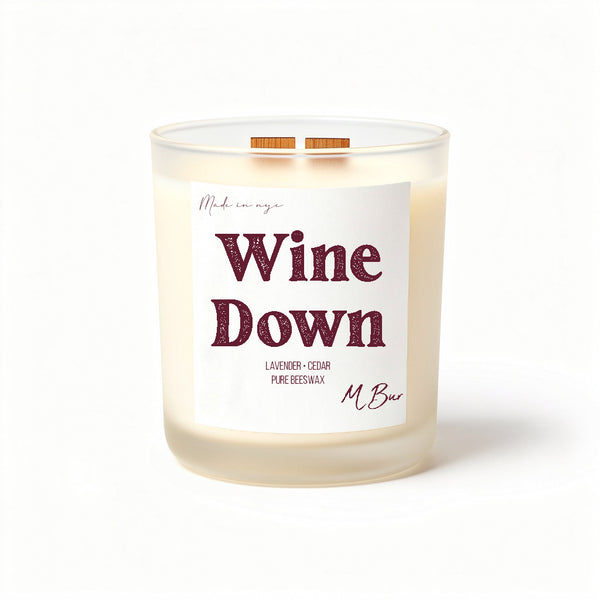
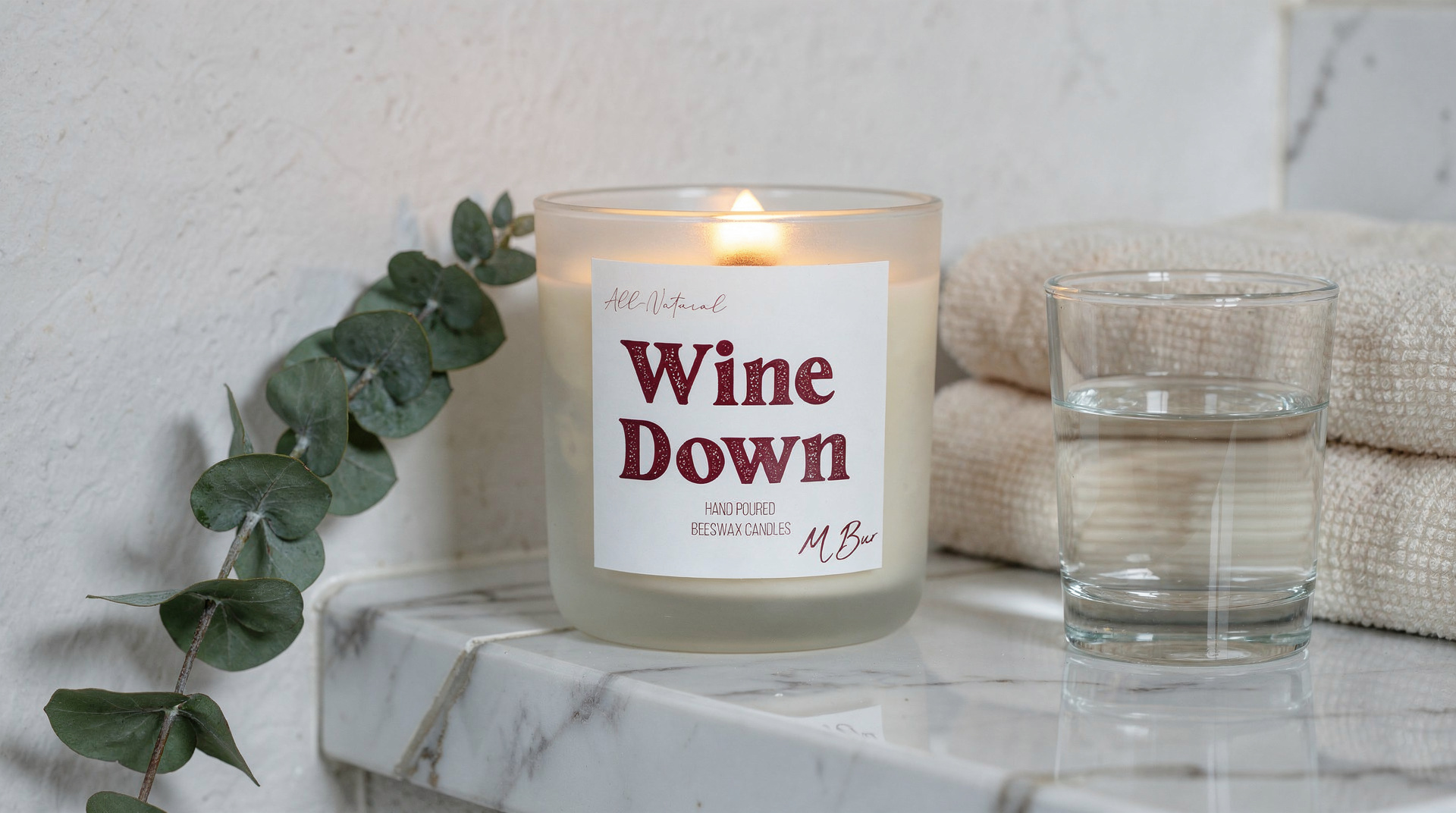
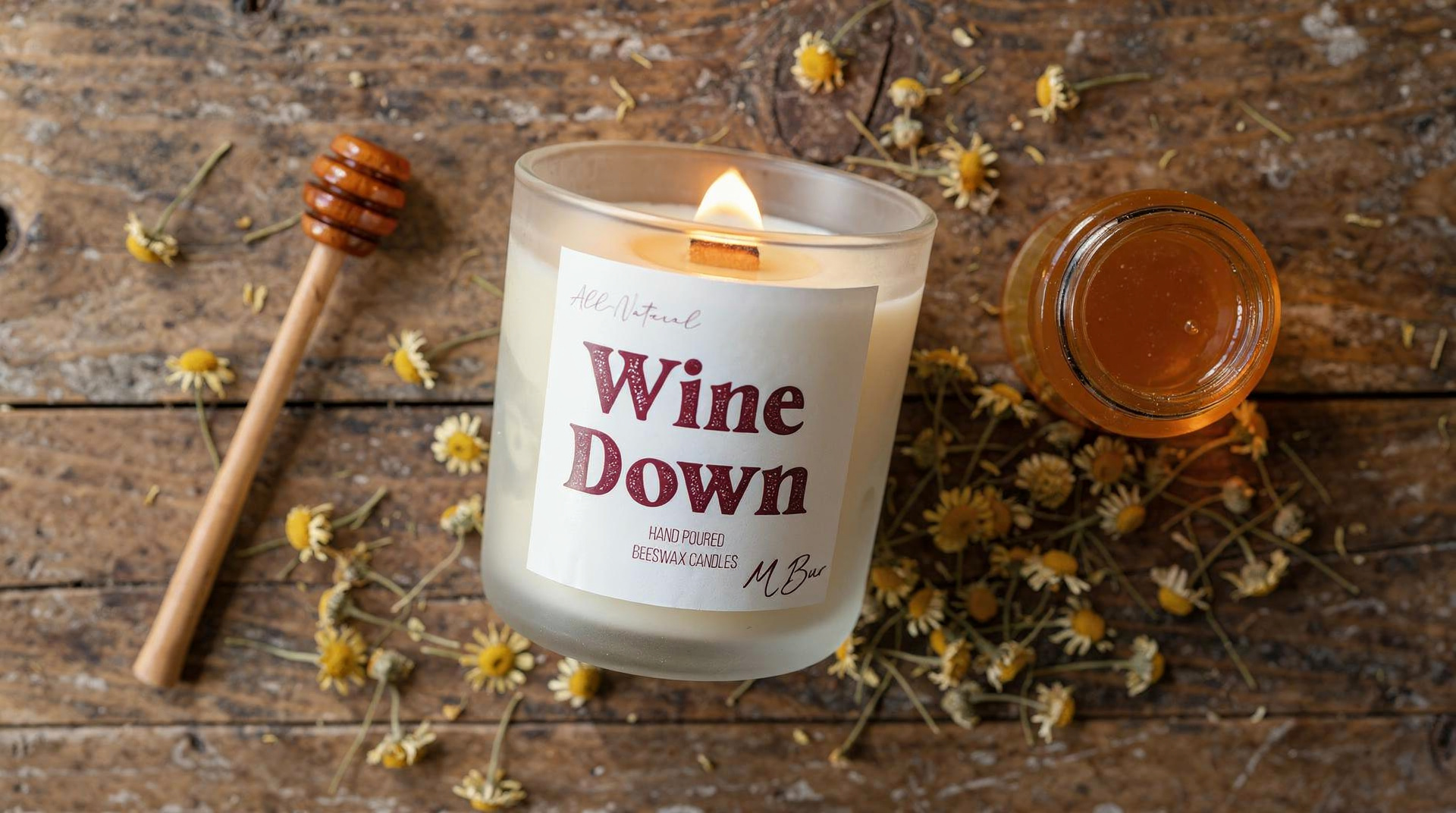
The Wine Down beeswax candle is particularly well suited to allergy sufferers who are also trying to wind down at the end of the day. It combines lavender, chamomile, and sage in a fragrance that is light and calming rather than loud and chemical. The 80 hour burn time (available in the 12oz size at $65) means you are not replacing it every two weeks.
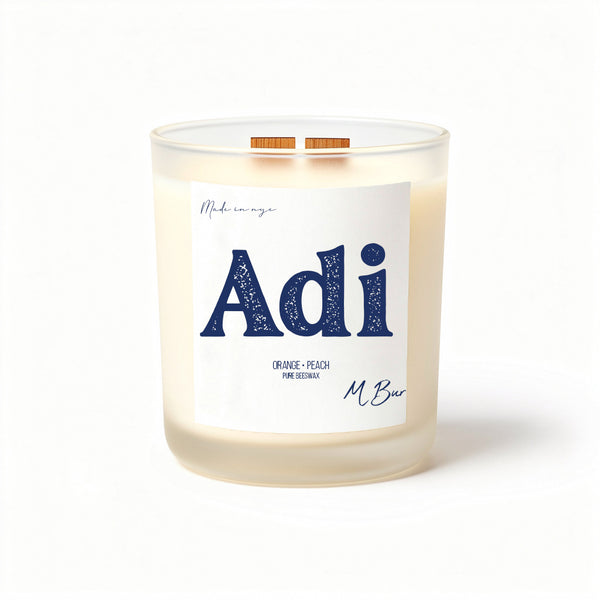
The Sunday Reset candle with its peppermint and eucalyptus profile is another strong choice for anyone dealing with sinus congestion alongside allergies. Peppermint and eucalyptus are not just pleasant scents. They are traditionally associated with easier breathing, and the fact that they are delivered via phthalate free fragrance in a beeswax base means you are not trading one irritant for another.
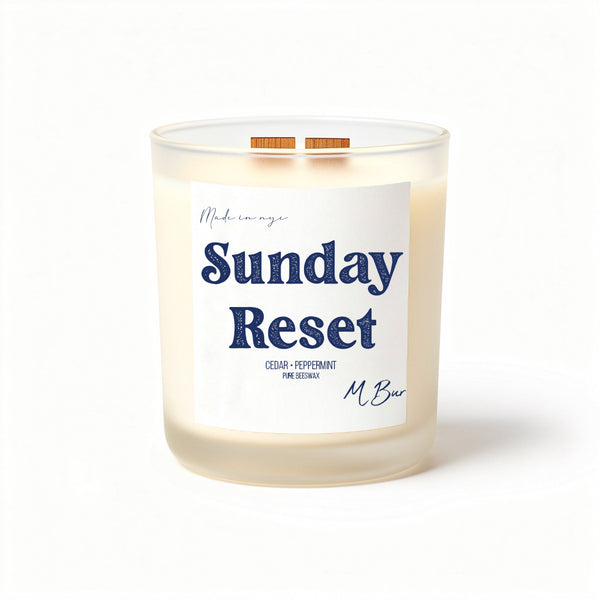
Handmade in Queens, NY. Burn times range from 20 hours (2.5oz, starting at $20) to 80 hours (12oz at $65).
That is exactly the experience this guide is trying to help you find.
2. Bluecorn Beeswax (Best for Unscented, Raw Options)
Colorado based Bluecorn has been making 100% pure beeswax candles since 1991. Their Raw Beeswax Pillar line is the gold standard for people who want zero added fragrance whatsoever. Pillars start at around $10 for a small size and go up to around $60 for larger formats. The 3x4 pillar burns approximately 60 hours. Wicks are 100% cotton, no metal cores. The natural honey scent is subtle and does not trigger fragrance sensitivity.
The tradeoff: these are purely functional. No scent variety, no wooden wick crackle, no fragrance options if you decide you want them. For the most sensitive cases, that may be exactly what you need. For everyone else, the lack of options is a real limitation.
3. Big Dipper Wax Works (Best Value Entry Point)
Big Dipper offers 100% pure beeswax pillars at a genuinely accessible price. A small pillar (2x4.75 inches) runs around $11.95 and burns approximately 40 hours. The wick is 100% cotton, primed with vegetable wax rather than paraffin. Their filtration process is solid enough to ensure a clean, low soot burn. No dyes, no toxic fragrance.
The limitation here is similar to Bluecorn: you are getting a utilitarian product. No scent customization, no wick variety, and the aesthetic is very much "natural goods store" rather than modern home decor. If function is the priority, this is a good value pick.
4. The Beeswax Co. (Best for Maximizing Burn Time per Dollar)
Texas based, with a focus on dense, long burning pillars. Their 3x4 pillar starts around $26 and reportedly burns 60 to 70 hours. Multi stage filtration means the wax is very clean and the burn is bright without producing visible soot. Cotton wicks. No toxic fragrance. Tea lights are available for around $12.95 for a six pack.
Like Bluecorn and Big Dipper, these are unscented by design. Great for people who want a table candle or ambient light without any added scent at all.
5. Greentree Home (Best for Visual Appeal)
If you want beeswax candles that look like something other than a utilitarian block, Greentree Home makes sculptural tapers and decorative shapes from 100% North American beeswax. Tapers run $14 to $20 per pair and burn roughly 10 to 12 hours. The wax quality is solid and the cotton wicks are clean. Good for dinner tables and decorative use where burn time is less critical.
Not the pick for everyday ambient burning. But if aesthetics matter and you need allergy safe options for entertaining, these work.
At a Glance: Brand Comparison for Allergy and Asthma Sufferers
| Brand | Wax | Wick | Scented Options | Price Range | Best For |
|---|---|---|---|---|---|
| MBur Candle Co. | 100% Pure Beeswax | Wooden | Yes (phthalate free, non toxic) | $20 to $60 | Scented options with respiratory sensitivity |
| Bluecorn Beeswax | 100% Pure Raw Beeswax | Cotton | No (unscented only) | $10 to $60 | Strictest fragrance sensitivity cases |
| Big Dipper Wax Works | 100% Pure Beeswax | Cotton | No | $11.95 to $16.50 | Budget conscious buyers |
| The Beeswax Co. | 100% Pure Texas Beeswax | Cotton | No | $12.95 to $26+ | Maximum burn time per dollar |
| Greentree Home | 100% North American Beeswax | Cotton | No | $14 to $24 | Decorative and entertaining use |
Frequently Asked Questions
Can I burn scented beeswax candles if I have asthma?
It depends on the fragrance. If the candle uses phthalate free, non toxic fragrance oils, the risk is dramatically lower than with standard scented candles. That said, every person's triggers are different. If you have severe asthma, your safest starting point is an unscented raw beeswax candle. If you want to try scented options, MBur offers candle samples at $5 each so you can test a scent in your space before committing to a full size candle.
What is the difference between "beeswax blend" and "100% pure beeswax"?
A beeswax blend can legally contain as little as 51% beeswax. The remaining 49% can be paraffin. A candle labeled "100% pure beeswax" must be exactly that. For allergy and asthma sufferers, only 100% pure beeswax is worth burning. Blends carry the same paraffin related risks as conventional candles, just at a slightly reduced level.
How long do beeswax candles actually burn?
Longer than any other wax type. Beeswax has the highest melting point of any candle wax, which is why it burns more slowly. MBur's 12oz candles burn up to 80 hours, which is exceptional even within the beeswax category. Pillar candles from brands like Bluecorn and The Beeswax Co. typically reach 60 to 70 hours for a standard 3x4 pillar.
Do wooden wicks release any harmful particles?
No. Wooden wicks are made from natural wood and do not contain metal cores, chemical treatments, or binding agents that would release harmful particles when burned. They produce a clean, even flame and burn cleaner than cotton in some conditions because they draw wax more evenly. They are a safe choice for asthma and allergy sufferers.
Should I still trim the wick on a beeswax candle?
Yes. Trim your wick to about a quarter inch before each burn. A wick that is too long creates a larger flame, more heat, and more soot, even with beeswax. Trimming keeps the burn clean and even, which matters more if you are burning candles specifically to avoid respiratory irritants. Proper candle care makes a real difference in both burn quality and air quality.
Practical Tips for Burning Candles Safely with Allergies or Asthma
Even the cleanest candle benefits from smart burning habits. Here is what actually helps.
Ventilate without creating a draft. Keep a window cracked if possible, but do not burn candles in a direct breeze. Drafts cause uneven burning and increase soot output even from clean burning candles.
Limit continuous burn time. Even with beeswax, burning a candle for more than four hours in a single session can reduce air quality in a small, sealed room. Two to three hours is a good target for smaller spaces.
Keep the melt pool clean. Remove any wick debris or foreign material from the wax before relighting. Anything floating in the melt pool can burn and release particles.
Start small. If you are switching from conventional candles and have not burned beeswax before, try a sample pack in one room first. This lets you confirm that the specific fragrance profile works for your sensitivities before you invest in a full size candle.
Place the candle at breathing height or below. Heat and combustion byproducts rise. Keeping the candle lower in the room means you are less likely to inhale anything directly from the flame zone.
The Bottom Line
If you have allergies or asthma and you want to burn candles, you have two real options: switch to 100% pure beeswax, or keep suffering through headaches and flare ups from paraffin and toxic fragrance. There is no middle ground that is actually safe.
For unscented, bare minimum ingredient candles, Bluecorn and Big Dipper are solid picks. For people who want the clean burn of beeswax but also want their space to actually smell like something other than a hardware store, MBur is the answer. Phthalate free non toxic fragrance, 100% beeswax, wooden wicks, no chemical dyes, handmade in Queens. The Wine Down candle (starting at $20 for the 20 hour 2.5oz size) is the specific recommendation for anyone with respiratory sensitivity who still wants the experience of a genuinely beautiful scent in their home.
Still not sure which scent is right for you? Try any scent for $5 before committing. No guessing, no regrets, no asthma flare up from a candle you cannot return.
Shop all MBur pure beeswax candles and find the one that works for your air, your home, and your lungs.
What buyers say:
Related Posts
Best Candles for Allergy Sufferers in 2025: 6 Picks That Won't Make You Sneeze
Paraffin vs. Beeswax vs. Soy: Which Candle Wax Is Safest for Indoor Air Quality?
Candles for Asthma Sufferers: The Only Buying Guide You Actually Need

