

Are Scented Candles Quietly Hurting Your Dog? What Owners Should Know
Your dog started sneezing every time you burned your favorite candle. Or maybe the coughing picked up. Or she just kept leaving the room whenever you lit one. You probably blamed it on allergies, dust, or the season changing. But the culprit might be sitting on your coffee table with a wick in it.
Most scented candles sold today contain ingredients that can genuinely irritate your dog's respiratory system. The good news: the problem is ingredient specific, not candle specific. Once you know what to avoid and what to look for, you can keep burning candles without worrying about your pup. This guide breaks down the science, names the real offenders, and points you to dog friendly beeswax candles that actually pass the sniff test.
Why Dogs Are More Vulnerable Than You Are
Your dog's nose is working on a completely different level than yours. A dog's sense of smell is at least 10,000 times more sensitive than a human's, with some estimates reaching 100,000 times more sensitive. So when a candle releases chemicals into the air, what barely registers for you can be overwhelming for your dog.
But sensitivity alone isn't the whole story. Dogs have smaller lungs and faster breathing rates than humans, which means airborne pollutants reach higher concentrations in their bodies more quickly relative to their body weight. They also metabolize certain chemicals, like fragrance compounds and phthalates, less efficiently than we do. That means those compounds can build up over time rather than getting flushed out.
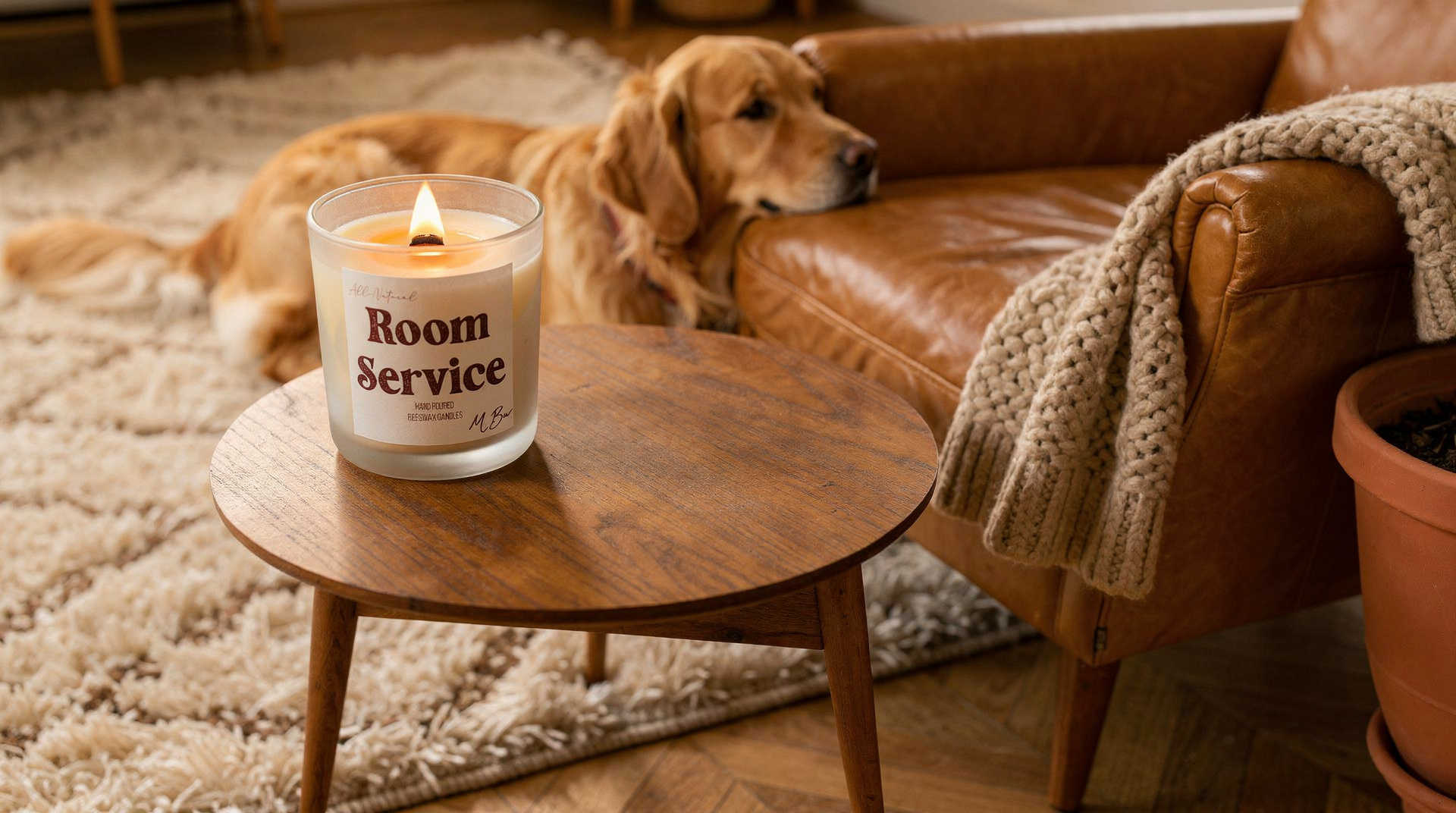
And there's a spatial factor most people overlook. Nanoparticles and heavier volatile organic compounds tend to linger close to the ground, right where your dog spends most of the day. While you're breathing air five feet up, your dog is breathing the densest layer of whatever your candle is putting out.
The Three Ingredients That Actually Cause Problems
The issue with most candles isn't the flame. It's what the flame is burning through. Three categories of ingredients are responsible for the vast majority of reactions in dogs.
1. Paraffin Wax
Paraffin is a petroleum byproduct and the base wax in roughly 95% of commercial candles. It's cheap, it's consistent, and it's terrible for indoor air quality. When burned, paraffin releases volatile organic compounds (VOCs) including benzene, toluene, and formaldehyde. Benzene is a known carcinogen. Toluene is a recognized respiratory and nervous system irritant.
For a dog with a sensitive airway or a brachycephalic breed like a pug or bulldog (which already has compromised breathing), those emissions add up. The soot that paraffin candles produce is composed of ultra fine particles that act as a respiratory irritant, particularly for dogs with conditions like chronic bronchitis.
2. Toxic Fragrances
The word "fragrance" on a candle label is basically a loophole. It can represent hundreds of undisclosed chemical compounds, many of which include phthalates, parabens, and chemical stabilizers. Phthalates in particular have been linked to hormonal disruption and allergic reactions in pets.
When a candle with toxic fragrance oils burns, combustion releases microscopic fragrance particles into the air. Your dog inhales them, and trace amounts also settle onto their fur. Later, when your dog grooms, those particles get ingested. That's a double exposure route most owners never consider.
3. Certain Essential Oils
Even "natural" isn't automatically safe for dogs. Tea tree oil, peppermint oil, and eucalyptus oil can cause serious health issues in dogs if exposure is significant. Veterinary case reports have documented tremors, weakness, and liver problems linked to concentrated essential oil exposure. Candles don't contain oils at those concentrations, but burning even diluted blends can be problematic for sensitive dogs over time.
If you're also managing your own sensitivities at home, our guide on candles and health concerns digs into the human side of this equation.
What to Look For in a Dog Friendly Candle
Finding a scented candle that's safe for dogs comes down to checking four things. Think of it as a quick filter you can run on any candle before you bring it into a house with a dog.
Wax type: Choose beeswax, soy, or coconut wax. Avoid anything that lists paraffin or "wax blend" (which usually means paraffin is the primary ingredient). Beeswax is the cleanest burning option because it has the highest melting point, produces virtually no soot, and is a single ingredient with no chemical processing required.
Fragrance: Look for candles that specifically state "phthalate free" or "non toxic fragrance." If the label just says "fragrance" with no further information, that's a red flag.
Wick: Cotton or wooden wicks are safe. Avoid any candle with a metal core wick. Lead core wicks were banned in the US in 2003, but some imported candles still contain them.
Dyes: Chemical dyes can release additional compounds when burned. Undyed candles are always the safer bet for a pet household.
Three Candle Brands That Pass the Dog Safety Test
If you want to skip the label reading and go straight to options that check every box, these brands are worth a look.
MBur Candle Co.
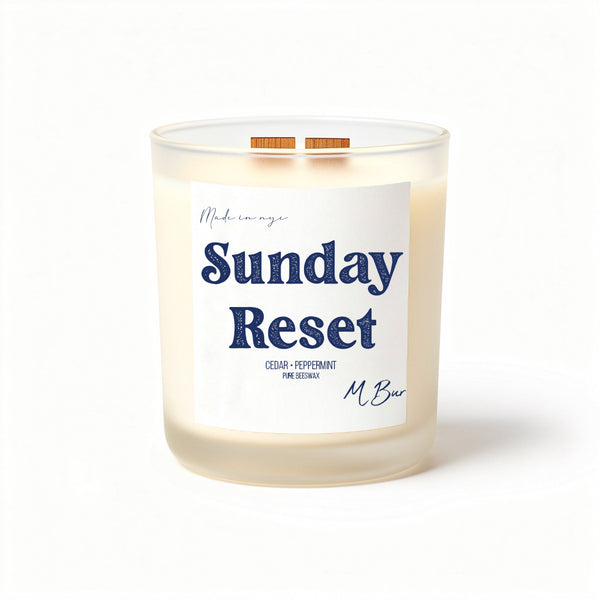
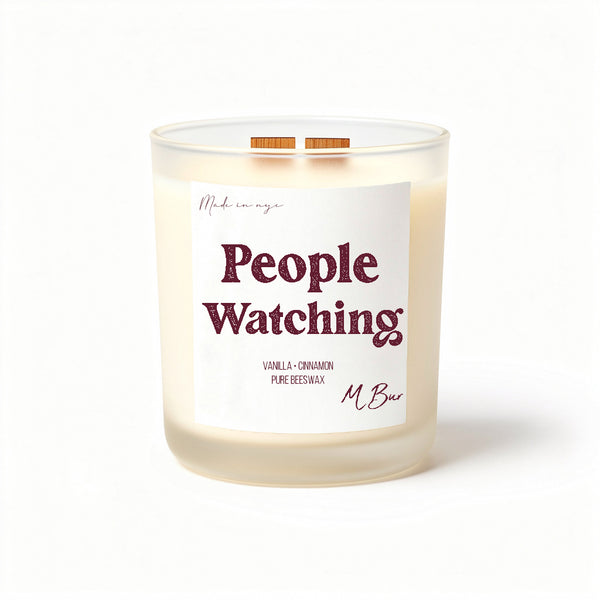
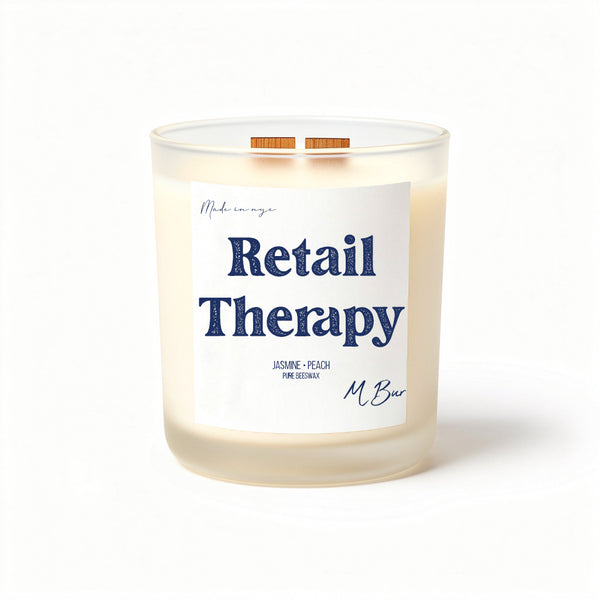
MBur candles are made with 100% pure beeswax (not a blend), wooden wicks, phthalate free fragrance oils, and zero chemical dyes. They're handmade in Manhattan, NY. Beeswax naturally burns cleaner than any other candle wax, producing virtually no soot and none of the VOCs associated with paraffin. The wooden wick means no metal core concerns, and it adds a soft crackling sound that, incidentally, dogs don't seem to mind at all.
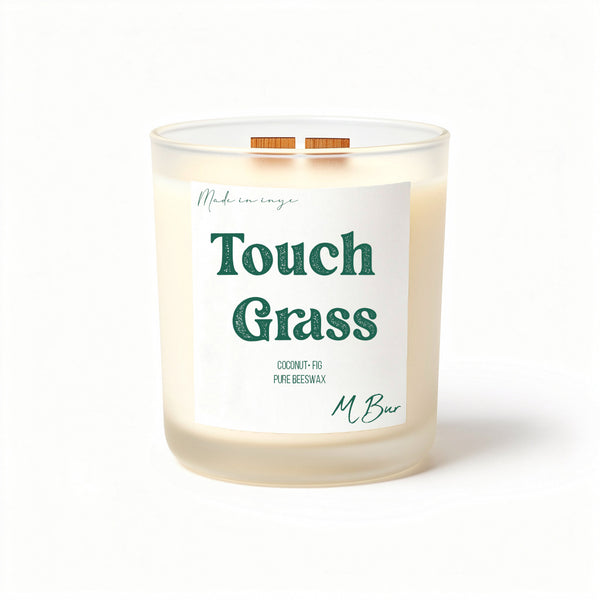
The burn time on these is genuinely long. The 80 hour size runs $65, and the 20 hour size starts at $20. If you have a dog with respiratory sensitivity, Touch Grass and Do Not Disturb are particularly good picks. Touch Grass has a fresh green quality, and Do Not Disturb leans into soft florals, neither of which are overwhelming in the way that heavy cinnamon or clove scented candles can be.
That "light and clean, not overpowering" quality is exactly what makes these work in a home with pets. Browse MBur's full beeswax candle collection to find a scent that fits your home.
One Fur All Pet House Candle
One Fur All makes soy wax candles specifically designed for pet households. They're paraffin free, phthalate free, and dye free with cotton wicks. The 9oz candle runs about $24 on Amazon with a burn time of around 60 hours. They also include odor neutralizing properties, which is a bonus if your dog brings the outdoors inside on a regular basis. Available in over 30 scents.
Companion Candles
Companion Candles markets itself as a pet safe brand from the ground up. Their candles are free from phthalates, parabens, and carcinogens, with vet approved formulations. They use wood wicks and clean wax, and they're transparent about their ingredient lists.
Practical Tips for Burning Candles Around Dogs
Even with a clean burning candle, a few habits go a long way in keeping your dog comfortable.
Ventilation matters. Crack a window or keep a door open when burning any candle. Fresh air circulation prevents fragrance particles from building up at ground level where your dog is breathing.
Trim the wick. Keep your wick trimmed to about 1/4 inch before each burn. A longer wick produces a larger flame, more soot, and more particulate matter in the air.
Watch the burn time. Burning a candle for more than four hours straight isn't great for anyone in the room. Give the air a break. Your dog will appreciate it.
Placement is obvious but important. Keep candles on high surfaces your dog can't reach. This prevents accidental burns, wax ingestion, and the very real fire risk of a wagging tail near an open flame.
Monitor your dog. Watch for sneezing, coughing, watery eyes, or your dog repeatedly leaving the room. Those are signs the candle is irritating them, even if the ingredients look fine on paper. Every dog is different.
If your dog has a diagnosed respiratory condition, talk to your vet before introducing any scented product into your home.
The Bottom Line
Most scented candles aren't designed with your dog in mind. Paraffin wax, toxic fragrances, and certain essential oils can all irritate your dog's respiratory system, especially over time and especially for smaller breeds or dogs with existing conditions. But the answer isn't giving up candles. It's switching to one made with ingredients that don't put your dog at risk.
Pure beeswax burns the cleanest of any candle wax. Paired with a wooden wick, phthalate free fragrance, and no chemical dyes, it's the safest option for a home with pets. Shop MBur's full collection of 100% beeswax candles and find a scent your whole household (four legs included) can enjoy.
Related Reading
- Are Candles Bad for Dogs? What's Safe and What to Avoid
- What candles are non toxic?
- What Makes a Candle Non Toxic? How to Spot the Real Thing
- Are Candles Bad for Your Health?
What buyers say:

