

Are Paraffin Candles Safe Around Indoor Cats? What Owners Often Overlook
Your cat's liver cannot process what your candle is releasing into the air. That is the short version. The longer version involves petroleum byproducts, toxic fragrance compounds, and the specific enzyme deficiency that makes felines uniquely vulnerable to airborne chemicals you barely notice.
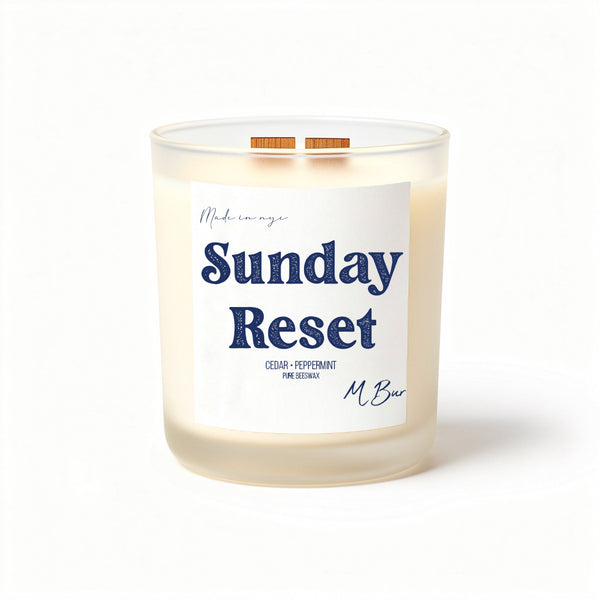
Most cat owners who research candle safety end up on forums full of vague advice: "just use soy" or "open a window." Neither answer is good enough when your cat is breathing recycled air in a 700 square foot apartment for 23 hours a day. This post breaks down exactly which candle ingredients are dangerous for cats, why paraffin is the worst offender, and what to burn instead if you want scent without the risk. If you want to skip straight to options, our full beeswax candle collection is built for exactly this kind of concern.
Why Cats Are More Vulnerable Than You Are
Cats are not small humans. Their bodies metabolize chemicals differently, and in some cases, they cannot metabolize them at all. According to the Merck Veterinary Manual, cats are deficient in the enzyme glucuronyl transferase, which is critical for breaking down and eliminating certain compounds from the body. That enzyme gap means substances that your liver handles without issue can accumulate in your cat's bloodstream and become toxic.
This is especially relevant with candles because the compounds released during burning, things like volatile organic compounds from paraffin wax and phenols from certain fragrance oils, are exactly the types of substances cats struggle to process. The Pet Poison Helpline notes that essential oils are rapidly absorbed through inhalation and skin contact, then metabolized in the liver, where cats simply do not have the enzymatic machinery to clear them safely.
The Paraffin Problem: What Burns Into Your Cat's Air
Paraffin wax is a petroleum byproduct. That is not an opinion or a wellness blog scare tactic. Cats.com, in a vet reviewed article, states that "paraffin wax is a petroleum derivative, originally a by product of the fuel industry, and should be avoided" around cats. The fumes are not just unpleasant. They contain measurable levels of benzene, toluene, and formaldehyde.
The American Lung Association has warned against burning paraffin candles. The EPA has confirmed that burning these candles emits toxins and dangerous chemicals into indoor air in measurable quantities. For a human with a functioning liver, brief exposure is unlikely to cause immediate harm. For a cat missing key detoxification enzymes, it is a completely different equation.
Paraffin candles also produce significantly more soot than natural wax alternatives. That black residue you see on jar rims and nearby walls? Your cat is breathing those fine particles. For cats with existing respiratory conditions or flat faced breeds like Persians and Himalayans, the risk compounds further.
Toxic Fragrance Is the Other Half of the Problem
Wax type gets most of the attention, but toxic fragrance is arguably worse. Many mass produced candles use fragrance blends containing phthalates, parabens, and hundreds of undisclosed chemical compounds. The word "fragrance" on a label is a catch all that can hide dozens of ingredients a manufacturer never has to disclose.
For cats, certain compounds commonly found in candle fragrances are outright dangerous. The Pet Poison Helpline lists citrus oil, eucalyptus, tea tree, peppermint, and cinnamon oil among the essential oils known to cause poisoning in cats. Symptoms range from drooling and vomiting to respiratory distress and, in severe cases, liver failure.
A candle does not need to contain concentrated essential oils to be a problem, either. The toxic fragrance compounds in conventional candles aerosolize when heated and settle on surfaces, fur, and paws. Your cat grooms constantly. Anything that lands on their coat eventually gets ingested.
What Actually Makes a Candle Safe for Cats
Veterinary sources and pet safety organizations consistently recommend the same checklist. A cat safe candle needs to meet all of these criteria, not just one or two:
- Natural wax only: 100% beeswax or pure soy. No paraffin, no "wax blends" that sneak petroleum in.
- Phthalate free, non toxic fragrance: If the candle is scented, the fragrance must be free of phthalates, parabens, and undisclosed chemical compounds.
- No chemical dyes: Dyes add another combustion variable that creates additional airborne particles.
- Safe wick material: Wooden wicks or lead free cotton. No metal core wicks.
- No essential oils toxic to cats: Avoid candles containing tea tree, eucalyptus, citrus, peppermint, or cinnamon oils, especially in concentrated form.
If you are also dealing with your own allergies or sensitivities alongside your cat's, our guide to the best candles to burn for allergies goes deeper on which formulations are safest for both you and your pet.
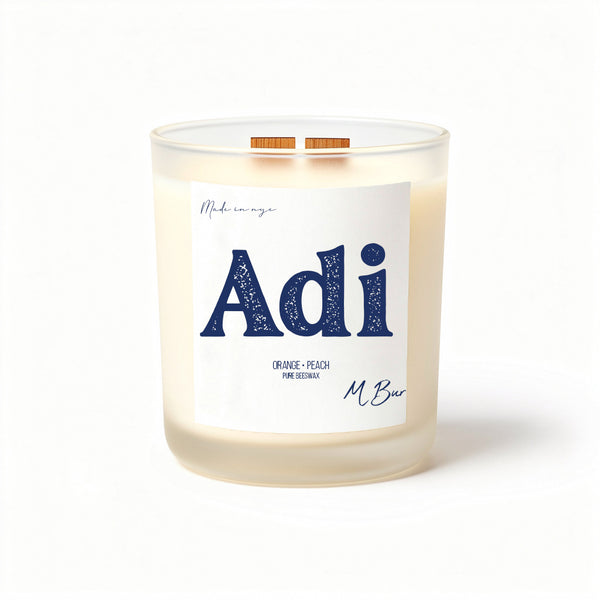
Beeswax vs. Paraffin vs. Soy: Quick Comparison for Cat Owners
| Factor | Paraffin | Soy | 100% Beeswax |
|---|---|---|---|
| Source | Petroleum byproduct | Soybean oil | Byproduct of honey production |
| VOCs released | High (benzene, toluene, formaldehyde) | Low | Minimal to none |
| Soot production | High | Moderate | Very low |
| Burn time | Shortest | Medium | Longest (highest melting point) |
| Often blended with paraffin? | N/A | Yes, frequently | Rarely (check labels) |
| Cat safety rating | Avoid | Acceptable if pure | Safest natural option |
One thing to watch with soy candles: many "soy" candles on the market are actually soy and paraffin blends. If the label says "soy blend" or does not specify, assume there is paraffin in there. Pure beeswax is the hardest to adulterate because it has a distinctive natural honey scent and a noticeably different burn behavior.
Cat Safe Candles Worth Considering
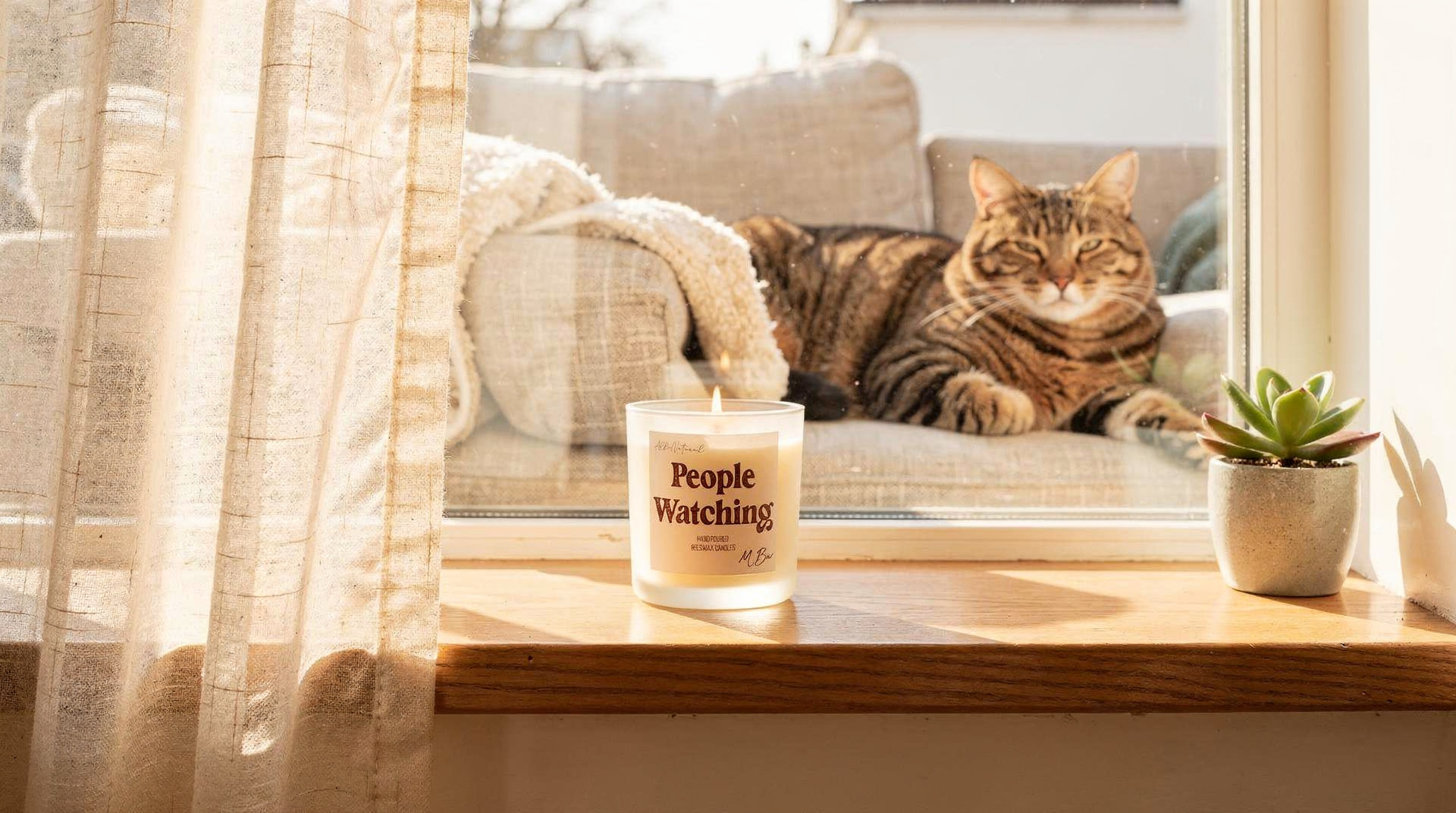
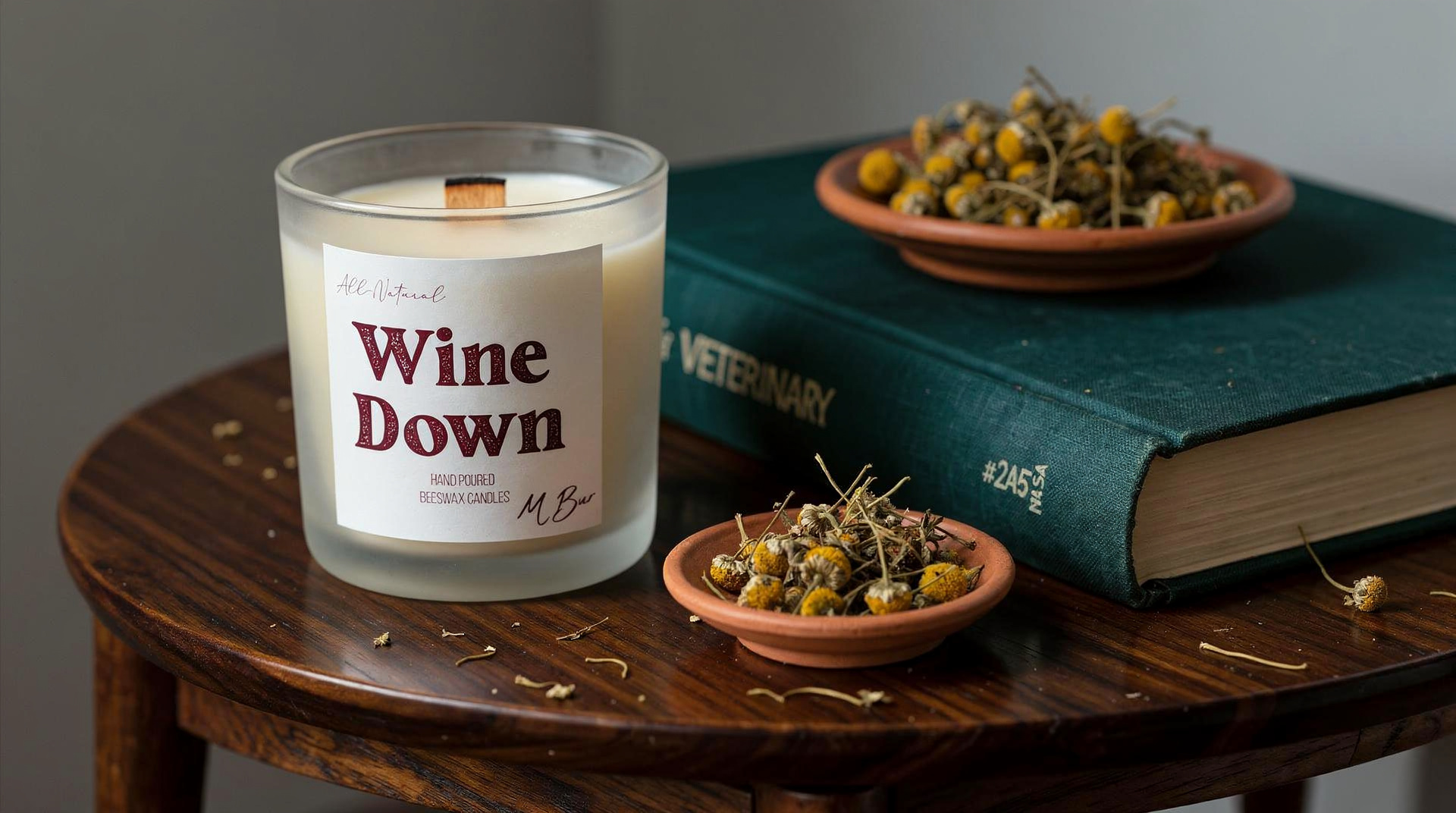
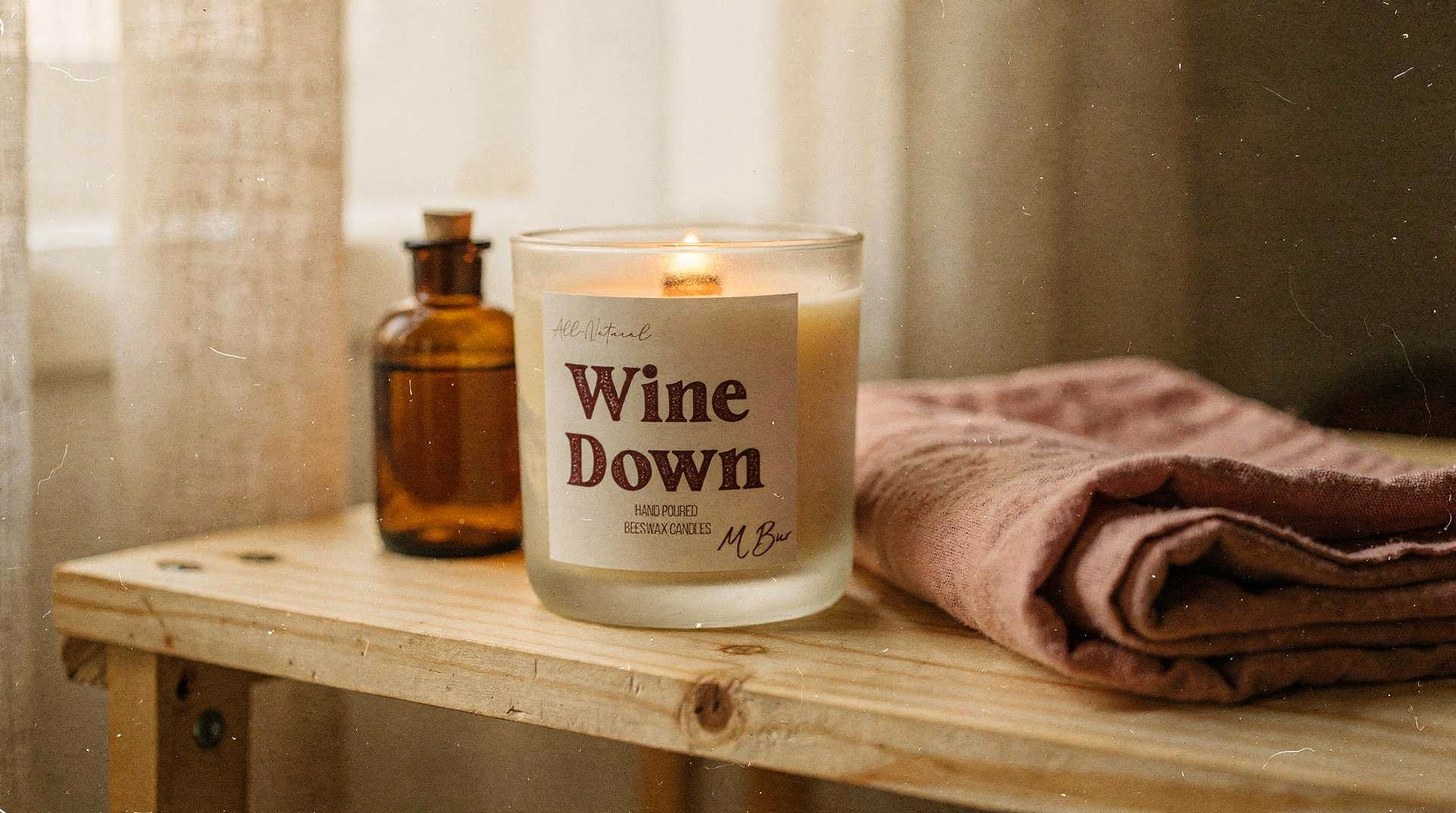
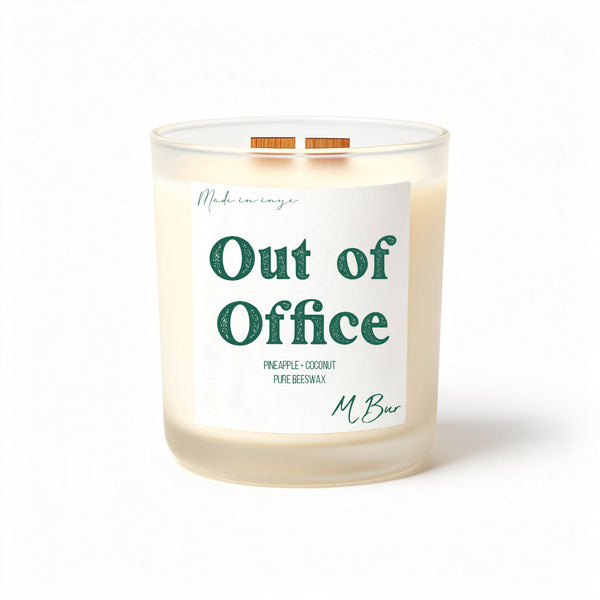
A few brands get this right. MBur Candle Co. makes every candle with 100% beeswax (single ingredient wax, no blending), wooden wicks, phthalate free fragrance, and zero chemical dyes. Handmade in Manhattan, NY. The Do Not Disturb candle is a solid pick for bedrooms where cats tend to spend the most time, and the Wine Down candle works well for living spaces. The 20 hour size starts at $20, and the 80 hour size runs $65, which is the longest burn time you will find in any candle wax thanks to beeswax's high melting point.
Pet House by One Fur All is another option worth knowing about. Their candles use 100% plant based soy wax with cotton wicks, no paraffin, no dyes, and no parabens or phthalates. They are specifically marketed for pet households and include an odor neutralizer. Their 9 oz candles run with up to 60 hours of burn time.
Companion Candles uses a coconut soy wax blend that is free of paraffin, phthalates, and preservatives, another reasonable choice for multi pet homes.
Practical Safety Tips for Burning Candles Around Cats
Even with a clean burning candle, placement and habits matter. Cats are curious, agile, and not great at risk assessment.
- Ventilate the room. Crack a window or run an air purifier when burning any candle, regardless of wax type.
- Keep candles on stable, elevated surfaces that your cat cannot reach, tip, or knock over. This is harder than it sounds with cats, so wall mounted shelves or enclosed lanterns are worth considering.
- Limit burn sessions to 3 to 4 hours. This prevents any buildup of particulate matter and also protects the candle itself.
- Trim the wick before every burn. A trimmed wick produces a cleaner, lower flame with less soot.
- Watch for symptoms. If your cat starts coughing, sneezing, drooling excessively, or seems lethargic after you burn a candle, discontinue use and call your vet.
- Never leave a burning candle unattended. This is standard fire safety, but it is doubly important with a cat who can reach shelves you thought were inaccessible.
If your cat has asthma, bronchitis, or any diagnosed respiratory condition, consult your veterinarian before introducing any scented product to your home, even a clean burning one.
The Bottom Line
Paraffin candles are not safe for cats. Your cat's liver cannot detoxify the compounds that paraffin and toxic fragrance release into your shared air, and the risks compound with every burn session in a closed room. The fix is straightforward: switch to 100% pure beeswax or verified pure soy, choose candles with phthalate free fragrance and clean wicks, and pay attention to how your cat responds.
If you want one place to start, browse the full MBur beeswax candle collection. Every candle is 100% beeswax, wooden wick, phthalate free fragrance, no dyes. Built for people who care about what they are breathing, and what their pets are breathing too.
Related Reading
- Are Scented Candles Safe for Cats? What Pet Owners Should Know
- Are Candles Bad for Dogs? What's Safe and What to Avoid
- What Candles Are Safe to Burn? A Guide to Clean, Non Toxic Options
- What Makes a Candle Non Toxic? How to Spot the Real Thing
What buyers say:

