

Are Candles Safe in a Twin Nursery or Shared Kids' Room?
Two cribs, one room, and a question that keeps nagging at you: can you light a candle in here without putting your babies at risk?
The concern is real, and it deserves a real answer. Shared nurseries already concentrate more body heat, more diaper pail odor, and more humidity into a single space. A candle seems like an obvious fix. But infants have developing respiratory systems, faster breathing rates relative to their body weight, and they spend the vast majority of their hours in that one room. Whatever is in the air, they are breathing more of it, more often, than you are.
The good news: candles are not categorically dangerous in a nursery. The danger comes from specific ingredients, specific waxes, and specific habits. Once you know what to look for (and what to avoid), you can make an informed call. This guide breaks down the actual science, names the real culprits, and gives you a practical checklist so you can decide what belongs in your kids' room. If you want to skip ahead to what a clean candle actually looks like, browse our full beeswax candle collection for a reference point.
Why Nurseries Are Different From Every Other Room
Adults tolerate low levels of airborne irritants without noticing. Babies do not have that luxury. Their airways are narrower, their lung tissue is still forming, and they take roughly 40 to 60 breaths per minute compared to an adult's 12 to 20. Pound for pound, an infant inhales a significantly higher volume of air.
In a twin nursery or shared kids' room, two (or more) children are breathing in that same enclosed space. If a candle is releasing soot, volatile organic compounds, or chemical fragrance residue, the exposure multiplies. Research published in the National Library of Medicine confirms that burning candles can significantly elevate particulate matter concentrations and alter indoor air composition.
And roughly 20 to 30 percent of children have underlying conditions like asthma or allergies that make them even more reactive to airborne irritants. In a shared room, the odds that at least one child falls into that category go up.

The Real Problem: It Is Not "Candles." It Is What Is Inside Them.
When pediatric experts advise caution about candles in nurseries, they are responding to the candle market as it exists today. Most candles sold in the United States are made from paraffin wax, a petroleum byproduct. When paraffin burns, it releases benzene, toluene, and formaldehyde into the air. These are not trace amounts you can hand wave away. They are classified volatile organic compounds, and in a small, enclosed nursery with limited ventilation, they accumulate.
Then there is the fragrance. The word "fragrance" on a candle label is a legal catch all that can represent hundreds of undisclosed chemical compounds, including phthalates and parabens. Many candles use toxic fragrance oils that release additional irritants when heated. For an adult in a well ventilated living room, this might cause a mild headache. For an infant sleeping six inches from the source for 12 hours, the stakes are different.
Add metal core wicks (which can release trace heavy metals when burned) and chemical dyes, and the average drugstore candle becomes a cocktail of compounds you would never intentionally put in a nursery.
A Quick Comparison: Candle Wax Types
| Wax Type | Source | Soot Level | VOC Emissions | Nursery Suitability |
|---|---|---|---|---|
| Paraffin | Petroleum byproduct | High | Benzene, toluene, formaldehyde | Avoid |
| Soy | Soybean oil | Low to moderate | Lower, but often blended with paraffin | Better, but check for blends and fragrance quality |
| Beeswax | Honeycomb (byproduct of honey production) | Minimal | Lowest of any candle wax | Best option if you choose to burn a candle |
The distinction matters. When someone says "candles are bad for babies," they are usually describing a paraffin candle with toxic fragrance, a cotton wick with a metal core, and chemical dyes. That is a very different product than a 100% beeswax candle with a wooden wick and phthalate free fragrance.
Fire Safety: The Other Half of the Equation
Air quality is one concern. Fire is the other, and in a nursery it demands extra attention. Approximately 36% of home candle fires start in bedrooms, and children under age 5 face a fire related death rate more than twice the national average.
A shared kids' room compounds the risk. More furniture, more bedding, more stuffed animals, more things that can be knocked over or pulled down by curious hands. The Government of Canada's candle safety guidance recommends keeping candles at least 12 inches from any combustible material, maintaining 3 feet of clearance above the flame, and never leaving a burning candle unattended in a room with children.
That last point is non negotiable. A candle should never burn while children are sleeping in the room, regardless of what it is made from.

The Solution: A Practical Protocol for Candle Use in Shared Kids' Rooms
Pediatric and environmental health guidance points toward the same practical approach: if you want candle ambiance in or near a nursery, do it before the kids are in the room, choose the cleanest possible candle, and follow strict safety habits. Here is how that looks in practice.
Step 1: Choose the Right Candle
Your checklist for a nursery adjacent candle:
- 100% beeswax wax. Single ingredient, not a "beeswax blend" (which is mostly paraffin). Beeswax produces the least soot of any candle wax and has the highest melting point, which means a slower, cleaner burn.
- Non toxic, phthalate free fragrance. If the label just says "fragrance" with no further disclosure, assume the worst. Look for brands that explicitly state phthalate free and paraben free.
- Wooden or unbleached cotton wick. No metal cores. Wooden wicks produce a steady, even flame with minimal soot.
- No chemical dyes. Dyes can release additional compounds when burned.
MBur's Do Not Disturb candle, for example, checks every one of those boxes. It is 100% pure beeswax with a wooden wick and phthalate free fragrance, with notes of bergamot, pear, jasmine, vanilla, and sandalwood. The scent is calm without being medicinal, which matters when you are trying to create a soothing pre bedtime atmosphere.
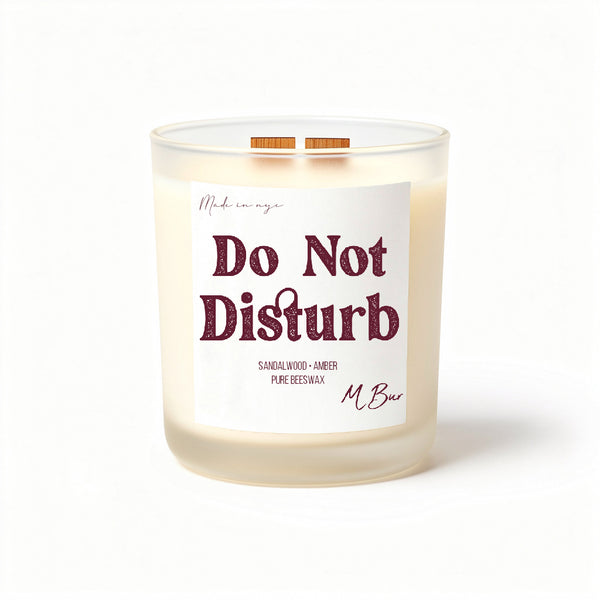
"I love the scent of this candle. It is lovely not overpowering. It's soothing fragrance more than covers my bedroom and bathroom. It is aromatherapy at its best." Dawne Forrest, Do Not Disturb customer
Step 2: Burn Before, Not During
This is the protocol that pediatric experts recommend, and it is the one that lets you have the ambiance without the risk.
- Light your candle in the nursery 30 to 60 minutes before the kids enter the room.
- Extinguish completely using a snuffer (blowing creates wax spatter and a burst of smoke).
- Open a window or turn on ventilation for 10 to 15 minutes to clear any residual particulates.
- Then bring the kids in. The room smells wonderful, the air is clear, and there is zero fire risk.
With a beeswax candle, this approach works especially well because beeswax holds its scent throw even after the flame is out. The room continues to smell like bergamot and vanilla, not like extinguished smoke.
Step 3: Placement and Maintenance
- Place candles on a high, stable surface that children absolutely cannot reach, even if they climb.
- Keep at least 12 inches of clearance from curtains, mobiles, bedding, and wall hangings.
- Trim the wick to 1/4 inch before every burn. This minimizes soot production and keeps the flame controlled.
- Extinguish container candles before the last 1/2 inch of wax melts.
- Never move a candle while it is lit or while the wax is still liquid.
Step 4: Know When to Skip It Entirely
If either child in the room has diagnosed asthma, reactive airway disease, or severe allergies, talk to your pediatrician before introducing any combustion source. A clean candle produces fewer irritants, but "fewer" and "none" are different things. For families in that situation, flameless LED candles or simply opening the candle jar to enjoy the cold throw scent may be the better call.
Anyone with specific medical concerns about their child's respiratory health should follow their doctor's guidance first.

Why Beeswax Specifically?
Beeswax is the oldest candle material humans have used, dating back roughly 5,000 years. It is a natural byproduct of honey production, meaning no chemical processing is required to turn it into candle wax. It burns at a higher melting point than soy or paraffin, which translates to a longer burn time, less soot, and a more complete combustion.
Some studies suggest beeswax candles may release negative ions when burned, which could help neutralize airborne pollutants. That claim deserves a "may" in front of it, because the research is not conclusive. What is well established: beeswax produces dramatically less particulate matter than paraffin and does not leave black soot residue on walls or ceilings.
It is also naturally hypoallergenic, which matters in a nursery where you are trying to minimize every potential irritant.
MBur's Wine Down candle, with its lavender, chamomile, sage, rosemary, and sandalwood notes, is another strong pick for a pre bedtime nursery ritual. Lavender and chamomile are two of the most universally calming scent profiles, and the wooden wick crackle adds a gentle ambient sound that many parents find soothing during the wind down routine.
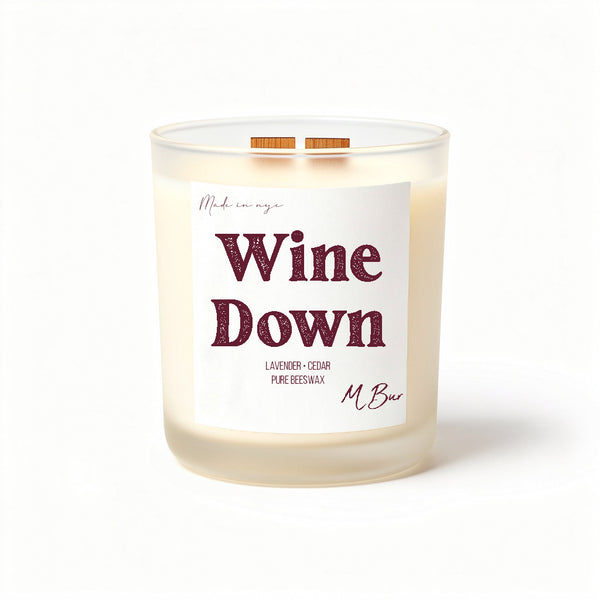
"Absolutely loved the Wine Down candle! The scent is so light and clean not overpowering at all, which is exactly what I look for. A lot of other candles tend to give me headaches, but this one was a total game changer. I was able to enjoy the calming aroma without any discomfort." Nicole D.
Frequently Asked Questions
Can I burn a candle while my babies are sleeping in the nursery?
No. Regardless of candle quality, an open flame should never be left in a room where children are sleeping or unsupervised. The recommended approach is to burn the candle before the children enter the room, extinguish it completely, ventilate, and then bring them in. Browse MBur's beeswax candle collection for options designed to throw scent even after the flame is out.
Are "nursery safe" candles actually regulated?
There is no standardized regulatory definition for "nursery safe" candles. Any brand can put that on a label. What actually matters is the ingredient list: 100% natural wax (not a blend), non toxic phthalate free fragrance, no metal core wicks, and no chemical dyes. Read the label, not the marketing claim.
How long do beeswax candles actually burn?
Beeswax has the highest melting point of any candle wax, which gives it the longest burn time. MBur's candles range from 20 hours (the 20 hour size at $20) up to 80 hours for the largest size at $65. For a nursery where you are burning in short sessions before bedtime, even the smallest size lasts weeks.
What about essential oil diffusers instead of candles?
Diffusers eliminate the fire risk, which is a real advantage. However, many essential oils are not recommended for use around infants under 6 months, and some (like eucalyptus and peppermint) can irritate young airways. If you go the diffuser route, check with your pediatrician on which oils are safe for your children's age. A beeswax candle burned before the kids enter the room avoids both the fire risk and the direct essential oil exposure.
My twins share a room with an older toddler. Does that change anything?
It raises the fire safety stakes. Toddlers climb, grab, and pull things off surfaces. If you use a candle, it must be on a surface that is genuinely inaccessible, and it must be extinguished and removed from reach well before the children are in the room. The "burn before, not during" protocol becomes even more important with mobile kids in the space.
The Bottom Line
Candles can coexist with a twin nursery or shared kids' room, but only if you choose the right candle and follow the right protocol. That means 100% beeswax, non toxic phthalate free fragrance, wooden or unbleached cotton wicks, and a strict "burn before, not during" habit. Skip the paraffin. Skip the mystery fragrance blends. And never leave a flame unattended around children.
If you are looking for a candle that checks every box on the nursery safe checklist, start with MBur's pure beeswax collection. Every candle is 100% beeswax, wooden wick, phthalate free fragrance, no chemical dyes, and handmade in Queens, New York. The 20 hour size starts at $20, which is a low commitment way to find out if beeswax is the right fit for your family.
Related reading

