

Are Candles Safe for a Baby With Reflux or Sensitive Skin? A Parent's Guide
Your pediatrician said to eliminate irritants from the nursery. You tossed the plug in air freshener, switched to fragrance free detergent, started reading every label in the baby aisle. But the candle on the living room shelf? You are not sure what to do with that one. You love it. You also love your baby more, and the reflux flare ups and eczema patches are making you second guess everything in your home that has a scent.
The concern is legitimate. Babies breathe faster than adults, their lungs are still developing, and their skin is thinner and more permeable than yours. What counts as a mild background scent for you can be a concentrated dose of airborne chemicals for a seven month old. The good news: the problem is almost never "candles" as a category. The problem is specific ingredients inside most candles, and once you know which ones to avoid, you can make a genuinely informed call.
This guide breaks down exactly what makes certain candles risky for babies with reflux or sensitive skin, what to look for on a label, and how to burn a candle safely in a home with an infant. If you want to skip ahead to the cleanest burning option we know of, browse our full beeswax candle collection.
Why Conventional Candles Can Be a Problem for Babies
Most candles sold at big box stores are made from paraffin wax, which is a petroleum byproduct. When paraffin burns, it releases volatile organic compounds (VOCs) including benzene, toluene, and formaldehyde into your indoor air. For an adult in a well ventilated room, the exposure levels from a single candle session are relatively low. For an infant who breathes more air per pound of body weight and whose respiratory system is still forming, those same compounds hit differently.
Then there is the fragrance. The word "fragrance" on a candle label is a catch all that can represent dozens of undisclosed chemical compounds, many of which contain phthalates and parabens. These are known skin irritants. For a baby with eczema or contact dermatitis, airborne fragrance chemicals can settle on skin and trigger flare ups even without direct contact.

Reflux, Respiratory Sensitivity, and Indoor Air Quality
There is no direct clinical evidence that candles cause reflux. But reflux in infants often involves airway irritation, and anything that degrades indoor air quality can make an already irritated system work harder. The particulate matter and soot released by paraffin candles, especially those with cotton core wicks that have not been trimmed, contribute to the kind of low grade air pollution that pediatricians flag as problematic.
The American Academy of Pediatrics identifies combustion byproducts and VOCs as particular concerns for developing respiratory systems. The EPA's indoor air quality guidance notes that candles and incense are potential sources of indoor pollution. For a baby who already struggles with reflux related coughing or congestion, adding airborne irritants to the mix is the opposite of helpful.
This does not mean every candle in your home is a hazard. It means the type of wax, the type of fragrance, and the way you burn it all matter enormously.
The Ingredient Checklist: What to Avoid and What to Look For
Ingredients That Cause Problems
Paraffin wax. Petroleum derived, releases the highest levels of soot and VOCs among common candle waxes. If the label says "wax blend" without specifying the blend, it almost certainly contains paraffin.
Toxic fragrance oils. Any label that just says "fragrance" without disclosing ingredients is a red flag. Phthalates, parabens, and other undisclosed compounds hide behind that single word. These are the chemicals most likely to irritate sensitive skin and aggravate respiratory issues.
Metal core wicks. Some candle wicks contain a thin metal wire (historically lead, now more commonly zinc or tin) to keep the wick upright. Metal core wicks can release trace metals into the air when burned.
Chemical dyes. The bright colors in many candles come from chemical dyes that release additional compounds when heated.
Ingredients That Are Safer
100% beeswax. Single ingredient wax, no petroleum, no chemical processing. Beeswax has the highest melting point of any candle wax, which means it burns slower and produces significantly less soot. It is naturally hypoallergenic.
Phthalate free, non toxic fragrance. Companies that use clean fragrance oils will typically say so explicitly on the label. If they do not mention phthalate free, assume the fragrance contains phthalates.
Wooden wicks or untreated cotton wicks. No metal cores, cleaner burn, less particulate matter.
No chemical dyes. The natural color of the wax (golden for beeswax, white for soy) is what you want to see.

Beeswax vs. Soy vs. Paraffin: A Quick Comparison
| Paraffin | Soy | 100% Beeswax | |
|---|---|---|---|
| Source | Petroleum byproduct | Soybean oil (often blended with paraffin) | Byproduct of honey production |
| Soot production | High | Moderate | Very low |
| VOC emissions | Benzene, toluene, formaldehyde | Lower, but varies by blend | Lowest of the three |
| Hypoallergenic | No | — | Yes, naturally |
| Burn time (relative) | Shortest | Moderate | Longest (highest melting point) |
| Common additives | Dyes, toxic fragrance, metal wicks | Sometimes blended with paraffin, may use toxic fragrance | Typically minimal or none |
One thing worth noting about soy candles: "soy blend" is an extremely common label, and it often means the candle is majority paraffin with enough soy mixed in to put "soy" on the front. If the label does not say "100% soy," treat it with the same skepticism you would treat paraffin.
What "Unscented" Actually Means (and Why It Can Be Misleading)
Parents of babies with sensitive skin often reach for "unscented" products assuming they are fragrance free. They are frequently not the same thing. "Unscented" can mean the manufacturer added a masking fragrance to neutralize the smell, which still introduces chemical compounds into the air. "Fragrance free" means no fragrance ingredients were added at all. For a baby with eczema or dermatitis, this distinction matters.
If you prefer a scented candle, the safest route is a candle that uses non toxic, phthalate free fragrance oils and discloses its ingredients. A candle that smells good does not have to be a candle that irritates your baby's skin or lungs.
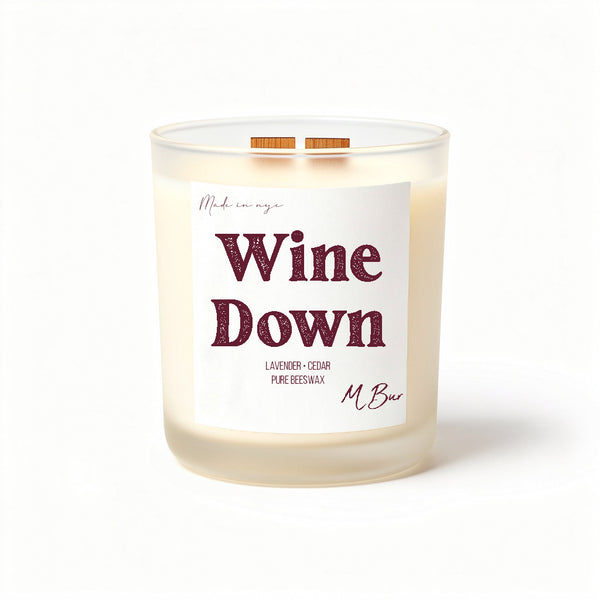
"Absolutely loved the Wine Down candle! The scent is so light and clean, not overpowering at all, which is exactly what I look for. A lot of other candles tend to give me headaches, but this one was a total game changer. I was able to enjoy the calming aroma without any discomfort." Nicole D.
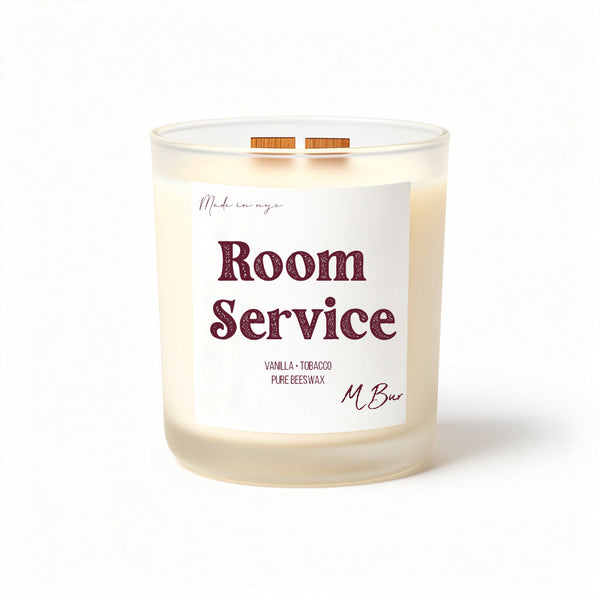
Nicole's experience is one we hear frequently. The Wine Down candle, with its lavender, chamomile, sage, rosemary, camphor, cedar, and sandalwood notes, was designed for winding down at the end of the day. Its scent fills a room without the aggressive chemical throw that triggers headaches or irritation. Every MBur candle is made from 100% beeswax with wooden wicks, phthalate free fragrance, and zero chemical dyes, which checks every box on the safe ingredient list above.
How to Burn a Candle Safely in a Home With a Baby
Even with the cleanest candle on the market, how you burn it matters. These are practical guidelines, not suggestions.
Never burn a candle in the nursery or any room where your baby sleeps. Period. Even beeswax. The combustion process, however clean, still produces some level of particulate matter, and a sleeping baby's room should have the cleanest possible air.
Burn in a well ventilated common area. The living room with a window cracked is fine. The bathroom with the door shut is not.
Trim the wick before every burn. For wooden wicks, snap or trim to about 3/16 of an inch. For cotton wicks, trim to 1/4 inch. A longer wick produces a larger flame, more soot, and more particulate matter.
Keep burn sessions to two hours or less. Longer burns mean more compound accumulation in the air. Light it, enjoy it, put it out.
Use a snuffer instead of blowing it out. Blowing out a candle releases a burst of smoke and soot. A snuffer cuts the oxygen cleanly.
Air out the room before bringing the baby in. If you burned a candle in the living room while the baby napped in the bedroom, open a window for ten minutes before bringing them into that space.

A Note About Candle Warmers
Candle warmers seem like an obvious workaround because they eliminate the flame and therefore the combustion byproducts. That is partly true. You avoid soot and smoke. But the warmer still heats the wax and releases the same fragrance compounds into the air. If the candle contains toxic fragrance oils, a warmer does not make those oils any safer. It just delivers them without the soot. The fragrance itself is still the issue for a baby with sensitive skin or respiratory concerns.
Frequently Asked Questions
Can candle fragrance cause skin rashes on my baby?
Yes. Babies have thinner, more permeable skin than adults, and airborne fragrance chemicals can settle on skin and trigger contact dermatitis, hives, or eczema patches. Choosing a candle with phthalate free, non toxic fragrance significantly reduces this risk.
How long do beeswax candles actually burn?
Beeswax has the highest melting point of any candle wax, so it burns longer per ounce than soy or paraffin. MBur's largest size burns for approximately 80 hours. The 20 hour size starts at $20, which makes it a reasonable way to test whether beeswax works for your household.
Is it okay to burn a candle in the living room if my baby is in the next room?
Generally yes, as long as the living room is well ventilated and you air it out before bringing the baby into that space. The key variables are ventilation, burn duration, and candle ingredients. A 100% beeswax candle with non toxic fragrance in a ventilated room, burned for under two hours, is a very different situation than a paraffin candle in a closed space.
Are essential oil candles safer for babies?
Not necessarily. Essential oils are potent compounds, and some (like eucalyptus and peppermint) can be strong respiratory irritants for infants even in their natural form. "Essential oil" on a label does not automatically mean safe for a baby. The full ingredient profile of the candle, including the wax, wick, and whether those oils are diluted in a phthalate free base, matters more than the source of the scent.
What if I just want a candle that smells good and will not make my baby's symptoms worse?
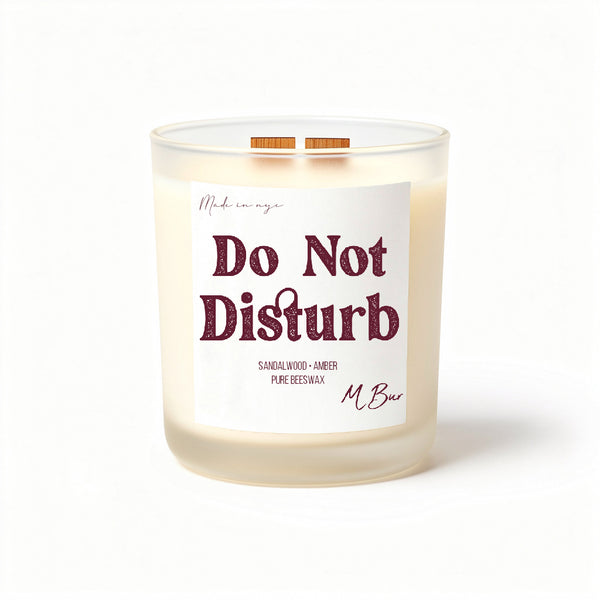
Look for 100% beeswax (not a blend), a wooden or untreated cotton wick, phthalate free fragrance, and no chemical dyes. Burn it in a ventilated room away from where your baby sleeps, trim the wick, and keep sessions short. The Do Not Disturb candle, with its bergamot, pear, vanilla, and sandalwood notes, is a gentle option that parents with sensitive households tend to reach for.
The Bottom Line
You do not have to give up candles entirely because your baby has reflux or sensitive skin. You do have to give up the cheap ones made from petroleum wax and undisclosed fragrance chemicals. The difference between a candle that irritates your baby and one that does not comes down to four things: the wax, the wick, the fragrance, and how you burn it.
MBur candles are 100% beeswax, wooden wick, phthalate free fragrance, no chemical dyes, handmade in Queens, New York. They are naturally hypoallergenic and produce the least soot of any candle wax type. If you have been hesitant to light anything in your home since the baby arrived, these are a solid place to start. Explore the full collection here.
"I absolutely love these candles! I instantly notice the difference in the air quality, in comparison to the Bath & Body scented candles. I love Bath & Body's candles but I acknowledge that it caused a slight headache and other minor respiratory discomfort. Awesome products. Totally addicted." Jason H.
If you have specific medical concerns about your baby's reflux or skin condition, always follow your pediatrician's guidance first.
Related reading

