

Why Your Cheap Candles Are Making You Feel Worse (And What Burns Better)
You light a candle after a long day, sink into the couch, and twenty minutes later you have a headache you cannot explain. You figure it is stress, or the weather, or the fact that you stared at a screen for nine hours. But then it happens again, and again, and always when the candle is burning.
There is usually a real chemical reason candles cause headaches. The cheap, mass-produced candles in nearly every big box store are packed with ingredients that irritate your airways, disrupt hormones, and make the air inside your home worse than the air outside. That last part is not a scare tactic. The EPA has documented that indoor air can be two to five times more polluted than outdoor air, and candles can contribute.
By the end of this post you will know what is in the candles making you feel off, why it happens, and what a genuinely clean-burning beeswax candle does differently. No vague wellness language, just the breakdown. If you want to browse while you read, the full MBur beeswax candle collection is 100% beeswax with phthalate-free fragrance.
The Real Reason Cheap Candles Give You Headaches
Start with the wax, because that is where most of the damage happens. The overwhelming majority of candles sold at drugstores, grocery stores, and big box retailers are made from paraffin. Paraffin is a petroleum byproduct, a refined form of crude oil residue that gets bleached and deodorized before it is poured into a jar with a pretty label.
When paraffin burns, it can release volatile organic compounds including benzene and toluene. Benzene is a known carcinogen, the same chemical found in cigarette smoke and car exhaust. Toluene is a recognized toxin used as a paint solvent. Research has documented that scented candles can emit these compounds during normal household use. Neither belongs in your living room.
The soot that coats your walls and collects on your jar lids is incompletely burned paraffin, and it is going into your lungs too.
The Fragrance Is Often the Bigger Problem
Paraffin is problem number one. Fragrance is problem number two, and for most people who get headaches it might be the bigger issue.
Under US labeling rules, thousands of chemical ingredients can be grouped under a single word on a label: fragrance. That one word can represent dozens of undisclosed chemicals, many of which are phthalates. Phthalates are plasticizers used to help scent stick to surfaces and last longer, and they are classified as endocrine disruptors, meaning they interfere with hormone function. Research has linked phthalate exposure to hormone disruption and respiratory irritation.
So when a candle gives you a headache, the trigger is often the chemicals carrying the scent rather than the scent itself, the fixatives and plasticizers the fragrance is built on. That is a meaningful distinction, because switching to a candle that uses phthalate-free fragrance can make a real difference even if you keep burning the same scent profile you love.
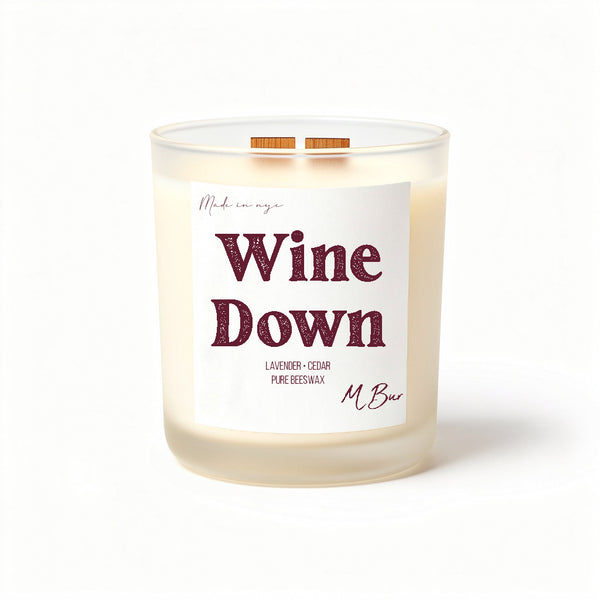
The Wine Down beeswax candle from MBur is a good example. It is lavender, chamomile, sage, rosemary, cedar, and sandalwood, the kind of scent you would expect from any spa candle. Unlike most spa candles, it uses man-made phthalate-free fragrance, so what you are inhaling is the scent, not a cloud of endocrine-disrupting plasticizers. The 20-hour size starts at $20.
The Third Problem: Metal-Core Wicks
Most people do not think about wicks at all. They are easy to overlook, but the wick matters too.
Cheap candles often use cotton wicks with metal cores, typically zinc or tin, to keep the wick upright. When those wicks burn, they can release trace amounts of heavy metals into the air. Lead-core wicks were banned in the US in 2003, but zinc and tin wicks are still common, and research on their long-term inhalation effects is limited at best.
Wooden wicks, like the ones MBur uses, skip this entirely. They are a single natural material that produces a soft crackling sound, a low steady flame, and no metal particles. Several MBur customers specifically mention the wick as something that surprised them.
What Actually Burns Cleaner: A Quick Comparison
Not all candle waxes behave the same way. Here is the honest breakdown.
| Wax Type | Source | VOC Emissions | Soot | Notes |
|---|---|---|---|---|
| Paraffin | Petroleum byproduct | High (benzene, toluene) | Heavy black soot | Cheapest to produce, most widely used |
| Soy | Soybean oil | Lower than paraffin | Less soot, but still present | Often blended with paraffin. Fragrance still matters. |
| Coconut | Coconut oil | Low | Minimal | Clean burn but expensive. Often blended. |
| Beeswax | Honeybee byproduct | Negligible | Near zero | Oldest candle material known. Very high melting point, long burn time. |
The soy candle industry did a good job of positioning itself as the clean alternative to paraffin, and it is better in isolation. But most commercial soy candles are not 100% soy. They are soy blends, and the blending agent is usually paraffin. Unless a soy candle explicitly states it is 100% soy with no blending, you are likely still getting some paraffin in the mix. And if the fragrance is not phthalate-free, you are still inhaling the same plasticizers regardless of what the wax is made from.
Beeswax is genuinely different. It is a single-ingredient wax that requires no chemical processing, no bleaching, and no deodorizing. It is often described as giving off a warmer light closer to natural daylight than paraffin or soy, and many users report that it leaves a noticeably cleaner-feeling room after burning. Some studies suggest beeswax may emit negative ions that help bind airborne particles, though this research is still developing and individual results vary.
The Checklist: What to Look for in a Clean Candle
If you are evaluating candles and want to know whether they are actually clean, here is what to look for.
- 100% single-ingredient wax. Not a blend. If it says soy blend or proprietary wax blend, look closer.
- Phthalate-free fragrance. This should be stated explicitly, not implied.
- No synthetic dyes. Synthetic colorants add more chemicals to what you are inhaling for no functional reason.
- Natural wick material. Cotton or wood, no metal cores.
- Transparent ingredient sourcing. If the brand cannot tell you what is in the candle, that is your answer.
MBur checks every one of these. The candles are 100% beeswax with no blends, man-made phthalate-free non-toxic fragrance only, no synthetic dyes, and untreated wooden wicks. Hand-poured in Far Rockaway, Queens, NY, which means small-batch production with actual quality control rather than an overseas factory churning out millions of units a week.
If you want to go deeper on what makes a candle genuinely clean, our guide to what makes a candle non-toxic walks through the ingredients to look for and avoid.
Practical Tips for Burning Any Candle More Safely
Even if you switch to a clean candle, a few habits will make a real difference in air quality.
Trim your wick before every burn. For wooden wicks, trim to about 1/8 inch. A long wick makes a larger, less stable flame that generates more soot and burns through fragrance faster.
Do not burn for more than four hours at a stretch. Even clean candles benefit from rest periods. Let the wax solidify fully before relighting.
Ventilate the room. Cracking a window slightly during a burn is a simple move that improves air quality.
Keep the candle away from drafts. Drafts cause uneven burning, more soot, and faster wax consumption.
Let the wax pool reach the edges on the first burn. This prevents tunneling and ensures you get the full advertised burn time.
MBur's beeswax candles are rated for up to 80 hours on the largest size, among the longest burn times of any candle wax because beeswax has one of the highest melting points. You can explore the full care guide in our complete beeswax candle care guide.
Frequently Asked Questions
Can candles really cause headaches?
Yes, and the mechanism is well documented. Paraffin candles release VOCs including benzene and toluene, which can cause headaches, dizziness, and respiratory irritation at indoor concentrations. Phthalates in fragrance are also a common trigger. Switching to a clean-burning beeswax candle with phthalate-free fragrance removes these specific triggers.
Are soy candles safe?
Soy wax on its own burns cleaner than paraffin. The problem is that most commercial soy candles are blended with paraffin, and many still use fragrance that contains phthalates. Look for 100% soy with explicit phthalate-free fragrance claims, or skip the blending issue entirely and go with 100% beeswax.
How long do beeswax candles actually burn?
Longer than most other candle waxes. MBur's largest size is rated for 80 hours, backed by customer reviews. Beeswax has one of the highest melting points of any candle wax, which means it burns slower and lasts longer. Our complete burn time guide breaks down how those hours translate across sizes.
What is phthalate-free fragrance?
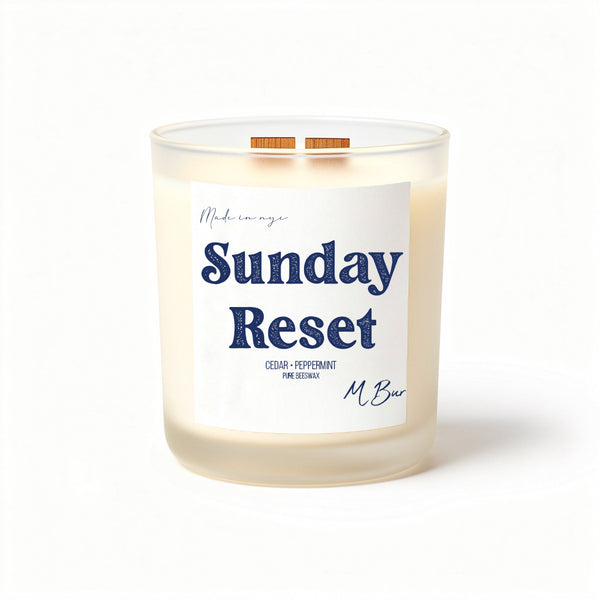
Phthalates are plasticizing chemicals added to fragrance blends to help scent molecules bind to surfaces and last longer. They are endocrine disruptors, meaning they interfere with hormone function. Phthalate-free fragrance uses alternative fixatives that do not carry these risks. All MBur candles, including the Sunday Reset beeswax candle, use phthalate-free fragrance exclusively.
Do wooden-wick candles burn differently than cotton-wick candles?
Yes, in a few good ways. Wooden wicks produce a lower, more stable flame that burns the wax more evenly. They also make a soft crackling sound that many people find relaxing. And because they have no metal core, you are not introducing heavy metal particles into the air.
The Bottom Line
If candles have been giving you headaches, it is almost certainly not candles as a category. It is what those specific candles are made of. Paraffin wax, fragrance containing phthalates, and metal-core wicks are all documented irritants that have no business in your home air supply.
Switching to 100% beeswax with phthalate-free fragrance and a wooden wick removes a problem you should not have had in the first place.
The Wine Down beeswax candle is the most straightforward starting point if headaches have been your issue: lavender, chamomile, sage, rosemary, cedar, and sandalwood, with phthalate-free fragrance, no paraffin, and no dyes, on a wooden wick. The 20-hour size starts at $20 if you want to try a scent before sizing up to the 40-hour at $32 or the 80-hour at $65. It is backed by our 30-day satisfaction guarantee.
Shop the full MBur beeswax candle collection
Related reading
- Candles that won't give you a headache: 7 clean-burning picks for scent-sensitive people
- Do scented candles make your head spin? Understanding the headache triggers
- What makes a candle non-toxic? Ingredients to look for (and avoid)
- Complete beeswax candle care guide: keep every candle burning like new
What buyers say:

