

Why Your Candle Gives You a Rash: Toxic Fragrance, Dyes, and What to Switch To
Why Your Candle Gives You a Rash: Toxic Fragrance, Dyes, and What to Switch To
Your skin started reacting and the only thing that changed was the candle on your nightstand. A rash on your forearm. Redness around your collarbone. Maybe a breakout you wrote off as stress until you noticed the pattern. It happens right when you burn a certain candle, and it clears up a few days after you stop.
There is a name for it: a candle fragrance allergy rash, and it is more common than most people realize.
The good news is that the candles themselves are rarely the issue. The culprits are what is inside most of them: toxic fragrance compounds and synthetic dyes. Once you understand what they are, switching to something that does not wreck your skin is straightforward. This post breaks down why your current candle is causing a reaction, which specific ingredients to blame, and what to look for instead.
If you are already deep in reaction mode and just want the fast answer, jump to our guide to the best candles for allergy sufferers for a full roundup of clean-burning options.
Why This Happens: The Science Behind Candle Fragrance Skin Reactions
Your skin is doing its job. When it encounters a compound it recognizes as a threat, it mounts a response. The rash, the itching, the redness: that is your immune system flagging something it does not want near your body.
Most conventional candles, including many popular mass-market ones, use fragrance blends that contain dozens of individual chemical compounds. The International Fragrance Association maintains a database of thousands of fragrance ingredients, many of which are known allergens and sensitizers. According to research published in dermatology literature, fragrance is one of the leading causes of contact dermatitis, which is the clinical name for the kind of skin reaction you are experiencing.
Here is the part that catches most people off guard. You do not have to touch the candle. You do not even have to sit next to it. Volatile organic compounds, or VOCs, from the fragrance evaporate into the air when the candle burns and settle onto your skin. So a candle burning across the room can still deposit fragrance chemicals onto your arms, your face, and your neck. Over time, repeated low-level exposure sensitizes your immune system, and eventually even small amounts trigger a visible reaction.
This is called sensitization, and it is why someone can burn the same candle brand for two years with no issue and then suddenly start reacting. Your immune system has been building a case the whole time. Then one day it decides it has seen enough.
The Specific Ingredients Causing Your Reaction
Not all fragrance compounds are equal when it comes to skin reactions. A few categories show up repeatedly as triggers.
Phthalates
Phthalates are plasticizing chemicals added to fragrance blends to help the scent stick to surfaces and last longer. They are absorbed through both skin and inhalation. Research from the National Institutes of Health has flagged certain phthalates as endocrine disruptors, meaning they interfere with hormone signaling. For people with already sensitive skin or hormonal conditions, phthalate exposure can accelerate or worsen inflammatory skin responses.
Most mainstream candle brands do not disclose whether their fragrances contain phthalates. The word "fragrance" on a label is a legal loophole that can cover hundreds of undisclosed compounds.
Synthetic Dyes
That deep red, rich purple, or vivid teal wax is colored with synthetic dyes that behave similarly to textile dyes. When the candle burns, those dye compounds enter the air along with the soot. They are not designed for inhalation or skin contact. Some azo dyes, which are common in candle colorants, have been linked to contact dermatitis and respiratory irritation in occupational exposure studies.
If your reaction tends to appear on skin that is exposed to the air in the room where you burn the candle rather than where you physically touched anything, dye particles in the air are a likely contributor.
Benzene and Toluene from Paraffin
Paraffin wax is a petroleum byproduct. When it burns, it releases benzene and toluene, both of which are classified as hazardous air pollutants by the EPA. These compounds do not just affect your lungs. They deposit on your skin the same way secondhand smoke does. For people with eczema, rosacea, or reactive skin, paraffin candle soot is a direct trigger.
A 2009 study from South Carolina State University tested paraffin candles against soy and beeswax alternatives and reported that paraffin released significantly higher levels of toxic compounds, including alkanes, alkenes, and toluene.
Why "Fragrance Free" Is Not Enough
Switching to a candle marketed as "unscented" or "fragrance free" sounds logical, but it often does not solve the problem. Here is why.
Many unscented candles still use paraffin wax and synthetic dyes. The dyes are the issue in that case. A candle can be completely scent free and still release dye compounds and paraffin VOCs that settle on your skin.
Additionally, some "fragrance free" candles use masking fragrances, compounds added to neutralize the natural smell of the wax. These are still fragrance chemicals. They just do not smell like anything. The label says fragrance free but your skin cannot read labels.
What you actually need is a candle that is free from toxic fragrance compounds, free from synthetic dyes, and made from a wax that burns clean. That combination is much rarer than the marketing suggests.
What to Look for Instead: A Practical Checklist
If you have identified that your candle is causing a candle fragrance skin reaction, here is the checklist to use when evaluating replacements.
- Phthalate-free fragrance. The brand should state this explicitly. It should be listed as a product feature, not implied or buried in an FAQ.
- No synthetic dyes. The wax should be its natural color. Beeswax is naturally golden. Soy wax is naturally off-white. Any bright or saturated color is a red flag.
- Non-paraffin wax. Beeswax and soy wax are the two main alternatives. Beeswax burns cleaner because it has the highest melting point of any candle wax, which means it releases fewer unburned compounds into the air.
- Cotton or wooden wicks without metal cores. Some cotton wicks use metal cores to keep them upright. When those burn, the metal compounds go airborne. Wooden wicks and untreated cotton wicks are safer options.
- Transparent ingredient disclosure. If a brand cannot tell you what is in the fragrance, that is information.
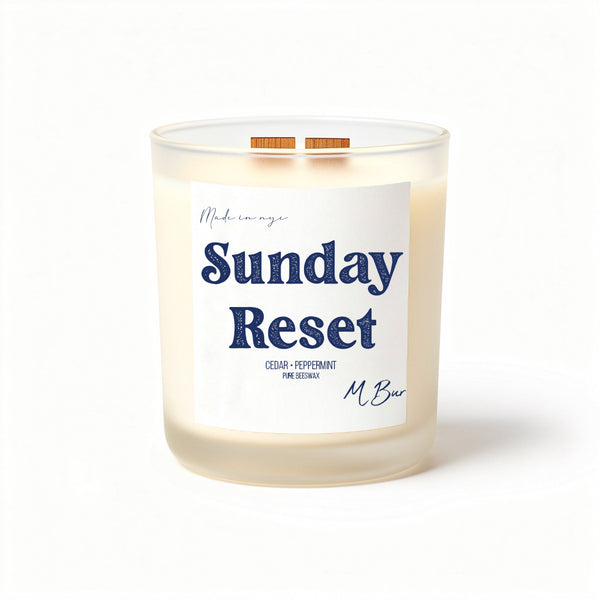
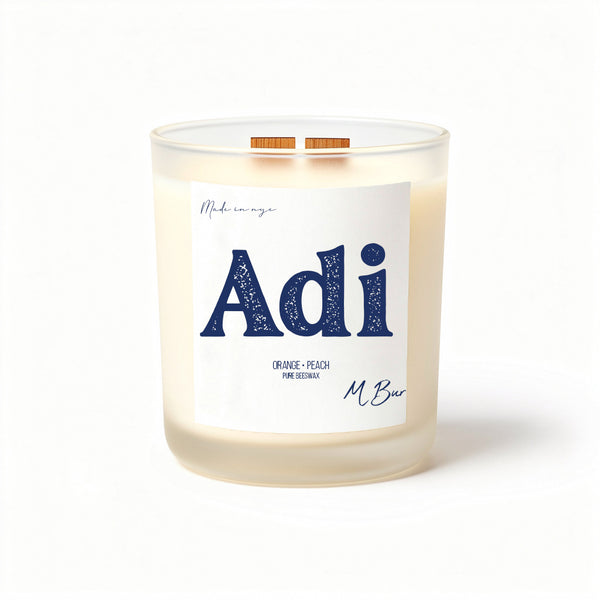
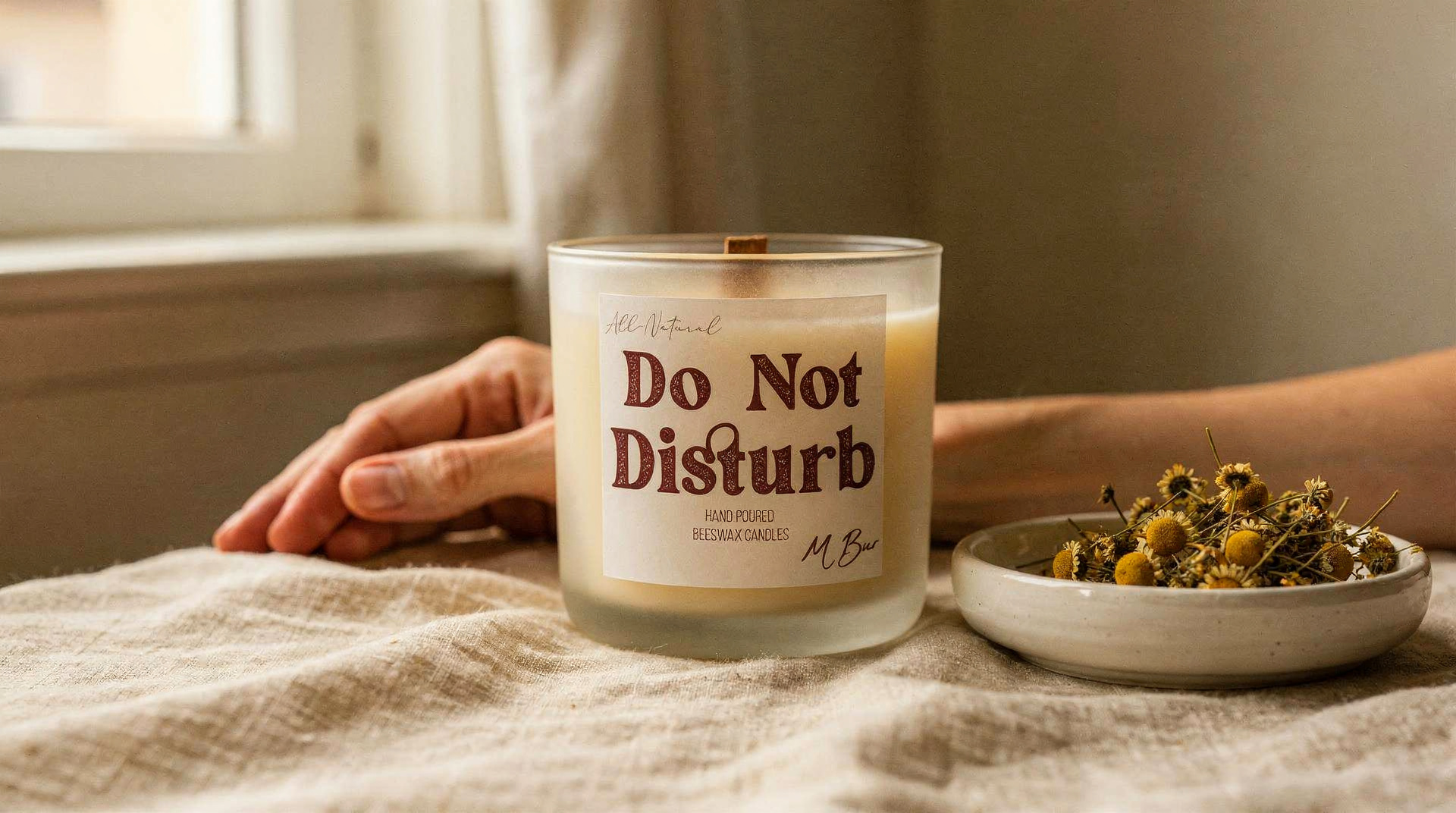
MBur's full beeswax candle collection checks every one of those boxes. Every candle uses 100% beeswax with no added dyes, phthalate-free non-toxic fragrance, and wooden wicks with no metal cores. The wax itself is a single ingredient, not a blend padded with paraffin.
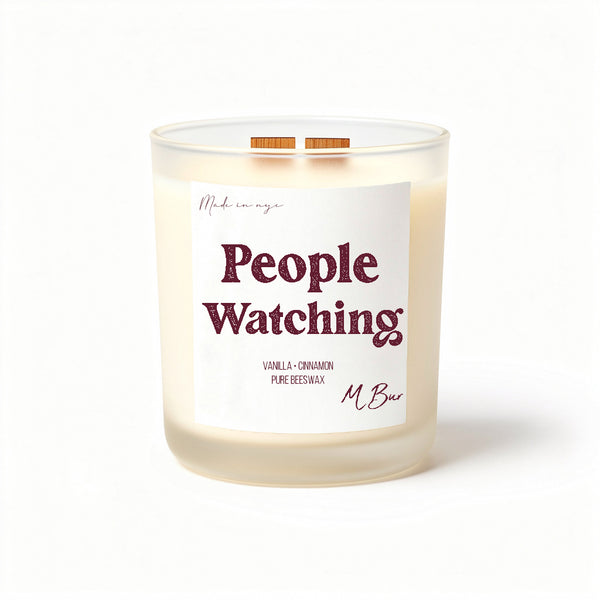
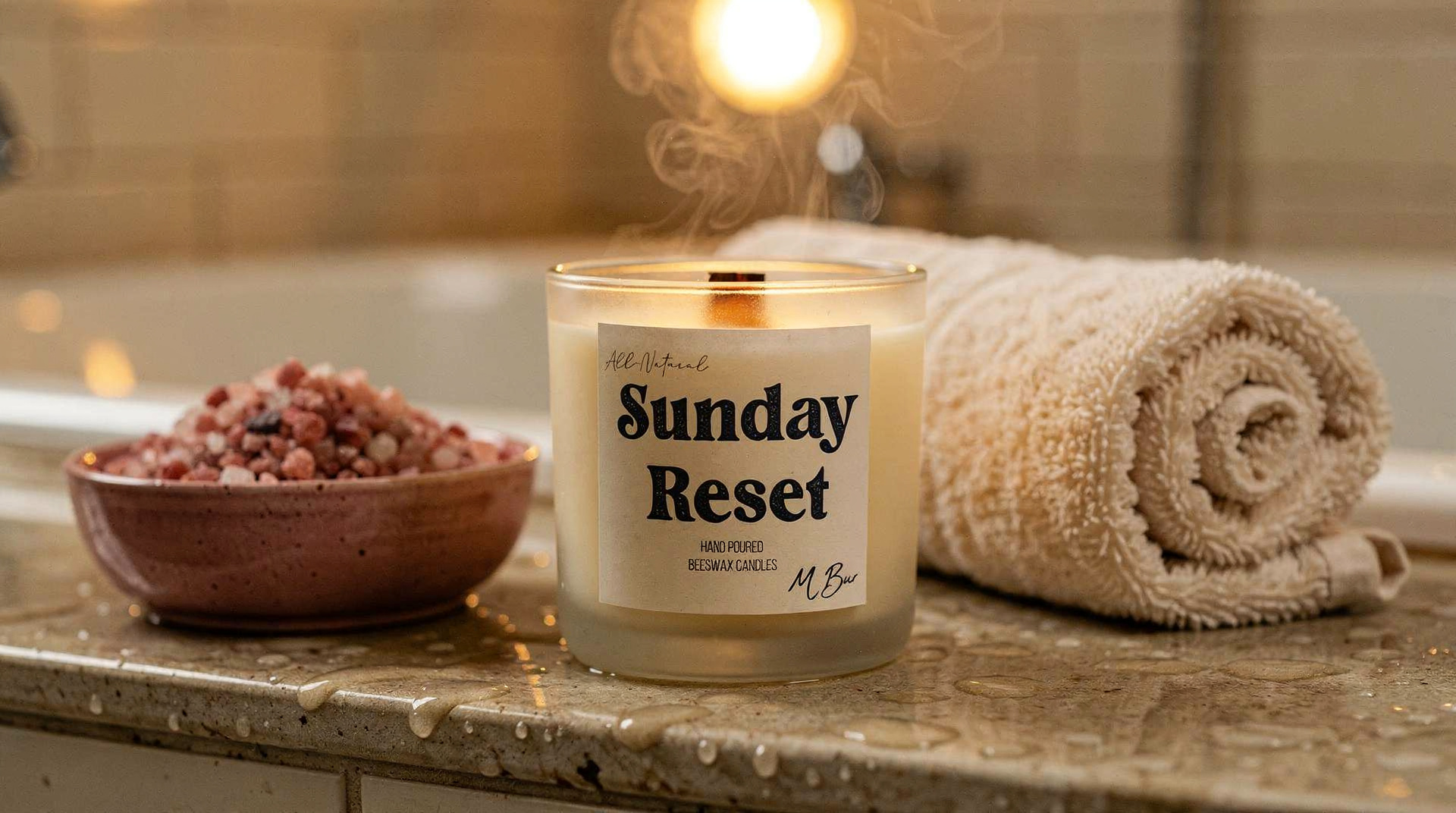
"I absolutely love these candles! I instantly notice the difference in the air quality, in comparison to the Bath and Body scented candles. I love Bath and Body's candles but I acknowledge that it caused a slight headache and other minor respiratory discomfort. Awesome products. Totally addicted." Jason H., Sunday Reset Candle
Jason is not alone. That pattern of switching from a mainstream brand and immediately noticing a physical difference is something we hear consistently. The ingredient difference is real, and your body notices it before your brain does.
The Beeswax Difference for Reactive Skin
Beeswax is the oldest candle material in human history, used for over 5,000 years. That long history means it is one of the most studied and well-understood candle materials, with a safety record about as long as it gets.
Here is why beeswax specifically is better for people with candle fragrance skin reactions. Beeswax has the highest melting point of any candle wax, which produces a slower, cooler burn. A cooler burn means fewer aerosolized particles. Fewer particles in the air means less material landing on your skin.
Beeswax also does not require chemical processing to become a candle-ready material the way paraffin does. Paraffin goes through hydrogenation, bleaching, and de-oiling before it is usable, and each of those processing steps can leave chemical residues. Beeswax goes from the hive to the pour with minimal intervention.
And unlike soy wax, which is often blended with paraffin to improve performance, a 100% beeswax candle is exactly what the label says. One ingredient, nothing hidden.
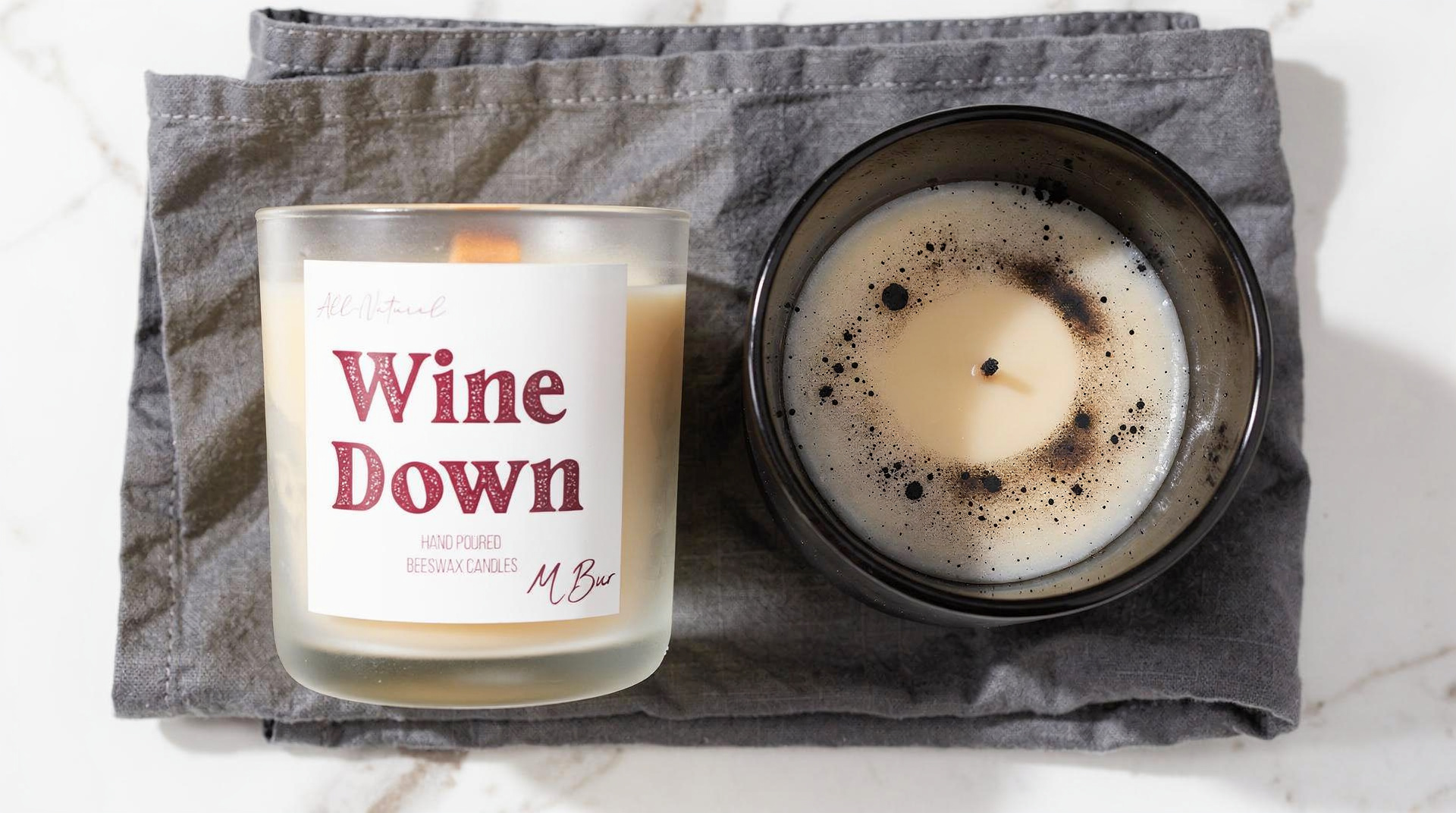
For people specifically managing skin sensitivity, the Wine Down beeswax candle (starting at $20 for the 20-hour size) is designed for exactly the kind of low-key, longer burn that works best in enclosed spaces like bedrooms and bathrooms. The fragrance is light and non-aggressive, which matters when you have been dealing with reactions.
Practical Tips to Reduce Reaction Risk While You Transition
If you are still working through your current candle stash or waiting on a new order, these habits will reduce your exposure in the meantime.
Ventilate consistently. Open a window or run a fan to move air through the room when burning. This does not eliminate the compounds but reduces their concentration in the air around you.
Do not burn for more than two to three hours at a time. Longer burns accumulate more airborne compounds. Shorter sessions give the air time to clear between burns.
Keep distance. The closer you sit to a burning candle, the higher your skin exposure. If you are reacting, burn the candle in a room you are not sitting in and let the scent carry naturally.
Trim the wick before every burn. A longer wick produces a larger flame, which means more soot and more aerosolized compounds. For wooden wicks, clear any charred wood from the tip before relighting.
Stop burning the candle that triggered the reaction. This sounds obvious, but a lot of people keep trying to troubleshoot while still using the offending product. Remove the trigger first, then test alternatives one at a time so you can identify what works for your skin.
Frequently Asked Questions
Can a candle really cause a skin rash even if I never touch it?
Yes. Volatile compounds from toxic fragrance and burning dyes aerosolize and settle onto any exposed skin surface in the room. You do not need direct contact for a candle fragrance allergy rash to develop. For more context on what is getting into your air, read our breakdown of what phthalate free candles actually mean for your air quality.
How do I know if it is the fragrance or the dye causing my reaction?
Test a dye-free, unscented candle made from beeswax or clean soy. If the reaction clears, the dye was likely a contributor. If you still react to a scented but dye-free version, the fragrance compounds are the primary trigger. Process of elimination is the most reliable method.
Are soy candles safe for people with fragrance sensitivities?
Soy wax is better than paraffin, but the wax alone is not the whole story. Many soy candles use the same toxic fragrance blends and synthetic dyes as paraffin candles. A soy candle with phthalate-loaded fragrance and synthetic colorants is not meaningfully safer. The fragrance and dye ingredients matter as much as the wax type.
What is the safest candle to burn if I have eczema or rosacea?
Look for 100% beeswax with no added dyes, phthalate-free fragrance, and a wooden or untreated cotton wick. Our full roundup of hypoallergenic candles for sensitive skin covers the specific options that check every box.
Will switching candles actually clear up my skin?
For reactions caused by candle fragrance or dye exposure, removing the source typically resolves the reaction within days to a couple of weeks. If your skin does not improve after switching to a clean-burning candle and stopping use of the old one, consult a dermatologist. Candle ingredients may not be the only trigger in your environment.
The Bottom Line
A candle fragrance allergy rash is a direct response to toxic fragrance compounds, synthetic dyes, or paraffin soot landing on your skin and triggering an immune reaction. The fix is straightforward: switch to candles that do not put those compounds into the air in the first place.
Every MBur candle is built on the same formula: 100 percent beeswax, no synthetic dyes, and phthalate-free fragrance. Each one is handmade in Far Rockaway, Queens, NY, with ingredients you can actually account for.
If you are not sure where to start, the 20-hour size at $20 lets you test an individual scent before committing to a larger size. It is the lowest-risk way to find out which scents work for your space and your skin.
Ready to stop reacting and start actually enjoying your candles? Browse the full MBur beeswax candle collection and find your clean-burning match.
What buyers say:
Related reading:

