

Why Frosting on Soy Candles Isn't a Problem (and How to Avoid It)
That patchy white film creeping across the top of your soy candle is soy wax frosting. It looks like dust. It looks like the candle went bad in the drawer. It did neither.
Frosting is a natural property of soy wax, and it says something good about what you bought. It shows up on pure wax and hides on cheap blends. If you want a candle that stays clean and burns clean, you might actually want a bit of frost, which is one reason pure beeswax candles behave the way they do too. But first, what is that white stuff, really?

The white film is crystals, not decay
Frosting is the growth of tiny crystals on the surface of the wax. That is the whole thing. No mold. No dust. No spoilage.
Soy wax is polymorphic. That means it can form different crystal shapes at different temperatures. Explained plainly: the wax can set in more than one pattern, and it keeps rearranging itself as it cools and ages.
The wax is also a mix of long molecules. Each one melts at its own point. As the candle cools, the lower-melting parts drift toward the surface. Some of the natural stearic acid in soy does the same. When they reach the top, they crystallize. You see white.
Why this only happens to the good stuff
Here is the part that flips the whole worry on its head. Frosting is a sign of pure soy wax made without additives to hide it.
Mass-market candle factories often add chemicals to stop frosting before it starts. That keeps the top looking glassy on the shelf. It can also work against the wax's natural burn and scent.
Blended waxes frost less too. When you mix soy with paraffin, the different wax types get in the way of soy's crystal growth. Less frost, but you have also added petroleum wax to the pour.
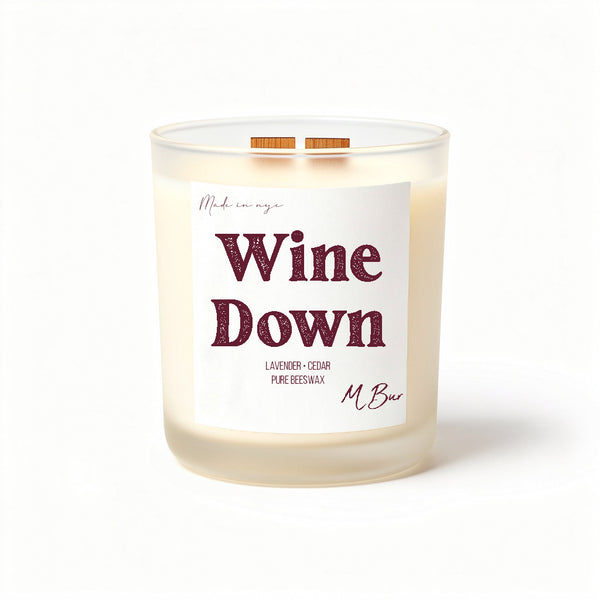
So the smooth, frost-free candle in the store is not always the cleaner one. A little bloom on the surface can mean nobody messed with the wax. That is why we skip the frost-blockers on our own Wine Down beeswax candle, which reads clean and burns clean without any cosmetic tricks. Its notes are lavender, chamomile, sage, rosemary, camphor, cedar, and sandalwood.
One customer put the appeal of a clean, gentle burn better than we could:
"Absolutely loved the Wine Down candle! The scent is so light and clean, not overpowering at all, which is exactly what I look for. A lot of other candles tend to give me headaches, but this one was a total game-changer. I was able to enjoy the calming aroma without any discomfort." Nicole D.

What actually makes frosting worse
Now that you know it is harmless, you may still want less of it. Fair. A few things speed frosting up.
Heat and handling during the pour
Overheating the wax speeds frosting up. Pouring too hot also causes discoloration and sinkholes. Stirring the melted wax hard makes it worse too, because agitation kicks off faster crystal growth and traps air.
Color
Color makes frosting stand out. White crystals on white wax barely show. White crystals on a dyed candle look dramatic. This is one more reason we use no chemical dyes.
Time
Soy keeps curing for weeks after the pour. You might buy a smooth candle and watch frost appear a month later. Each burn can also form new crystals as the wax melts and resets.
How to reduce frosting on soy candles
If you make your own soy candles, a few habits cut down the bloom. None of them will stop it forever. Soy will always frost eventually.
- Pour at the right temperature. Do not overheat the wax. Pour on the cooler side rather than screaming hot.
- Warm your glass first. Preheating the container to a gentle warmth helps the top set smoother. A warm oven on its lowest setting works.
- Stir gently. Slow and steady. Hard stirring adds air and speeds crystals.
- Cool at room temperature. Keep candles away from drafts. Aim for a steady room, around 22C, so the temperature does not swing while it sets.
- Elevate while cooling. A wire rack keeps the base from losing heat too fast and cooling unevenly.
- Let it cure. One to two weeks in a stable spot lets the internal structure settle before you burn or gift it.
If you buy your candles rather than make them, the fix is easier. Frost melts. The first time you light a frosted candle, the top layer softens and the white vanishes into a clear melt pool.

The clean-burn checklist
Frosting is a distraction from the thing that actually matters, which is what the candle puts into your air. Use this to judge a candle:
- Single-ingredient wax, not a mystery blend
- No petroleum wax like paraffin
- Phthalate-free fragrance
- No chemical dyes
- A wick you can trust, cotton or wood, not metal-core
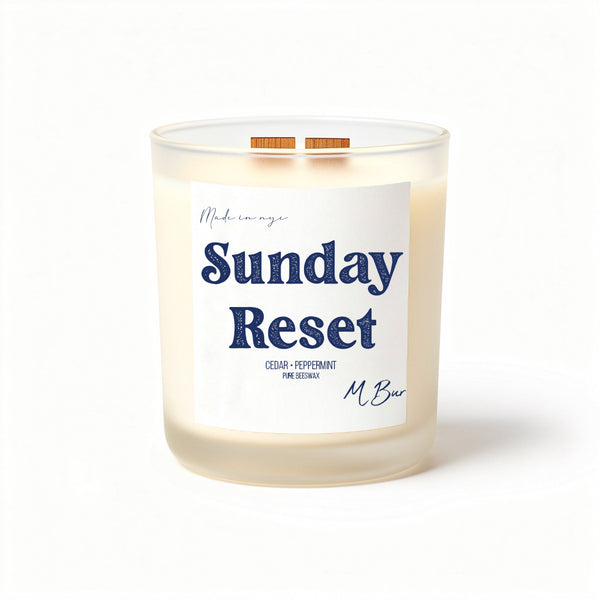
Our candles are made from 100% beeswax, a single wax with the highest melting point of any candle wax, so it gives the longest burn. We pair it with wooden wicks and phthalate-free fragrance. Beeswax also frosts a little as it ages, for the same honest reason soy does. If you want a clean start to your day, our Sunday Reset candle carries notes of eucalyptus, clove, cedar, patchouli, and vanilla. The 40-hour size is $32 and the 80-hour size is $65.
Why beeswax over soy in the first place
Soy is a real upgrade over paraffin. Still, a lot of soy candles on the market are soy blended with paraffin, and the label rarely spells that out.
Beeswax skips the blend entirely. It is a naturally occurring wax and the oldest candle material, used since about 5,000 BCE. It burns with a warm light close to natural sunlight. It is naturally hypoallergenic, which readers who react to other candles tend to notice fast.
You may worry that giving up soy means giving up scent throw. A clean beeswax candle with a wooden wick still fills a room, and it holds the scent without the petroleum load.
Frequently asked questions
Does frosting hurt my candle's performance?
No. Frosting is only cosmetic. It does not change how the candle burns, how long it lasts, or how it smells. You can see this for yourself with any candle from our beeswax collection: light it and the surface goes clear.
Is frosting a sign of mold or a defective candle?
No. It is a natural property of vegetable and beeswax candles, not mold, dust, or a defect. A frosted candle still burns and smells exactly as it should.
Why do only soy and beeswax candles frost? Does paraffin?
Natural waxes like soy, coconut, and beeswax bloom because their molecules crystallize as they cool. Paraffin has a more uniform structure and rarely frosts. A frost-free paraffin candle is smoother to look at and made from petroleum.
Why did frost show up months after I bought the candle?
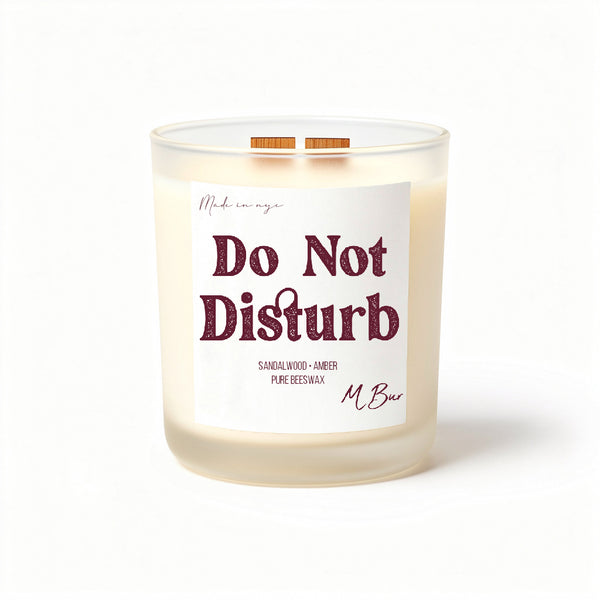
Natural wax keeps curing for weeks after it is poured. Crystals keep forming as the wax settles into room temperature, and each burn can start new ones. A gentle option for nightstand use is our Do Not Disturb candle, with notes of bergamot and pear.
Can I remove frosting after it appears?
Yes. Wave a hair dryer or heat gun a few inches from the surface until the frost melts smooth. Or just light the candle and let the first burn clear it.
The takeaway
Frosting on soy is a beauty mark, not a flaw. It tells you the wax is pure and nobody added chemicals to fake a flawless top. The thing worth caring about is a clean burn from a single, honest wax.
For that, we would point you to our 100% beeswax Sunday Reset candle, a fresh, clean pour with wooden-wick crackle and an 80-hour burn in the largest size ($65). Readers who react to other candles keep telling us the same thing, that they can finally burn something without a headache. Shop the beeswax collection and see the difference for yourself.
Related reading

