

Why Beeswax Candles Burn Longer: The Science of Long Lasting Candles
Beeswax has been lighting rooms for over 5,000 years, which makes it the oldest candle material humans ever figured out. That kind of staying power is not a coincidence. Beeswax also happens to burn longer than almost anything else you can pour into a jar, and the reason comes down to chemistry most people never think about.
If you have ever bought a candle that vanished in what felt like two movie nights, you already understand the frustration. The good news is that our full beeswax candle collection is built around exactly this problem. But before you shop, it helps to know why some waxes go the distance and others burn out fast.
What Actually Makes a Candle Burn Slowly
A candle is a slow, controlled fire. The wick pulls up melted wax, the flame vaporizes it, and that vapor is what burns. Anything that makes wax harder to melt makes the whole process slower.
This is where wax type does the heavy lifting. Different waxes melt at different temperatures, and the higher that melting point, the more heat energy the flame needs before it can turn solid wax into fuel.
Beeswax has the highest melting point of any common candle wax, sitting around 62 to 65 degrees Celsius (144 to 149 degrees Fahrenheit). Paraffin melts lower, and soy is all over the place depending on how it was processed. That temperature gap is a big part of why beeswax simply lasts longer.

The Molecular Reason Beeswax Goes the Distance
Beeswax is dense. It clocks in around 0.96 grams per cubic centimeter, which means there is more actual fuel packed into the same size candle. More fuel plus a higher melting point equals a slower, steadier burn.
The structure matters too. Beeswax is made up mostly of long chain monoesters and diesters, with some straight chain hydrocarbons and free fatty acids in the mix. Those long, heavy molecules take more thermal energy to break apart and vaporize. The flame has to work harder, so the candle burns down more gradually.
Research and material testing consistently show beeswax burning roughly 30 percent longer than paraffin or soy candles of the same weight and size. In pillar form the difference can be even more dramatic. A large beeswax pillar can push past 110 hours where a comparable paraffin one might tap out closer to 60.
How the Common Waxes Stack Up
| Wax type | Melting point | Relative burn time | Notes |
|---|---|---|---|
| Beeswax | 62 to 65 C (144 to 149 F) | Longest | Densest wax, natural honey undertone, no petroleum |
| Soy | 49 to 68 C (varies widely) | Medium | Better than paraffin, often blended with other waxes |
| Paraffin | 58 to 62 C (136 to 144 F) | Shortest | Petroleum byproduct, burns fast, produces more soot |
One thing worth flagging: a lot of candles labeled "beeswax" are actually blends. Manufacturers cut real beeswax with cheaper paraffin or soy while keeping the good word on the label. That blend burns faster and dirtier than the pure stuff, which defeats the whole reason you reached for beeswax in the first place.
When we say 100 percent beeswax at MBur, we mean single ingredient wax with nothing else stirred in. That purity is why our candles hit their full burn time instead of the marketing version of it.

Burn Time You Can Actually Plan Around
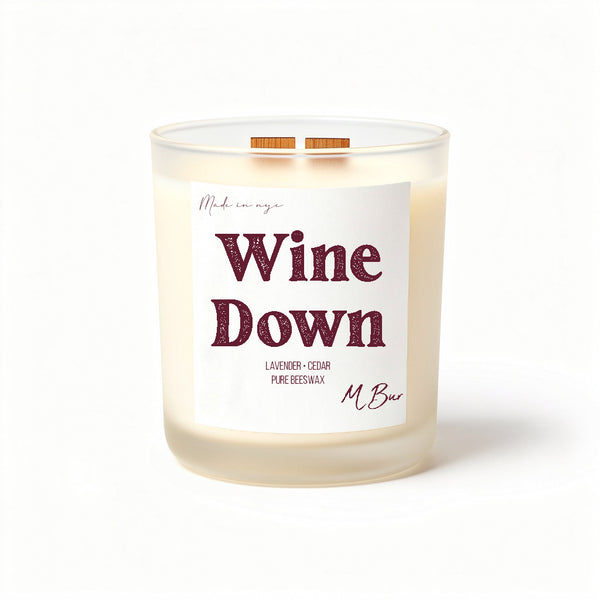
Because pure beeswax burns so slowly, our sizes are named for their hours rather than guesswork. The Wine Down candle comes in a 20 hour size at $20 all the way up to an 80 hour size at $65, and that 80 hour figure is the longest burn of any candle wax thanks to that high melting point. Wine Down leans into lavender, chamomile, sage, and rosemary, so it earns its keep on the nights you actually want to slow down.
Customers notice the difference. One reviewer put it plainly:
"From the packaging to the burn of the candle everything was top notch! Candle burned slowly and was exactly the amount of hours the company said it would burn. I was able to enjoy it for days even though it was the smaller size." Portia Darby
That is the whole point of a long lasting candle. You buy it once and it keeps showing up for you.
The Wooden Wick Factor
Wax gets most of the credit, but the wick controls the flame. Ours are wooden, which burn evenly and give off that quiet crackle people tend to love. A steady, controlled flame melts wax at a consistent rate instead of flaring and gulping fuel, which protects your burn time.
A flame that is too tall burns through wax fast and throws off soot. A flame that is too short drowns in its own wax pool and tunnels. The wick is what keeps that flame in the sweet spot, and a well made one does that shift after shift.
How to Get Every Hour Out of Your Candle
Even the best wax can be shortchanged by bad habits. A few small moves protect your burn time.
Nail the first burn. Let the wax melt all the way to the edges of the container the very first time you light it, which usually takes a couple of hours for a jar. Beeswax has a memory. If it tunnels on burn one, it will keep tunneling and waste the outer ring of wax for good.
Trim the wick. Keep it around a quarter inch before every session. A long wick flickers, mushrooms carbon, and speeds up the melt.
Keep it out of drafts. Air currents push the flame around, which melts one side faster than the other and drips wax down the wall. A still spot burns evenly.
Snuff, do not blow. Blowing out a candle sends up a smoke plume and unburned wax vapor. A snuffer, or dipping the wick into the pool and straightening it, kills the flame cleanly and keeps the next light easy.

A Note on the Air Purifying Claims
You have probably read that beeswax candles clean your air. Some studies suggest beeswax releases negative ions as it burns, and those ions can bind to heavier airborne dust and particles. That is genuinely interesting, but a candle is not a mechanical air purifier and we would rather be honest than oversell it.
What we can say with confidence is that a clean burning candle skips the stuff that bothers people. No petroleum soot, no toxic fragrance loaded with phthalates, no chemical dyes. That is why a lot of our customers who used to get headaches from other candles reach for ours instead. If you have a respiratory condition, follow your doctor's guidance, but a cleaner burn is a lower irritant burn.
Frequently Asked Questions
Why do beeswax candles burn longer than soy or paraffin?
Beeswax has the highest melting point of the common waxes, around 62 to 65 degrees Celsius, plus a dense, heavy molecular structure. The flame needs more energy to melt and vaporize it, so it burns slower and lasts longer. You can see the hour ratings for yourself across our full beeswax candle collection.
Do long lasting candles need special care?
They benefit from it. Trim the wick to about a quarter inch before each burn and let the first burn pool all the way to the edges. Both habits prevent tunneling and soot, which protects your total hours.
Are all natural wax candles equally long lasting?
No. Burn time depends heavily on wax type, and beeswax typically outlasts soy or paraffin of the same size by roughly 30 percent. Watch out for candles labeled beeswax that are actually blends, since the added paraffin or soy shortens the burn.
What causes tunneling and how does it affect burn time?
Tunneling happens when the wax burns straight down the center while the outer edges stay solid, usually from short early burns. It wastes a whole ring of wax and cuts your candle's usable life. A proper first burn is the fix, and our guide to the first burn walks through it.
The Takeaway
Beeswax burns longer because it is denser and melts at a higher temperature than any other common candle wax, and pure beeswax delivers the full burn time instead of a blended fraction of it. Pair that with a wooden wick and good burn habits, and one candle carries you through weeks of evenings.
If you want a place to start, Wine Down is a customer favorite that shows off exactly what long lasting looks like. With dozens of five star reviews across the shop, our candles have earned their reputation the slow way. Browse our full beeswax candle collection and pick the burn time that fits your nights.
Related reading

