

Where Does Beeswax Come From? From Hive to Candle
Beeswax is the only candle material that starts inside a living organism. Every other wax on the market, paraffin, soy, coconut, and palm, is either refined from petroleum or processed from agricultural crops. Beeswax is secreted by honeybees, harvested as a byproduct of honey production, and requires zero chemical processing to become a candle. That distinction matters for your air quality, your health, and the beekeeping ecosystems that produce it.
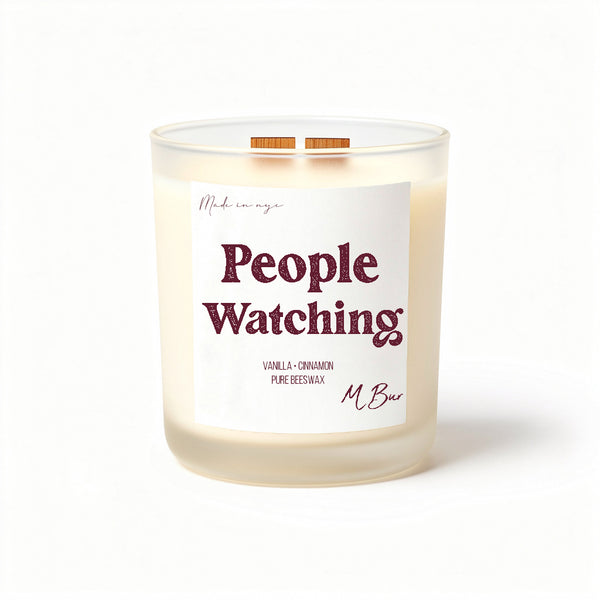
This post covers how beeswax goes from hive to candle: how bees make it, how beekeepers harvest it, how candle makers work with it, and why the sourcing matters more than most people realize. If you want to see the finished product, our full beeswax candle collection is hand-poured in Far Rockaway, Queens, NY.
How Bees Actually Make Beeswax
Beeswax is produced by worker honeybees (Apis mellifera) between 12 and 18 days old. These bees have special wax-producing glands on the underside of their abdomen that secrete tiny, translucent flakes of wax, each one so small it is lighter than a grain of sand. The bees chew these flakes, mixing them with enzymes, until the wax becomes pliable enough to shape into honeycomb.
The numbers behind beeswax production explain why it costs more than other waxes. It takes roughly 1,100 of those wax flakes to make a single gram of beeswax, and to produce one pound of wax, bees consume an estimated 6 to 8 pounds of honey, according to the UN Food and Agriculture Organization's overview of beeswax production. That ratio is why beeswax is inherently more expensive than petroleum-derived paraffin or industrially farmed soy.
The honeycomb itself serves two purposes in the hive: storing honey and providing cells for the queen to lay eggs. The wax structure is remarkably engineered. Hexagonal cells use the least amount of wax to create the maximum storage volume, a geometric efficiency that mathematicians have studied for centuries.
How Beekeepers Harvest Beeswax
Beeswax is always a byproduct of honey harvesting, never the primary product. When beekeepers extract honey from hives, they first remove the thin wax caps (called "cappings") that bees build over each cell of ripened honey. These cappings are the purest form of beeswax because they have had the least contact with brood rearing and hive debris.
The harvesting process works like this. Beekeepers remove frames from the hive, cut or scrape the wax cappings off with a heated knife or uncapping fork, then spin the frames in a centrifugal extractor to pull out the honey. The cappings and any comb that breaks during extraction are collected separately. This raw wax contains honey residue, propolis (bee glue), pollen, and occasionally small debris from the hive.
From there, the raw wax needs to be rendered. Beekeepers melt the wax in water, which separates the pure wax (which floats) from the heavier impurities (which sink). Some producers filter the wax further to remove fine particles. The degree of filtration affects the final product: lightly filtered beeswax retains more of its natural golden color and honey aroma, while heavily filtered beeswax is paler and more neutral.
One important distinction: legitimate beeswax producers never bleach their wax with chemicals. White or ivory beeswax from reputable sources is achieved through natural filtration methods. If a beeswax product is bright white and has no honey scent at all, it may have been chemically bleached, which defeats the purpose of using a natural material.
Why Beeswax Sourcing Matters for Candles
Not all beeswax is the same. The quality varies significantly based on where the bees forage, how the wax is harvested, and how it is processed. This directly affects how your candle burns.
Beeswax color and scent are determined by the flowers the bees pollinate. Bees foraging on clover produce a lighter, milder wax. Bees foraging on wildflowers produce a darker, more aromatic wax. Bees foraging on buckwheat produce a very dark wax with a strong, distinctive scent. This natural variation is normal and actually a sign of authenticity. If every batch of beeswax looks and smells identical, it has been heavily processed or blended with other materials.
Pesticide exposure is a real concern. Bees that forage on conventionally farmed crops can bring pesticide residues back to the hive, which accumulate in the wax over time. The highest-quality beeswax comes from regions with lower pesticide exposure, such as wild or organic forage areas, small diversified farms, or dedicated apiaries away from industrial agriculture.
Country of origin matters too. Most mass-market beeswax is imported, and some of it has documented issues with adulteration, meaning beeswax mixed with cheaper paraffin or stearin to increase volume. Beeswax that can be traced back to specific apiaries, and is subject to stricter quality standards, is easier to trust. You can read more about how we source our beeswax.
How Beeswax Becomes a Candle
Once rendered and filtered, beeswax arrives at a candle maker's workshop as blocks, pellets, or slabs. The candle-making process from there depends on the type of candle being produced.
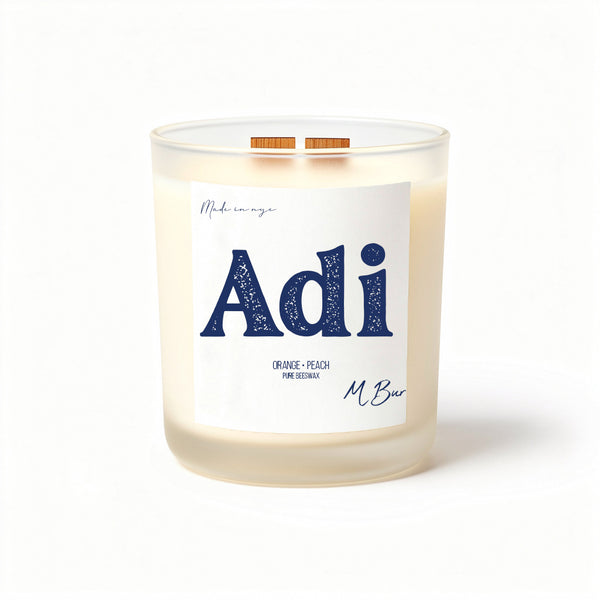
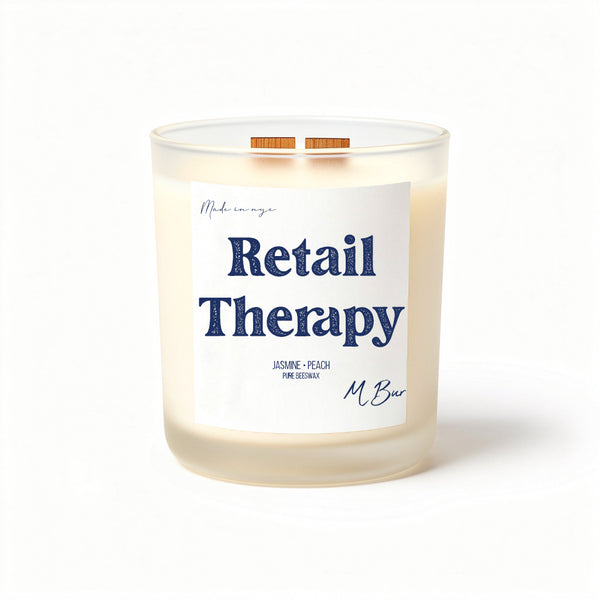
For container candles like the ones we make at MBur, the process involves melting the beeswax to approximately 160 to 170 degrees Fahrenheit, adding phthalate-free fragrance oils at the correct temperature for proper binding, then pouring the scented wax into containers with pre-tabbed wicks. The pour temperature matters. Too hot and the fragrance evaporates before the wax sets; too cool and the wax does not bond properly with the fragrance or the container walls.
Beeswax is more demanding to work with than paraffin or soy. Its higher melting point (approximately 144 to 149 degrees Fahrenheit, versus 115 to 142 for paraffin) means it takes longer to melt, requires more precise temperature control during pouring, and is less forgiving of mistakes. It also holds less fragrance oil by weight than soy, typically a 6 to 8 percent fragrance load compared to 10 to 12 percent for soy. This means the fragrance formulation needs to be more carefully calibrated, because you cannot just add more oil to compensate.
The tradeoff for all this extra effort: beeswax candles burn longer (the high melting point means slower fuel consumption), produce very little soot, and release fragrance more gradually and evenly. A paraffin candle releases its scent immediately and then fades, while a beeswax candle builds slowly and holds steady for hours.
What Makes Beeswax Sourcing Worth the Premium
Where beeswax comes from, and how transparently, changes what you are actually burning. Here is why it matters.
Traceability. Wax that can be traced to a known source lets you verify where it came from, what the bees were foraging on, and how it was processed. Imported beeswax often passes through multiple intermediaries, making it nearly impossible to verify purity or origin by the time it reaches a candle maker.
Purity. Beeswax from reputable suppliers is tested for adulteration. The most common form of beeswax fraud is mixing in paraffin or stearin, which lowers the melting point and changes the burn characteristics. A candle labeled "100% beeswax" that contains even 10 percent paraffin will burn differently and release compounds that pure beeswax does not.
Supporting beekeeping ecosystems. Honeybee populations have faced significant pressure from colony collapse disorder, pesticide exposure, and habitat loss. When you buy products made with responsibly sourced beeswax, the economic demand supports beekeepers who maintain healthy hives. Those hives pollinate roughly one-third of the food crops we eat, so the connection between buying a beeswax candle and supporting agricultural pollination is direct, not abstract.
Footprint. Shorter supply chains mean less shipping and lower carbon impact than beeswax shipped from overseas. Our candles are hand-poured in Far Rockaway, Queens, NY.
How to Tell if a Beeswax Candle Is Genuine
The beeswax candle market has an adulteration problem. Here is how to spot the real thing.
Check for "100% beeswax" on the label. "Made with beeswax" or "beeswax blend" means the candle contains other waxes, often paraffin. The percentage should be stated explicitly.
Look at the color. Pure beeswax ranges from pale yellow to deep golden brown, depending on filtration and floral source. Bright white beeswax may be chemically bleached. Perfectly uniform color across multiple candles suggests heavy processing.
Smell the unlit candle. Pure beeswax has a subtle, naturally sweet honey aroma even before lighting. If a beeswax candle has zero scent cold, it may be heavily filtered or blended. If it smells strongly of something artificial before burning, the fragrance load may be masking a non-beeswax base.
Check the burn. Pure beeswax burns with a warm, steady flame and produces very little black soot. If your "beeswax" candle is leaving soot on your walls or the inside of the jar, it likely contains paraffin.
Check the price. A pure beeswax candle in a standard jar size that costs $15 is almost certainly not pure beeswax. Raw beeswax costs significantly more per pound than paraffin or soy. A genuinely pure beeswax candle reflects that material cost.
FAQ: Beeswax Sourcing and Candle Making
How much does raw beeswax cost compared to other waxes?
Raw beeswax typically costs several times more per pound than paraffin or soy, depending on quality and filtration level. That material cost difference is the primary reason beeswax candles carry a higher price tag. You are paying for a naturally produced material with limited supply, not an industrially manufactured one.
Is beeswax harvesting harmful to bees?
No, when done responsibly. Beeswax is harvested as a byproduct of honey extraction, not as the primary product. Beekeepers remove the wax cappings to access the honey, and bees naturally rebuild the comb. Responsible beekeepers leave enough honey in the hive for the colony to survive, and the wax regeneration process is part of the bees' natural cycle.
Is beeswax vegan?
No. Beeswax is an animal byproduct. For people who avoid animal-derived materials, coconut wax or pure soy wax are the closest alternatives in terms of clean burning, though neither matches beeswax's melting point or burn longevity.
Can I tell where the beeswax in my candle came from?
Only if the brand discloses it. Most mass-market candles do not specify beeswax origin. Brands that care about transparency will state it explicitly. If a brand will not tell you where their beeswax comes from, that is worth noting.
Why does beeswax color vary between batches?
Because beeswax is a natural product. The color depends on the flowers the bees were pollinating, the age of the comb, and the filtration process. Variation is a sign of authenticity. Perfectly consistent color across every batch usually indicates heavy processing or blending with other waxes.
The Bottom Line
Beeswax comes from bees, but the full journey, from wax gland to honeycomb to a beekeeper's uncapping knife to a candle maker's pour, is what makes it worth the premium. It is the one wax that is genuinely natural, needs no chemical processing, and supports the pollinators our food supply depends on.
Shop the full MBur collection of 100% beeswax candles, hand-poured in Far Rockaway, Queens, NY
Related reading
What buyers say:

