

What to Look for on a Candle Label: A Buyer's Checklist
That "beeswax" candle you bought last month? There is a decent chance it is mostly paraffin. In the United States, no federal rule forces a candle maker to disclose the exact wax blend, so a jar can say "beeswax" in big letters on the front and still be more than half petroleum wax underneath. The word on the front tells you what the marketing team wanted you to feel. The fine print, or the total absence of it, tells you what you are actually burning.
Reading a candle label well takes about thirty seconds once you know where to look. Do it right and you stop paying premium prices for glorified petroleum. If you want a shortcut, everything in our full beeswax candle collection is single ingredient wax with the ingredients listed out, which is the whole point of this guide. But you should still know how to vet any candle you pick up, so here is the checklist.
Start with the wax type, because it drives everything else
Wax is the single most important thing on the label, and it is the thing brands are most creative about hiding. The federal Fair Packaging and Labeling Act requires a candle to show what it is and how much it weighs. It does not require the maker to tell you the wax is a blend.
Here is the trap. "Beeswax blend" and "soy blend" are legal terms with no minimum threshold. A candle labeled "beeswax blend" could be 5 percent beeswax and 95 percent paraffin. Same with soy. The word "blend" is your cue to put it down or dig deeper.
Paraffin is a petroleum byproduct, full stop. When it burns it releases volatile organic compounds, and the ones people worry about most are benzene, toluene, and formaldehyde. Soy is a step up, but soy candles are frequently cut with paraffin to lower the price and hold fragrance, and cheap soy often carries the same low quality scent oils. Beeswax is the one wax that occurs in nature with no chemical processing, and it burns the cleanest of the three.

What you want to see on the label: the word "100%" in front of a single wax. "100% beeswax" or "100% soy" means one ingredient, no filler. If the label just says "beeswax" with no percentage and no ingredient panel, treat that as a maybe and look for a full ingredient list somewhere on the jar or the product page.
Check the wick, and check what it is made of
Wicks matter more than most buyers realize. The old danger was metal core wicks, where a thin metal wire ran up the center to keep it standing. Some of those historically used lead, which is banned in the US now, but zinc and tin cores still exist and can add soot and particulate to your air.
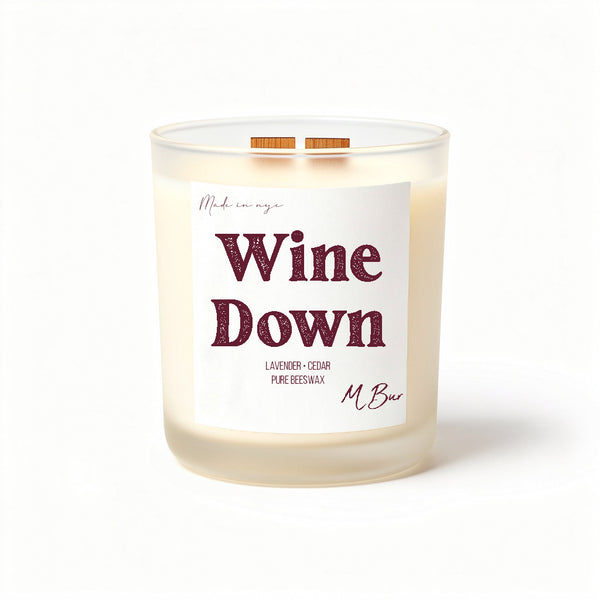
Cotton wicks are the common standard and are fine. Wooden wicks are the upgrade. They burn evenly, they throw scent well, and they make a soft crackle that people tend to love. Our candles use wooden wicks for exactly that reason.
On the label, look for the wick material stated outright. If a candle brags about the vessel and the scent but says nothing about the wick, that silence is usually the answer.
Scent sourcing: the word that hides the most
The word "fragrance" on a label is a catch all. It can legally cover hundreds of undisclosed chemicals, and many candles use toxic fragrances that contain phthalates and parabens. Phthalates help scent linger and are exactly what you do not want off gassing into a closed bedroom.
What you are looking for is a specific commitment: "phthalate free" or "non toxic fragrance," ideally with the scent notes actually listed out. A brand that lists its notes is a brand that knows what is in the bottle. When you can read that a candle is made with jasmine, peach, and black tea rather than just "floral fragrance," you are dealing with someone who sourced their oils on purpose.
"I absolutely love these candles! I instantly notice the difference in the air quality, in comparison to the Bath and Body scented candles. I love Bath and Body's candles but I acknowledge that it caused a slight headache and other minor respiratory discomfort. Awesome products. Totally addicted." Jason H.
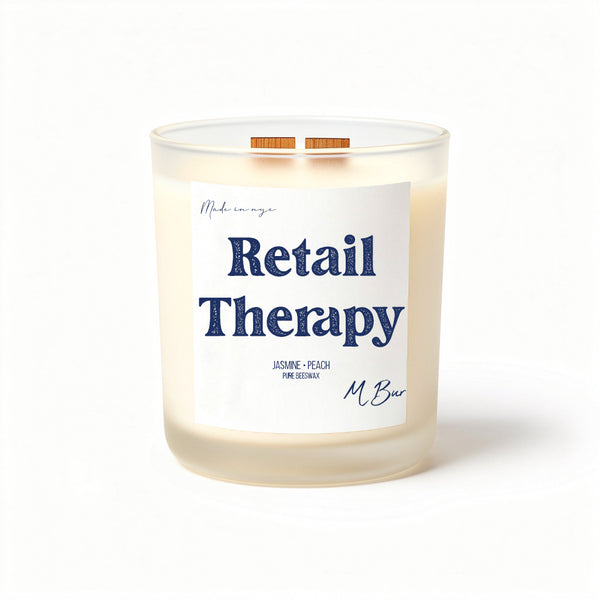
That headache versus no headache gap is almost always a fragrance and wax story. If scented candles have given you trouble before, the Retail Therapy candle lists its notes right on the page, red currant, black currant, jasmine, peach, black tea, amber, anise, and tonka bean, so you know exactly what you are inhaling.
The legally required stuff (and why its absence is a red flag)
A few things are supposed to be on every candle sold in the US. Their presence signals a maker who did their homework. Their absence signals someone cutting corners.
- Statement of identity: what the product is, e.g. "scented candle."
- Net weight: the weight of the wax, fragrance, and dye only, not the jar. Federal rules want this in both ounces and grams, usually near the bottom of the front panel. If a listing gives you jar dimensions but no net weight, you cannot compare value.
- Manufacturer or distributor: a real name and place of business.
- Safety warning: the ASTM F2058 fire safety text. Look for the word WARNING and the three core instructions: burn within sight, keep away from things that catch fire, and keep away from children and pets.
These fire safety labels are technically "voluntary" industry standards, but major retailers require them and consumer protection law requires truthful, non hazardous labeling, so a candle missing them entirely is a sign of an operation that has not been vetted. For the full regulatory picture, the Consumer Product Safety Commission's candle guidance lays out what is expected.

Watch out for medical and "therapeutic" claims
A label that promises a candle will relieve anxiety, cure headaches, or treat any condition is either bending the rules or ignoring them. Health claims can trip FDA drug regulations, and a candle is not a drug. A clean candle is less likely to irritate you, and its scent is a sensory experience, but no candle treats a medical condition. If you have asthma, migraines, or another condition triggered by airborne particulate, follow your doctor's guidance on what you burn indoors.
Size and price per hour: the number nobody prints
Here is where most people overpay. Two candles can cost the same and deliver wildly different value, because burn time is the real unit you are buying. The move is to divide the price by the burn hours and compare the cost per hour.
This is also where wax type comes back around. Beeswax has the highest melting point of any candle wax, which is why it burns the longest. An 80 hour beeswax candle will outlast a same size paraffin candle that claims 40.
| MBur size | Burn time | Price | Cost per hour |
|---|---|---|---|
| Small | 20 hours | $20 | $1.00 |
| Medium | 40 hours | $32 | $0.80 |
| Large | 55 hours | $37 | $0.67 |
| X Large | 80 hours | $65 | $0.81 |
The 55 hour size is the value sweet spot here at about 67 cents an hour. One reviewer put the burn time honesty plainly:
"From the packaging to the burn of the candle, everything was top notch! Candle burned slowly and was exactly the amount of hours the company said it would burn. I was able to enjoy it for days even though it was the smaller size." Portia Darby
Your quick reference candle label checklist
- Wax: Does it say "100%" of a single wax? Avoid the word "blend."
- Wick: Is the material stated? Cotton is fine, wooden is better, avoid metal cores.
- Fragrance: Does it say "phthalate free" or "non toxic fragrance" and list actual scent notes?
- Net weight: Listed in ounces and grams, wax only?
- Maker: Real name and location shown?
- Safety: WARNING text and the three core burn instructions present?
- Claims: No medical or "therapeutic" promises?
- Value: Price divided by burn hours, so you can compare apples to apples.
Run any candle through those eight and you will know in half a minute whether you are buying quality or buying a font choice.
How MBur reads against the checklist
We built the label to answer every one of these before you have to ask. The wax is 100 percent beeswax, one ingredient, no paraffin cut. The wicks are wooden. The fragrance is phthalate free and the notes are listed on every product page, no chemical dyes anywhere. Burn times are printed honestly and range from 20 to 80 hours, and everything is handmade in small batches in New York City. Beeswax is a byproduct of honey production, so buying it quietly supports beekeeping too.
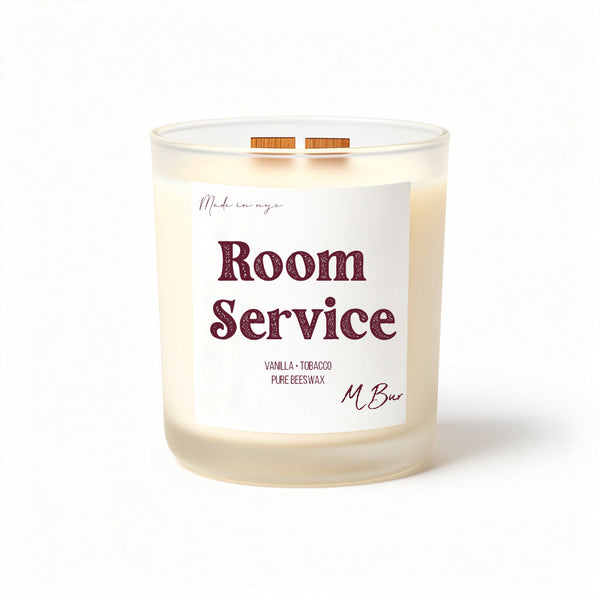
If you want a starting point, the Room Service candle is our bestseller, with notes of saffron, white tea leaves, purple peonies, orchid, tobacco, vanilla, almond milk, and tonka bean. It reads like a five star hotel lobby and checks every box on the list above.

The takeaway is simple. The front of a candle is advertising, and the label is where the truth lives, so learn to read it and you will stop overpaying for petroleum in disguise. Look for one wax, a stated wick, phthalate free fragrance with real notes, and an honest burn time.
MBur candles carry a strong review record across scents, with customers repeatedly noting no headaches and a clean, room filling burn. Ready to see labels that pass the whole checklist? Browse our full beeswax candle collection.
Related reading

