

Are Yankee Candles Really Toxic? What You Need to Know
If a scented candle leaves you with a dull headache or a scratchy throat after an hour in the living room, the ingredient list is worth a closer look. Yankee Candles are made primarily from paraffin wax, a petroleum byproduct, blended with soy and scented with fragrance oils. That combination is legal, widely sold, and not going to poison you in one sitting. It also produces more soot and more airborne compounds than a cleaner wax, which is exactly why sensitive people notice it.
So let us answer the real question honestly, no fearmongering, and then talk about what actually fixes the problem. If you already know you want a cleaner option, you can skip ahead to our full beeswax candle collection.

Are Yankee Candles Toxic? The Honest Answer
Here is the version that respects your intelligence. Under normal use, in a room with some airflow, a Yankee Candle is not going to acutely poison a healthy adult. A frequently cited 2014 study on scented candle emissions found the compounds released stayed below World Health Organization recommended limits under typical conditions.
That is the reassuring part. The less reassuring part is that "below regulatory limits" is not the same as "clean." Paraffin still releases volatile organic compounds like benzene and toluene as it burns, plus particulate matter you can see as soot on the glass and, over time, on your walls.
For most people that means slightly worse indoor air. For people with asthma, fragrance allergies, or a low tolerance for strong scent, it can mean the headache, the cough, or the stuffy feeling that sent you searching in the first place.
Why Paraffin and Fragrance Oils Cause Problems
Paraffin is what is left over after crude oil is refined. It burns fine, it is cheap, and it holds a lot of scent, which is why the big brands love it. The tradeoff is a lower, dirtier burn. Paraffin produces more of that black soot, and that soot is the streak you find on the inside of an old candle jar.
The bigger irritant for a lot of people is the fragrance. On most mainstream labels, the single word "fragrance" stands in for a complex formula the manufacturer is not required to disclose. Those formulas frequently contain phthalates and other compounds that trigger contact dermatitis, allergy symptoms, and headaches in sensitive people.
That is the frustrating catch. You buy a candle to make a room smell good, and the exact thing making it smell good is the thing your body is objecting to.

Paraffin vs. Soy vs. Beeswax
Not all candles behave the same way, and the wax is where most of the difference lives. Here is the quick comparison.
| Wax type | Source | Burn quality | Soot | Notes |
|---|---|---|---|---|
| Paraffin | Petroleum byproduct | Fast, lower melting point | Higher, visible soot | Cheap, holds scent well, releases more VOCs |
| Soy | Soybean oil | Cleaner than paraffin | Lower | Often blended with paraffin, still frequently scented with toxic fragrance |
| Beeswax | Byproduct of honey production | Slow, highest melting point | Minimal | Single ingredient, no chemical processing, longest burn |
Soy is a real step up from paraffin, but read closely, because a lot of "soy" candles are actually soy and paraffin blends. And a clean wax still gets paired with a toxic fragrance more often than you would hope. The wax and the scent are two separate decisions, and both matter.
What Actually Fixes It
The good news is you do not have to give up candles or settle for something that smells like nothing. You just need a candle that solves both problems at once, a clean wax and a non toxic, phthalate free fragrance.
Beeswax is the oldest candle material humans have used, going back to roughly 5,000 BCE, and it is still the cleanest. It is a single ingredient, it needs no chemical processing, and it has the highest melting point of any candle wax, which is why it burns longer and produces almost no soot. It is naturally hypoallergenic too, which is exactly what you want if strong scent has been the trigger.
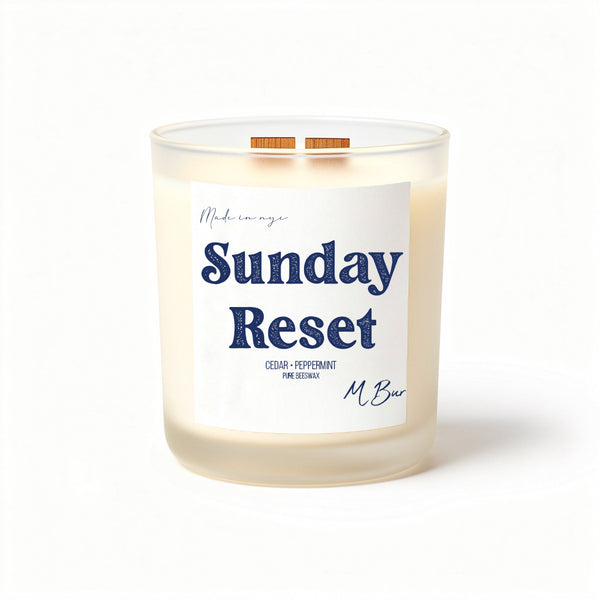
This is the whole reason MBur exists. Every MBur candle is 100 percent beeswax, never a blend, with a wooden wick and phthalate free fragrance, no chemical dyes, handmade in New York City. One reader put the difference plainly.
"I absolutely love these candles! I instantly notice the difference in the air quality, in comparison to the Bath & Body scented candles. I love Bath & Body's candles but I acknowledge that it caused a slight headache and other minor respiratory discomfort. Awesome products. Totally addicted." Jason H.
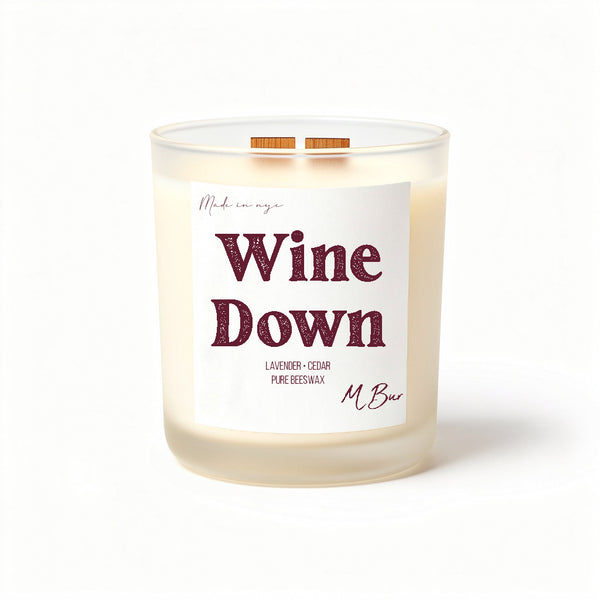
If light, clean scent is what you are after, Wine Down is a good place to start. Its notes are Lavender, Chamomile, Sage, Rosemary, Camphor, Cedar, and Sandalwood, and it reads as calm and green rather than heavy. A customer who used to get headaches from other candles said this: "A lot of other candles tend to give me headaches, but this one was a total game changer. I was able to enjoy the calming aroma without any discomfort."
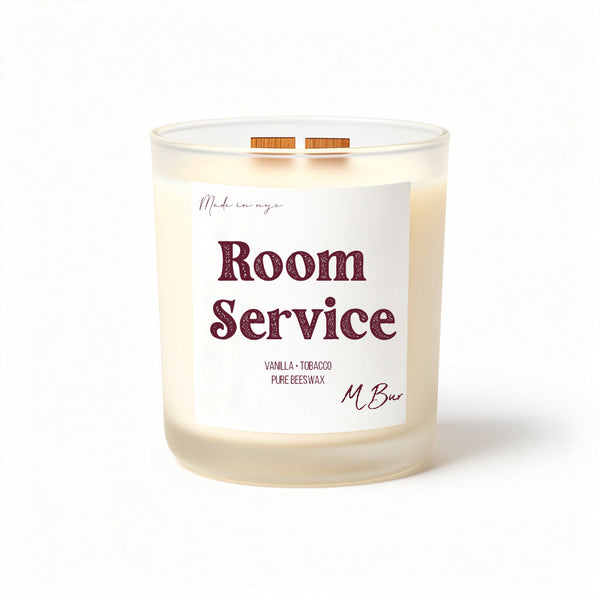
Prefer something warmer and richer for a living room or hosting? Room Service is the bestseller, with Saffron, White tea leaves, Purple Peonies, Orchid, Tobacco, Vanilla, Almond milk, and Tonka Bean. It has that expensive hotel lobby thing going on without the paraffin headache.

A Quick Checklist for Choosing a Clean Candle
Whether you shop MBur or somewhere else, use this list. A genuinely clean candle should check every box.
- 100 percent beeswax or 100 percent soy, not a paraffin blend
- Phthalate free, non toxic fragrance
- No chemical dyes
- Cotton or wooden wick, never a metal core wick
- A full, transparent ingredient list
MBur checks every one of them. Sizes run from the 20 hour candle at $20 up to the 80 hour candle at $65, and the beeswax burn time is the longest of any wax because of that high melting point. You can compare the whole lineup in our full beeswax candle collection.
Practical Tips for a Cleaner Burn
A few habits keep any candle burning cleaner and cut down on irritation.
- Trim the wick to about a quarter inch before each burn. A long wick is the main cause of black soot.
- Give the room some airflow. A cracked window makes a real difference for indoor air quality.
- On the first burn, let the wax melt all the way to the edges so it pools evenly. This also helps the candle last longer.
- Keep candles out of nurseries and away from anyone with serious respiratory sensitivity.
One note on air quality generally: if scent has been bothering you at home, it is worth ruling out other sources like damp or mold, which the EPA covers here. And if you have asthma or a diagnosed condition, follow your doctor's guidance on what belongs in your space. A cleaner burning candle is less likely to irritate, but it is not a treatment for anything.
The Bottom Line
Yankee Candles are not going to poison you, but paraffin and undisclosed fragrance oils produce more soot and more airborne compounds than a clean wax does, which is why sensitive people react to them. The fix is straightforward: switch to a single ingredient beeswax candle with phthalate free fragrance and you keep the scent you love while dropping the irritants your body was reacting to.
MBur is rated highly across dozens of reviews, with customers repeatedly noting the cleaner air and lack of headaches. If you want to feel the difference in your own home, start with our full beeswax candle collection and pick the scent that fits your space.
Related reading

