
You light your favorite candle in the living room, settle in, and twenty minutes later you can barely smell it from the couch. The candle is fine. The placement is the problem. This is exactly what the 8/10 rule solves, and once you know it, you stop wondering why one candle never seems to be enough for a real room.
What customers say on Google
View on Google
The 8/10 rule is a simple guideline for scenting a space evenly: one 8-ounce candle for every 10 feet of room. Instead of relying on a single candle to carry an entire open-plan living area, you place a few smaller sources so the fragrance travels the way it is meant to. Below we cover where the rule comes from, how to apply it room by room, which scents work best when you are using more than one, and where it stops being useful. If you want to put it into practice tonight, you can browse the full MBur collection and pick a couple of scents that play well together.
What the 8/10 rule actually means
Fragrance does not sit still. It drifts toward open doorways, rises with warm air, and sinks into soft surfaces like sofas, rugs, and bedding. A single candle creates one concentrated pocket of scent near the flame and very little past about ten feet. You end up with a room that smells incredible right by the coffee table and like nothing at all by the window.
The 8/10 rule fixes the distribution problem. Light one 8-ounce candle for every 10 feet of space you want to scent. A 20-foot living room gets two candles placed several feet apart. A long open kitchen and dining area might want three. The goal is even coverage, so the fragrance feels like it belongs to the whole room rather than one corner of it.
How to apply it room by room
Start by estimating the longest dimension of the space, then divide by ten. That tells you roughly how many candles to light. A few practical numbers:
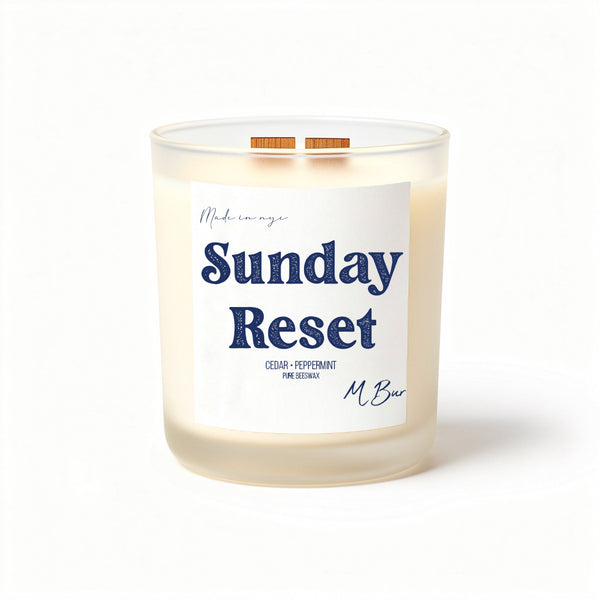
- Small bedroom or bathroom (under 10 feet): one candle is plenty. A single Sunday Reset on the nightstand carries a small room easily.
- Standard living room (15 to 20 feet): two candles, placed a few feet apart on opposite sides of the seating area.
- Open-plan kitchen and dining (25 to 30 feet): three candles, spaced so each anchors a zone. Keep them off the dining table itself, where scent competes with food.
Placement matters as much as count. Frame the areas people move through, the entry, the seating, the reading nook, so the scent greets them as they cross the room rather than hitting all at once in one spot. In a small apartment, restraint wins. One well-placed candle often does more than three crowded onto a single shelf.
Choosing scents when you use more than one
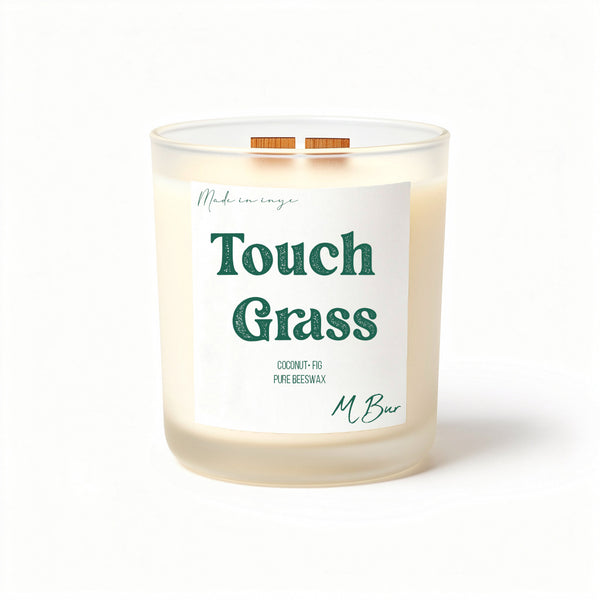
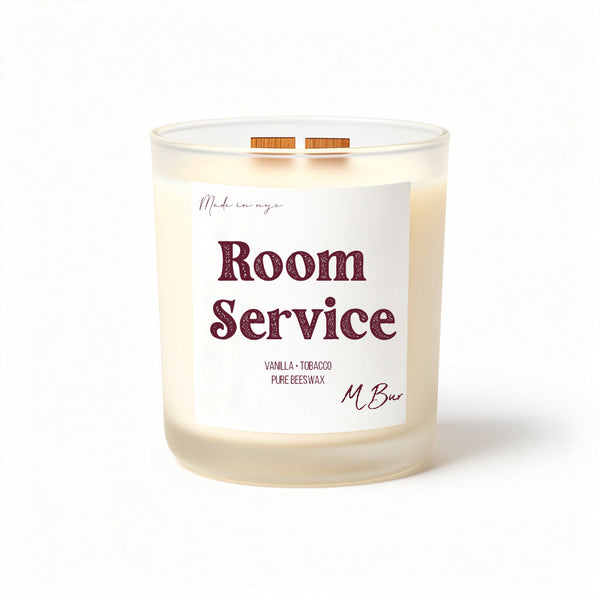
When you light multiple candles in the same open space, you have two good options. The simplest is to burn the same scent in every spot, which gives you a clean, cohesive result with zero guesswork. Two Room Service candles across a living room read as one intentional atmosphere.
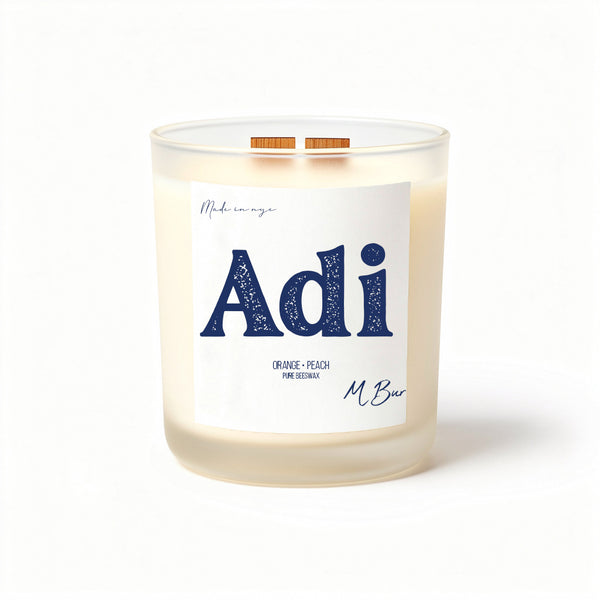
Adi Candle
$65.00
The second option is to pair scents from the same family so they blend instead of clashing. Warm, woody, and soft floral notes diffuse gradually and tend to feel cohesive from several points in a room, which makes them ideal for the 8/10 approach. Wine Down, with its lavender, cedar, and camphor backbone, layers comfortably alongside a quieter woody scent. What you want to avoid is putting a bright citrus next to a heavy warm-spice candle in a small space, where the two compete rather than complement.
Every MBur candle is hand-poured from 100% pure beeswax with an untreated wooden wick and phthalate-free fragrance, so the scent throw stays clean and the burn stays even no matter how many you have going at once.
When the rule stops being useful
Treat 8/10 as a starting point, not a formula. Real homes have kitchens, pets, fireplaces, drafts, and open floor plans that all change how fragrance behaves. A room with constant airflow from a hallway will pull scent toward the opening, so you may want a candle closer to where people actually sit. A closed, cozy den holds fragrance far longer, so one candle stretches further than the math suggests.
Scent throw also depends on the candle itself. The size of the candle, the strength of the fragrance, and the dimensions of the room all factor in. A larger room with a strong woody scent needs fewer sources than the same room with a delicate fresh scent. Use the rule to get in the right ballpark, then trust your nose to fine-tune from there.
Frequently asked questions
Is the 8/10 rule about how long to burn a candle?
No. The 8/10 rule is about scent distribution, one 8-ounce candle per 10 feet of room. It is sometimes confused with burn-time guidance. For how long to safely burn a single candle, the key number is the 4-hour limit per session, which protects the glass, the wick, and the fragrance.
Can I use different sizes instead of multiple 8-ounce candles?
Yes. The 8-ounce figure is a reference point. A larger candle covers more ground, and a few smaller candles can stand in for one bigger one. What matters is spreading the sources across the space rather than stacking them in one spot.
Does the rule work for unscented or lightly scented candles?
The distribution logic still applies, but lightly scented candles cover less ground per source, so you may want them closer together. Beeswax has a naturally soft, honey-sweet aroma even without added fragrance, which carries gently across a small room.
How many candles do I need for a party?
Map the rooms guests will use, apply 8/10 to each, and keep scents within the same family across connected spaces so the home feels cohesive from the entry through to where people gather.
Ready to scent your space the right way? Explore the full MBur collection and choose a few scents that travel well together.
What buyers say:

