
What Is Soy Wax Blended With? The Dirty Secret of 'Soy' Candles
Here is a number worth sitting with: a candle can legally be labeled "soy" if it contains as little as 51% soy wax. The other 49%? That can be paraffin, a petroleum byproduct that releases benzene and toluene when burned. Both are classified as hazardous air pollutants by the U.S. Environmental Protection Agency. Neither belongs in your living room.
What customers say on Google
View on Google
This is not a fringe concern or candle industry gossip. It is a labeling loophole that most major candle brands exploit quietly, and it is part of why the soy candle boom of the last two decades has not delivered the clean air promise it made. If you have ever bought a "soy" candle assuming it was the safer, cleaner choice, this post is for you. We are going to break down what goes into a soy wax blend, why blending happens in the first place, and what it actually takes to burn something clean.
For a full side-by-side look at how soy stacks up against other waxes, browse the MBur beeswax candle collection or read our paraffin vs beeswax vs soy comparison.
Why "Soy" Candles Are Rarely Just Soy
Soy wax, in its pure form, has a soft consistency and a relatively low melting point. That makes it tricky to work with at scale. It can frost, crack, and struggle to hold fragrance at high load rates without some kind of structural support. Blending it with harder waxes solves those problems fast.
Paraffin is the most common blending partner. It is cheap, widely available, and it hardens soy into a more stable, workable wax. It also increases fragrance throw, which is why heavily scented candles from mass market brands tend to hit you the moment you walk into a room. That intensity is not coming from soy. It is coming from the paraffin and the synthetic fragrance chemicals loaded into it.
Other common additions to soy wax blends include:
- Microcrystalline wax: A petroleum-derived wax used to improve texture and adhesion to glass jars.
- Palm wax: Sometimes added for hardness, though its sourcing is linked to significant deforestation concerns.
- Vybar: A polymer additive used to help soy wax hold fragrance oils. It is petroleum-derived.
- UV inhibitors and synthetic dyes: Added to prevent discoloration and maintain visual consistency on store shelves.
None of these appear on candle labels. Candles are not required to disclose their full ingredient list under current U.S. regulations. A candle marketed as "natural soy" could contain three or four of the above additives and still be perfectly legal.
The Labeling Loophole Nobody Talks About
The candle industry is largely self-regulated when it comes to ingredient claims. Unlike food products, candles do not fall under FDA jurisdiction for ingredient disclosure. The National Candle Association sets voluntary guidelines, but compliance is optional and enforcement is essentially nonexistent.
This creates a situation where a brand can call its product a "soy blend candle," "natural soy," or even just "soy" without specifying the percentage of actual soy in the formula. Some brands use the word "soy" purely as a marketing signal, knowing that consumers associate it with cleanliness and sustainability, even when the candle is majority paraffin by weight.
Research published in the journal Environmental Health Perspectives has identified scented candles as a significant source of indoor volatile organic compounds (VOCs), including formaldehyde, benzene, and toluene. The wax type mattered, but so did the fragrance load and fragrance chemistry. Paraffin-based and paraffin-blended candles consistently ranked highest for VOC emissions.
The takeaway is not that all soy candles are dangerous. It is that "soy" as a label tells you almost nothing about what you are actually burning.
What Does a Soy Wax Blend Actually Burn Like?
Setting health concerns aside for a moment, soy blends have real performance trade-offs worth understanding.
Burn Time
Pure soy wax burns slower than paraffin but faster than beeswax. When soy is blended with paraffin, burn time tends to decrease because paraffin has a lower melting point and burns faster. Brands rarely publish honest burn time data, so the "50 hours" printed on a soy blend candle is often optimistic.
Scent Throw
Soy holds fragrance reasonably well on its own, but blended soy candles almost always use higher fragrance loads to compensate for the wax blend's inconsistency. High fragrance loads with synthetic fragrance chemistry mean more VOCs in your air, more headache potential, and a scent that fades unevenly as the candle burns down.
Soot Output
Paraffin is the primary driver of candle soot. The black residue you see on jar walls and ceilings near candle placement is almost always paraffin-related. Pure soy produces less soot than paraffin, but a soy and paraffin blend will still produce measurable soot depending on the ratio.
Appearance Over Time
Soy wax is prone to frosting, a white crystalline film that appears on the surface of the candle. It is harmless but unsightly, which is why manufacturers blend in microcrystalline wax or other additives to prevent it. Those additives are not listed on the label.
The Fragrance Problem Inside Soy Blends
Wax is only half the story. Fragrance is often the bigger health variable in any candle, soy or otherwise.
Many soy candles, especially in the mass market, use fragrance oils loaded with phthalates. Phthalates are a class of chemical used to make fragrance last longer. They are also endocrine disruptors, meaning they interfere with hormone function. The European Chemicals Agency has restricted or flagged dozens of phthalate compounds. In the U.S., they remain largely unregulated in consumer products including candles.
A candle can be 100% soy wax and still off-gas phthalates from its fragrance load. The wax type is important, but it is not the whole picture. Fragrance sourcing matters just as much.
This is why clean candles need to clear two bars, not one: the wax must be clean, and the fragrance must be non-toxic. Most soy candles clear neither.
"I absolutely love these candles! I instantly notice the difference in the air quality, in comparison to the Bath and Body scented candles. I love Bath and Body's candles but I acknowledge that it caused a slight headache and other minor respiratory discomfort. Awesome products. Totally addicted." Jason H., Sunday Reset Candle
That pattern, enjoying a popular candle brand but noticing headaches and respiratory irritation, shows up repeatedly in customer reviews. It points to fragrance chemistry, not coincidence.
Where Beeswax Fits Into This
Beeswax is not a blend. It is a single-ingredient wax produced naturally by honeybees during the honey-making process. It requires no chemical processing, no hardening agents, no polymer additives, and no petroleum inputs to perform well as a candle wax.
It has the highest melting point of any candle wax, which is why beeswax candles burn significantly longer than soy or paraffin alternatives. The MBur 80-hour beeswax candle delivers up to 80 hours of burn time at $65. A comparable soy blend candle typically delivers 40 to 55 hours depending on the paraffin ratio and fragrance load.
Beeswax is also often described as producing a warmer light closer to natural daylight than soy or paraffin, an effect of its naturally clean combustion. The chemistry is consistent: beeswax's composition (primarily long-chain esters and fatty acids) burns at a stable temperature with no synthetic additives required to perform.
For a detailed breakdown of how the three major wax types compare, see our paraffin vs beeswax vs soy comparison.
How to Actually Read a Candle Label
Since candles are not required to list ingredients, you have to read between the lines. Here is what to look for:
- "Soy blend" or "soy wax blend": This always means paraffin or another additive is present. The percentage is not disclosed.
- "Natural soy": Means nothing specific. Natural is not a regulated term for candles.
- No fragrance information: If a brand does not mention phthalate-free fragrance, assume it is not.
- Synthetic dyes: Any candle in a bold, non-natural color likely contains added dyes that release VOCs when burned.
- Metal-core wicks: Common in cheaper candles, these can release trace heavy metals during burning. Look for cotton or wood wicks.
The cleanest candle labels also tend to be the shortest. A candle that simply says "100% beeswax, wooden wick, phthalate-free fragrance" does not need a paragraph of marketing language to justify its ingredients.
The MBur Standard
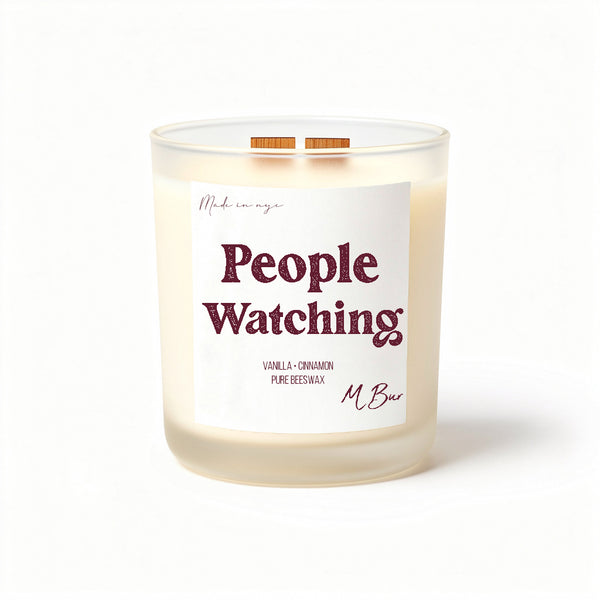
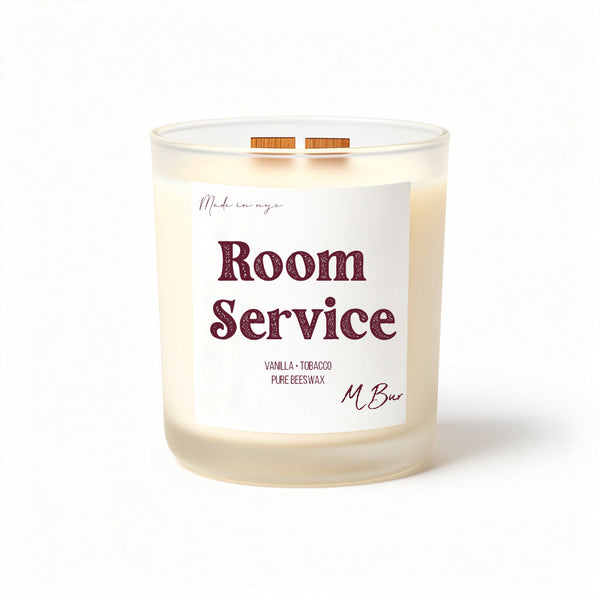
Every MBur candle is made from 100% pure beeswax, no blending, no fillers, no paraffin. The fragrance is phthalate-free non-toxic fragrance oils. The wicks are wooden, which means no metal core. No synthetic dyes in any candle in the lineup.
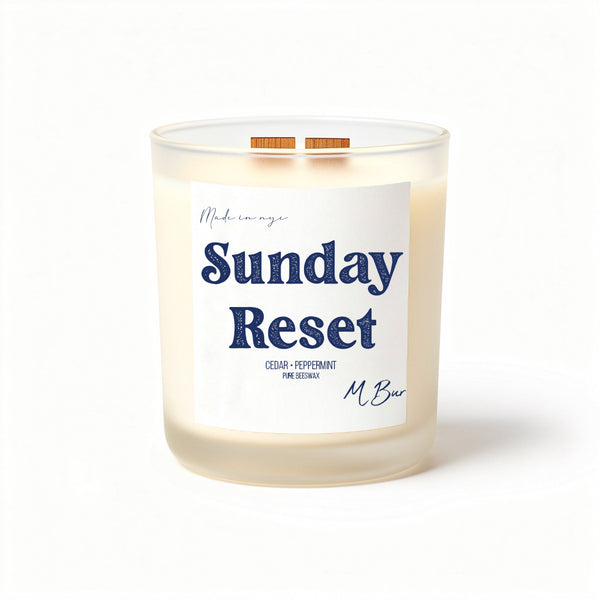
The Sunday Reset beeswax candle is a good entry point if you are switching from a soy or paraffin candle and want something that runs clean. The 20-hour size at $20 is the lowest commitment way to test the scent in your space. The 40-hour at $25 is the per-hour sweet spot at $0.625 per burn hour, the best value in the lineup. The 80-hour at $65 gives you the longest burn for a single candle. Across all three sizes: no black residue on the jar, no headache the next morning.
Frequently Asked Questions
Is soy wax really better than paraffin?
Pure soy wax is a step up from paraffin in terms of VOC output, but most soy candles on the market are soy blends containing paraffin. A soy-paraffin blend candle is not meaningfully cleaner than a standard paraffin candle. If you want to move away from petroleum-based waxes entirely, 100% beeswax candles are the cleaner alternative.
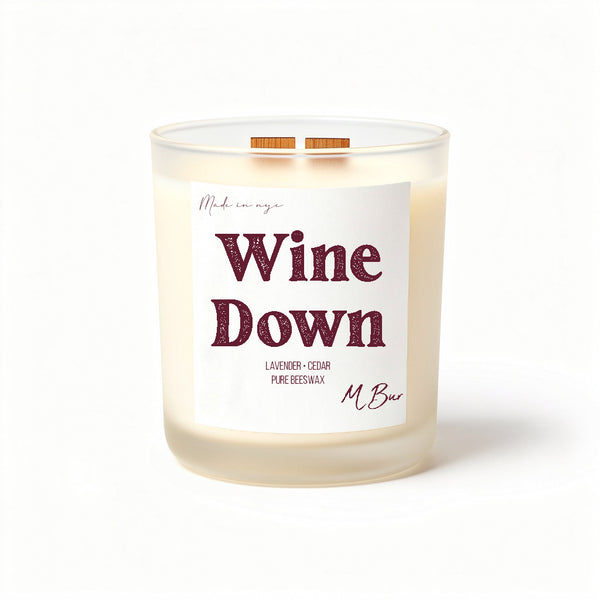
Wine Down Candle
$65.00
How can I tell if my soy candle has paraffin in it?
Check the label for the phrase "soy blend" or "soy wax blend." Those terms signal a mixed formula. If the label says "100% soy wax" but the candle is very firm, has no frosting, and throws scent extremely hard, there is a good chance it contains additives like Vybar or microcrystalline wax. When in doubt, contact the brand and ask directly for their full ingredient list.
Do soy candles give you headaches?
Soy wax itself is not a common headache trigger. The more likely culprits are the synthetic fragrance chemicals and paraffin present in soy blend candles. Phthalates in particular have been associated with headaches and respiratory irritation in sensitive individuals. Switching to candles with non-toxic, phthalate-free fragrance and no paraffin, like the Wine Down beeswax candle, is the most direct fix.
What percentage of soy makes a candle "soy"?
There is no federal standard. A candle can legally be called a soy candle with as little as 51% soy content in the U.S. Some industry observers argue the threshold is even lower in practice, since labeling enforcement is minimal. This is one of the reasons "soy" as a marketing claim is essentially meaningless without additional transparency from the brand.
Is beeswax better than soy for clean burning?
Yes, for a few concrete reasons. Beeswax is a single-ingredient natural wax with no petroleum inputs, no need for polymer additives, and no blending required. It has a higher melting point than soy, which means a longer and more stable burn. It also pairs cleanly with non-toxic fragrance without needing chemical enhancers to hold scent.
The Bottom Line
"Soy" on a candle label is a marketing word, not a guarantee. Most soy candles are soy wax blends containing paraffin, petroleum-derived additives, and synthetic fragrance chemicals that do not appear on any ingredient list. The cleaner choice is a candle that does not need a blend in the first place.
If you are ready to stop guessing what is in your candle, start with the Sunday Reset beeswax candle. The 20-hour at $20 is the entry point; the 40-hour at $25 is the per-hour sweet spot at $0.625/hour. 100% beeswax, wooden wick, phthalate-free non-toxic fragrance, no dyes. That is the full ingredient picture.
"I love these candles. No headache or feeling nauseous like the Bath and Body candles with all the extra chemicals. In addition, I love the package and how carefully everything was wrapped." Jason H., Sunday Reset Candle
The difference shows up where you can see and feel it: cleaner jars, cleaner air, and burns that last.
Shop the full MBur beeswax collection: 100% beeswax, no blends, no guessing
What buyers say:

