

What Are Holistic Candles? What the Label Really Signals
The word "holistic" appears on candle labels the way "artisan" appears on bread packaging: constantly, confidently, and with absolutely zero legal accountability. There is no regulatory body that certifies a candle as holistic. No checklist a manufacturer must pass. No third party auditor showing up at the warehouse with a clipboard. The term means whatever the company printing the label wants it to mean.
That does not make it useless. It just means the burden of decoding it falls entirely on you. And once you understand what a genuinely clean burning candle actually requires, you will be able to tell which brands are signaling real quality and which ones are borrowing wellness vocabulary to sell the same old petroleum wax in prettier packaging.
"Holistic" Is a Marketing Term, Full Stop
Candles in the United States are regulated by the Consumer Product Safety Commission as consumer goods. The CPSC cares about fire safety, wick composition (lead core wicks have been banned since 2003), and labeling requirements around burn warnings. That is roughly where oversight ends.
The FDA only steps in if a candle manufacturer makes a specific therapeutic claim, something like "cures anxiety" or "treats insomnia." Short of that, brands can use words like "holistic," "clean," "non toxic," and "natural" without meeting any defined standard. These are marketing terms, not certifications.
This matters because the global candle market is on track to reach roughly $13 to $15 billion by the early 2030s, and a huge chunk of that growth is driven by the wellness economy. Consumers are actively searching for candles that feel safer, cleaner, more intentional. Brands know this. So the vocabulary of wellness gets stamped onto products that may or may not deliver on the promise.

What "Holistic" Is Trying to Signal
When a brand labels a candle "holistic," they are generally trying to communicate a cluster of ideas: that the candle is made from natural materials, that it avoids harmful chemicals, that it supports some broader sense of wellbeing, and that it was produced with intention rather than mass manufactured in a factory. The word is doing a lot of heavy lifting.
Some brands genuinely deliver on all of those ideas. Others use "holistic" as a shorthand for "we added lavender essential oil to paraffin wax and put a crystal on the lid." The gap between those two realities is enormous.
The useful thing about the holistic candle trend is that it reflects a real and legitimate shift in what consumers want. People are paying attention to indoor air quality. They are reading ingredient lists. They want to know what they are breathing. That instinct is good. The problem is that the label itself cannot tell you whether the product lives up to it.
The Three Things That Actually Determine a "Clean" Candle
Forget the label for a moment. If you strip away the marketing language, a candle's impact on your home comes down to three material choices: the wax, the wick, and the fragrance. Everything else, the packaging, the branding, the word "holistic" on the front, is decoration.
1. The Wax
Paraffin wax is a petroleum byproduct. It is the cheapest candle wax available, and it is what most mass market candles are made from. When paraffin burns, it releases compounds like benzene, toluene, and formaldehyde. These are volatile organic compounds, and while the amounts from a single candle in a ventilated room are generally considered low risk, they accumulate, especially if you burn candles frequently in smaller spaces.
Soy wax is marketed as the cleaner alternative, and it is a step up from paraffin. But "soy candle" is a loosely used term. Many soy candles are actually soy and paraffin blends, because pure soy wax has a lower scent throw and can be tricky to work with. Unless a brand specifies 100% soy, you may be getting a blend with a significant paraffin percentage.
Beeswax is the oldest candle material humans have used, dating back roughly 5,000 years. It burns at the highest melting point of any candle wax, which means it burns slower and lasts longer. It produces minimal soot compared to paraffin. And it is a single ingredient wax, a natural byproduct of honey production, with no chemical processing required. Some research suggests beeswax may release negative ions when burned, though this is not conclusively established.
2. The Wick
Lead core wicks are banned in the U.S., so that particular concern is off the table for any domestically sold candle. But wick material still matters. Cotton wicks are standard and perform fine. Wooden wicks burn at a lower, more even temperature, which means less soot production and a more complete wax pool. They also produce a quiet crackling sound, which is more of a sensory bonus than a safety feature, but it is worth mentioning because people genuinely love it.
3. The Fragrance
This is where the real risk hides, and where "holistic" labels are the least helpful. Under the Fair Packaging and Labeling Act, the word "fragrance" on a candle label can represent dozens or even hundreds of undisclosed chemical compounds. Manufacturers are not legally required to tell you what is in their fragrance blend because it qualifies as a trade secret.
Many conventional candles use toxic fragrance oils containing phthalates, parabens, and other compounds that have been flagged by researchers for potential endocrine disruption and respiratory irritation. A candle labeled "holistic" might still use these exact fragrance compounds. Without voluntary disclosure from the brand, you simply cannot know.
There is a common misconception that essential oils are automatically safer than fragrance oils. In reality, essential oils can become unstable when heated and may cause irritation in sensitive individuals. High quality, phthalate free fragrance oils that are specifically formulated for candle use are often more stable and perform better for scent diffusion. The key distinction is not "essential vs. fragrance" but rather "toxic fragrance vs. non toxic fragrance."

A Practical Checklist for Evaluating Any "Holistic" Candle
Rather than relying on a single word on the label, run any candle through these questions:
What is the wax, specifically? Look for "100% beeswax" or "100% soy." If it just says "natural wax blend," that blend likely includes paraffin.
What is the wick made of? Cotton or wood are both good options. If the listing does not mention wick material at all, that is a yellow flag.
Does the brand disclose fragrance ingredients? Any company serious about clean candles will voluntarily list their fragrance components or at minimum confirm they are phthalate free. If the ingredient list just says "fragrance" with no further detail, you are trusting a trade secret.
Where is it made? This is less about nationalism and more about oversight. Small batch domestic production typically means tighter quality control than mass overseas manufacturing.
Does the brand make therapeutic claims? A candle that claims to "relieve stress" or "improve sleep" as a medical benefit is either skirting FDA guidelines or making promises it cannot keep. Honest brands describe scent as a sensory experience, not a treatment.
"I absolutely love these candles! I instantly notice the difference in the air quality, in comparison to the Bath & Body scented candles. I love Bath & Body's candles but I acknowledge that it caused a slight headache and other minor respiratory discomfort. Awesome products. Totally addicted." Jason H., verified MBur customer
Jason's experience points to something real: when you switch from a candle loaded with undisclosed fragrance compounds to one built on pure beeswax with phthalate free fragrance, the difference is something your body notices before your brain catches up.
Where MBur Fits in This Conversation
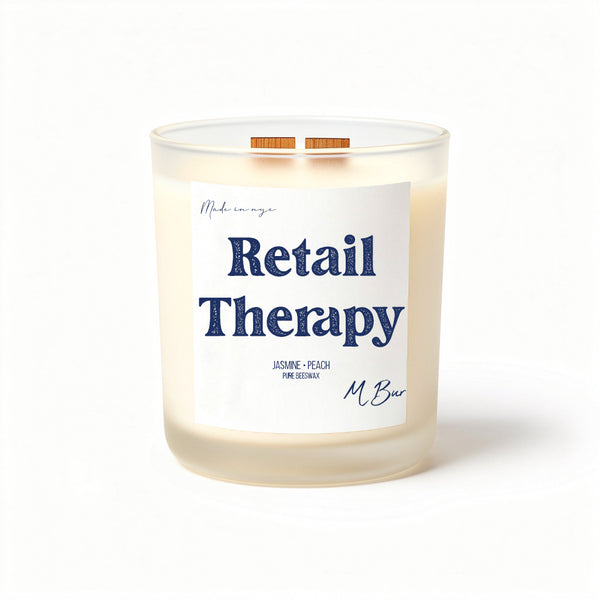
MBur Candle Co. does not use the word "holistic" on its labels. But if you run our candles through the checklist above, they pass every question.
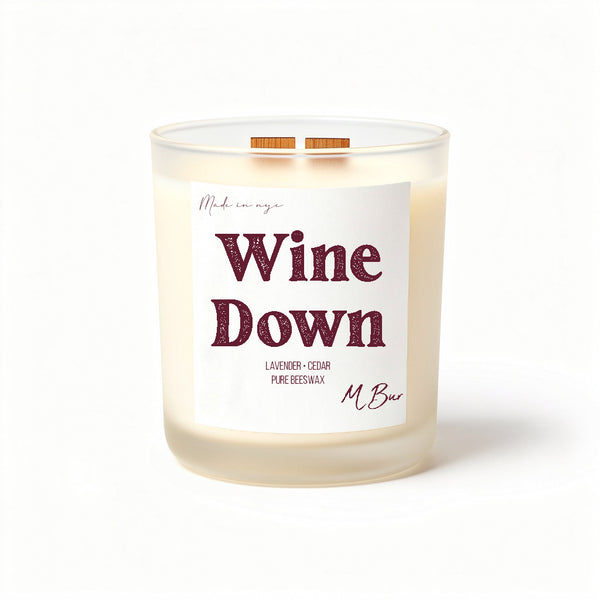
The wax is 100% beeswax. Single ingredient. No blending with paraffin or soy to cut costs. Because beeswax has the highest melting point of any candle wax, the 80 hour size at $65 actually outlasts candles that cost more, burning up to 80 hours on a single pour.
The wicks are wooden, which means an even burn, minimal soot, and that quiet crackling sound that makes a room feel different the moment you light one. The fragrance oils are non toxic and phthalate free. No chemical dyes. Everything is handmade in small batches in Manhattan, New York.
Beeswax itself is naturally hypoallergenic and emits a light spectrum closest to natural sunlight, which gives the flame a warmer, softer quality than paraffin. And because beeswax is a byproduct of honey production, purchasing it supports beekeeping operations rather than petroleum extraction.
If you want to see what that looks like across a full range of scents, browse our complete beeswax candle collection. The entry point is the 20 hour size at $20, so you do not need to commit to a large candle to find out whether the difference is real.

Burn Smarter: Practical Tips Regardless of What Candle You Choose
Even the cleanest candle in the world will underperform if you burn it wrong. A few basics that apply to every candle, holistic or otherwise:
Trim the wick to about a quarter inch before every burn. An untrimmed wick produces a larger, less stable flame, which means more soot and faster consumption of the wax. This is the single most impactful thing you can do for candle performance.
Let the first burn create a full wax pool. The wax should melt all the way to the edges of the container on your first lighting. This usually takes two to four hours depending on the candle size. Skipping this step causes tunneling, where the candle burns down the center and wastes the wax around the edges.
Do not burn for more than four hours at a stretch. Extended burns overheat the glass vessel and cause carbon buildup on the wick, which leads to mushrooming and uneven performance.
Ventilate. Burning any candle in a tiny, sealed room concentrates whatever compounds are being released. Crack a window or leave a door open. This is especially important if you are burning paraffin candles, but it is good practice across the board.
Stop burning when half an inch of wax remains. The last bit of wax does not have enough depth to keep the flame stable, and the heat can damage whatever surface the candle is sitting on.
Frequently Asked Questions
Do holistic candles actually purify the air?
Some research suggests that beeswax candles may release negative ions when burned, which could help settle airborne particles. This is not conclusively proven, and no candle should be treated as an air purifier. What a genuinely clean candle does do is avoid adding pollutants, which is the more practical benefit. MBur's pure beeswax candles produce minimal soot and contain no toxic fragrance compounds, so they keep your indoor air cleaner than conventional alternatives.
Are essential oil candles better than fragrance oil candles?
Not automatically. Essential oils can become unstable at high temperatures and may irritate people with sensitivities. What matters more than the oil type is whether the fragrance is phthalate free and whether the brand discloses its ingredients. MBur uses non toxic, phthalate free fragrance oils that are specifically formulated for safe, stable scent throw during combustion.
How can I tell if a "natural" candle actually contains paraffin?
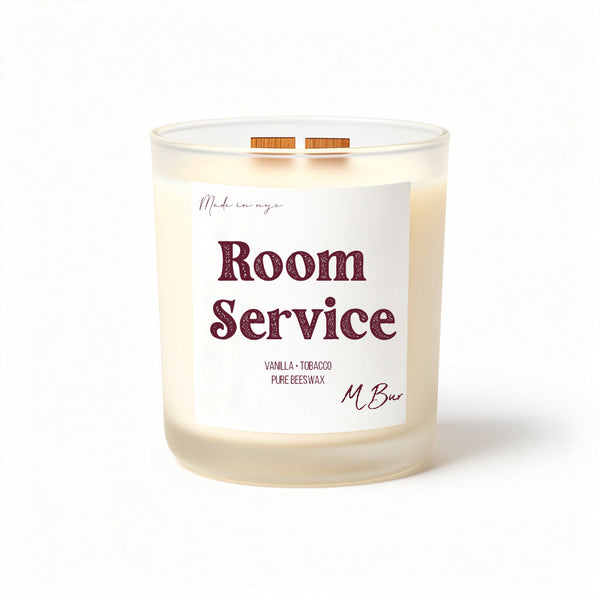
Look for the phrase "100% [wax type]" rather than "natural wax blend" or "soy blend." If the label does not specify a single wax source, it almost certainly contains paraffin as a filler. A candle like Room Service is made from 100% beeswax, one ingredient, no blending.
Why do some clean candles cost more than regular ones?
Paraffin is the cheapest candle wax because it is a petroleum byproduct produced at massive scale. Beeswax costs significantly more as a raw material because it is harvested in small quantities from active beehives. Wooden wicks, phthalate free fragrance, and small batch handmade production all add to the cost. The tradeoff is a candle that burns longer, burns cleaner, and does not fill your home with undisclosed chemicals. MBur's 20 hour size starts at $20, which is a reasonable entry point to experience the difference firsthand.
The Bottom Line
"Holistic" on a candle label is a signal, not a guarantee. It tells you the brand is trying to appeal to health conscious consumers. Whether the product actually delivers depends entirely on the wax, the wick, and the fragrance, three things you now know how to evaluate.
If you want a candle that checks every box without requiring you to decode vague marketing language, explore MBur's full beeswax candle collection. Pure beeswax, wooden wicks, non toxic fragrance, handmade in New York. Over 50 five star reviews from customers who noticed the difference immediately.
Related reading

