

The Ultimate Guide to Choosing the Perfect Candle for a Lamp Warmer
That "beeswax" candle you grabbed for your new warmer lamp? Check the fine print. A candle can call itself beeswax while being mostly paraffin, because labeling rules let a wax blend borrow the nicer name. When you put that jar under a warmer, you are essentially cooking petroleum wax under a halogen bulb for hours at a time, minus the flame you were trying to avoid.
Warmer lamps are having a moment for good reason. They melt wax from above with a low watt bulb, so you skip the soot, the tunneling, and the open flame. But the device only does half the job. The candle you put under it decides whether you get a rich, even scent throw or a sad puddle that smells like nothing by week two. Here is what actually matters, in the order it matters, plus where our full beeswax candle collection fits in.

First, understand what a warmer lamp is doing
A top down warmer lamp uses a halogen bulb, usually somewhere between 25 and 50 watts, to gently heat the surface of the wax from a couple inches above. No wick is burning. The wax liquefies, the fragrance oil evaporates, and the room fills with scent.
Because nothing is being consumed by fire, the wax lasts roughly two to three times longer than it would on a burning candle. When you switch the lamp off, the wax hardens again and waits for next time. You are only losing fragrance oil, not wax.
One myth worth killing early: more heat does not mean more scent. Cranking a variable lamp to its highest setting overheats the wax and burns off the fragrance fast, leaving you with an unscented block way ahead of schedule. Start low to medium and taper once a pool forms.
Decision 1: Wax type
This is the call that affects your health, your scent throw, and your walls.
Paraffin is a petroleum byproduct. Under heat it releases compounds like benzene, toluene, and formaldehyde. A warmer lamp does not burn it, but you are still liberating those compounds into the air as the wax melts. Many people who get headaches from candles are reacting to paraffin and the fragrances loaded into it.
Soy and coconut blends are a step up and throw scent well under gentle warmer heat, since their low melting points release fragrance without scorching the top notes. The catch is that soy is frequently blended with paraffin, and the word "blend" hides a lot.
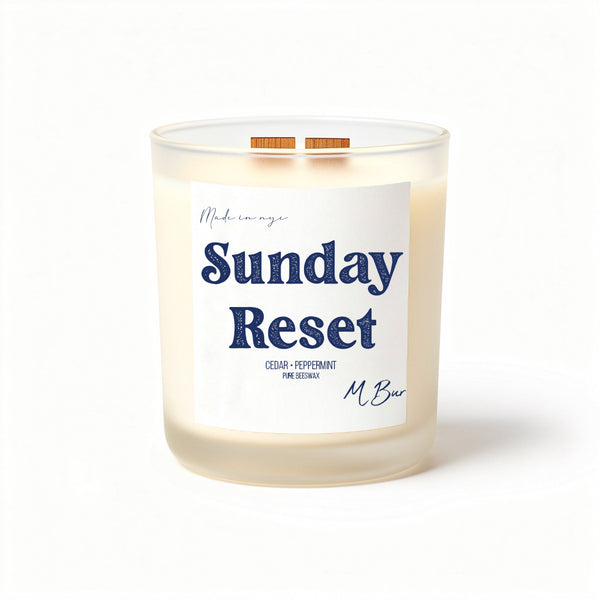
Beeswax is the one that gives you no asterisks. It is a single naturally occurring material, it burns and melts the cleanest of any wax, and it carries a faint honey undertone all on its own. It also has the highest melting point of common candle waxes, which is why it lasts longer than soy or paraffin whether you are burning it or warming it. If you want the cleanest possible surface pool under your lamp, this is the answer.

Decision 2: Wick type (yes, even under a warmer)
People assume the wick is irrelevant when you are not lighting the candle. It matters more than you would think, because the wick tells you something about how the candle was built.
Metal core wicks are a red flag. They were often used to keep a wick standing straight, and some historically contained materials you do not want near heat. A candle made with a wooden wick, like ours, signals a maker who cares about a clean, even burn and a stable wax structure. That same structure pools cleanly and predictably under a lamp.
If you ever decide to actually light the candle instead of warming it, a wooden wick gives you that soft crackle and a wide even melt pool. Either way, it is a good proxy for quality construction.
Decision 3: Scent sourcing
The word "fragrance" on a label is a catch all that can hide hundreds of undisclosed chemicals, and many candles use toxic fragrances containing phthalates and parabens. Under a warmer lamp you are evaporating that fragrance straight into your air for hours, so this is not a detail to wave off.
Look for phthalate free fragrance and no chemical dyes. Non toxic, phthalate free fragrance oils give you the scent you want without the compounds your body tends to react to. A clean candle is less likely to irritate. If you have a respiratory condition or scent sensitivity, follow your doctor's guidance regardless of what any candle promises.
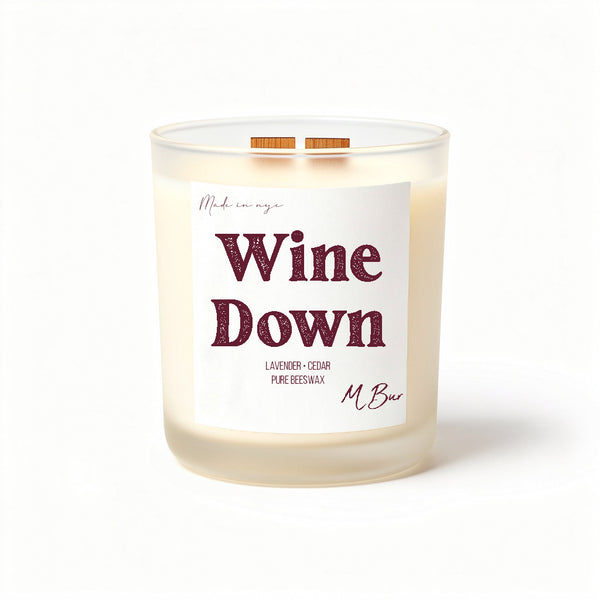
"Absolutely loved the Wine Down candle. The scent is so light and clean, not overpowering at all, which is exactly what I look for. A lot of other candles tend to give me headaches, but this one was a total game changer. I was able to enjoy the calming aroma without any discomfort." Nicole D.
That review is about our Wine Down candle, which layers lavender, chamomile, sage, rosemary, camphor, cedar, and sandalwood. It is the kind of soft, clean profile that behaves beautifully under low warmer heat, since gentle warming preserves those delicate herbal top notes.
Decision 4: Size and jar shape
Warmer lamps are picky about geometry. Radiant heat needs to reach edge to edge across the wax surface, so a few rules apply:
- Jars with a diameter around 3 to 4 inches pool most evenly.
- Straight sided glass beats tapered or novelty shapes.
- Skip extremely tall jars, tiny 1 inch votives, and thin fragile glass, which can fail to pool or crack from uneven heat.
- The ideal clearance between bulb and wax surface is roughly 2 to 4 inches, so a height adjustable lamp helps as the wax level drops.
Our candles come in four sizes, and for warmer use, the larger formats give you the most surface area and the longest run. The 55 hour size ($37) and the 80 hour size ($65) are the workhorses if you plan to keep a lamp going most evenings.

Decision 5: Price per hour
Sticker price is a bad way to shop candles. Cost per hour is the honest number.
Our entry size runs 20 hours at $20, which is $1.00 per hour. The 80 hour size at $65 works out to about $0.81 per hour, and because beeswax has the highest melting point of the common waxes, it stretches even further under a warmer lamp where nothing is being burned away. Compare that to a big box paraffin jar that looks cheaper up front but throws less scent per hour and often fades fast once liquefied on high heat.
How MBur stacks up against the usual warmer lamp candles
Most people pair their lamp with whatever large jar is on the shelf. A few common picks, for context:
- Yankee Candle large jar is a 22oz paraffin based jar cross marketed heavily for warmers. Big and cheap, but paraffin.
- Warmer focused brands sell the lamps themselves in the $13 to $25 range (GODONLIF, Innqoo, Angju), but leave the candle choice to you.
The lamp is the appliance. The candle is what you are actually breathing. That is where a pure beeswax candle earns its keep.
Quick reference checklist
- Wax: 100% beeswax (single ingredient), or at minimum a soy blend you can verify. Avoid unlabeled "blends."
- Wick: wooden or cotton, never metal core. A quality wick signals quality construction.
- Fragrance: phthalate free, no chemical dyes.
- Jar: straight sided glass, roughly 3 to 4 inch diameter, not too tall or fragile.
- Lamp setting: start low to medium, taper down after a pool forms.
- Value: judge by price per hour, not sticker price.
Frequently asked questions
Do candles last longer under a lamp warmer?
Yes. Because only the wax and fragrance oil melt while nothing burns away, a candle lasts roughly two to three times longer under a warmer. Beeswax stretches it even further thanks to its high melting point, which is one reason our beeswax candle collection is a smart pick for daily warmer use.
Can you reuse a candle after the scent fades on a warmer?
You can. Once the top layer of melted wax stops releasing fragrance, pour off or blot away that top layer to expose fresh scented wax underneath, then keep going.
Do you need special candles for a lamp warmer?
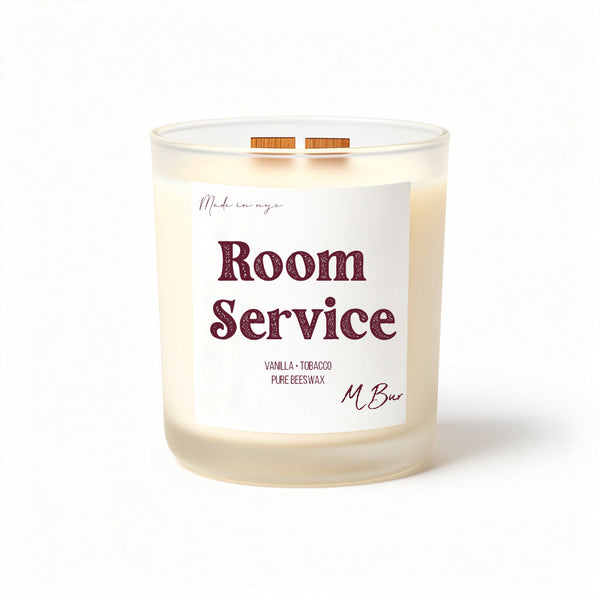
No, most standard jar candles work, but straight sided glass and a high quality wax make a real difference. A single ingredient wax like our Room Service candle, our bestseller with its saffron and white tea hotel lobby profile, pools cleanly and throws scent evenly under gentle heat.
Why isn't my warmer melting the wax or throwing scent?
Usually one of three things: the bulb wattage is too low, the gap between the bulb and the wax is too wide (aim for 2 to 4 inches), or the candle's fragrance oil is poor quality. Cheap toxic fragrances tend to flash off fast and leave you with nothing.
Are candle warmer lamps safer than burning?
They remove the open flame, soot, and smoke, which cuts household fire risk considerably. Flameless does not mean zero emissions, so ventilate the room like you would with any home fragrance, per general candle safety guidance.
The bottom line
A warmer lamp is only as clean as the candle you put under it. The device removes the flame, but the wax and fragrance are still going into your air, so wax type and scent sourcing are the two decisions worth getting right. Pick a straight sided, single ingredient beeswax candle with phthalate free fragrance and you get the longest run, the cleanest pool, and none of the guesswork.
Our candles are handmade in small batches in Queens, New York, with 100% beeswax, wooden wicks, and non toxic fragrance. Reviewers keep telling us the same thing Jason H. did: "I instantly notice the difference in the air quality. I acknowledge that [other brands] caused a slight headache and other minor respiratory discomfort." If you want a candle that behaves under a warmer lamp, browse the full beeswax candle collection and start with a wide jar size.
Related reading

