

The Ultimate Guide to Choosing Baby-Safe Candles
That "beeswax" candle you grabbed for the nursery? There is a good chance it is mostly paraffin. Nothing on the label legally has to tell you the ratio, so a candle can say "beeswax" on the front and still be more than half petroleum wax by weight. When you are buying for a baby, that gap between what the label implies and what is actually in the jar is the whole ballgame.
Infants breathe faster than adults and their airways are still developing, which makes them more sensitive to soot and airborne irritants than the rest of us. That is not a reason to panic. It is a reason to be a picky shopper. Below is exactly what to look for, in order of how much it matters. If you want to skip ahead and see candles that clear every bar, browse our full beeswax candle collection.

Start with the wax, because it decides almost everything
Wax is the single biggest factor in how clean a candle burns. Get this right and you have solved most of the problem before you even look at the wick.
Paraffin is a petroleum byproduct. When it burns it can release volatile organic compounds like benzene and toluene, and it tends to throw more visible soot. Those black marks on the wall above your last candle? That is paraffin soot, and it is the last thing you want circulating in a small room where a baby sleeps.
Soy and coconut wax burn cleaner than paraffin, which is why you see them everywhere in the "natural" aisle. The catch is that a lot of candles labeled "soy" are actually soy paraffin blends, and the label rarely spells out the split.
Beeswax sits at the top for a baby's room. It is a single, naturally occurring material that needs no chemical processing, it burns with very little soot, and it has the highest melting point of the common waxes, so it burns longer and slower. Look for the words "100% beeswax," not "beeswax" or "beeswax blend." That one number is the difference between a clean candle and a marketing photo.
The wick matters more than the crackle
Older candles sometimes used metal core wicks, and some of those cores were lead, which is a hard no anywhere near a child. Any reputable modern maker has moved to unbleached cotton or wood, so your job is mostly to confirm the wick is metal free and then keep it trimmed.
Wooden wicks give you that soft crackle and a wide, even burn. They are not automatically cleaner than cotton, though. An untrimmed wooden wick can spark or smoke, so trim it to about an eighth of an inch before every burn. A well trimmed wooden wick is a lovely, low soot option; a neglected one is a smoky one. The maintenance is the whole story.
Where the scent comes from is the part everyone skips
Here is where most "natural" candles quietly fall apart. A candle can use clean wax and a cotton wick and still be scented with toxic fragrance oils loaded with phthalates and parabens, the exact compounds most likely to irritate a small child's airways.
"Fragrance" on an ingredient list is a catch all that can hide dozens of undisclosed chemicals. What you want to see instead is an explicit phthalate free claim, or fragrance sourced from a maker that lists what is in it. MBur uses only non toxic, phthalate free fragrance oils and no chemical dyes, which is the standard you should hold every nursery candle to.
One honest note on scent strength: cleaner candles sometimes read as a touch softer than the paraffin bombs from the mall. For a baby's space, softer is a feature. You want a scent that is present in the room, not one that hits you at the door.
"Absolutely loved the Wine Down candle! The scent is so light and clean, not overpowering at all, which is exactly what I look for. A lot of other candles tend to give me headaches, but this one was a total game changer." Nicole D.
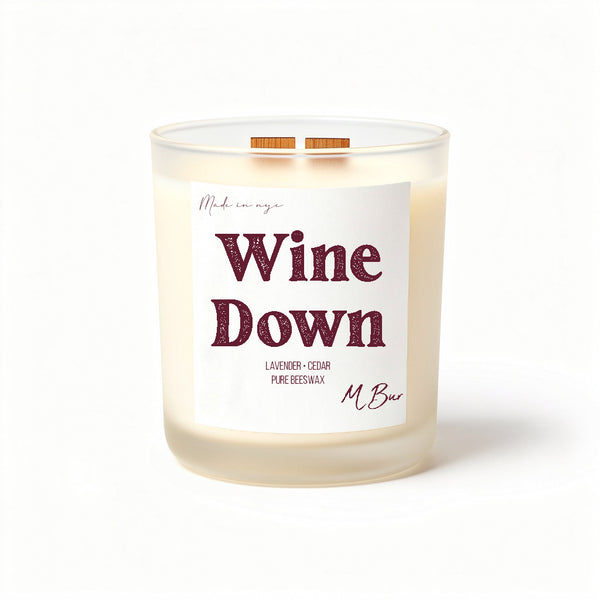
If a light, clean throw is what you are after, Wine Down (notes of lavender, chamomile, sage, rosemary, camphor, cedar, and sandalwood) is a calm, end of day scent that fills a room without shouting. The 40 hour size runs $32.

Size and burn time: what actually gives you value
Bigger is not automatically better in a nursery. A smaller candle you burn for short, supervised stretches is more practical than a giant jar. What you really want to compare is burn time, because that is where beeswax pulls ahead.
Because beeswax has the highest melting point of the common waxes, MBur candles burn up to 80 hours in the largest size. When you divide price by hours, a candle that costs more up front can quietly cost less per hour than a cheap paraffin jar that tunnels and burns out fast.
| Factor | Paraffin | Soy / coconut | 100% beeswax |
|---|---|---|---|
| Source | Petroleum byproduct | Plant based, often blended with paraffin | Naturally occurring, from honey production |
| Soot | Higher, visible marks | Lower | Very low |
| VOC risk | Can release benzene, toluene | Lower, depends on blend and fragrance | Cleanest burn, no chemical processing |
| Burn time | Shorter | Moderate | Longest (highest melting point) |
How MBur compares to other clean candle brands
To keep this honest, MBur is not the only maker taking clean burning seriously. Fontana Candle Co. offers a beeswax and coconut base with third party MADE SAFE certification, running for a 9 oz jar. Natural Sloth blends beeswax with organic coconut oil and FSC certified wooden wicks, roughly $17 to $35. Wick of Hope leans into a fragrance free option marketed for nurseries, around $42 CAD.
All are reasonable choices. The common buyer complaint across the category is the same one we mentioned: cleaner candles can read as softer, and natural wicks can tunnel if you do not burn them correctly. That is a technique issue, not a wax issue, and we cover the fix below. Where MBur stands apart is the single ingredient wax (100% beeswax, never a blend), the phthalate free fragrance, no chemical dyes, and everything handmade in small batches in New York City.
Your quick reference checklist
Before you buy any candle for a baby's space, confirm it hits every one of these:
- Wax says "100% beeswax," "100% soy," or "100% coconut," not "blend"
- Wick is unbleached cotton or wood, with zero metal core
- Fragrance is explicitly phthalate free, or the maker discloses what is in it
- No chemical dyes
- You know the burn time, so you can compare real price per hour
- The maker tells you where and how it is made
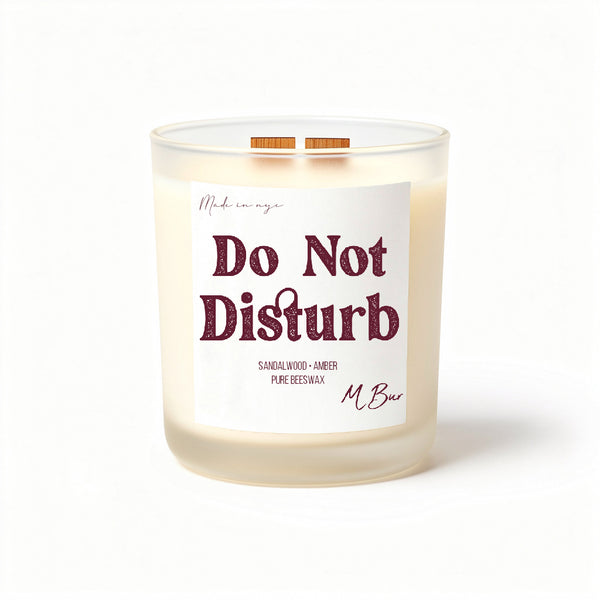
MBur checks every box on that list. If you want a gentle, versatile scent that suits a shared living space as easily as a nursery adjacent room, Do Not Disturb (bergamot and pear) is a soft, soothing option; the 40 hour size is $32.

Practical burn tips for a baby's space
Choosing the right candle is half the job. How you burn it is the other half.
Keep the room ventilated with a cracked window or open door. Trim the wick to about an eighth of an inch before every single burn, which is what keeps wooden wicks from smoking and helps the wax pool evenly instead of tunneling. Burn in short, supervised stretches rather than leaving one going for hours.
Most important: never leave a lit candle in a room where a baby is sleeping, and never use one as a nightlight. The fire and tip over risks alone make that a no. Light your candle while you are awake and present, then put it out before anyone goes down for the night. If your child has asthma or any diagnosed respiratory condition, follow your pediatrician's guidance on scented products in the home.
Frequently asked questions
Are scented candles safe to burn around newborns?
Newborns breathe rapidly and have sensitive, developing airways, so soot and toxic fragrance oils can irritate them more easily than they would an adult. A clean burning, phthalate free candle burned briefly in a ventilated room, and never while the baby sleeps, is far less likely to irritate. Start with something soft from our beeswax candle collection.
What type of candle wax is best for a baby's nursery?
100% beeswax, pure soy, or pure coconut wax all burn cleaner and produce far less petroleum based soot than paraffin. Beeswax has the added edge of the longest burn time and no chemical processing, which is why we make every MBur candle from single ingredient beeswax.
Are wooden wick candles safer than cotton wicks?
Neither is automatically safer. A wooden wick can spark or smoke if it is not trimmed before each burn, and the same goes for cotton. The trick is trimming to about an eighth of an inch every time, which keeps any well made candle burning cleanly.
Can candles trigger asthma symptoms in children?
Strong scents and the VOCs from burning can aggravate airway inflammation in sensitive kids. Cleaner wax and phthalate free fragrance mean fewer irritants, but if your child has asthma, follow your doctor's guidance on candles in the home. You can browse gentler, lightly scented options in our collection.
Should I use a candle as a nightlight in a baby's room?
Never. An open flame in a sleeping area is a serious fire and tip over hazard. Use a candle only while you are awake and present, then extinguish it before bedtime.
The bottom line
The label word "beeswax" or "natural" tells you almost nothing on its own. Check the wax percentage, confirm the wick is metal free, demand phthalate free fragrance, and compare price per hour before you buy anything for a baby's space. A single ingredient beeswax candle with a wooden wick and clean fragrance clears every one of those bars.
MBur candles are 100% beeswax, wooden wicked, phthalate free, dye free, and handmade in small batches in New York City, with hundreds of five star reviews from people who noticed the difference in their air. If you want the cleanest starting point for your home, browse our full beeswax candle collection and pick the scent that fits your space.
Related reading

