

The Best Candles for New Parents Losing Sleep Over the Baby Monitor
If you find yourself standing over the crib at 2 a.m. with your hand hovering, waiting to feel the tiny chest rise, you are not broken. That worry has a name. Intrusive thoughts about a baby's breathing are one of the most common things new parents feel, and studies have found the vast majority of parents go through some version of it.
The thoughts spike in the first weeks after birth, when sleep is thin and hormones are dropping fast. You want the racing mind to slow down. Many parents reach for a calming ritual at the end of the day, and a clean-burning candle can be part of a quiet space, which is exactly why people search for the right one from our pure beeswax candle collection that keeps a room feeling fresh without heavy smoke or harsh scent.
Before we get to which candle, one thing has to be clear.

The candle is not the fix, and pretending it is would fail you
Here is the honest part most candle blogs skip. A candle will not treat postpartum anxiety. Intrusive thoughts about your baby are a mental health symptom, and they respond to care, not scent.
If these thoughts eat more than an hour of your day, cause real distress, or make it hard to function, please talk to your doctor. A therapist certified in perinatal mental health can help. The National Maternal Mental Health Hotline is 1-833-852-6262, open all day, every day.
The content of a scary thought does not predict your behavior. Parents with these thoughts are no more likely to act on them than anyone else. That reframe alone helps many people breathe easier.
So where does a candle fit? It sits in the wind-down ritual around real care. It marks the end of the shift. It gives your hands something calm to do while your nervous system settles. That is a small, real thing. It matters.
Why the wrong candle makes a worried parent feel worse
You are already scanning the air your baby breathes. That instinct is correct. So the last thing a worried nursery-adjacent room needs is a candle adding smoke and mystery chemicals.
Paraffin is a petroleum byproduct. When it burns it can release compounds like benzene, toluene, and formaldehyde, plus visible soot. Babies breathe more air per pound of body weight than you do, so anything in the air hits them harder.
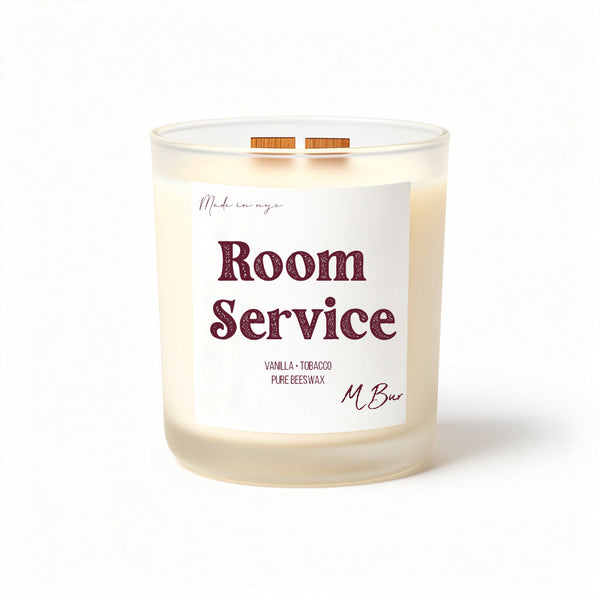
Then there is fragrance. Many candles use toxic fragrances that carry phthalates and parabens. Those can irritate developing lungs. A heavy, cloying scent can also trigger the exact headache and unease you are trying to escape.
One MBur customer, Nicole D., put the difference plainly:
"A lot of other candles tend to give me headaches, but this one was a total game-changer. I was able to enjoy the calming aroma without any discomfort."
That is the whole point. A calming ritual should not come with a payload.

What actually makes a candle safe for a home with a baby
The answer parents almost reach on their own: pick the cleanest possible wax, skip the toxic fragrance, and keep the flame out of the room where the baby sleeps. Let's break that down.
Wax sets the floor for everything else. Beeswax is a naturally occurring wax, a byproduct of honey production, and it needs no chemical processing. It has the highest melting point of any candle wax, so it burns slow and clean with minimal soot.
Fragrance does the most work on the label. Look for phthalate-free fragrance, stated plainly. MBur uses only non-toxic, phthalate-free fragrance oils and no chemical dyes.
The wick is the part you can watch. A wooden wick burns evenly and stays low. MBur candles are made in New York City with 100% beeswax and wooden wicks, and the 80-hour size burns for about 80 hours.
A quick clean-candle checklist
- 100% beeswax or another clean, single-source wax
- Phthalate-free fragrance, disclosed on the label
- No chemical dyes
- A cotton or wooden wick, never a metal-core wick
- Burned in a living room or bath, never in the nursery, never while the baby sleeps
The scents that fit a wind-down, ranked from bright to bedtime
For a racing mind at the end of the day, softer and greener tends to land better than sweet and heavy. Here are two picks, moving from the evening reset toward true lights-out.
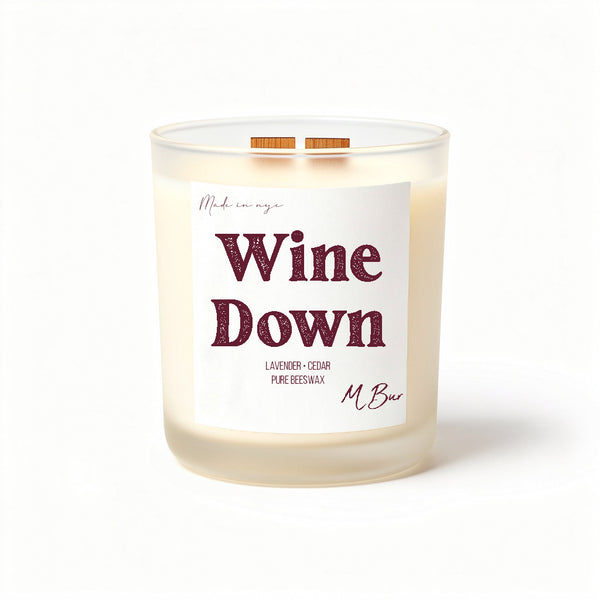
For the bath or the couch after the baby is finally down, our Wine Down beeswax candle leans clean and herbal. Its notes are Lavender, Chamomile, Sage, Rosemary, Camphor, Cedar, Sandalwood. Lavender and chamomile are the scents most often reached for when people want a calmer room.
Paige, a repeat buyer, said it best:
"They smell up a WHOLE room during the burn & even a while after blowing them out. I won't buy other candles anymore, they're just that good."
The 40-hour Wine Down candle is $32, and the 80-hour size is $65 if you want it to last through weeks of long nights.
For the last quiet hour before bed, our Do Not Disturb beeswax candle is the softer of the two. It carries bergamot and pear, a gentle, low scent rather than a loud one. Snuff it out before you head to sleep, and let the room hold the calm.
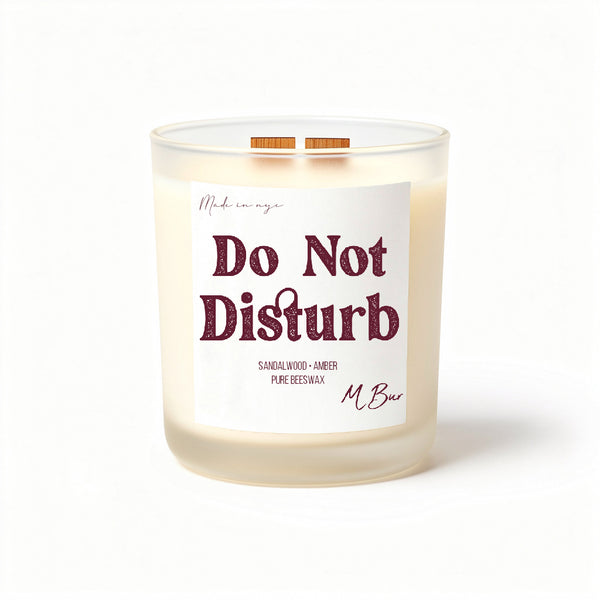
A customer named Dawne described it as "lovely not overpowering," the kind of light scent that fills a room without taking it over. The 20-hour size starts at $20.

But my nursery feels bare without a candle in it
Skip it in the nursery. That one rule holds even for the cleanest beeswax. Never burn any candle in the room where your baby sleeps or crawls, and never while they are asleep.
Keep the flame in the rooms you are awake in. Light it in the living room or the bath, enjoy the wind-down, then snuff it out before nap time or bed. If you love the scent in a shared space, a beeswax candle in the next room over gives you the ritual without putting anything near the crib.
Simple burn habits that keep the air clean
Trim the wooden wick before each burn. A short wick means a low flame and less smoke.
Crack a window or run a fan for airflow. Good ventilation clears anything the flame gives off.
Keep burns to a couple of hours and always put the flame out when you leave the room. If your family has allergies, asthma, or any respiratory condition, follow your doctor's guidance on scented products at home.
Frequently asked questions
Is it normal to constantly worry about my baby's breathing?
Yes. The vast majority of new parents get intrusive thoughts in the postpartum period, and worry about breathing is one of the most common. It does not mean anything is wrong with you. A calm evening ritual, like a clean burn from our beeswax candle collection, can help you decompress, but persistent distress deserves a call to your doctor.
Do these thoughts mean I might hurt my baby?
No. The content of an intrusive thought does not predict behavior. Parents with these thoughts are no more likely to act on them than anyone else. If the thoughts are heavy or constant, reach out to a perinatal mental health specialist.
What scent is best for calming down at night?
Lavender and chamomile are the scents people reach for most when they want a softer, calmer room. Our Wine Down candle leans into that herbal, clean profile. Keep any candle out of the nursery.
How long does a beeswax candle actually burn?
Beeswax has the highest melting point of any candle wax, so it burns slow. Our largest 80-hour size lasts about 80 hours, which is a lot of quiet evenings from one candle. You can compare sizes across the full candle collection.
The takeaway
A candle will not treat postpartum anxiety, and any honest guide has to say so first. What a clean beeswax candle can do is anchor a calm end-of-day ritual, without adding paraffin soot or toxic fragrance to a home with a new baby. Keep it out of the nursery, burn it while you are awake, and let it mark the moment you exhale.
For that wind-down, start with the Wine Down beeswax candle, 40 hours for $32. It is handmade in NYC with 100% beeswax, a wooden wick, and phthalate-free fragrance, and it is part of a line customers keep coming back to. If the worry runs deeper than a hard night, please call the National Maternal Mental Health Hotline at 1-833-852-6262.

