

The Best Candles for Asthma and Allergy Sufferers: Clean Burning and Soot-Free
If candles set off your asthma or leave you sniffling, the wax is usually the reason. Most people blame the scent. The bigger problem is what the wax is made of and how much soot it throws into the air you breathe.
Soot is made of tiny particles. These particles add to something called PM2.5, which is one of the most studied asthma triggers in indoor air. Not every candle produces the same amount, and that gap is huge. Before you write off candles for good, it is worth knowing that pure beeswax candles burn clean with no paraffin soot and no heavy toxic fragrance, so they keep a room smelling fresh instead of coating your lungs to do it.

Throwing out the paraffin candle is the easy part
The easy fix is obvious. Stop buying the cheap paraffin candle. But that is not the part that fails most people.
What fails is the swap. You buy something labeled "natural" or "soy" and your chest still tightens. The label lied to you a little, and your airways caught it before your brain did.
So the real question is not "are candles bad." It is "which parts of a candle actually trigger you, and which parts are just marketing." Let us start with the one that sets the floor for everything else.
The wax, which decides how much soot you breathe
Paraffin is a petroleum byproduct. When it burns, it releases benzene, toluene, and formaldehyde. All three are documented asthma triggers. This part is not debated.
Soy burns cleaner than paraffin and makes less soot. That is real progress. But there is a catch most people never hear about.
A candle that is 51% soy can still be sold as a "soy candle." You could be breathing nearly half paraffin and never know it. "Natural wax blend" usually means paraffin is in the mix too.
Beeswax sits at the top. Studies suggest it produces the least soot of any wax, even less than soy. It burns hotter and slower, and it does not need chemical processing to exist. That matters when your lungs react to the small stuff.
This is why single-ingredient wax is worth hunting for. Our Do Not Disturb candle is 100% beeswax, not a blend, so there is no hidden paraffin riding along. One reviewer, Dawne, put it plainly.
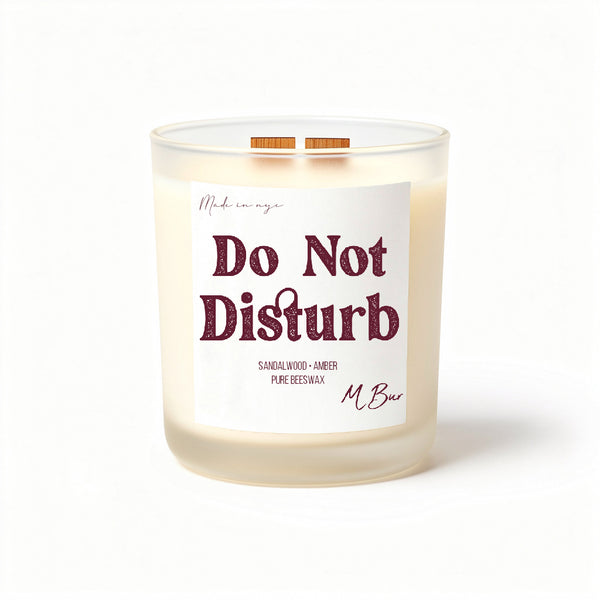
"I love the scent of this candle. It is lovely not overpowering. It's soothing fragrance more than covers my bedroom and bathroom. It is aromatherapy at its best. I also love getting fragrance samples with my order."
Dawne mentions the scent was not overpowering. That points at the next thing your airways notice.

The word doing the most work on the label
"Fragrance" is a catch-all word. It can hide dozens of compounds, and you get no list.
Many candles use toxic fragrances that contain phthalates and other VOCs. These are respiratory irritants. In a sensitized airway, they can spark inflammation and tightness.
People with asthma and chemical sensitivity react to scented products at higher rates than the general public. So a heavy, undisclosed scent load is a real risk, not a made-up one.
The fix is not going scent-free forever, though that is the safest route for severe cases. A clean candle keeps a scent you enjoy while dropping the compounds your body fights. MBur uses only non-toxic, phthalate-free fragrance oils and no chemical dyes. Jason, a longtime candle user, noticed the difference right away.
"I love these candles! I instantly notice the difference in the air quality, in comparison to the Bath & Body scented candles. I love Bath & Body's candles but I acknowledge that it caused a slight headache and other minor respiratory discomfort. Awesome products. Totally addicted."
If you want a full breakdown of what a truly clean candle contains, our guide on what makes a candle non-toxic walks through every ingredient.
The two parts you can check with your own eyes
The wick and the burn habits are where you have the most control. And they cause more soot than most people guess.
Metal-core wicks are the first thing to avoid. The Consumer Product Safety Commission banned lead-core wicks back in 2003, but cotton and wooden wicks still burn cleaner than metal alternatives. Wooden wicks in particular burn steady and even.
A long wick is the other culprit. A flame with too much wick to feed throws smoke and soot into the room. Trim it and the flame burns clean.
How to compare candle types at a glance
| Wax type | Soot level | Chemical byproducts | Notes for sensitive airways |
|---|---|---|---|
| Paraffin | Highest | Benzene, toluene, formaldehyde | Allergists generally advise avoiding it |
| Soy | Lower than paraffin | Fewer byproducts | Often blended with paraffin; some soy allergies exist |
| Beeswax (100%) | Lowest | None from the wax itself | Cleanest burn; MBur uses this at 100% |
What to actually look for when you shop
Here is the checklist to run before you buy. MBur candles meet every point on it.
- Wax listed as 100% beeswax, coconut, or soy, never a vague "blend"
- Phthalate-free, non-toxic fragrance
- No chemical dyes
- Cotton or wooden wick, never metal-core
- Clear burn-time and size info from the maker
MBur candles are 100% beeswax with wooden wicks, made by hand in New York City. They are naturally hypoallergenic and burn up to 80 hours in the largest size. The 40-hour size starts at $32, and the 80-hour size runs $65.
If you have asthma, allergies, or any chronic breathing condition, follow your doctor's guidance first. A clean candle is a smart swap, but your care plan comes before any product.
How to burn it so it stays clean
Even the best candle needs good habits. These small steps keep soot down.
Trim the wick to about one-eighth inch before every burn. A short wick means a calm flame and far less smoke. Keep a window cracked so fresh air moves through the room.
Do not burn for more than about four hours at a stretch. Put it out, let it cool, trim again, then relight. Never burn in a small closed space with no airflow.

Frequently asked questions
Do all candles trigger asthma, or just certain types?
Not all equally. Paraffin candles, candles with toxic fragrance, and candles burned in stuffy rooms are the main triggers. A 100% beeswax candle with a clean wick and open window is the format most sensitive people tolerate.
What is the safest candle wax for asthma sufferers?
Beeswax is the cleanest choice. Studies suggest it produces the least soot of any wax, even less than soy. Every candle in the Wine Down lineup and the rest of the range is 100% beeswax.
Are the fragrances in candles harmful for allergies?
They can be if they contain phthalates, which release into the air as the candle burns and can worsen allergy and asthma symptoms. MBur uses only phthalate-free, non-toxic fragrance, which you can read more about in our post on non-toxic fragrance oils.
How can I reduce candle-related asthma symptoms?
Trim the wick to about one-eighth inch so the flame burns clean without smoke, keep the room ventilated, and limit burn time. For the science on why paraffin causes trouble, see our paraffin-free guide.
What chemicals do paraffin candles release?
Paraffin is a petroleum byproduct. It releases benzene, toluene, and formaldehyde when it burns, and all three are documented asthma triggers. You can read more from the Cleveland Clinic on candle safety.
The takeaway
If candles bother your breathing, the wax and the wick are almost always the cause, not the mood you were after. A 100% beeswax candle with a wooden wick and phthalate-free fragrance gives you the glow without the soot. MBur candles check every box on the clean list, are handmade in NYC, and reviewers with scent sensitivities keep coming back for the cleaner air.
Start with our Do Not Disturb candle in the 40-hour size ($32) for a soft, low-key scent that fills a room without overwhelming it.
Related reading

