

How to Remove the Smell of Garlic from Your Kitchen and Home
The garlic smell that hangs around for two days is not clinging to the air. It is clinging to your curtains, your dish towels, and the plastic tub you stored the leftovers in. That is why spraying the room does nothing. You freshen the air, and an hour later the smell creeps back from the soft stuff it soaked into.
Here is the part most people miss. Garlic odor is a chemical, not just a scent. Once you know what you are fighting, the fix gets simple, and it is why our pure beeswax candles work best as the last step, keeping a room fresh after you have dealt with the source, rather than trying to cover it up.

What garlic leaves behind, and why it hides
When you crush or cut garlic, the cells break open. That releases sulfur compounds like allicin and allyl methyl sulfide. These are the same molecules that give garlic its bite on your tongue and its punch in the air.
Sulfur compounds are volatile. They lift off the cutting board and drift through the room fast. Then they settle. They bond with anything porous nearby.
Curtains soak them up. So do dish towels, couch cushions, and the wood grain of your cutting board. The extension folks who study garlic point to these sulfur oils as the reason the smell travels and sticks.
That is the real problem. The air clears on its own in a few hours. The fabric holds the smell for days.
The mistake that makes it worse
Most people wait until the kitchen already reeks before they open a window. By then the sulfur has already bonded with your soft surfaces. You are venting an empty room.
The bigger mistake happens at the sink. You grab hot soapy water for the smelly plastic container. Heat expands the plastic and drives the garlic oils deeper into tiny cracks.
Hot water does the same thing to wood boards. It cooks the smell into the grain instead of pulling it out. So the two things that feel right, heat and speed, both backfire.
Start before you even cut
The best move happens before the knife touches the clove. Crack a window or turn on the exhaust fan first. Cross-ventilation carries the sulfur out while it is still airborne, before it can settle.

This one habit does more than any cleanup step later. You are giving the volatile compounds an exit instead of a landing spot.
Clear the air at the source
Once the cooking is done, put a small pot on the stove. Add 1 cup of water and 3 tablespoons of white vinegar. Let it simmer for a few minutes.
The vinegar steam breaks down the airborne sulfur molecules. Boiling a few lemon slices does the same job if you prefer the smell. Then wipe your counters and stovetop with a vinegar-and-water mix to catch the sulfur that landed there.
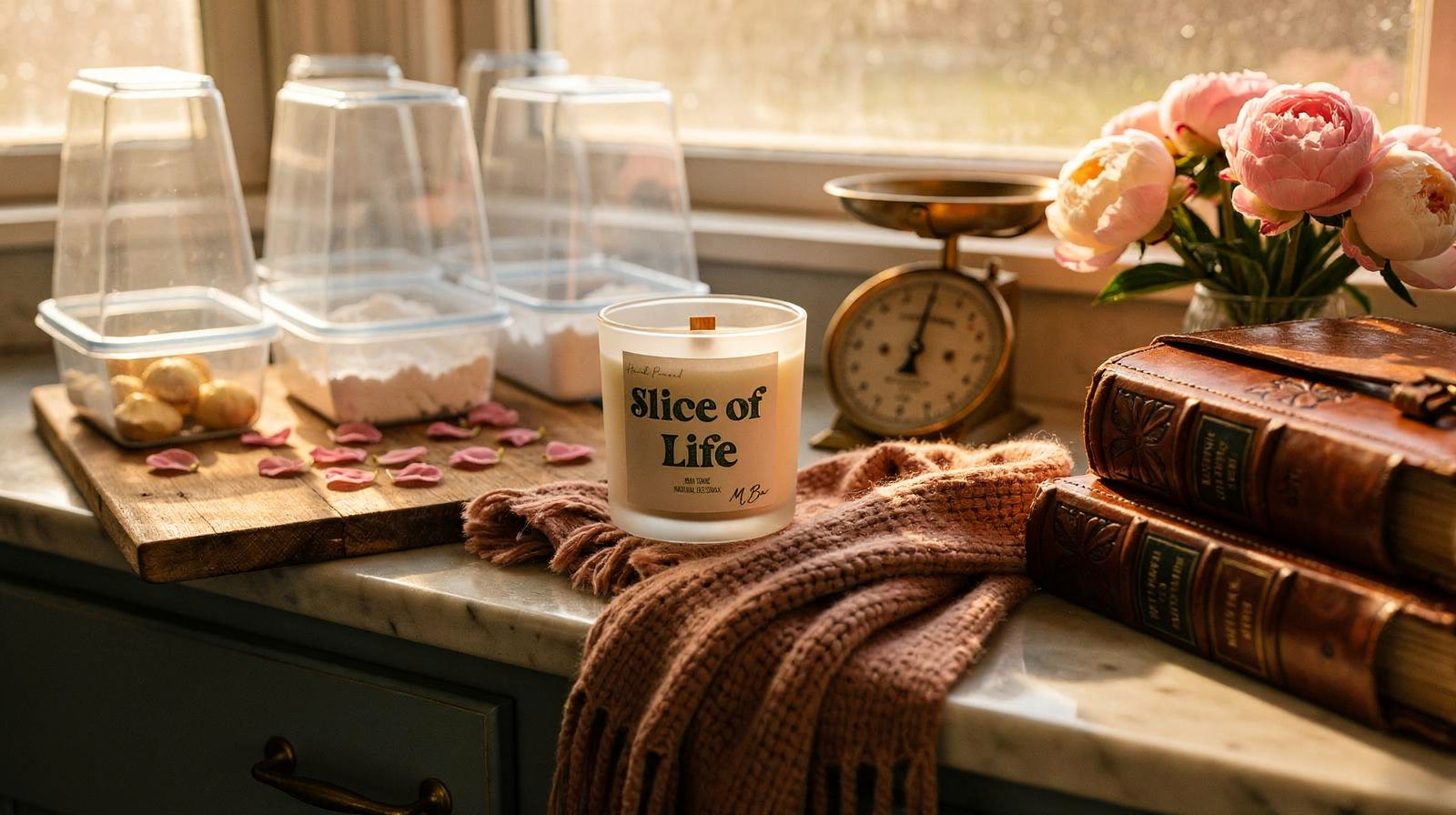
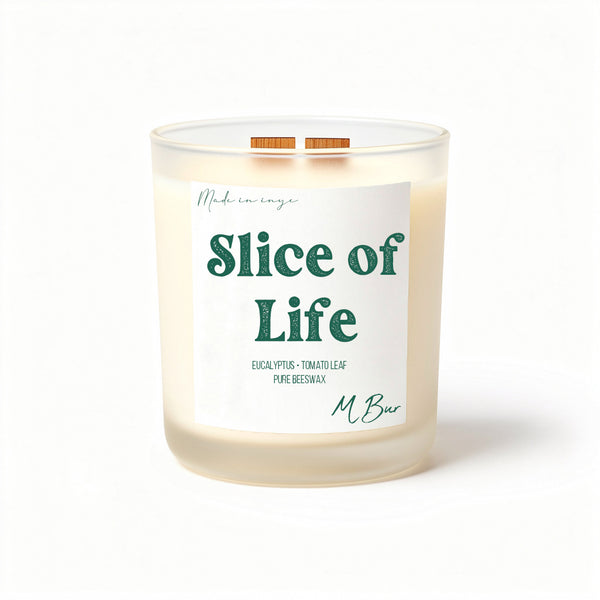
This is where a clean-burning candle earns its place. After the source is handled, our Slice of Life beeswax candle keeps the kitchen smelling fresh with notes of Spearmint, Eucalyptus, Tomato Leaf, Anise, and Mint. It burns with no paraffin soot and no toxic fragrance, so it holds a clean room instead of layering a heavy scent over a bad one.
"I love these candles. No headache or feeling nauseous like the Bath & Body candles with all the extra chemicals. In addition, I love the package and how carefully everything was wrapped." Jason H.
Hands, boards, and containers
Your hands hold the smell too. Rub them on a stainless steel spoon or the sink under cold running water. This helps bind and lift the sulfur off your skin. Science is split on exactly why it works, but it costs you nothing to try.
For a stronger scrub, mix about 1 teaspoon of salt with 2 teaspoons of baking soda. Rub it over your hands for about 30 seconds, then rinse. The grit lifts the residue off your skin.
Cutting boards need a gentler touch. Make a paste of coarse salt and fresh lemon juice. Leave it on for 5 to 10 minutes, no longer, or the acid starts to etch the wood. Rinse with cool water, then stand the board on its edge to air-dry for at least 2 hours.
The plastic container trick
Plastic is the worst offender because garlic oil sinks into the porous surface. Skip the hot water. Rinse the container in cold water first.
Then coat the inside with 1 to 2 tablespoons of baking soda. Set it upside-down in direct sunlight for 2 to 4 hours, flipping it halfway. The UV light breaks down the trapped sulfur compounds. It sounds odd, and it works.
Don't forget the soft stuff
The fabrics that soaked up the smell need attention too. Sprinkle baking soda on curtains, cushions, and rugs near the kitchen. Let it sit for an hour, then vacuum it up.
Check the hidden spots as well. Garbage disposals and dishwasher seals trap food odor and pump it back into the room. Run a few citrus rinds through the disposal and wipe the dishwasher gasket.
The USDA has a guide on pulling stubborn odors out of the fridge if the smell migrated in there too.
Why masking alone fails
You might think a strong air freshener solves this. It hides the smell for an hour, then the garlic bleeds back through from the curtains and the containers. The sulfur is still there.
A candle works differently when you use it as the finish. You break down the source first with vinegar, sun, and baking soda. Then the candle keeps a room that is already clean smelling fresh.
A clean beeswax candle matters here for one more reason. If you burn a paraffin candle in a kitchen you just aired out, you are adding soot and heavy fragrance back into the space. Beeswax burns clean, so it keeps the fresh air fresh.
Frequently asked questions
Why does the garlic smell linger in my house for days?
The volatile sulfur oils travel through the air and embed into porous fabrics like curtains and carpets. Without cross-ventilation while you cook, they bond with soft surfaces and release slowly for days. Air the room early, treat the fabrics with baking soda, then let a clean candle from our beeswax candle collection hold the fresh air.
How do I get garlic smell off my hands fast?
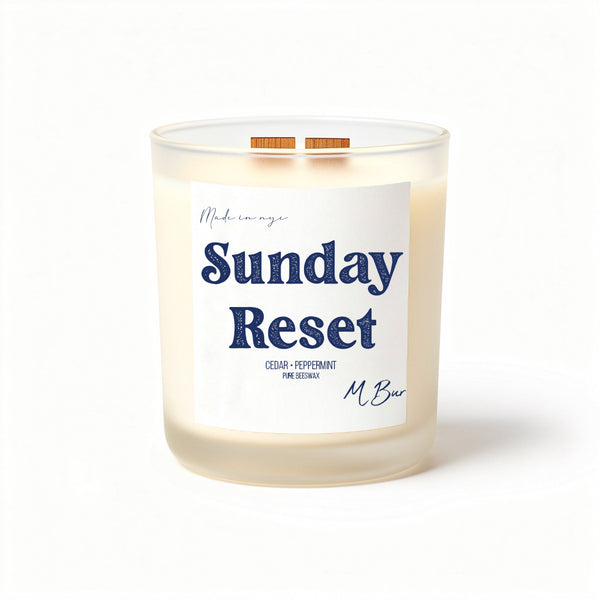
Rub your hands on a stainless steel spoon or your sink under cold running water. For a stronger fix, scrub with a salt and baking soda mix for 30 seconds. Once your hands are clean, our Sunday Reset candle with Eucalyptus, Clove, Cedar, Patchouli, and Vanilla makes the whole kitchen feel reset.
Does vinegar really neutralize garlic odor?
Yes. Simmering 3 tablespoons of white vinegar in 1 cup of water breaks down the airborne sulfur molecules that cause the smell. Wipe down hard surfaces with a vinegar-water dilution to catch what settled.
Can I just use hot water on smelly plastic containers?
No. Hot water expands the plastic and bakes the garlic oils deeper into the surface. Rinse in cold water, coat with baking soda, and set the container in direct sunlight for a few hours instead.
How long does it take to fully clear a garlic smell?
The airborne smell clears in a few hours with good ventilation. Fabrics and containers can take a day if you treat them, and garlic on your breath can linger up to 48 hours. Handle the source first, then keep the room fresh with a clean-burning candle.
The short version
Garlic smell sticks because sulfur compounds bond with your fabrics, wood, and plastic. Beat it by venting early, simmering vinegar, and using baking soda and sunlight on the tough spots, then keep the room fresh with a clean candle instead of masking the problem.
For that last step, reach for the Slice of Life beeswax candle, made for the kitchen with fresh mint and green notes. It starts at $32 for the 40-hour size and runs up to $65 for the 80-hour size, all handmade in New York City with phthalate-free fragrance and no chemical dyes. Readers keep telling us the same thing, in Jason H.'s words: "No headache or feeling nauseous like the Bath & Body candles."
Shop the Slice of Life candle and keep your kitchen smelling fresh.
Related reading
- Discover the Secret to Soot-Free Candles: Say Goodbye to Mess and Hello to Clean Burn
- Why Paraffin-Free Candles Are a Must-Have for a Healthier Home
- Discover the Benefits of Non-Toxic Candle Fragrance Oils: Enhancing Your Space without Harmful Chemicals
- What Makes a Candle Non-Toxic? How to Spot the Real Thing

