

How to Remove the Smell of Chitlins: Freshen Your Home Naturally
The smell of chitlins settles into curtains, couch fabric, and the hallway carpet, and it stays there for days after the pot is cleaned. Most people think one good boil handles it. That single boil is often what locks the odor deep into your walls.
The strong smell comes from pig intestines and the fat still clinging to them. When you boil raw or under-cleaned chitlins, they release unstable sulfur compounds into the steam. That steam drifts everywhere. If you want to keep a space smelling fresh after the cooking is done, a clean-burning candle helps a lot, and MBur's pure beeswax candles keep a room fresh without paraffin soot or heavy perfume layered on top of the problem. Fix the source first. Then let the candle hold the room.
Why chitlins smell the way they do
Chitlins are pig intestines. Even packaged ones carry waste, debris, and a tough outer membrane. That membrane and the fat inside trap most of the odor.
Heat pulls all of it into the air. Sulfur compounds go airborne the second the water starts to bubble. This is why the smell spreads room to room so fast.
There is a safety side too. Raw chitterlings can carry Yersinia enterocolitica, a bacteria that causes foodborne illness. So cleaning them well is about more than the smell.

The step everyone skips, which is why the smell wins
Throwing out the dirty water is the easy part. Cleaning the intestines the right way is the part that actually kills the smell.
Start by peeling the membrane. Pull away the tough outer layer and the excess fat with your hands. This is slow work. It is also where most of the odor hides.
Then rinse. Not once. Not twice. Cooks who do this well rinse the chitlins through many water changes until the water runs clear.
Wear gloves. Keep raw chitlins away from other food. Sanitize your sink and counters right after. For the full food-safety steps, the USDA guide on chitterlings lays it out clearly.
The soak that breaks the odor down before it starts
Here is where you get ahead of the smell. A quick acid soak cuts the pungent compounds before any heat touches the pot.
Mix equal parts cold water and white vinegar. Apple cider vinegar or lemon juice work too. Soak the cleaned chitlins for 30 minutes, or a few hours if you have time.
The acid breaks down the surface film that carries most of the funk. Baking soda in the soak water helps neutralize the sulfur smell too.
Boil, drain, repeat, then cook low
Now the part most people get wrong. Do not do one long boil.
Give the chitlins a short first boil, about 5 to 10 minutes, then dump the water completely. That first drain carries off the heaviest impurities and the worst of the smell.
Do it again with fresh water. Two or three times. Each drain takes more odor out of the room.
Once they are boiled and drained, drop the heat and simmer them 3 to 4 hours until tender. Add aromatics to the pot while it goes.
Aromatics that pull odor out of the air
Cooks have leaned on kitchen ingredients for this for generations. A halved onion in the boil absorbs a lot. A halved potato works like a smell sponge.
Whole garlic cloves help. So does a splash of vinegar in the pot. A little cheesecloth pouch of fresh cilantro or a few orange slices adds a clean top note over the cooking.

Clearing the air once the cooking is done
The pot is off. The smell is not. This is the part that lingers longest.
Start with airflow. Open windows. Run the range hood the whole time and keep it going after. Cross-ventilation moves the trapped air out faster than anything else.
Then absorb what is left. Leave out bowls of white vinegar or baking soda overnight. They pull ambient odor straight from the air.
A simmer pot of water with citrus peels, cinnamon sticks, and a few cloves adds a warm, clean scent while it steams. For a lingering fridge smell after storing leftovers, the USDA odor-removal guide covers that too.
Keeping the room fresh, not just masked
Once the source is handled and the air has cleared, you want the room to stay fresh. This is where the candle you burn actually matters.
Paraffin candles add soot and heavy perfume. That sits on top of the leftover food smell instead of clearing it. A clean-burning beeswax candle holds a fresh room without piling more into the air.
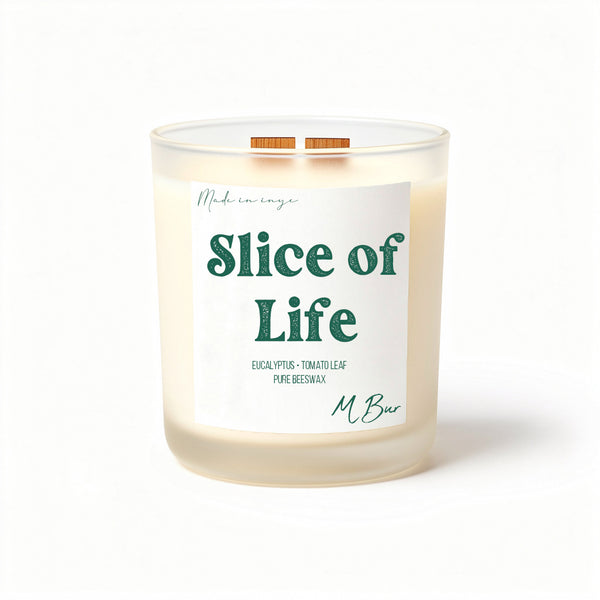
For a kitchen that just finished a big cook, our Slice of Life candle fits the moment. Its notes are Spearmint, Eucalyptus, Tomato Leaf, Anise, and Mint. That cold green mint reads clean and bright, which is exactly what you want after hours at the stove. It starts at $32 for the 40-hour size and goes up to $65 for the 80-hour size.
"I absolutely love these candles! I instantly notice the difference in the air quality, in comparison to the Bath & Body scented candles. I love Bath & Body's candles but I acknowledge that it caused a slight headache and other minor respiratory discomfort. Awesome products. Totally addicted." Jason H.
MBur candles are 100% beeswax with a wooden wick, phthalate-free fragrance, and no chemical dyes. They burn clean, which is the whole point when you are trying to freshen a space, not smother it.
What if the smell is still there the next morning?
You cleaned. You aired it out. And it is still faintly there. This happens because soft surfaces held onto it.
Wash any kitchen towels and cloth napkins. Wipe down cabinet fronts and the range hood filter. Fabric and grease hold odor longer than hard surfaces do.
Run the range hood again for a while. Keep a fresh bowl of baking soda out for a second night. The smell fades in layers, so a second pass usually finishes it.
FAQ
What causes the intense smell when cooking chitlins?
The odor comes from the natural contents and fat inside pig intestines. When boiled, they release unstable sulfur compounds into the steam. Cleaning well and changing the boil water several times cuts it down. Afterward, a clean beeswax candle helps keep the room fresh.
Does soaking chitlins in vinegar or lemon juice really help?
Yes. Soaking pre-cleaned chitlins in equal parts water and vinegar, or lemon juice, for 30 minutes to a few hours breaks down the odor-causing residue before you cook.
How do I get the lingering smell out of my kitchen afterward?
Open windows, run the range hood, and leave out bowls of vinegar or baking soda overnight. A simmer pot with citrus and cinnamon adds a fresh note, and a wooden-wick candle like Slice of Life keeps the room fresh after.
Will a scented candle just cover the smell instead of fixing it?
A heavy paraffin candle masks. A clean beeswax candle holds a fresh room without adding soot or heavy perfume. Handle the source first, then let the candle keep it fresh. If you have asthma or scent sensitivity, follow your doctor's guidance on what you burn indoors.
How long should chitlins cook to reduce both smell and safety risk?
Give them a short 5 to 10 minute first boil, drain, and repeat two or three times. Then simmer 3 to 4 hours until tender. This lowers both the odor and the bacteria risk.
The takeaway
Clean the chitlins thoroughly, soak them in vinegar, and boil-and-drain more than once before the long simmer. Air out the kitchen after, then keep the room fresh with a clean-burning candle instead of a heavy one that just masks. Our Slice of Life candle ($32 for the 40-hour size) is the pick for a post-cook kitchen, loved by reviewers who notice the cleaner air right away.
Ready to keep your kitchen smelling fresh the natural way? Shop the Slice of Life beeswax candle.
Related reading
- Discover the Secret to Soot-Free Candles: Say Goodbye to Mess and Hello to Clean Burn
- Why Paraffin-Free Candles Are a Must-Have for a Healthier Home
- What Makes a Candle Non-Toxic? How to Spot the Real Thing
- Discover the Benefits of Non-Toxic Candle Fragrance Oils: Enhancing Your Space without Harmful Chemicals

