

How to Get the New Renovation Smell Out of a Just-Finished Wing
The new renovation smell in your just finished wing is off gassing, which is fresh paint, adhesives, sealants, new flooring, and pressed wood cabinets all releasing volatile organic compounds into your air at once. That sharp chemical bite you notice when you walk in is formaldehyde, benzene, and toluene evaporating out of the materials your contractor installed last week. It is not a sign the space is clean and new. It is a signal the room is still purging.
Here is the frustrating part: the instinct most people have is to light something fragrant and call it handled. That approach makes the problem worse, and I will explain why below. If you want to clear the air properly and then bring in a scent you actually feel good about, start with our full beeswax candle collection, but only after the room has done the heavy lifting.

Why a fresh renovation smells like chemicals
Off gassing is the culprit. When paint, varnish, wood adhesives, and engineered wood like MDF and particleboard cure, they release VOCs and formaldehyde into the room. The EPA notes that indoor pollutant concentrations can run 2 to 5 times higher than outdoor air, and those levels spike hard during and right after remodeling.
Latex paint off gasses fast, mostly in the first few days. Composite wood bonded with urea formaldehyde resins is the slow burn. Those materials can emit low levels for months, with the heaviest release happening in the first few weeks after install.
Modern airtight construction complicates all of this. Tight weatherproofing is great for your energy bill and terrible for a freshly renovated wing, because it traps those gases inside with nowhere to go. If your new space feels sealed up and the smell just lingers, that is why.
One more thing worth knowing. If you cannot smell it anymore, that does not mean the air is clear. Certain forms of formaldehyde are odorless or fade from your detection long before emission levels drop to a safe range. Your nose is a rough tool here, not a monitor.
The mistake that makes new construction smell worse
Reaching for a plug in, an air freshener, or a cheap fragrance candle is the most common wrong move. Masking agents do not neutralize VOCs. They add a second layer of chemicals and toxic fragrance on top of an already heavy load. You end up with a room that smells like fake vanilla over formaldehyde, which is somehow worse than the formaldehyde alone.
Houseplants get a lot of credit they have not earned. The viral idea that a few pothos will scrub renovation chemicals out of the air does not hold up against rapid post renovation off gassing. Their real world impact is negligible compared to moving air.
Cranking the heat is another trap. It feels productive, like you are cooking the smell out. Heat does accelerate off gassing, but if you seal the windows and crank the HVAC without ventilating, you create a high heat, high humidity worst case scenario that pumps chemicals into the air faster than you can clear them. Formaldehyde release from pressed wood at 77 degrees can run 2 to 3 times higher than at 65 degrees.

How to actually clear the smell: a layered plan
No single tool fixes this. The people who deal with indoor air quality for a living agree on a layered approach: aggressive ventilation first, then filtration, then careful use of heat.
1. Ventilate hard, and do it mechanically
Fresh air dilution is the fastest way to drop VOC concentrations, and it is scientifically the single most effective intervention. Open windows on opposite sides of the wing to create a cross breeze, then put a box fan in one window facing outward to force stagnant air out. That is the part people skip. A fan blowing in just recirculates. A fan blowing out purges.
Done right, cross ventilation with fans can drop initial room concentrations by 50 to 70 percent within the first couple of hours. Keep it running for days, not minutes. The EPA's guidance on indoor air quality when remodeling is worth a read if you want the official version.
2. Run a real activated carbon air purifier
Here is a detail that trips people up. Standard HEPA only purifiers capture particles, not gases. They will not touch formaldehyde or benzene. You need a purifier with a substantial bed of activated carbon or charcoal, which adsorbs airborne chemical molecules. Skip the ones with a razor thin carbon mesh, because they saturate almost immediately and do next to nothing.
3. Use the bake out technique correctly
If you want to speed things along, you can raise the room temperature deliberately to force trapped chemicals out faster, then immediately ventilate hard to purge what you released. The order matters. Heat with the windows open and fans running, never heat while sealed up. This is the difference between accelerating the cure and trapping a chemical cloud.
4. Clean up the construction dust
Fine sanding and cutting dust holds chemical particulates and keeps redistributing odor every time the air moves. Wipe surfaces, vacuum with a good filter, and damp mop hard floors. Do not let that layer sit.
"I absolutely love these candles! I instantly notice the difference in the air quality, in comparison to the Bath and Body scented candles. I love Bath and Body's candles but I acknowledge that it caused a slight headache and other minor respiratory discomfort. Awesome products. Totally addicted." Jason H.
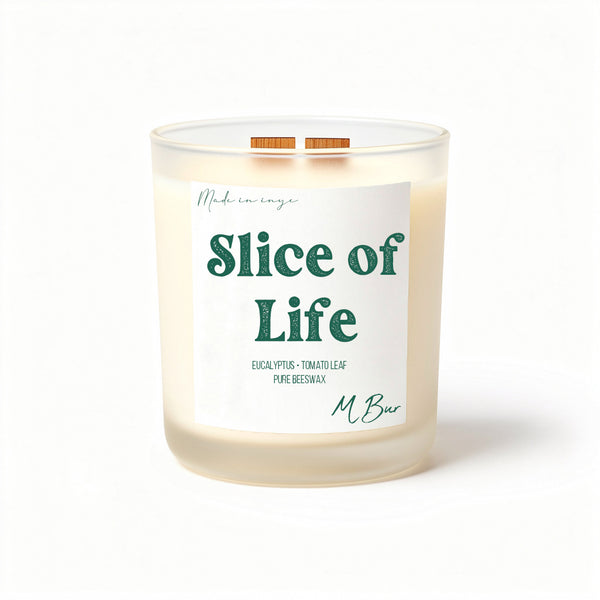
That reaction Jason describes is exactly why the candle you eventually bring into a fresh renovation matters. Once the room is ventilated and filtered, you want a candle that adds a clean scent without piling more chemicals onto air that just spent weeks clearing them. A pure beeswax candle with a wooden wick, like the crisp, green Slice of Life with its notes of spearmint, eucalyptus, tomato leaf, anise, and mint, gives a new space a fresh feel without the toxic fragrance load that plug ins and paraffin candles carry.

When you can finally enjoy the space
The strongest odors usually fade within a few days to a couple of weeks with proper ventilation. The low level off gassing from heavier materials can quietly continue for months, which is exactly why you keep the purifier running long after your nose stops complaining.
The reason beeswax fits a freshly finished wing is simple. It is a single ingredient wax, not a paraffin blend, so it does not release the petroleum soot and VOCs that paraffin candles do. MBur candles use only phthalate free, non toxic fragrance, no chemical dyes, and a wooden wick that burns clean and even. They are handmade in New York City and naturally hypoallergenic, which is a real consideration in a room where you are trying to lower the chemical burden, not raise it. If you or anyone using the space has a diagnosed respiratory condition, follow your doctor's guidance on when to reintroduce any scent.
A clean candle keeps the atmosphere you want and drops the compounds your body reacts to. That is the whole point of doing the ventilation work first.
Frequently asked questions
What actually causes the new renovation smell?
Off gassing. Fresh paint, new flooring, adhesives, sealants, and composite wood release VOCs and formaldehyde into the air as they cure. It is a chemical cloud, not a clean scent, which is why masking it does not help. Once the air is cleared, a non toxic option from our beeswax candle collection is a much better way to scent the space.
How long does it take for a newly remodeled wing to stop smelling?
The strongest odors usually fade within a few days to two weeks with steady ventilation. Low level off gassing from heavier materials like composite wood can continue for months, so keep an air purifier running well past the point where you can smell anything.
Does cranking up the heat get rid of the smell faster?
Not on its own. Heat increases the rate materials release formaldehyde and other VOCs, so a sealed, heated room actually gets worse. It only helps if you heat and ventilate at the same time, forcing the gases out and then purging them with fans.
Do houseplants or air fresheners remove renovation VOCs?
Air fresheners just mask the odor with toxic fragrance while adding to the pollutant load, and houseplants have a negligible effect on rapid off gassing. For scent that does not add chemicals back, a wooden wick beeswax candle like Slice of Life is the cleaner choice once the room is aired out.
Are air purifiers effective against renovation chemical odors?
Standard HEPA particle filters do not capture gases. Purifiers with a thick bed of activated carbon do, because carbon adsorbs airborne chemical molecules. Cheap thin mesh carbon filters saturate fast and barely help.
The bottom line
The new renovation smell is a chemical cloud you clear with ventilation first, then activated carbon filtration, then careful heat and a thorough dust cleanup. Masking it with a plug in or a paraffin candle only adds to the problem. Once the wing has aired out, a pure beeswax candle with a wooden wick gives you the fresh, finished feeling you were after without piling more compounds into the air.
MBur candles are rated across dozens of five star reviews, with customers repeatedly noting they can burn them without the headaches and stuffiness they get from paraffin candles. If you are ready to scent your finished space the clean way, browse our full beeswax candle collection and start with a scent that matches the room.
Related reading
- Discover the Benefits of Non Toxic Candle Fragrance Oils: Enhancing Your Space without Harmful Chemicals
- Why Paraffin Free Candles Are a Must Have for a Healthier Home
- What Makes a Candle Non Toxic? How to Spot the Real Thing
- Discover the Secret to Soot Free Candles: Say Goodbye to Mess and Hello to Clean Burn

