

How to Fix a Rotten Egg Smell in Hot Water
A rotten-egg, sulfur smell in your hot water usually means bacteria are growing in the water heater tank, often when it is set below about 120°F, reacting with the anode rod to produce that smell. Flush and treat the tank, adjust the temperature, and it clears.
We make small-batch beeswax candles in Far Rockaway, so a room that truly smells clean is our whole focus, and that always starts at the source rather than the scent. Below is where the smell comes from, how to clear it step by step, and how to keep the space fresh afterward, with the full the MBur beeswax candle collection here as you read.
Why hot water smells like rotten eggs
Sulfate-reducing bacteria can grow in a water heater, especially at lower temperatures, and react with the magnesium anode rod to produce hydrogen sulfide gas, the rotten-egg smell. It shows up mainly in the hot water.
A tank set too low, a common energy-saving choice, lets those bacteria thrive. Flushing, adjusting the temperature, and addressing the anode is what fixes it.

How to fix it, step by step
- Check the temperature. Set the water heater to around 120°F, since too low encourages bacteria and much higher risks scalding, so 120 is the usual balance.
- Flush the tank. Drain and flush the water heater to clear sediment and bacteria, following your heater's instructions or a plumber.
- Disinfect if needed. A chlorine or peroxide treatment run through the tank can kill the bacteria, per manufacturer guidance or a plumber.
- Consider the anode rod. A magnesium anode rod feeds the reaction, so switching to an aluminum-zinc or powered anode rod often solves a persistent sulfur smell. A plumber can do this.
- Rule out the supply. If cold water also smells, the issue may be the water supply rather than the heater, which is a water-treatment question.
Water heater work carries scald and gas or electrical risk. Keep the tank around 120°F for safety, and when you are unsure about flushing or the anode rod, call a plumber.

Keep it from coming back
Keep the temperature around 120°F, and flush the tank periodically to clear sediment.
If the smell keeps returning, have the anode rod switched, which is often the lasting fix.
Freshen the whole room once the source is gone
With the sulfur smell handled, the air itself is the last step. A clean candle is the finishing touch here, best lit once the space is already clean. From there it is the fastest way to make the room read fresh rather than merely neutral.
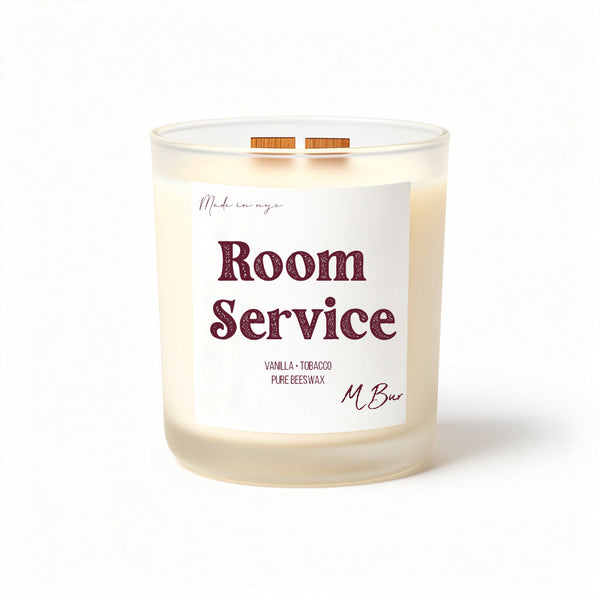
For your home, Room Service fits well. It is cozy and sweet, with vanilla, almond milk, white tea, and tonka bean, and like every MBur candle it is poured from 100% beeswax with a wooden wick and phthalate-free non-toxic fragrance oils, so freshening the air never means adding soot on top.

Frequently asked questions
Why does my hot water smell like rotten eggs?
Bacteria in the water heater reacting with the anode rod produce hydrogen sulfide gas. Flush the tank, keep it around 120°F, and consider switching the anode rod.
What temperature should my water heater be?
Around 120°F, which balances killing bacteria against scald risk. Too low encourages the bacteria that cause the smell.
Why does only my hot water smell?
Because the reaction happens in the water heater. If cold water smells too, the issue is likely the water supply, not the heater.
Do I need a plumber?
For flushing the tank or switching the anode rod, a plumber is the safe call, since water heater work involves scald and gas or electrical hazards.
Ready to keep your space smelling clean once the source is handled? Explore the MBur beeswax candle collection and find the scent that fits the room.

