

How to Choose the Best Candles for Sleep Deprivation
Sleep deprivation does not always look like lying awake at 3 a.m. Sometimes it looks like a body that keeps buzzing long after the lights go off. Your mind knows it is bedtime. Your nervous system did not get the memo.
Most people reach for a candle to fix this, then wonder why nothing changes. The scent smells nice for an hour. The racing thoughts stay. This is where the wrong candle quietly works against you, because a candle heavy with paraffin soot or hidden phthalates can nudge your system toward alert instead of calm. If you want a bedtime scent that actually helps you wind down, the pure beeswax candles we make in New York City burn clean, so the only thing filling the room is the scent you chose, not chemical residue.

Why the candle you own probably is not helping
Buying a "lavender" candle is the easy part. That is not the part that fails. The part that fails is what that candle is actually made of.
Many mass-market candles use paraffin wax. Paraffin is a petroleum byproduct. When it burns, it releases compounds like benzene, toluene, and formaldehyde into the air you are trying to sleep in.
That soot and residue can leave you feeling stuffy or wired instead of settled. Add a toxic fragrance loaded with phthalates, and you get a scent that reads as stimulating to a tired brain. You wanted calm. You got a low-grade headache.
One MBur customer put the difference plainly:
"A lot of other candles tend to give me headaches, but this one was a total game-changer. I was able to enjoy the calming aroma without any discomfort." Nicole D.
Her issue was never the scent itself. It was everything packed in around it.
The part almost nobody checks: the wax and the wick
By now you can probably guess where this is going. The scent gets all the attention. The wax and the wick decide whether that scent helps or hurts.
Here is the honest answer. The best candles for sleep deprivation start with a clean wax, use a calming scent your body responds to, and skip the chemical extras entirely.
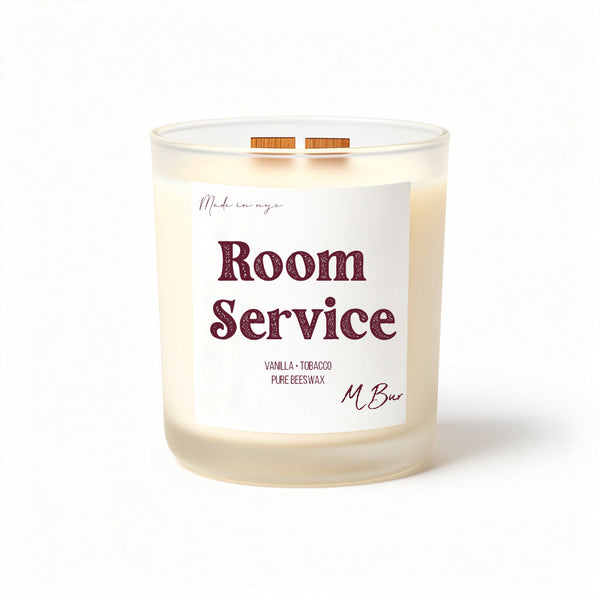
Natural waxes are the baseline. Soy wax burns cleaner than paraffin and holds fragrance well. Beeswax goes further. It is a single-ingredient wax, a natural byproduct of honey production, with no chemical processing at all.
Beeswax also has the highest melting point of common candle waxes. That means the longest burn time, up to 80 hours in our largest size. A candle you can use nightly for weeks matters, because scent and sleep only click with repetition.

Which scents your nervous system actually responds to
Some scents have real research behind them. Lavender leads the pack. Its main active compound, linalool, has been studied for calming effects on the nervous system.
A meta-analysis of 30 studies found aromatherapy had a moderate, statistically significant effect on sleep quality. A separate randomized study on jasmine showed improvement in sleep quality and total sleep time.
Chamomile, sandalwood, and vanilla show up in the research too. Chamomile contains apigenin. Sandalwood carries santalols. Vanilla is warm and grounding.
None of these are a cure. A candle will not fix insomnia. What the right scent at bedtime can do is signal your nervous system that the day is over.
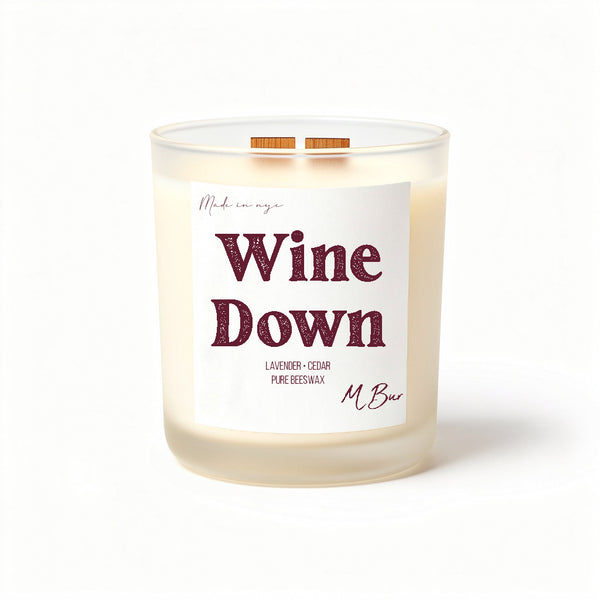
For a calming, herbal wind-down scent, our Wine Down beeswax candle leans into lavender, chamomile, sage, and rosemary, with cedar and sandalwood underneath. It is built for the end of the day. The 40-hour size runs $32, and the 80-hour size is $65.
If your evenings need something quieter and less herbal, the Do Not Disturb candle is softer, with bergamot and pear leading a mellow, bedroom-friendly scent.
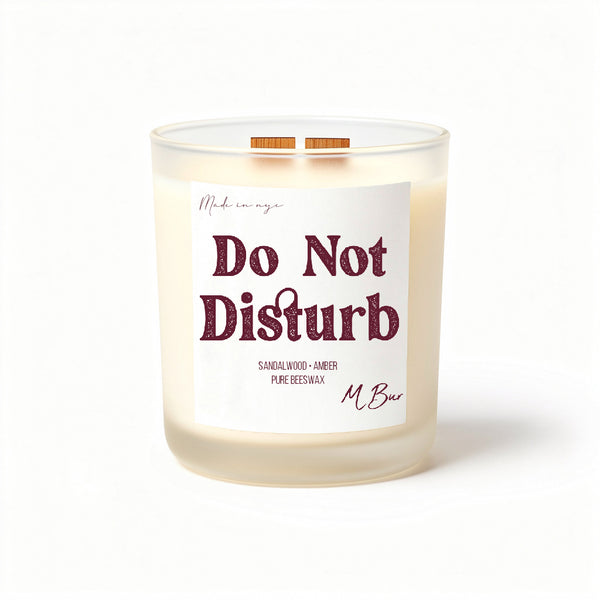
"It is lovely not overpowering. It's soothing fragrance more than covers my bedroom and bathroom." Dawne Forrest
A note if your sleep trouble is ongoing or tied to a health condition. Aromatherapy does not have strong evidence for treating clinical insomnia, and you should follow your doctor's guidance rather than a candle alone.

How to actually use a sleep candle
The candle is only half the routine. How you use it does the rest.
Light it about 30 minutes before bed. That gives the scent time to fill the room and gives your body time to read the signal. A cooler room helps too, around 66°F.
Trim the wick before each burn. A clean wick means an even flame and less residue. Keep the candle away from drafts and anything flammable.
Then the non-negotiable part. Blow it out before you get into bed. A sleep candle is for the wind-down, not for sleeping beside. Never leave one burning unattended.
Consistency is what makes it work. The effect builds over several nights, not one. Even a few nights a week can teach your brain that this scent means the day is done.
"But I have tried scented candles and they did nothing"
If a candle gave you a headache before, that is a strong clue it was paraffin or packed with toxic fragrance. A clean beeswax candle with phthalate-free fragrance is a different experience for a tired, sensitive system.
And if one scent did nothing for you, that is normal. There is no single best scent for sleep. Lavender works for many people. Others settle faster with vanilla or something warmer. Your preference is part of the science.
Frequently asked questions
Do lavender candles actually help you sleep?
Lavender has been linked to better sleep in several studies, including in some people with insomnia. The effect is supportive, not a guaranteed fix. A clean, lavender-forward option like the Wine Down beeswax candle gives you the scent without paraffin soot working against it.
Can I leave a candle burning while I sleep?
No. Always blow out your candle before you get into bed. Use it during your wind-down, then put it out. You can browse safe, clean options in our beeswax candle collection.
How long does it take for a sleep candle to work?
The strongest effects show up after several nights of consistent use. This is why a long burn time helps. The 80-hour size of the Do Not Disturb candle ($65) lasts through weeks of bedtime routines.
What is the best scent for sleep, lavender or chamomile?
There is no single winner. What works depends on your sleep issue and your scent preference. A blend like Wine Down gives you both lavender and chamomile in one candle.
Which candle scents are backed by research?
Linalool in lavender, santalols in sandalwood, vanillin in vanilla, and apigenin in chamomile all interact with the nervous system in studied ways. You can explore scents built around these notes in our candle collection.
The takeaway
A candle will not cure sleep deprivation, but the right one can help signal your body that the day is over. Start with clean beeswax, pick a calming scent your body responds to, and use it 30 minutes before bed, every night if you can. For a lavender and chamomile wind-down that burns clean and long, the Wine Down beeswax candle is the one to start with, with a 40-hour size at $32 and an 80-hour size at $65.
MBur candles are handmade in New York City with 100% beeswax, wooden wicks, and phthalate-free fragrance. Reviewers who once got headaches from other candles keep coming back for the calmer nights.
Shop the Wine Down beeswax candle and build a bedtime routine that actually settles you.
Related reading

