

How to Buy the Best Meditation Candles (And Avoid the Ones That Wreck Your Practice)
How to Buy the Best Meditation Candles (And Avoid the Ones That Wreck Your Practice)
That "beeswax" candle you bought at the boutique wellness shop? There is a decent chance it is 51% paraffin with just enough beeswax to legally use the label. The candle industry has almost no labeling standards, which means the candle sitting on your yoga mat right now could be off gassing benzene and toluene while you try to breathe deeply and find some peace.
The good news: once you know what to actually look for, buying a genuinely clean meditation candle is not complicated. This guide breaks it down by the criteria that matter.
The Most Common Mistake: Assuming the Label Tells the Whole Story
Paraffin is a petroleum byproduct. When it burns, it releases volatile organic compounds including benzene and formaldehyde. Burning one in a small, enclosed yoga space is working against everything the practice is meant to do for your body.
Soy candles are better, but most commercial soy candles are blends containing some percentage of paraffin. Soy is also almost always paired with toxic fragrance to compensate for soy wax's weak scent throw.
Beeswax is the only wax that needs zero chemical processing to be usable. It burns at the highest melting point of any candle wax, lasts longer, and produces virtually no soot. For meditation and yoga specifically, that clean burn is the baseline requirement.
Decision Criterion 1: Wax Type
You want 100% single ingredient beeswax. Not "beeswax blend," not "natural wax blend." The ingredient list should be short enough to read in two seconds.
Any candle that lists "fragrance" without specifying phthalate free is almost certainly using a toxic fragrance cocktail. Those compounds build up in enclosed spaces fast, and your deep breathing during yoga means you are pulling more of that air into your lungs than normal.
Decision Criterion 2: Wick Type
Metal core wicks are an immediate disqualifier. They release trace metals when burned.
Cotton wicks are fine. They are the most common clean burning option.
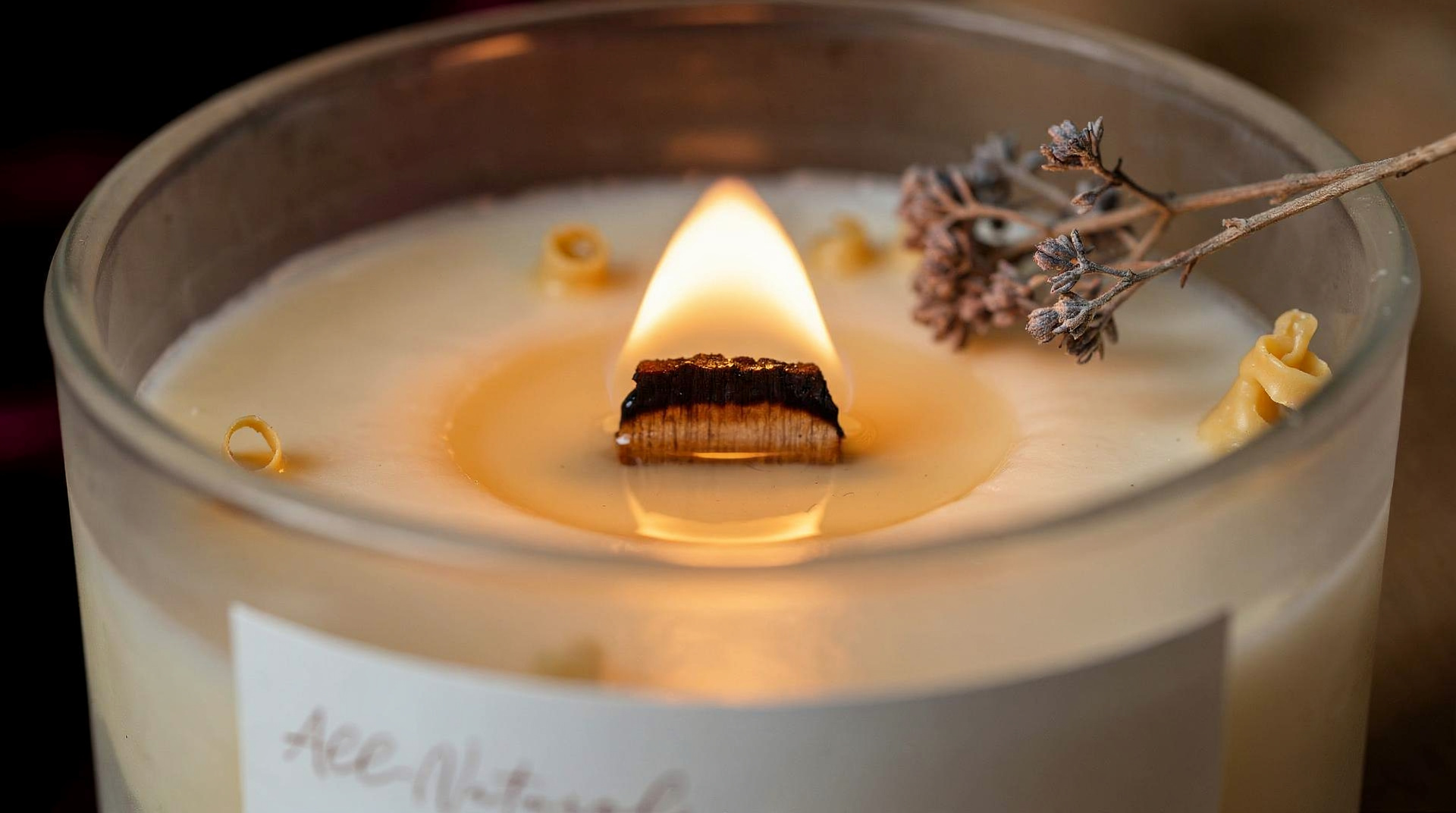
Wooden wicks are specifically well suited for meditation and yoga environments. The low, steady crackle of a wood wick is not just pleasant. Soft, rhythmic sounds can activate the parasympathetic nervous system, the same "rest and digest" state that breathwork and meditation are trying to reach. Wooden wicks also produce a wider, more even melt pool, which means better scent distribution in a room sized yoga space.
Decision Criterion 3: Scent Sourcing
The words "aromatherapy candle" have no regulated meaning. A candle can use entirely toxic fragrance compounds and still legally call itself an aromatherapy product.
What you are looking for is phthalate free fragrance. Phthalates are chemical plasticizers used in many fragrances, and they are endocrine disruptors.
For meditation specifically, the scent profile matters as much as how the scent is made. Lavender, chamomile, eucalyptus, and sage have documented calming effects on the nervous system.
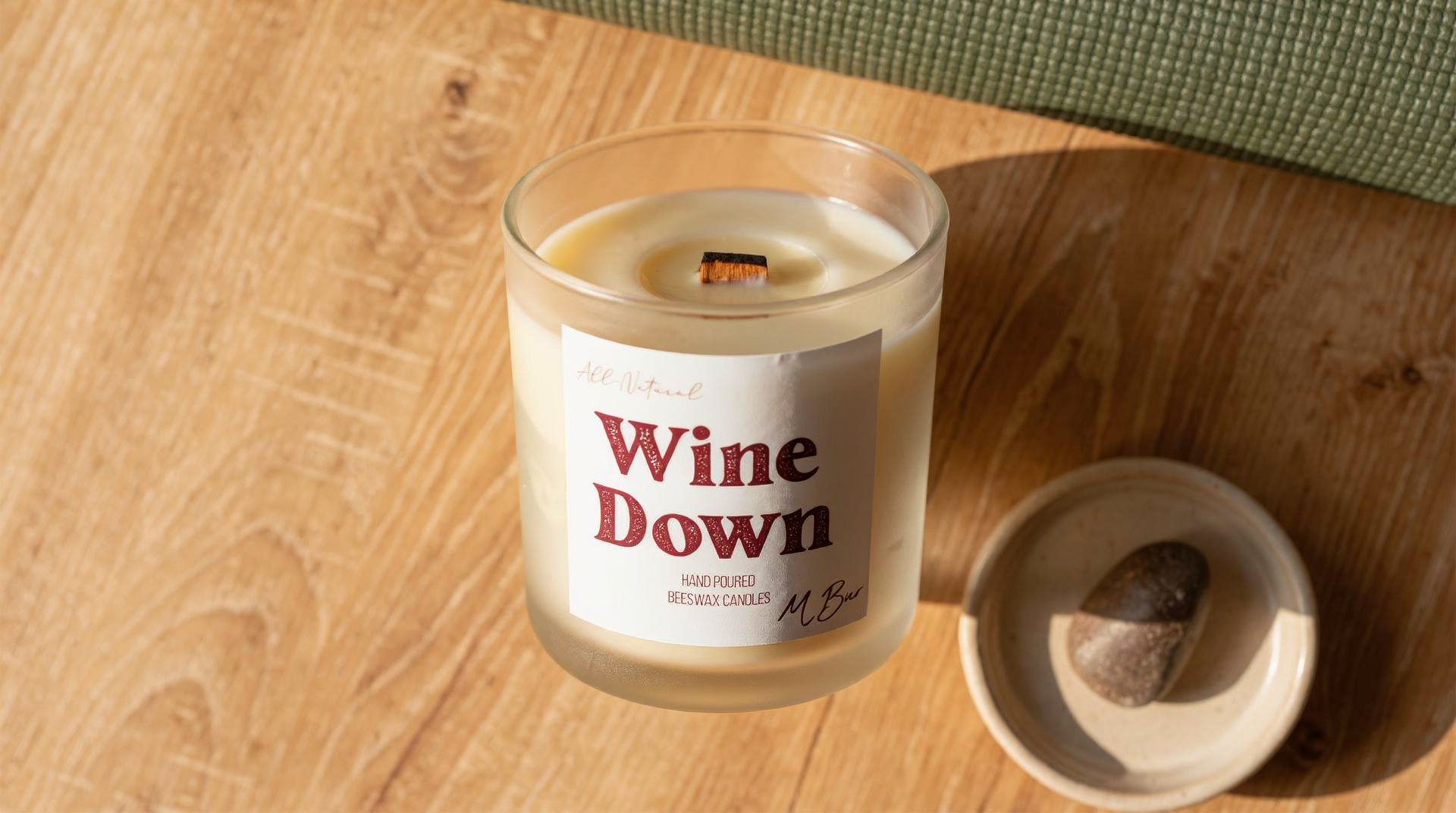
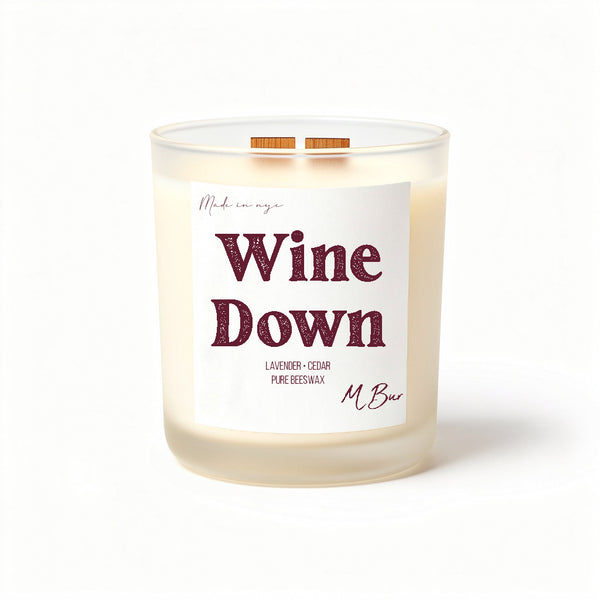
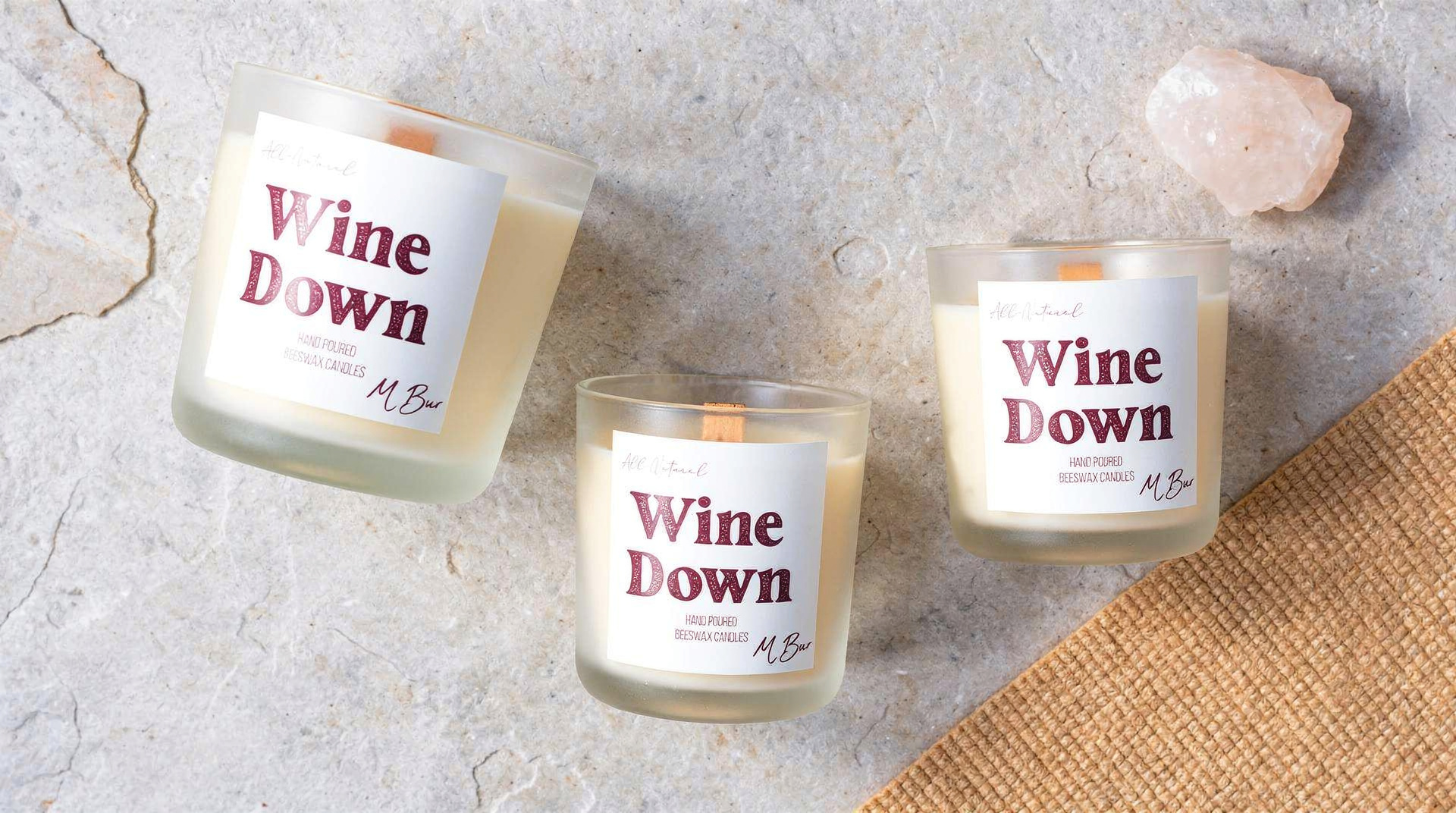
The Wine Down beeswax candle is built exactly for this use case. Lavender, chamomile, sage, cedar, and sandalwood. That is a genuinely functional calming scent stack, not a random combination of things that sound relaxing on a label. Made with phthalate free fragrance in 100% beeswax.
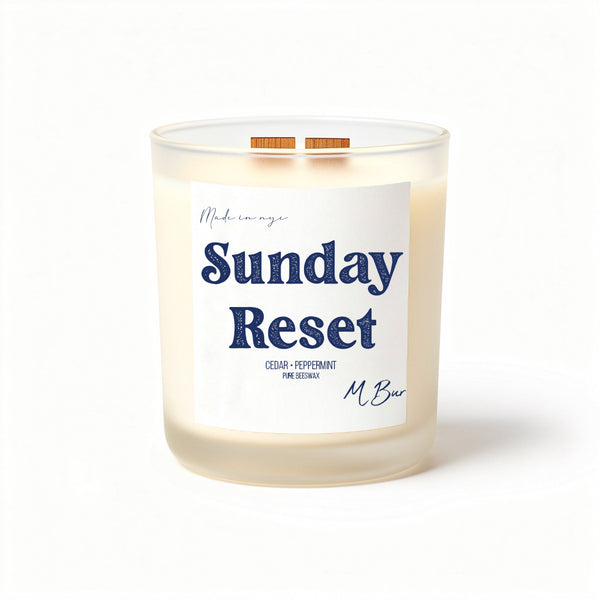
"A lot of other candles tend to give me headaches, but this one was a total game changer. I was able to enjoy the calming aroma without any discomfort. It made my space feel cozy and refreshed at the same time." Nicole D., Sunday Reset Candle
Decision Criterion 4: Size and Burn Time
A $15 paraffin candle that burns for 25 hours costs about $0.60 per hour. A $65 beeswax candle that burns for 80 hours costs $0.75 per hour. That is a 25 cent difference for a dramatically cleaner burn material.
Beeswax has the highest melting point of any candle wax, which is why it burns slower and longer. MBur's 12oz candles are rated for 80 hours. For a regular yoga or meditation practice, a single candle at that size lasts months.
Sizing Guide for Meditation and Yoga
- Solo practice, small room: The 2.5oz, 20 hour size works well.
- Regular daily practice: The 5oz, 40 hour size is the sweet spot. Enough wax to last several weeks, small enough to store easily.
- Studio use or larger spaces: Go straight to the 12oz, 80 hour option. The larger wax pool means stronger scent throw.
Decision Criterion 5: Price Per Hour
| Wax Type | Average Burn Time (8oz) | Average Price | Price Per Hour |
|---|---|---|---|
| Paraffin | 40 to 50 hours | $15 to $20 | $0.30 to $0.50 |
| Soy blend | 40 to 55 hours | $20 to $30 | $0.40 to $0.75 |
| 100% Beeswax (MBur) | 55 hours (7oz) / 80 hours (12oz) | $37 to $60 | $0.67 to $0.75 |
When you factor in what you are not burning, no soot, no VOCs, no phthalates, beeswax is not the expensive option. It is the efficient one.
Quick Reference Checklist: Is This Candle Actually Good for Meditation?
- Wax is 100% beeswax, not a blend
- Fragrance is phthalate free
- No metal core wick
- No artificial dyes
- Scent profile includes at least one documented calming note (lavender, chamomile, eucalyptus, sage, frankincense)
- Burn time is clearly stated
- No vague claims like "natural" without specifying the actual wax ingredient
Frequently Asked Questions
How long should I burn a candle during a meditation session?
Most meditation sessions run 20 to 60 minutes. Any beeswax candle should burn for at least a full hour at a time to allow the wax pool to reach the edges of the container, which prevents tunneling. A 20 minute sit is fine as long as you are doing longer burns regularly.
Do candles actually help with meditation, or is it just aesthetic?
Both. The visual focus of a flame is a legitimate concentration anchor used in trataka, a classic yoga practice of fixed gaze meditation. The scent component engages the olfactory system, which connects directly to the limbic system, the brain region that processes emotion and stress.
Can I use scented candles in a hot yoga or heated practice space?
Yes, with a caveat. Heat accelerates scent throw, so a candle that smells moderate at room temperature will be noticeably stronger in a heated room. Start with a lighter scent profile or a smaller candle size in heated spaces.
Are beeswax candles actually safer than paraffin in a small yoga room?
Yes. Paraffin releases benzene and toluene when burned, both classified as VOCs. In a small, enclosed space where you are specifically doing deep breathing, that matters more than in a large, well ventilated room. Beeswax burns cleanly with no significant VOC output.
The Bottom Line
Most candles marketed to the wellness crowd are not actually clean. What matters is 100% beeswax, phthalate free fragrance, no metal core wick, and a scent profile built for the kind of stillness you are actually trying to create.
For meditation and yoga specifically, the Wine Down beeswax candle is the one we keep coming back to. Lavender, chamomile, sage, cedar, and sandalwood. Built entirely on clean ingredients and rated for up to 80 hours. The 20-hour size at $20 is the lowest-commitment way to find out if it belongs in your practice.
Shop the full MBur beeswax candle collection
What buyers say:
Related reading:

