

Expensive Candles vs Cheap Candles: Is the Price Difference Actually Worth It?
Expensive Candles vs Cheap Candles: Is the Price Difference Actually Worth It?
The internet is convinced this is a personality test. Some people swear a $10 candle from the drugstore does the job just fine. Others insist cheap candles are a waste of money and possibly a health hazard. Both camps are partially right, and both are missing the actual point.
The real question is not how much a candle costs. It is what you are getting per dollar, per hour, and per breath. Because a $15 candle that burns for 25 hours and fills the room is a better deal than a $40 candle that tunnels through the center, smells like a department store floor, and gives you a headache by hour three.
This post breaks it down with actual numbers. We are talking ingredients, burn time, cost per hour, scent throw, and the health factors that most candle brands would rather you not think too hard about. By the end, you will know exactly when cheap is fine and when paying more is the smarter call. If you want to skip ahead, our full beeswax candle collection starts at $20.
The Comparison Framework
To make this actually useful, we are comparing candles across five categories that matter: wax type and ingredients, burn time, cost per hour, scent throw, and health impact. These are the factors that determine whether a candle is worth owning, regardless of price tag.
1. Wax Type and Ingredients
This is where most of the price difference originates, and it is the category that matters most.
Cheap candles: mostly paraffin
The majority of budget candles, including most mass market options under $20, are made from paraffin wax. Paraffin is a petroleum byproduct. It is the sludge left over after crude oil is refined into gasoline. It is cheap to produce, easy to work with, and takes fragrance well. It is also the reason a lot of people walk away from candles with a mild headache and a faint soot ring on their ceiling.
Paraffin combustion releases benzene and toluene, both classified as volatile organic compounds. A study published in the journal Environmental Health Perspectives found measurable VOC emissions from paraffin candles in controlled settings. That does not mean one paraffin candle will send you to urgent care. But it does mean that burning them daily in an enclosed space adds up.
Mid range candles: soy, but read the label
Soy candles occupy most of the $20 to $40 range and are marketed heavily as the clean, natural alternative. Soy wax is genuinely better than paraffin. It burns cooler, produces less soot, and is biodegradable. The problem is that most soy candles on the market are not 100% soy. Many brands blend soy with paraffin to improve scent throw or lower costs, then still call it a soy candle because there is no regulation requiring them to disclose the ratio.
Even fully soy candles can carry synthetic fragrance oils loaded with phthalates, which are endocrine disrupting chemicals used to make scents stick. A clean wax with a problematic fragrance is still a problematic candle.
Premium candles: beeswax at the top
Beeswax is the oldest candle material on earth, used since approximately 3000 BCE, and it is still the cleanest burning option available. It is a single ingredient wax with no chemical processing required. It burns with a flame that emits light in the same spectrum as natural sunlight. It produces no black soot and no petrochemical byproducts.
Beeswax is also a byproduct of honey production, which means supporting beeswax candle brands supports beekeeping operations. It is not a manufactured material. Bees make it, beekeepers harvest it, and candle makers use it as is.
The cost is higher because the supply is limited and the raw material is genuinely premium. You cannot factory farm beeswax the way you can refine paraffin. That scarcity is reflected in the price, and it is legitimate.
2. Burn Time
Cheap candles tend to burn fast. This is not a coincidence. Paraffin has a low melting point, which means it liquefies quickly and burns through faster than denser waxes. A standard 8 oz paraffin candle typically delivers 40 to 50 hours of burn time on a good day. Many deliver less.
Soy candles burn slower than paraffin, generally around 50 to 60 hours for a comparable size, which is a meaningful improvement.
Beeswax has the highest melting point of any candle wax, and that translates directly to longer burn times. A 12 oz beeswax candle can deliver up to 80 hours. That is not a marketing claim. It is chemistry. Higher melting point means slower fuel consumption means more hours per ounce.
At MBur, the 12 oz candle is rated for 80 hours of burn time. That is a documented, consistent figure across the product line.
3. Cost Per Hour: The Math Nobody Does
This is the number that should determine your buying decision, and almost nobody calculates it before purchasing.
Here is how to do it: take the price of the candle and divide it by the estimated burn hours. The result is your cost per hour of burn time.
| Candle Type | Example Price | Estimated Burn Hours | Cost Per Hour |
|---|---|---|---|
| Drugstore paraffin (approx 8 oz) | $10 to $15 | 40 to 50 hours | $0.25 to $0.38 per hour |
| Mid range soy (approx 8 oz) | $25 to $35 | 50 to 60 hours | $0.42 to $0.70 per hour |
| MBur beeswax 12 oz | $60 | 80 hours | $0.75 per hour |
| MBur beeswax 7 oz | $37 | 55 hours | $0.67 per hour |
| MBur beeswax 5 oz | $23 | 40 hours | $0.58 per hour |
MBur costs more per hour than a drugstore candle, no question. But the gap is much smaller than the sticker price suggests, especially when you factor in what you are actually burning. Seventy five cents an hour for clean beeswax with phthalate free fragrance versus thirty cents an hour for a petroleum product. That is a meaningful difference in what you are bringing into your home.
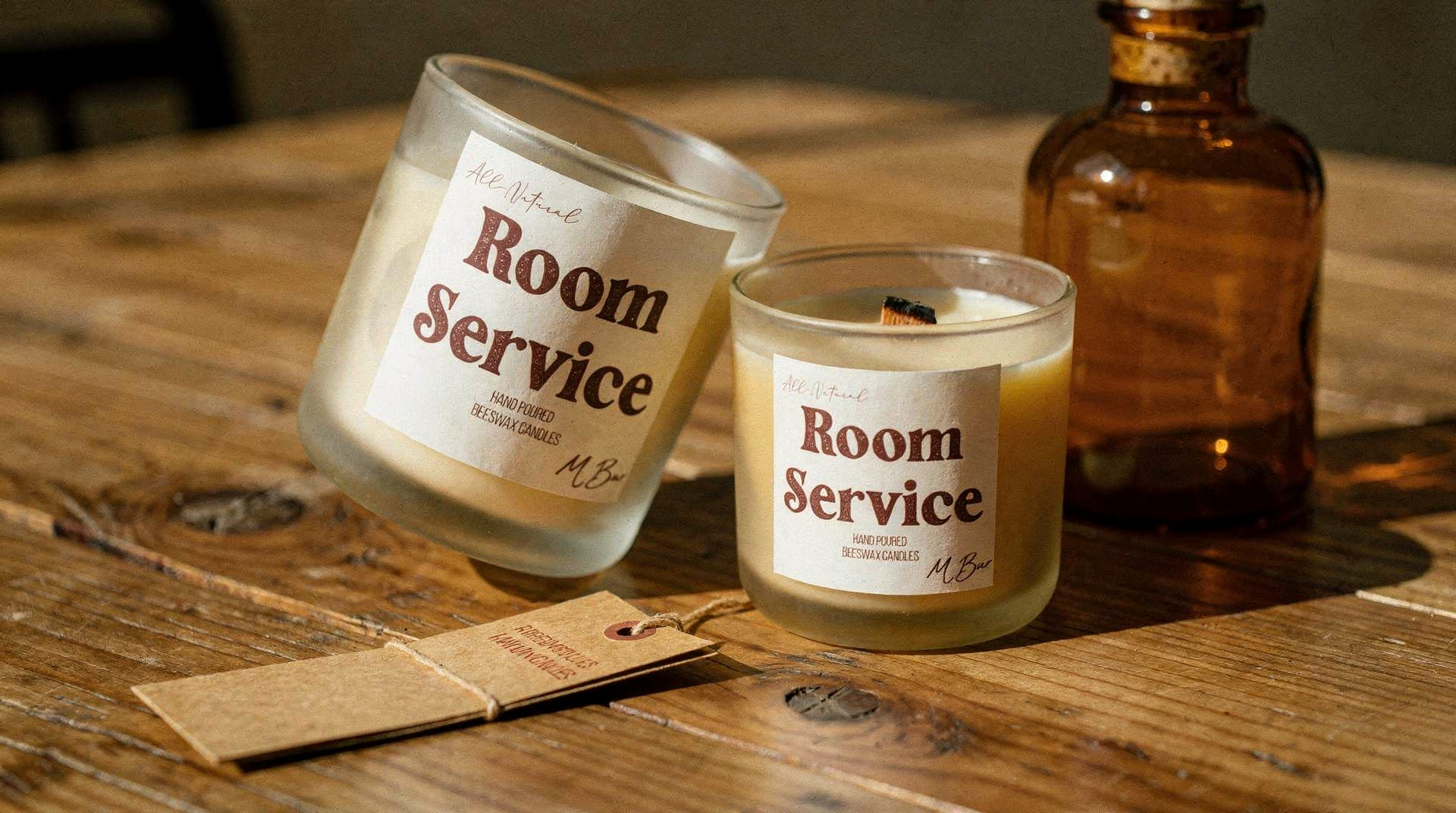
It is also worth noting that candles like the Room Service beeswax candle deliver 80 hours from a single 12 oz vessel at $60, making the cost per hour competitive with mid range soy options once quality is factored in.
4. Scent Throw
Scent throw is how far and how consistently a candle fills a room with fragrance. Cheap candles often perform well here initially, because paraffin wax holds fragrance oil at a high concentration and releases it aggressively. But that strong initial hit fades, and the scent becomes inconsistent as the candle burns down.
Beeswax has a naturally warm, honey adjacent scent that can sometimes compete with added fragrance, which is a real tradeoff. However, when the fragrance is properly balanced for beeswax, the throw is steady and consistent throughout the entire burn. No dramatic peaks and valleys.
"This scent has me in a chokehold. I burn it in my room and my living room and it fills my space SOOOOO nicely. There is nothing I hate more than a candle that cannot fill the room and baby this is NOT that. This candle permeates every corner of the room." Tiffany G., verified buyer
Scent throw also depends heavily on fragrance quality. Cheap candles often use high concentration synthetic fragrance that smells strong but carries phthalates and other chemical compounds. Premium candles that use non toxic fragrance, like MBur's phthalate free formulations, provide a cleaner scent experience that does not come with the side effects.
5. Health Impact
This is the category that separates a fine purchase from an actually smart one.
Paraffin candles release benzene, toluene, and formaldehyde during combustion. These are not trace amounts you can dismiss. The South Carolina State University study that first documented this found emissions levels that raised legitimate indoor air quality concerns with regular use. The risk scales with frequency. One paraffin candle at a party is not a crisis. Burning one every day in a small apartment is a different conversation.
Soy candles are meaningfully cleaner, but the fragrance load and potential paraffin blending keep them from being fully in the clear. If the label says "fragrance" without specifying phthalate free or non toxic fragrance, that is a gap worth noting.
Beeswax produces no petrochemical byproducts. Some studies suggest that burning beeswax may release negative ions that help neutralize airborne particulates, though the research here is still early and many user reports are anecdotal. What is not anecdotal is the absence of VOC emissions.
"I absolutely love these candles! I instantly notice the difference in the air quality, in comparison to the Bath and Body scented candles. I love Bath and Body's candles but I acknowledge that it caused a slight headache and other minor respiratory discomfort. Awesome products. Totally addicted." Jason H., verified buyer
If you have ever noticed that certain candles give you a headache or make your nose run, the fragrance and wax type are usually the culprits. Our post on why candles give you headaches goes deeper on the specific mechanisms if you want the full breakdown.
Quick Reference: Cheap vs Expensive Candles
| Category | Cheap Candle (Paraffin) | Mid Range (Soy) | Premium (Beeswax) |
|---|---|---|---|
| Wax source | Petroleum byproduct | Soy crop (often blended) | Bee produced, single ingredient |
| Burn time (8 to 12 oz) | 40 to 50 hours | 50 to 60 hours | Up to 80 hours |
| Cost per hour | $0.25 to $0.38 | $0.42 to $0.70 | $0.58 to $0.75 |
| Scent throw | Strong but inconsistent | Moderate, consistent | Consistent, warm |
| VOC emissions | Yes, benzene and toluene | Low to moderate | None |
| Fragrance quality | Often synthetic with phthalates | Varies widely | Phthalate free (at MBur) |
| Soot output | High | Low | None |
Verdict by Use Case
Best for occasional use or decoration: cheap paraffin is fine
If you are dressing a table for a dinner party twice a year and never plan to sit in the same room for hours while it burns, an affordable paraffin candle gets the job done. The visual and atmospheric effect is the same.
Best for everyday burning: pay for quality
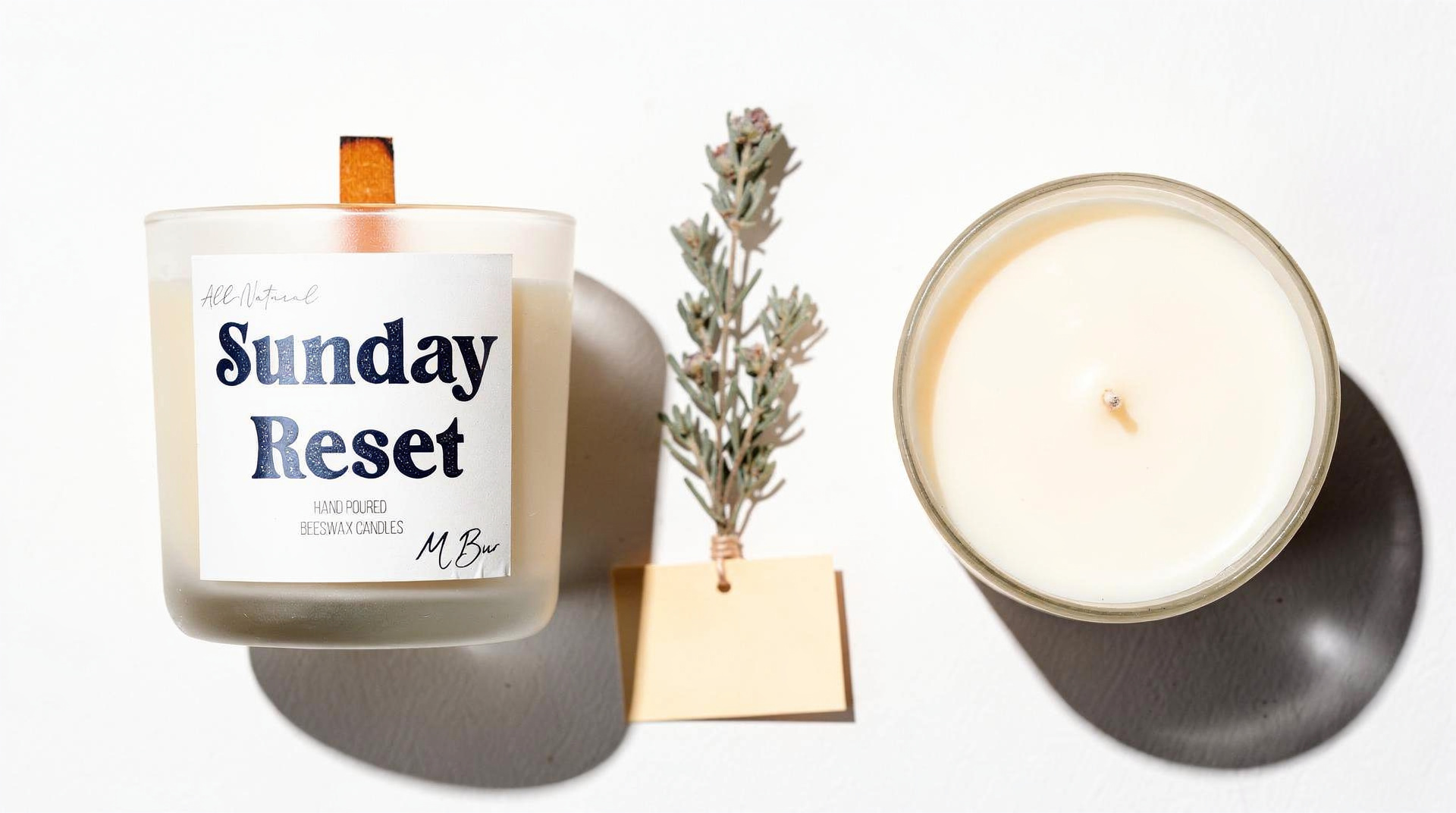
If a candle is part of your daily routine, the ingredient conversation becomes genuinely important. Burning a paraffin candle every evening in a bedroom or home office adds up to real VOC exposure over time. This is exactly the use case where a clean burning beeswax candle like Sunday Reset makes financial and health sense. You burn it more, you pay less per hour proportionally, and you are not introducing petrochemicals into your air.
Best for gifting: premium every time
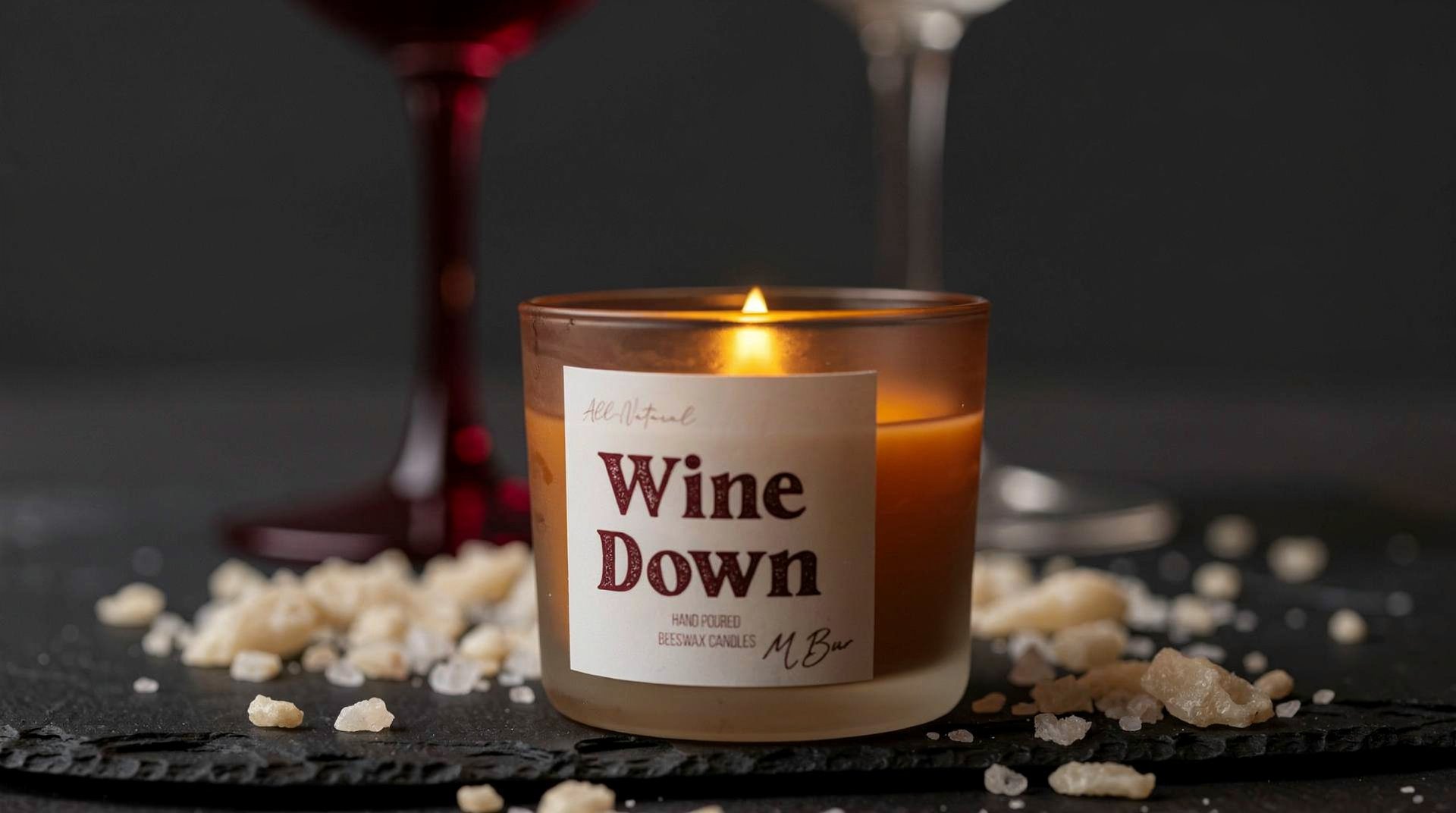
A candle as a gift is a statement about the person receiving it. A $10 drugstore candle communicates something very specific. A beautifully presented beeswax candle like Wine Down communicates something else entirely, and it is the kind of gift people actually remember. For gifting contexts, the price premium is always justified.
Best for scent sensitive people: beeswax with non toxic fragrance
If you or someone in your home gets headaches from candles, the issue is almost certainly paraffin combustion or toxic fragrance compounds. Switching to a beeswax candle with phthalate free fragrance solves this for most people.
The MBur Difference
MBur candles are made from 100% beeswax, not a blend, not a paraffin base with a beeswax marketing angle. Single ingredient wax, wooden wicks for an even burn and a softer crackling sound, phthalate free fragrance, no chemical dyes, handmade in Queens, NY.
The full candle collection ranges from $20 for a 20 hour burn to $60 for the 80 hour flagship size. That is a cost per hour range of roughly $0.58 to $1.00, with the larger sizes delivering better value as the burn time scales up.
Want to dig deeper on the tradeoffs of beeswax specifically? Our post on the disadvantages of beeswax candles covers the full picture, including the cases where beeswax is not the obvious choice.
Frequently Asked Questions
Are expensive candles actually worth it?
It depends what you mean by worth it. On a pure cost per hour basis, the gap between premium and budget candles is smaller than it looks. On an ingredient and health basis, premium beeswax candles with non toxic fragrance are meaningfully better for daily use. If you burn candles regularly, the upgrade pays for itself in air quality alone.
How do I calculate whether a candle is a good deal?
Divide the price by the number of burn hours. A $60 candle that burns for 80 hours costs $0.75 per hour. A $15 candle that burns for 40 hours costs $0.38 per hour. Then factor in what you are burning. The cheapest candle per hour is not always the best investment.
Do cheap candles really cause headaches?
For many people, yes. The most common culprits are paraffin combustion releasing VOCs and synthetic fragrance compounds like phthalates. Switching to a beeswax candle with phthalate free fragrance resolves this for a significant number of people. Our post on why candles give you headaches goes deeper on exactly why this happens.
Is soy wax actually clean?
Soy is better than paraffin, but the label can be misleading. Many candles marketed as soy are actually a soy and paraffin blend, and there is no labeling requirement that forces brands to disclose the ratio. Even fully soy candles vary widely based on fragrance quality. Look for 100% soy or 100% beeswax plus a clear statement about phthalate free fragrance before assuming a candle is clean.
What should I actually look for when buying a candle?
Single ingredient wax with no blending. Phthalate free fragrance. No metal core wicks. No chemical dyes. Beeswax checks every box by default. Our post on what makes a candle non toxic gives you a complete checklist.
The Bottom Line
Cheap candles are not always a bad buy. For occasional use and decoration, they are perfectly reasonable. But for everyday burning, for people who are scent sensitive, and for anyone who wants to stop replacing candles every three weeks, the math and the health case both favor premium beeswax.
The price premium on beeswax is real, but it is smaller than it looks once you run the cost per hour numbers. And when you factor in what you are not burning — petrochemicals, VOCs, phthalates — the upgrade starts looking less like a luxury and more like a sensible decision.
Shop the full MBur beeswax collection — from $20
Related reading: