
The heat source matters far less than what your candle is made of. Here is the honest comparison, factor by factor.
Shop the candles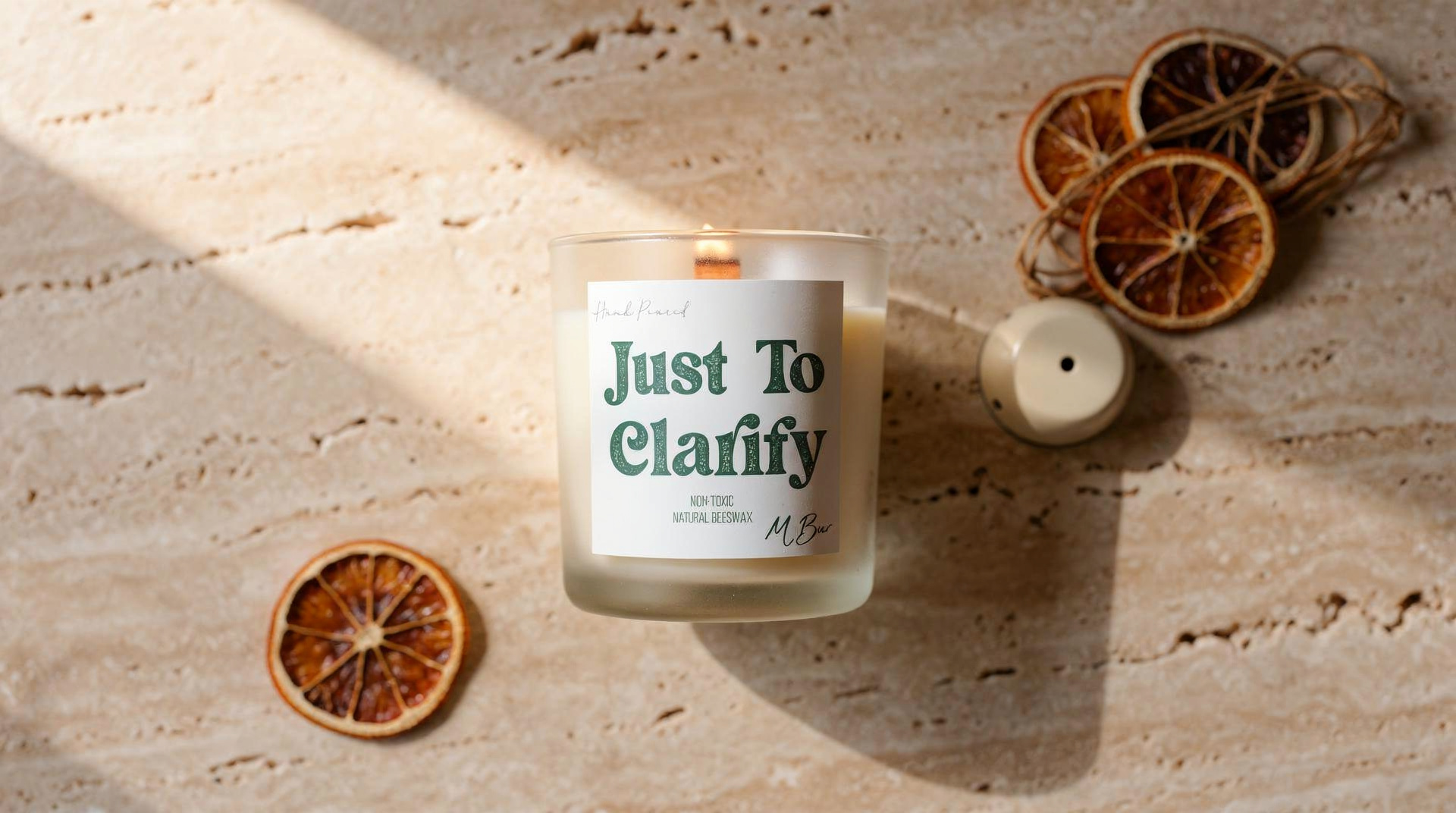
The short answer
Warm a paraffin candle gently on a plate and it still releases the same petroleum-derived compounds it would over a flame. Burn a clean 100% beeswax candle in a ventilated room and you get one of the lowest-soot ways there is to scent a space. The wax, the wick, and the fragrance set the ceiling on how safe either method can be.
We make small-batch 100% beeswax candles by hand in New York City, and we have burned and tested a lot of them. Below is the health data, scent throw, real cost, safety, and ritual of each method, plus which one fits your situation. Browse the full MBur beeswax candle collection to see what a clean-burn candle looks like.
The comparison table
| Factor | Candle warmer | Burning (flame) |
|---|---|---|
| Health (paraffin candles) | Better (no combustion) | VOCs released through combustion |
| Health (beeswax candles) | Clean | Also clean, minimal soot |
| Scent throw | Moderate, localized | Strong, room filling |
| Value per hour | Fragrance depletes, unpredictable | Predictable hours per candle |
| Open flame risk | None | Present, manageable with care |
| Ambiance | Scent only | Scent plus light, sound, ritual |
| Best wax for the method | Soy or paraffin (lower melt point) | Beeswax excels |
The variable that decides everything
Most warmer-versus-flame comparisons stop at "flame or no flame." The more useful question is what your candle is made of, and what heat does to those ingredients.
Every candle releases compounds when it heats up, from a flame or an electric plate. A flame burns the wax and fragrance together and produces combustion byproducts along with the scent. A warmer melts the surface gently and releases fragrance without combustion, and also without the higher heat that helps push scent across a room.
Paraffin wax, phthalate-heavy fragrance oils, or metal-core wicks put compounds you do not want into your air on either method. A warmer just does it more slowly. Single-ingredient beeswax, phthalate-free non-toxic fragrance oils, and a wooden wick start you from a far cleaner baseline. Both methods perform well from there.
1. Health impact
Burning paraffin releases benzene, toluene, and formaldehyde, all documented volatile organic compounds (VOCs). A 2009 South Carolina State University study presented to the American Chemical Society found paraffin candles emitting these compounds at levels that could pose a risk with repeated use in poorly ventilated rooms. That study was never peer reviewed and the candle industry disputes it, so treat it as a reason for caution rather than settled proof, especially if you burn cheap candles daily in a closed space.
Warmers remove combustion entirely. No smoke, no soot, no combustion byproducts. For anyone with asthma, allergies, or respiratory sensitivity, that is a meaningful difference.
The catch with warmers: they still volatilize fragrance. If a candle uses phthalate-heavy fragrance oils, a warmer releases those compounds at a lower temperature in a steady, concentrated way, with no draft from a flame to disperse them.
Beeswax changes the math. It has the highest melting point of the common candle waxes, which supports more complete combustion and much less soot and particulate.
Winner for paraffin candles: the warmer, clearly. Winner for clean beeswax with phthalate-free fragrance oils: too close to call, because both are genuinely clean.
2. Scent throw
This is where warmers lose the most ground, and the gap is wider than most people expect. A flame creates a convection current. Hot air rises off the wick, pulls cooler air toward it, and pushes scent outward in every direction. A well-made candle with a wooden wick can fill a large room in 20 to 30 minutes.
A warmer melts the top layer and releases fragrance passively, so the scent stays gentler and more local. For a small bathroom or a desk, that is plenty. In a living room or an open-plan space, you will feel the gap.
Beeswax raises the bar again. Because it melts hotter than soy or paraffin, a warmer needs a surface temperature of at least 140 to 160 degrees Fahrenheit to get real throw from a beeswax candle. Cooler warmers barely break the surface.
Winner: burning, consistently.
3. Predictable value
Warmers get marketed as more economical because the wax survives. That logic only holds if the wax stays useful, and it does not. On a warmer you release the fragrance while the wax stays behind. Once the fragrance load runs out you are left with scentless wax that still fills the vessel but is finished as a scented product.
Burning consumes wax at a steady, predictable rate and disperses fragrance more efficiently per hour. MBur candles come in two sizes: the 40-hour size at $32 to start with, and the 80-hour size at $65, which also includes a lid for cleaner storage between burns. Either way, you know exactly how many hours of scent you are getting. Orders of $65 ship free.
Winner for predictable value: burning.
4. Safety and convenience
Open flames need attention. Never leave a burning candle unattended, keep it away from drafts and anything flammable, and trim the wick before every burn. In a home with kids, pets, or general chaos, those are real constraints.
Warmers remove open-flame risk, and many have auto-shutoff timers, so you can leave the room without the low-level worry a flame brings. For an office, a bedroom where you fall asleep, or a home with a curious cat, that helps.
Warmers carry their own hazards. The plate or bulb can get hot enough to burn skin on contact, and an overheated vessel can crack glass or scorch a surface.
Winner for hands-off use: the warmer.
5. Ambiance and ritual
A warmer gives you scent without a flame, and for a lot of people the flame is half the point. A wooden wick crackling softly, warm light pooling on a table, a room shifting slowly as the scent builds. If you use a candle purely as a fragrance tool, a warmer is efficient. If the ritual matters to you, burning gives you something a warmer cannot replicate.
Winner: burning.
What to watch for on a label
The US does not regulate the word "beeswax" on a candle label. A paraffin blend with 1% beeswax can legally be sold as a beeswax candle. Plenty of "soy" candles are not 100% soy either, and a blend puts paraffin back in your air on a flame or a warmer. Every MBur candle is 100% beeswax, single ingredient, never a blend, with a wooden wick, phthalate-free non-toxic fragrance oils, and no chemical dyes.
What a clean beeswax candle actually gives you
Burning is the stronger method as long as the candle is clean. That is the whole case for 100% beeswax with a wooden wick and phthalate-free non-toxic fragrance oils, no paraffin and no chemical dyes. You get strong throw, a soft crackle, low soot, and scent that fills a room the way a candle should. Beeswax is also the oldest candle material, in use since about 5,000 BCE, and it is a byproduct of honey production.
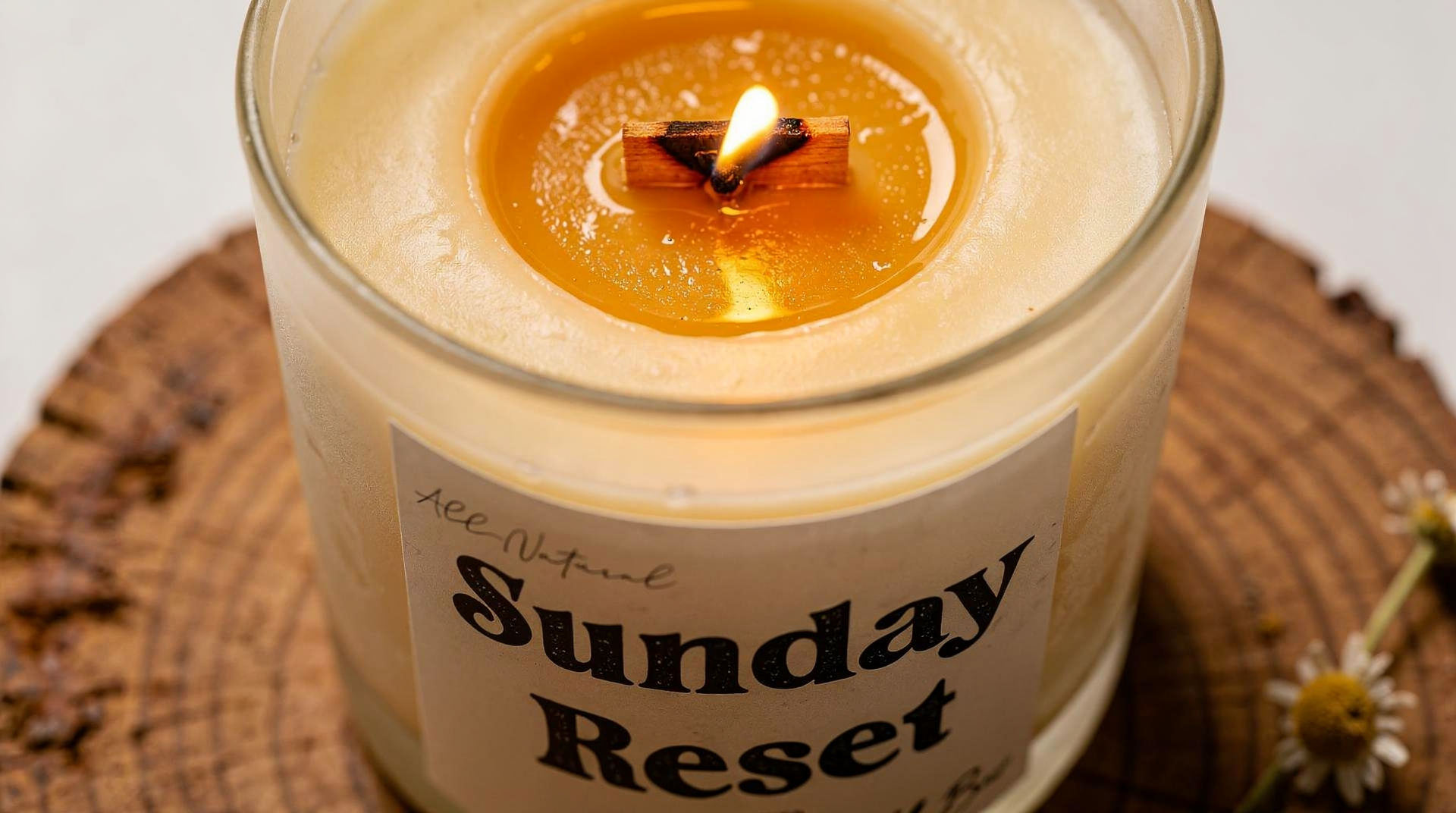

Our number one seller, and the one that fills a big open room on a flame. You will love this if you love warm hotel-lobby vanilla.

Reads as just cleaned the whole place. Good for a home office or a daytime burn while you work.

Bright up top, warm spice underneath. You will love this if you love a busy cafe in November.
For a green, garden-after-rain profile, Touch Grass runs fig, cedar, coconut, amber, tonka bean, and it also performs beautifully under a flame. 40 Hours $32 / 80 Hours $65.
What buyers notice most is the air itself. Both of these come from the same repeat customer, across two different scents.
"I absolutely love these candles! I instantly notice the difference in the air quality, in comparison to the Bath & Body scented candles. I love Bath & Body's candles but I acknowledge that it caused a slight headache and other minor respiratory discomfort. Awesome products. Totally addicted." Jason H., verified buyer, on Retail Therapy
"I love these candles. No headache or feeling nauseous like the Bath & Body candles with all the extra chemicals. In addition, I love the package and how carefully everything was wrapped." Jason H., verified buyer, on Room Service
Both reviews describe the same thing: what the wax puts into the room. That comes down to ingredients, on a flame or on a warmer.
Which method fits you
Use a warmer if: you have respiratory sensitivity and are burning anything other than 100% beeswax, you want unattended scent with no flame, you are scenting a small room like a bathroom or bedroom, or you use paraffin or blended candles and want to cut combustion byproducts.
Burn your candle if: you have a beeswax candle with a wooden wick and phthalate-free non-toxic fragrance oils, you want strong throw in a larger or open-plan space, you want the full sensory ritual, or you paid for quality wax and want every hour of it.
Want the clean-burn version done right? Start with the 40-hour size at $32 and test the scent throw in your own space. Move up to the 80-hour size at $65 (it comes with a lid) once you know the scent you want in your rotation. Trim the wick to a quarter inch before lighting, let the first burn reach a full melt pool across the surface, and you will see the difference within a single session.
Specs
| Spec | Every MBur candle |
|---|---|
| Wax | 100% pure beeswax, single ingredient, never a blend |
| Wick | Untreated wooden wick, crackles softly |
| Fragrance | Phthalate-free non-toxic fragrance oils |
| Burn time | 40 hours ($32) or 80 hours ($65, includes lid) |
| Dyes | None, no chemical or synthetic dyes |
Frequently asked questions
Are candle warmers actually safer than burning candles?
For paraffin candles, yes, because warmers skip the combustion that produces most of the harmful VOCs. For 100% beeswax with phthalate-free non-toxic fragrance oils, the safety gap shrinks to almost nothing. The wax type matters more than the heat method.
Do candle warmers work with beeswax candles?
They can, but beeswax melts hotter than soy or paraffin, so you need a warmer that reaches at least 140 degrees Fahrenheit for good scent throw. Cooler warmers barely melt the surface. For maximum performance from a beeswax candle, burning is still the better method.
Does using a warmer use up the candle faster?
The wax lasts longer on a warmer since none of it combusts. The fragrance load is what runs out. Once the scent is gone, the wax is spent as a candle even though the vessel still looks full. Burning gives you more predictable value per hour.
What candles are safest to burn if I have asthma or allergies?
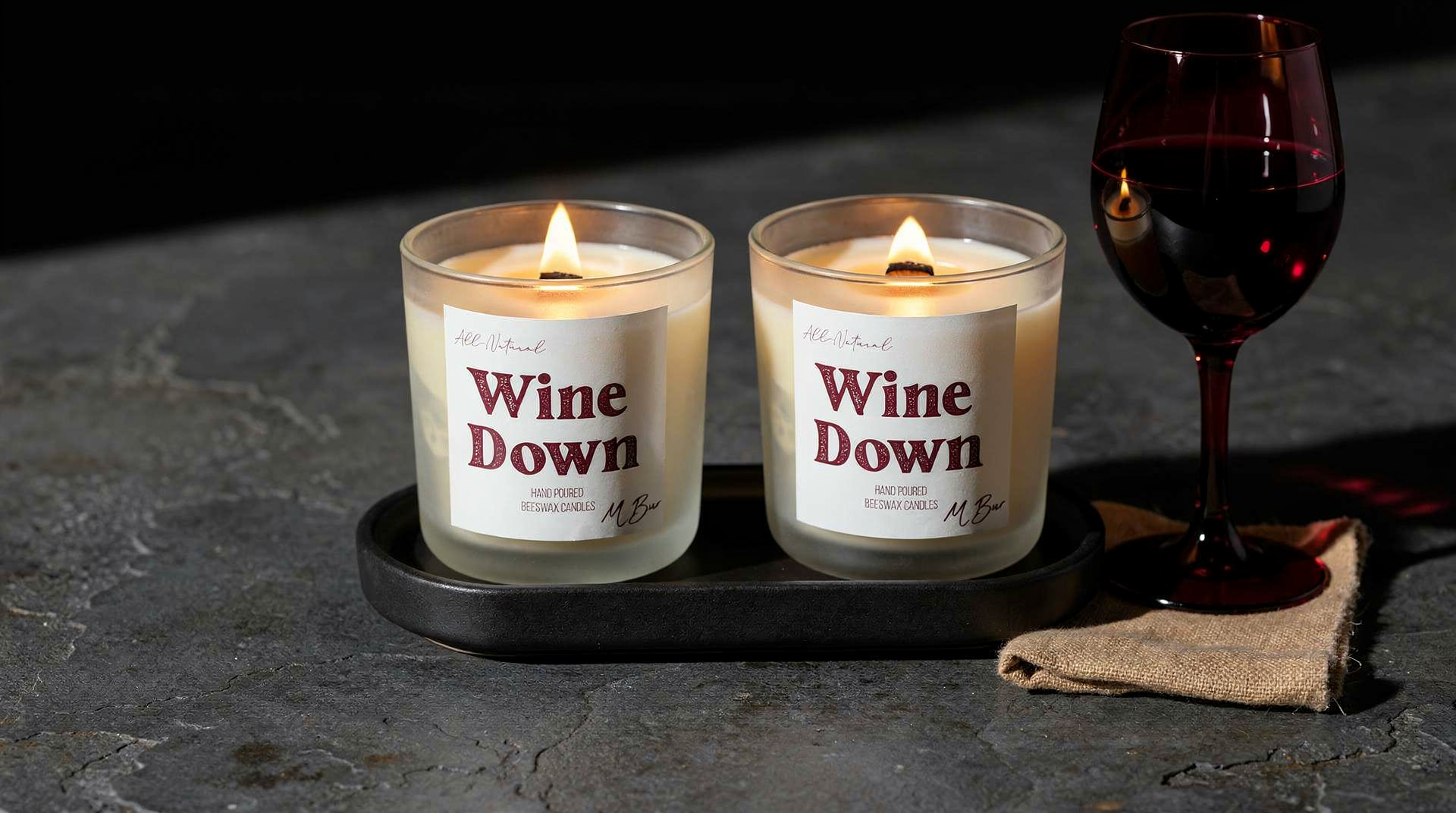
Look for 100% beeswax, a wooden wick, phthalate-free fragrance, and no chemical dyes. Every MBur candle meets all four criteria. Wine Down (lavender, chamomile, sage, cedar, sandalwood) is the usual pick for sensitive breathers and headache-prone switchers.
Can I use any candle in a warmer?
Technically yes, but the container matters. Glass is safest. Avoid intense localized heat under a thin-walled vessel, which can crack it. Follow the warmer manufacturer's temperature guidance and do not leave a warmer unattended for long stretches.
The bottom line
Warmers are a useful tool, especially with paraffin wax or when you are managing respiratory sensitivity. What decides whether either method is safe for you is the candle itself: the wax, the wick, and the fragrance. A 100% beeswax candle with phthalate-free non-toxic fragrance oils and a wooden wick gives you a clean burn, minimal soot, no petroleum derivatives, and scent that actually fills the room. Start with the 40-hour size at $32, burn it properly, and judge the difference for yourself.
What customers say
Pick the scent for your room
100% beeswax, wooden wick, no paraffin and no chemical dyes. Free shipping at $65.
Shop all candles