

Phthalate-Free Fragrance vs Essential Oils in Candles: What's Actually Safer?
Phthalate Free Fragrance vs Essential Oils in Candles: What's Actually Safer?
The essential oil candle crowd is loud. Confident. Absolutely certain that if it comes from a plant, it belongs in your home. And on the other side, you have fragrance oil candles getting lumped in with the worst offenders, as if every scented candle is secretly a chemistry experiment gone wrong.
Here is the thing: both takes are incomplete. Essential oils are not automatically safe in candles, and fragrance oils are not automatically dangerous. The question of phthalate free vs essential oil candles is actually a question about specific ingredients, burn chemistry, and what transparency really looks like from a brand. This post breaks it all down so you can make a smarter call the next time you are shopping for a candle that actually belongs in your home.
If you want the quick version: what makes any candle genuinely safe comes down to the wax, the wick, and the fragrance. We cover the full picture in our guide on what makes a candle non toxic, but this post goes deep on the fragrance question specifically.
First: What Are Phthalates and Why Do They Matter?
Phthalates are chemical compounds used in manufacturing to make plastics more flexible and to help fragrances bind and last longer. In candles, certain phthalates act as fixatives, keeping scent molecules attached to wax so the throw is stronger and more consistent over time.
The problem is that some phthalates, particularly DEHP and DBP, are classified as endocrine disruptors. Research published in journals including Environmental Health Perspectives has linked repeated exposure to phthalates with hormonal disruption, reproductive issues, and developmental concerns in children. The European Union has banned several phthalates outright. The U.S. regulatory framework has been slower to act, which means plenty of candles on American shelves still use them.
When a candle burns, fragrance compounds volatilize and enter the air. That is the whole point. But it also means whatever is in that fragrance gets inhaled directly. That is why the phthalate question matters more in candles than it does in, say, a plastic container sitting on a shelf.
What About Essential Oils? Are They Actually Safer?
Essential oils have earned a reputation for being the clean, natural, automatically safer alternative to toxic fragrance. That reputation is only partially deserved.
Essential oils are concentrated volatile organic compounds extracted from plants. In a diffuser or a diluted topical application, many of them are genuinely beneficial. In a candle, the picture gets more complicated for a few reasons.
Heat degrades essential oils. When an essential oil is subjected to the sustained heat of a candle flame, many of its active compounds break down. A candle scented with pure lavender essential oil is not delivering aromatherapy in the way a cold diffuser would. The therapeutic compounds degrade at temperatures above roughly 100 degrees Fahrenheit, and a candle flame burns at around 1400 degrees Fahrenheit.
Essential oils have a lower flash point. This means they can be more flammable and potentially less stable in wax, which can affect burn safety if a candle is not carefully formulated.
Not all essential oils are equal in candles. Some essential oils, like citrus varieties, are photosensitive and volatile enough that their scent dissipates quickly. Others, including certain eucalyptus and pine varieties, can release compounds when burned that are irritating to airways, particularly for people with asthma or respiratory sensitivity.
None of this makes essential oil candles inherently dangerous. But it does make the "essential oils equal safe" shorthand a significant oversimplification.
The Comparison Framework: Phthalate Free Fragrance vs Essential Oils
| Factor | Phthalate Free Fragrance Oils | Essential Oils |
|---|---|---|
| Safety Profile | No endocrine disruptors when certified phthalate free. Formulated to be stable at candle temperatures. | Naturally derived but can degrade or release irritating compounds when burned at high heat. |
| Scent Throw | Consistently strong cold and hot throw. Designed to perform throughout the full burn. | Weaker hot throw due to heat degradation. Scent can fade quickly, especially with citrus and floral oils. |
| Scent Range | Virtually unlimited. Complex multi note blends, seasonal scents, and unique profiles are possible. | Limited to what plants produce. Difficult to create complex layered scents without blending many oils. |
| Burn Stability | High. Engineered to bind well with wax and maintain consistent viscosity. | Variable. Some oils have low flash points that can create uneven burns or safety concerns. |
| Transparency | Requires brand to confirm phthalate free status. Third party certification is the gold standard. | "Natural" label does not guarantee purity or quality of the essential oil used. |
| Cost at Scale | More affordable to produce, which means better value per burn hour at comparable price points. | High quality essential oils are expensive. Candles using them at effective concentrations cost significantly more. |
| Allergen Risk | Can contain allergens but formulation can be controlled. Phthalate free does not mean allergen free. | Essential oils contain naturally occurring allergens. Some people react more strongly to natural compounds than to formulated alternatives. |
The Real Risk: It Is Not Essential Oil vs Fragrance Oil
Most of the candle industry's actual safety problems come from three things: paraffin wax, metal core wicks, and phthalate containing fragrance. Those are the variables that stack against you. A candle using any of those three things is a problem regardless of whether the scent comes from a plant or a lab.
Paraffin is a petroleum byproduct. Full stop. When burned, it releases benzene and toluene, both of which are recognized carcinogens according to the EPA. No amount of essential oil fragrance makes that wax cleaner. Similarly, metal core wicks have historically contained lead, which releases into the air as the candle burns. The U.S. banned lead wicks in 2003, but not all wicks are equal, and zinc core wicks remain common and produce their own emissions.
If your candle is made with paraffin and a metal core wick, the fragrance choice is almost irrelevant. You have already introduced the bigger hazard. This is why the wax matters as much as the fragrance, and why we break down the full ingredient picture in our post on candle safety for sensitive households.
Where MBur Lands on This
MBur uses phthalate free fragrance oils across the entire candle line. Not essential oils. That is a deliberate choice, and it comes down to a few honest reasons.
First, the scent performance is significantly better. Phthalate free fragrance oils are engineered to perform at candle temperatures, which means the scent throw you experience during a burn is consistent from the first hour to the last. Essential oils in candles often produce a beautiful cold throw, meaning they smell incredible before you light them, and then fade substantially during the actual burn. That is not what anyone wants after paying for a quality candle.
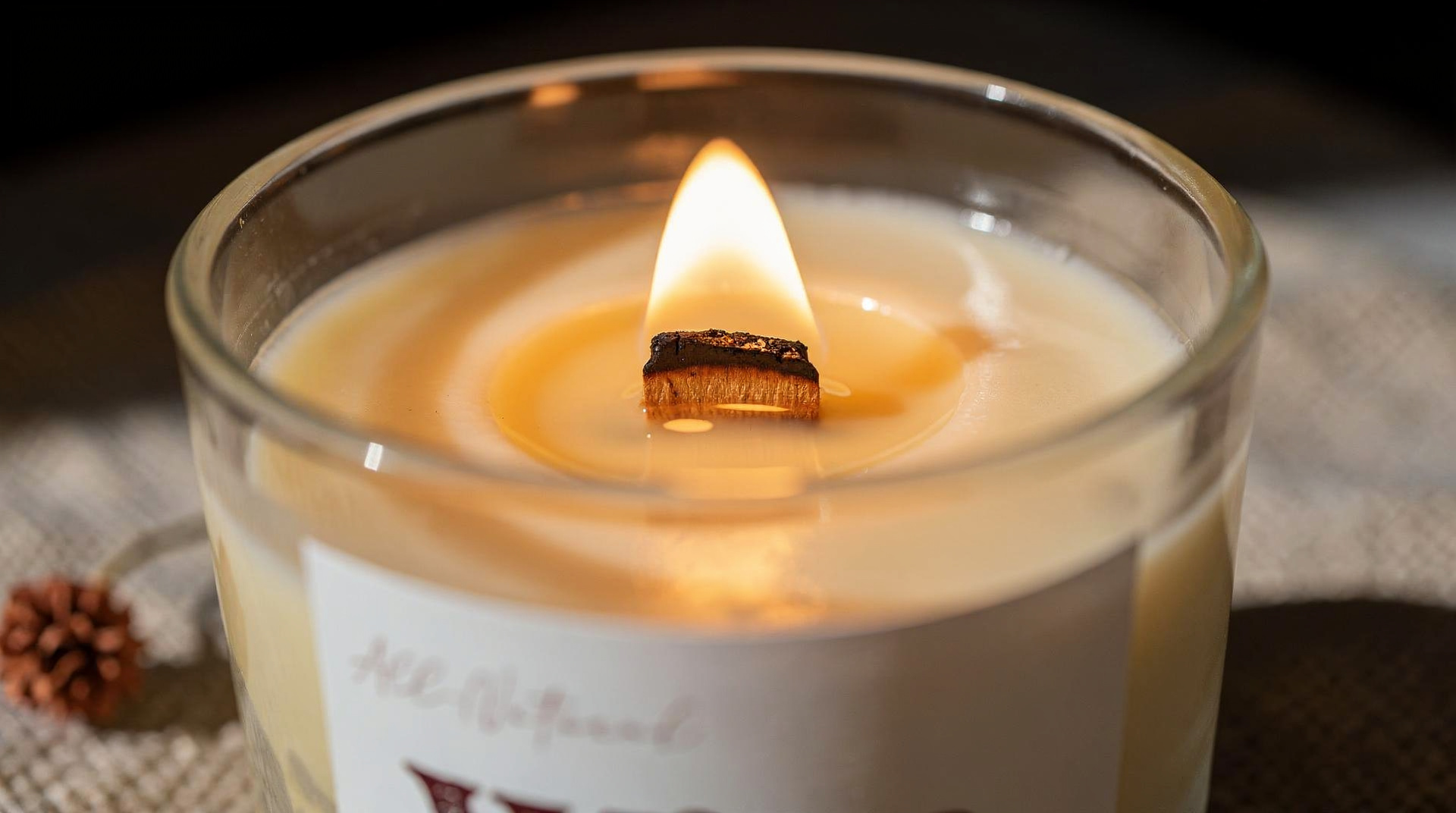
Second, the safety profile of a certified phthalate free fragrance oil, in a 100% beeswax candle with a wooden wick, is genuinely clean. Beeswax is the lowest emission candle wax available. It burns at a higher temperature than paraffin or soy, which means it burns more completely and produces less soot. Wooden wicks have no metal core. And phthalate free fragrance means the scent molecules entering your air are not carrying endocrine disrupting compounds with them.
The combination matters. It is not any single ingredient in isolation but the whole formula that determines what you are actually breathing.
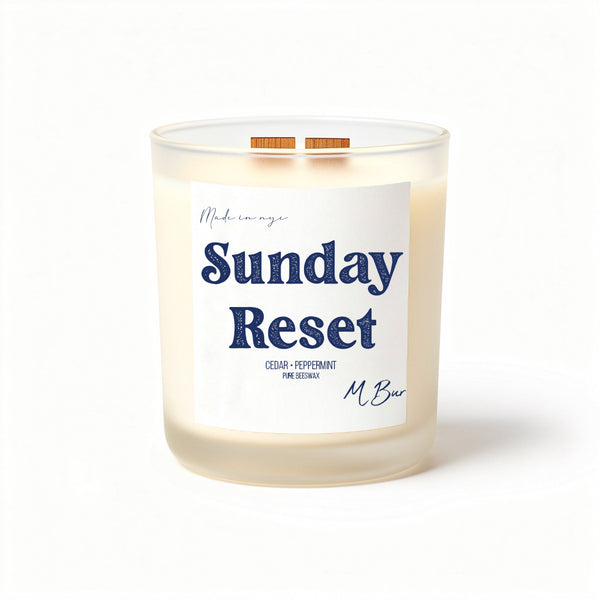
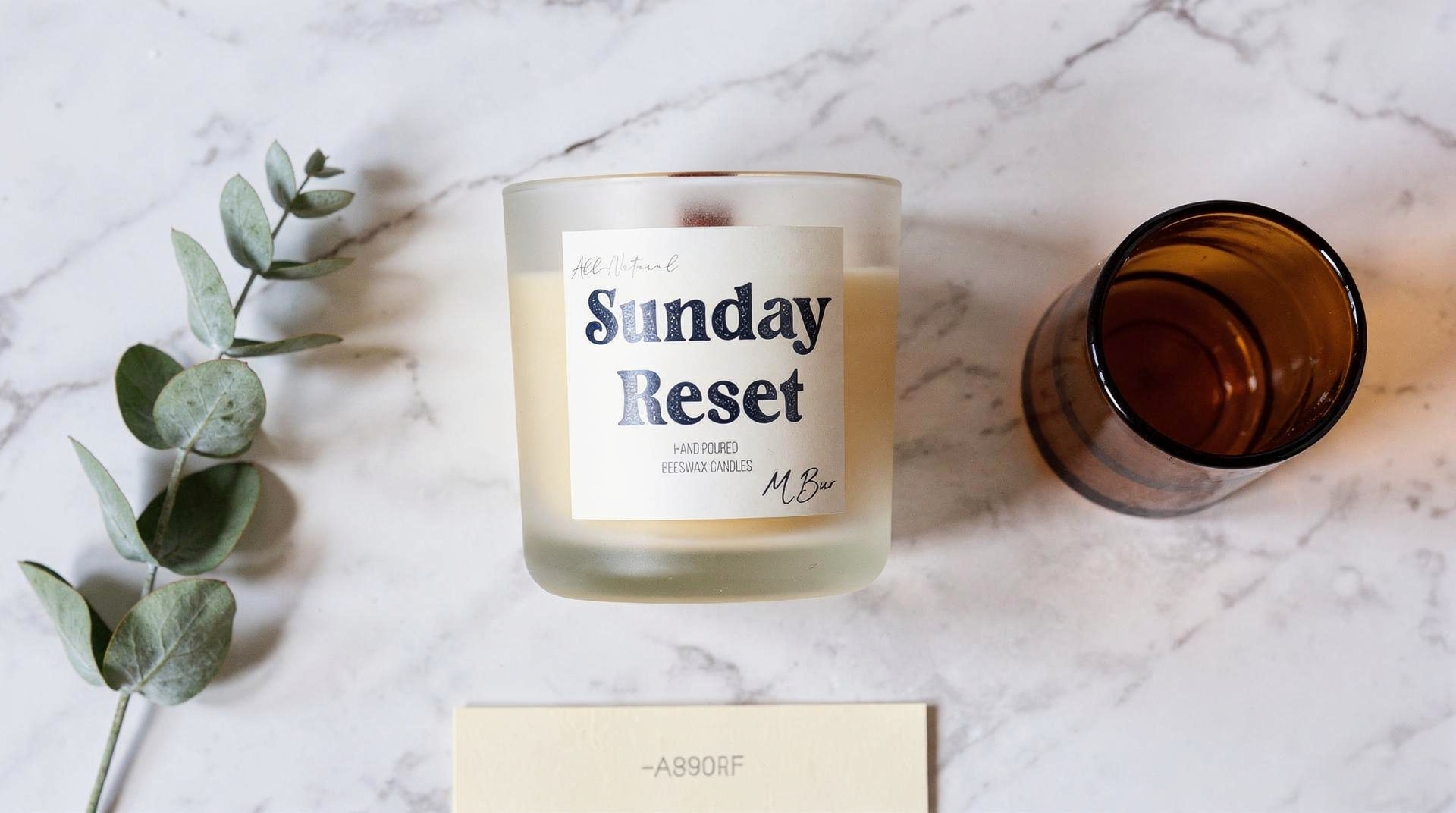
"I absolutely love these candles! I instantly notice the difference in the air quality, in comparison to the Bath and Body scented candles. I love Bath and Body's candles but I acknowledge that it caused a slight headache and other minor respiratory discomfort. Awesome products. Totally addicted." Jason H., Sunday Reset Candle
"A lot of other candles tend to give me headaches, but this one was a total game changer. I was able to enjoy the calming aroma without any discomfort. It made my space feel cozy and refreshed at the same time." Nicole D., Sunday Reset Candle
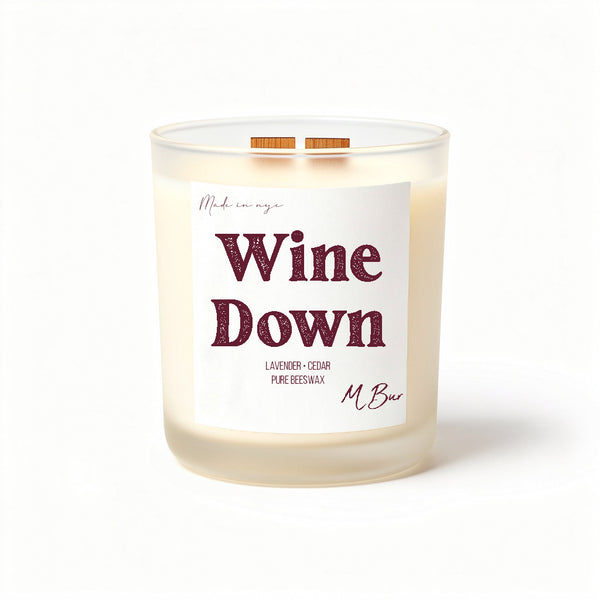
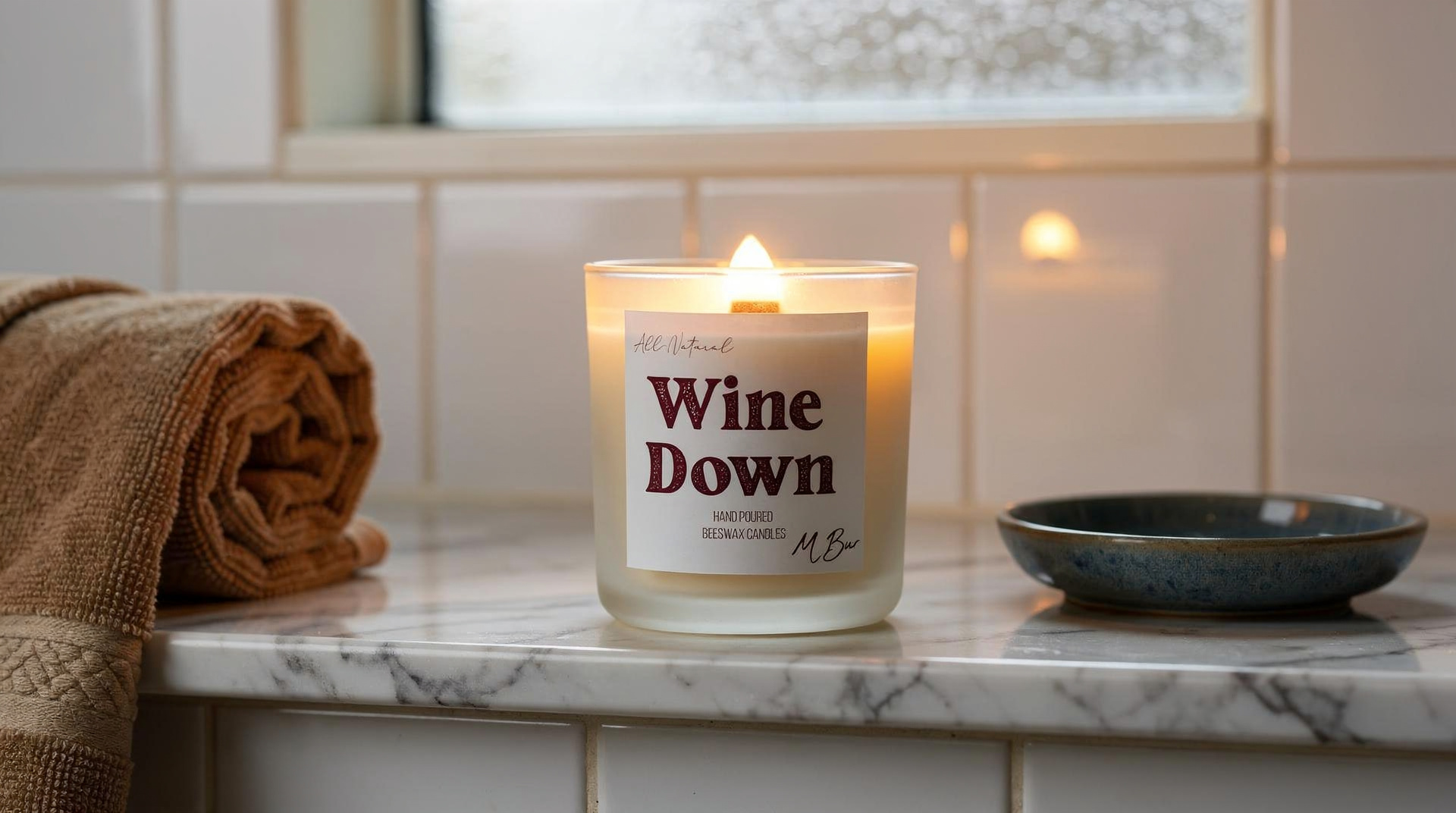
The Wine Down beeswax candle (from $20 for 20 hours of burn time) is a good example of what this combination delivers in practice. Lavender, chamomile, sage, cedar, and sandalwood. Complex enough to be interesting, clean enough to burn for two hours in a bedroom without anyone waking up with a headache.
What to Actually Look for When You Are Shopping
- Wax type: Beeswax is the cleanest option. Soy is better than paraffin but often blended. Paraffin is a hard pass.
- Wick type: Wood or cotton, no metal core. If the brand does not disclose wick material, that is a flag.
- Fragrance disclosure: If a brand uses fragrance oil, they should be able to confirm it is phthalate free. If they cannot, assume it is not.
- Dye disclosure: Chemical dyes are another common source of emissions. Look for undyed or naturally colored wax.
- Transparency overall: A brand that lists its full ingredient stack is a brand that is confident in its formula. Vague language like "clean fragrance" or "natural scents" without specifics is a marketing phrase, not a safety guarantee.
The Verdict: Which Is Safer?
For scent performance and consistency: Phthalate free fragrance wins. Essential oils fade too quickly when burned to deliver the consistent hot throw most people want from a candle.
For people with respiratory sensitivity or frequent headaches from candles: A phthalate free fragrance candle in beeswax is almost always the better option. The combination of clean wax and non toxic fragrance removes the most common irritant sources.
For people who want a purely natural ingredient list: Essential oil candles have the edge on principle, but only if the wax is also clean and the brand can verify the quality and concentration of the oils used. A low quality essential oil in paraffin wax is worse than a high quality phthalate free fragrance in beeswax.
For households with pets, kids, or anyone with asthma: Phthalate free fragrance in beeswax with a wooden wick is the safest available combination in a scented candle.
Frequently Asked Questions
Is "phthalate free" the same as "fragrance free"?
No. Phthalate free means the fragrance used does not contain phthalates, which are specific chemical compounds used as fixatives. The candle still has fragrance. Fragrance free means no scent compounds at all.
Do essential oil candles actually deliver aromatherapy benefits?
Probably not in the way most people hope. The therapeutic compounds in essential oils break down at the sustained heat of a candle flame. Cold diffusion or topical application is a much more effective delivery method for aromatherapy.
How do I know if a fragrance oil is phthalate free?
Ask the brand directly. Any brand confident in their formula will confirm this immediately. If they hedge, deflect, or use language like "we use safe fragrances" without specifics, that is not a confirmation. MBur uses phthalate free fragrance across every scent in the line, no exceptions.
Are all beeswax candles phthalate free?
No. Beeswax is the wax, not the fragrance. A beeswax candle can still use fragrance containing phthalates. You need both: clean wax AND clean fragrance.
Can I burn candles around my cat or dog if they are phthalate free?
Phthalate free fragrance reduces one category of risk, but ventilation still matters for any pet with a sensitive respiratory system. Our post on candle safety for cats covers the full picture.
Shop the full collection of phthalate-free beeswax candles
What buyers say:
Related reading:

