

Endocrine Disruptors in Candles: What Phthalates Are Actually Doing to Your Hormones
Endocrine Disruptors in Candles: What Phthalates Are Actually Doing to Your Hormones
In 1992, researchers discovered something alarming in the blood of newborns: plastic compounds that shouldn't have been there. Fast forward three decades, and we now know that endocrine disrupting chemicals are everywhere including in the scented candles burning on your nightstand right now.
The culprit? Phthalates. A class of chemicals used to soften plastics and extend fragrance throw in candles. They're invisible, odorless, and virtually unregulated in the fragrance industry. And they're silently interfering with your body's most delicate system: your endocrine system.
This isn't fear mongering. This is chemistry. This is biology. And it's something you should understand before you light another candle. If you want to skip ahead to the solution, our full collection of phthalate-free beeswax candles is here.
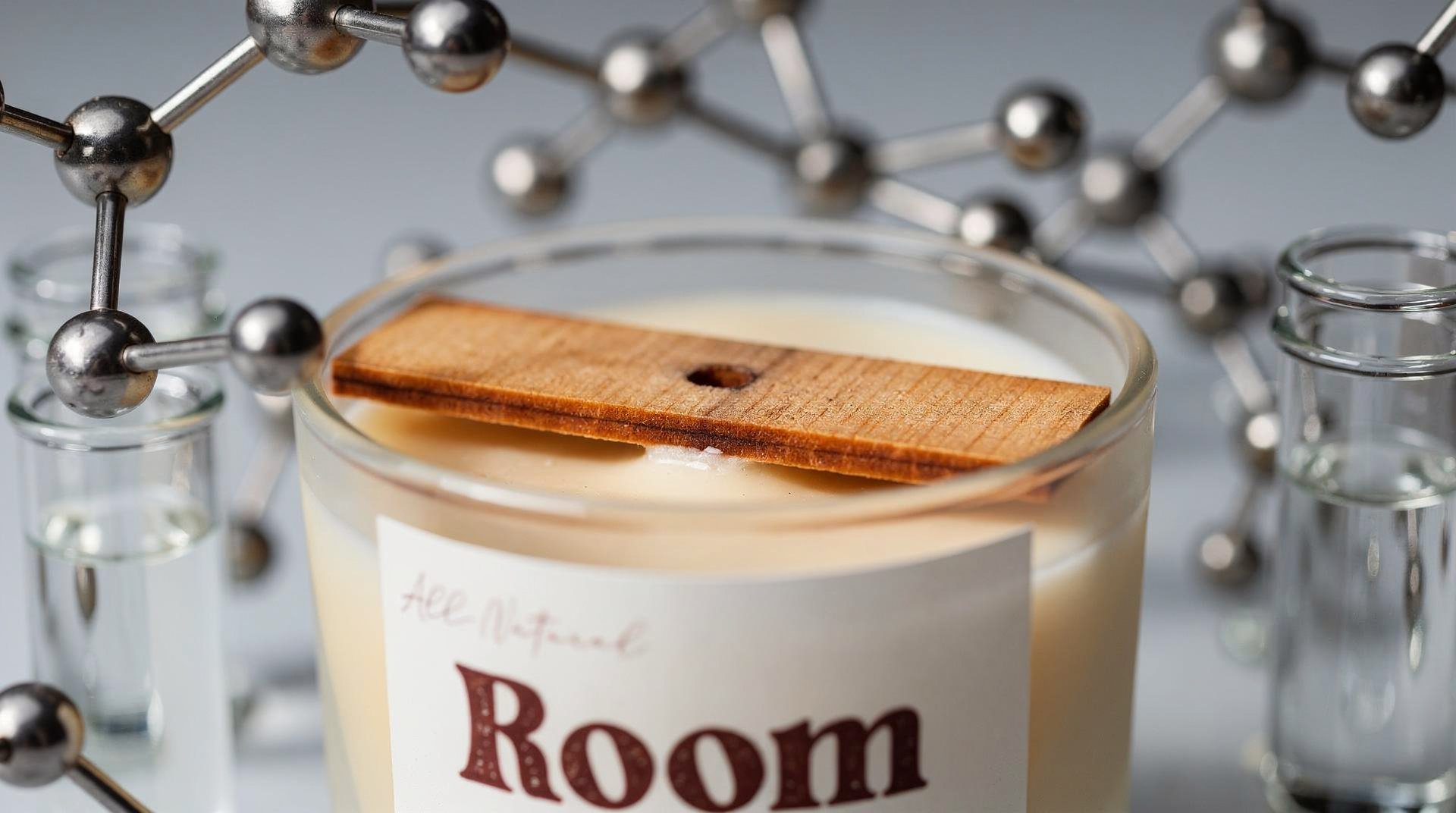
What Are Phthalates and Why Are They in Candles?
Phthalates are plasticizers, chemicals added to products to make them flexible, durable, or resistant to breaking. You'll find them in shower curtains, food packaging, vinyl flooring, and cosmetics. But in the candle industry, they serve a specific purpose: they're part of the fragrance formulation.
Here's how it works. Fragrance oils used in candles are concentrated liquids. Without something to stabilize and extend them, the scent would dissipate too quickly or unevenly as the candle burns. Enter phthalates. They act as solvents and carriers, allowing fragrance molecules to distribute more slowly and evenly throughout the wax. They also make the scent throw stronger — that's the distance a candle's fragrance travels through a room.
For manufacturers, it's simple economics. Phthalates are cheap. They're effective. And for decades, the fragrance industry operated under a loophole: fragrance formulations are considered proprietary trade secrets. Companies don't have to disclose what's actually in their fragrance oils. So a label that says "fragrance" might contain multiple types of phthalates, and the manufacturer isn't required to tell you.
The most common phthalates found in candles are DEP (diethyl phthalate), DBP (dibutyl phthalate), and DEHP (di 2 ethylhexyl phthalate). All three are classified as endocrine disruptors.
Understanding Endocrine Disruptors: How Phthalates Interfere With Your Hormones
Your endocrine system is your body's chemical messenger service. It produces hormones — estrogen, testosterone, cortisol, thyroid hormones — that regulate everything from metabolism and reproduction to mood and immune function. This system is exquisitely sensitive. Hormones work in incredibly small quantities, often parts per billion.
Endocrine disrupting chemicals like phthalates are molecular mimics. They're shaped similarly enough to natural hormones that they can bind to hormone receptors in your cells. Once bound, they send false signals. Your body thinks it has received a hormone message when it actually hasn't. Or it receives a signal at the wrong time, in the wrong tissue, or at the wrong dose.
The research is sobering. According to a 2021 study published in Environmental Health Perspectives, phthalate exposure is linked to altered testosterone levels, reduced sperm quality, and decreased fertility in men. In women, phthalates are associated with endometriosis, irregular menstrual cycles, and reduced fertility. Animal studies have shown that phthalates can disrupt fetal development of the reproductive system, particularly in male offspring.
The mechanism is straightforward. Phthalates bind to nuclear receptors that regulate genes involved in sex hormone production and metabolism. They can also affect the hypothalamic pituitary gonadal axis, the communication pathway that controls reproductive hormones. In other words, they don't just mimic hormones. They actively interfere with the systems that produce them.
And here's what makes this particularly concerning: the exposure is chronic and cumulative. You're not just breathing in phthalates from one candle. You're absorbing them from fragrance products, plastics, food packaging, personal care items, and more. A 2022 report from the Environmental Working Group found that the average American has phthalate metabolites in their urine year round.
The Fragrance Industry's Loophole: Why "Fragrance" is an Unregulated Catchall
Here's where the regulatory failure becomes clear. The FDA and the European Union both allow fragrance manufacturers to list the entire fragrance formulation as simply "fragrance" or "parfum" on a product label. This was designed to protect trade secrets. But it also means companies can use phthalates without disclosing them.
The fragrance ingredient disclosure is voluntary in the U.S. It's enforced by IFRA, the International Fragrance Association, which is an industry self regulatory body. While IFRA does have restrictions on some phthalates, the limits are based on dermal absorption, not inhalation. And enforcement depends on companies being honest about what they're using.
In Europe, the situation is slightly better. The EU has banned or restricted certain phthalates in cosmetics and fragrance products. DEP is still allowed, but DBP and DEHP are prohibited. However, many U.S. companies still use all three in products sold domestically, where regulation is weaker.
The candle industry is particularly opaque. Paraffin and soy candles, which rely heavily on fragrance oils to create scent throw, are more likely to contain phthalates. Many mid range and budget candle brands don't test their fragrance oils for phthalates and don't disclose whether they're present.
Other Endocrine Disruptors in Conventional Candles
Phthalates aren't the only endocrine disrupting chemicals lurking in scented candles. Here are the others you should know about.
Synthetic Fragrance Chemicals
Beyond phthalates, synthetic fragrance formulations often contain other endocrine disruptors. Musk compounds, used to create long lasting scent, are known to accumulate in body tissues and interfere with hormone signaling. Parabens, sometimes used as preservatives in fragrance oils, mimic estrogen and can bind to estrogen receptors. Benzene, toluene, and formaldehyde are released when paraffin candles burn, and all three are suspected endocrine disruptors in addition to being respiratory irritants.
Chemical Dyes
Conventional candles are often dyed with synthetic colorants. Some of these dyes, particularly azo dyes, can break down into aromatic amines under certain conditions. These metabolites have been linked to hormone disruption and are banned in the EU but still used in the U.S. candle industry.
Paraffin Wax Itself
Paraffin is a petroleum byproduct. When heated and burned, it releases volatile organic compounds including several suspected endocrine disruptors. The soot generated by paraffin candles contains polycyclic aromatic hydrocarbons (PAHs), which are known carcinogens and hormone disruptors.
What Makes Beeswax Different: A Formulation Perspective
Beeswax is a fundamentally different material from paraffin or soy wax. It's a natural substance produced by honeybees, not a petroleum derivative or highly processed agricultural product. But more importantly for this discussion, beeswax has inherent properties that eliminate the need for phthalates.
Beeswax has the highest melting point of any candle wax, approximately 62 to 64 degrees Celsius. This means it burns slowly and evenly, with less need for fragrance carriers or stabilizers. Its density and crystalline structure naturally distribute fragrance throughout the candle as it melts. You don't need phthalates to achieve scent throw with beeswax. The wax itself does the work.
Additionally, beeswax is compatible with non toxic fragrance formulations. Because beeswax candles burn hotter and release fragrance more efficiently than paraffin, they can use phthalate free fragrance oils and still deliver excellent scent performance. This is why true beeswax candles can be formulated entirely without endocrine disrupting chemicals.
The key is that the fragrance oil itself must be phthalate free. Not all beeswax candle makers use clean fragrances. But the structural properties of beeswax make it possible in a way that paraffin and soy cannot match.

How to Identify Endocrine Disrupting Candles
Red flags to watch for when shopping for candles.
The Word "Fragrance" With No Further Detail
If a candle label says "fragrance" and nothing else, you have no way of knowing whether phthalates are present. Ask the manufacturer directly. A transparent company will provide a fragrance oil report or full ingredient disclosure. If they won't, that's a signal.
Paraffin or Soy Wax Base
Not an absolute guarantee of phthalates, but these wax types almost always require phthalates for adequate scent throw. The lower the price point, the more likely phthalates are present.
Heavy, Synthetic Scent Immediately Upon Opening
Phthalates make fragrance more volatile and long lasting. If a candle smells overwhelmingly strong right out of the box, that's often a sign the fragrance was formulated with solvents and carriers like phthalates. Natural fragrances and phthalate free formulations smell good but more subtle until the candle is lit.
Cheap Price Combined With Strong Claims
A candle selling for $8 that claims 60 hours of burn time and room filling scent is almost certainly cutting corners. Phthalates are cheap. High quality beeswax, wooden wicks, and phthalate free fragrance are not.
Real Health Impacts: What the Research Shows
You might be thinking, "I'm not a newborn. Surely one candle won't disrupt my endocrine system." You're right that a single exposure isn't the issue. But chronic, cumulative exposure is.
The National Institute of Environmental Health Sciences (NIEHS) estimates that 97 percent of Americans have measurable levels of phthalate metabolites in their urine. This comes from multiple sources across daily life. But if you're also burning scented candles regularly, you're adding another source of exposure, and you're doing it in an enclosed space where inhalation exposure is concentrated.
For pregnant people, the stakes are higher. Phthalate exposure during pregnancy is linked to decreased anogenital distance in male infants, a marker of incomplete male sexual development. In children, phthalate exposure is associated with reduced verbal IQ and increased ADHD symptoms. These effects aren't theoretical. They're documented in epidemiological studies and animal models.
For anyone trying to conceive, phthalate exposure matters. A 2020 study in Environmental Research found that women with higher urinary phthalate levels had a 20 percent lower probability of pregnancy during a given cycle.
This doesn't mean you should panic. It means you should be intentional about where you're exposed to these chemicals. And candles, something you can actually control, are a logical place to start.
FAQ: Phthalates and Endocrine Health
How Much Phthalate Exposure Is Safe?
There is no established safe threshold for endocrine disruptors. The principle is this: if a chemical mimics or interferes with your hormones, exposure should be minimized. This is different from toxins where there's a dose below which no effect occurs. With endocrine disruptors, the relationship is often non linear. Small doses during critical developmental windows can cause permanent changes. The precautionary principle applies: avoid when you can.
Do Beeswax Candles Guarantee No Phthalates?
No. A beeswax candle can still contain phthalates if the fragrance oil used is formulated with them. However, beeswax candle makers who use quality phthalate free fragrance oils will typically advertise this prominently because it's a major selling point. Our line uses 100% phthalate free fragrance because beeswax's natural properties make it possible and because our customers deserve to know exactly what they're burning.
Can You Test a Candle for Phthalates?
Not at home. Lab testing for phthalate metabolites requires urinary analysis, and testing the candle itself requires gas chromatography. This is expensive, which is why most candle brands don't do it. Your best strategy is to buy from brands that provide full transparency about their fragrance sourcing and ingredients.
Are Unscented Candles Safe?
Unscented paraffin or soy candles avoid phthalates from fragrance oils, but they still release benzene, toluene, and formaldehyde when burned. Unscented beeswax candles are genuinely cleaner, though they won't have added scent. Many people prefer a scented option, which brings us back to sourcing.
What About Wax Melts or Diffusers?
Wax melts typically use the same fragrance oils as scented candles, often in higher concentration. Reed diffusers and room sprays also depend on fragrance formulations that may contain phthalates. The issue isn't the delivery method. It's the fragrance itself.
The Bottom Line
Phthalates are endocrine disruptors. This is not debated in the scientific community. They're in many conventional scented candles because the fragrance industry is largely unregulated and companies aren't required to disclose them. Cumulative exposure to these chemicals during your lifetime, especially during critical developmental periods, can affect fertility, fetal development, metabolism, and immunity.
You can't eliminate endocrine disruptors entirely from modern life. But you can make intentional choices where you have control. Choosing phthalate free, beeswax candles with transparent fragrance sourcing is one of them.
Look for brands that disclose their fragrance suppliers, publish testing reports, and use wax types like beeswax that don't structurally require phthalates. Your hormones will thank you.
"A lot of other candles tend to give me headaches, but this one was a total game changer. I was able to enjoy the calming aroma without any discomfort. It made my space feel cozy and refreshed at the same time." Nicole D., verified buyer
If you're ready to switch to candles formulated without endocrine disruptors, the Wine Down beeswax candle is a perfect starting point. It uses 100% pure beeswax, a wooden wick for even burn, and phthalate free fragrance. Available from $20 (20hr) up to $60 (80hr).
Shop the full collection of phthalate-free beeswax candles
Related reading: