

How to Read a Candle Label: What Every Ingredient Means
How to Read a Candle Label: What Every Ingredient Means
Beeswax has been used as a light source for over 5,000 years, yet most people buying candles today have no idea what they're actually burning in their homes. You pick up a jar, read "paraffin wax" and "fragrance," and hope for the best. But those ingredient lists? They're telling a story about your air quality, your health, and whether you're getting what you paid for.
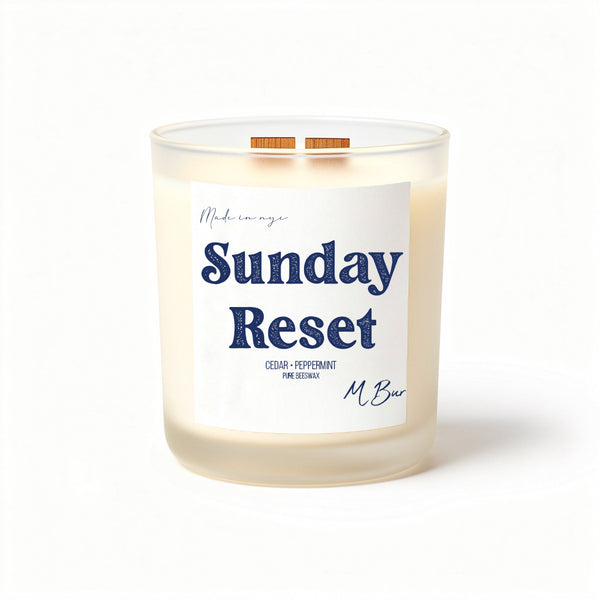
The problem is that candle labels are designed to confuse. A single word like "fragrance" can hide dozens of chemicals. "Blended wax" might be mostly petroleum byproduct. Even terms that sound clean, like "natural fragrance," don't guarantee safety.
This post breaks down what's actually on a candle label and why it matters. By the end, you'll know how to spot quality candles and avoid the ones that are basically just burning petroleum in your bedroom. If you want to see what a transparent label looks like in practice, our full beeswax candle collection discloses every ingredient upfront.
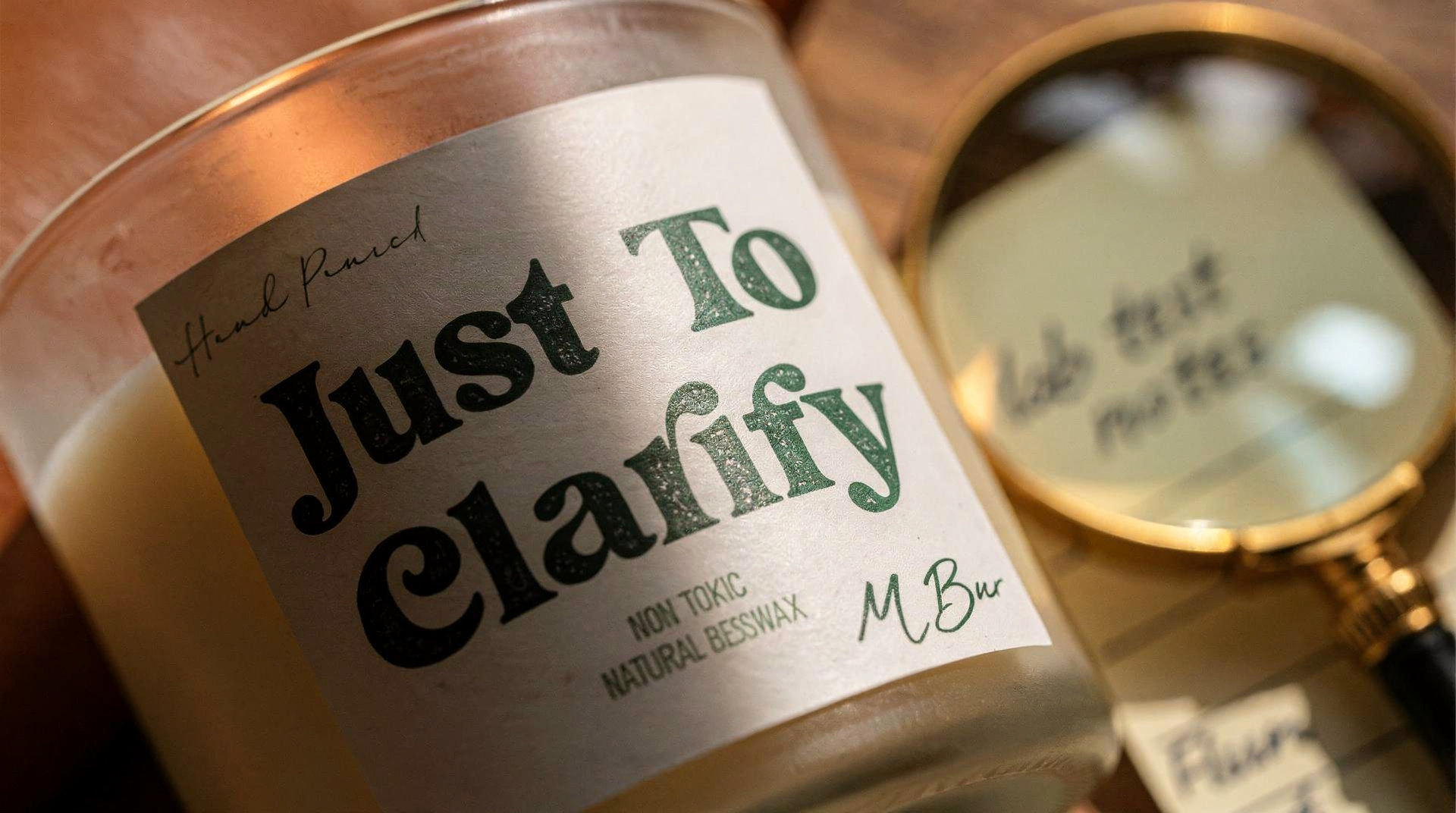
The Three Main Components on Every Candle Label
A candle label tells you three essential things: the wax, the wick, and the fragrance. Everything else is decoration or marketing. Let's decode each one.
Wax Type: The Foundation of Everything
The wax is what you're actually burning, so it matters more than you'd think.
Paraffin wax is the cheapest option and the most common. It's a petroleum byproduct, refined from crude oil. When paraffin burns, it releases volatile organic compounds (VOCs) like benzene and toluene. The American Chemical Society has documented that paraffin candles can release the same toxins found in diesel exhaust. If a label just says "wax" with no qualifier, it's almost certainly paraffin.
Soy wax sounds better, and it is, but the label game here is tricky. Soy wax is made from soybean oil and burns cleaner than paraffin. But many "soy candles" are actually soy blended with paraffin, sometimes up to 50/50. The label might say "soy blend" in small text. If you want pure soy, you'll see "100% soy wax" or it won't mention blending at all. Soy does have one catch: most soy candles still use synthetic fragrance, which undermines the environmental benefit.
Beeswax is the oldest candle material and the cleanest burning. It's a byproduct of honey production, so supporting beeswax candles means supporting beekeeping. Beeswax has the highest melting point of any candle wax, which means longer burn times and a hotter flame. If a label says "100% beeswax," you know exactly what you're getting: a single ingredient that burns completely. Beeswax also naturally emits a subtle sweet scent, which is why beeswax candles often need less fragrance. A label that highlights beeswax is usually a signal the maker cares about quality.
Other waxes exist (coconut, palm, gel), but these three dominate the market. The label should tell you the type clearly. If it doesn't, ask yourself why.
Wick Material: Cotton, Wood, or Paper Core?
The wick is the part that actually burns, and what it's made of matters for soot and safety.
Cotton wicks are the standard and generally fine. They burn cleaner than older paper core wicks.
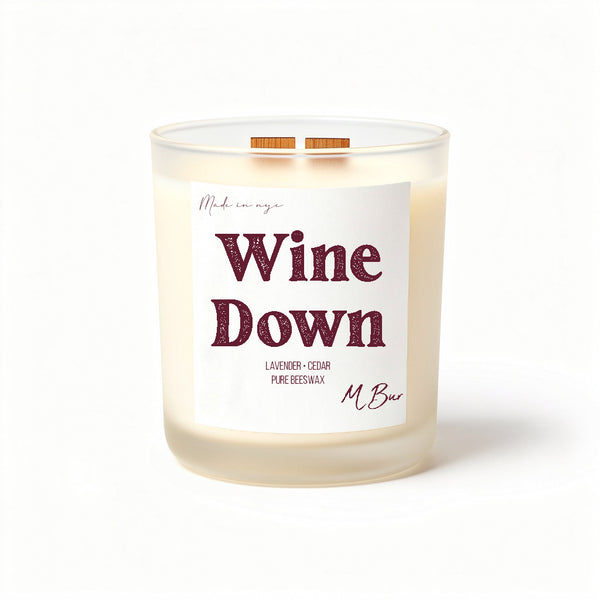
Wooden wicks are trendy and beloved for the crackling sound, which candle lovers describe as therapeutic. A wooden wick is a thin wood veneer, and the label should say "wooden wick" explicitly. The sound is real and comes from moisture in the wood. Wooden wicks also tend to produce a wider flame, which can help burn the candle more evenly.
Metal core wicks are a red flag. Many cheaper candles use zinc or lead cores to keep the wick standing upright. Lead core wicks have been banned in the US since 2001, but they still exist in imported candles. A label should explicitly say the wick is lead free if it's metal core. Better yet, the label should say "cotton wick" or "wooden wick" with no mention of metal at all.
If the label doesn't mention the wick at all, that's suspicious. Most quality makers highlight it.
Fragrance: Natural, Synthetic, or Something Else?
This is where labels get deliberately confusing. One word, "fragrance," can hide the entire chemistry lab.
Natural fragrance comes from essential oils and plant extracts. The label should say "essential oil fragrance" or "plant based fragrance." Natural fragrance is more expensive and sometimes less consistent (because plants vary), but it won't release synthetic compounds when burned.
The term "fragrance" or "parfum" by itself usually means synthetic fragrance. Synthetic fragrances are laboratory made compounds that mimic natural scents. They're cheaper, more consistent, and stable. But here's the catch: many synthetic fragrances release formaldehyde, benzene, and other VOCs when heated. A 2021 study published in Environmental Science and Technology found that synthetic fragrances in candles can react with ozone in indoor air to create secondary organic aerosols, essentially creating new chemicals inside your home. If a label just says "fragrance" with no descriptor, it's synthetic.
Some brands use "phthalate free" as a label claim. Phthalates are plasticizers sometimes added to fragrance to make it last longer. Saying a candle is phthalate free is like saying a restaurant doesn't have roaches: it should be a baseline, not a selling point. But it tells you the maker is paying attention to chemical safety.
"Paraben free" is another label phrase. Parabens are preservatives. Not all candles need them (solid wax doesn't spoil), but some makers add them to fragrances. Avoiding them is smart if you're sensitive, but it's not a health emergency.
What About "Natural" and "Clean" Claims?
Labels love the word "natural." It has no legal definition for candles. A candle can say "all natural" and still contain synthetic fragrance and paraffin wax. The word "natural" on a label is marketing, not regulation.
"Clean burning" is similarly vague. It usually means the candle produces less soot, which typically happens with cotton wicks and non paraffin wax. But there's no official standard for "clean," so makers can use the term loosely.
"Eco friendly" or "sustainable" might mean the maker sources palm oil responsibly, or it might mean nothing at all. Look for certifications (Fair Trade, Rainforest Alliance) rather than just the claim.
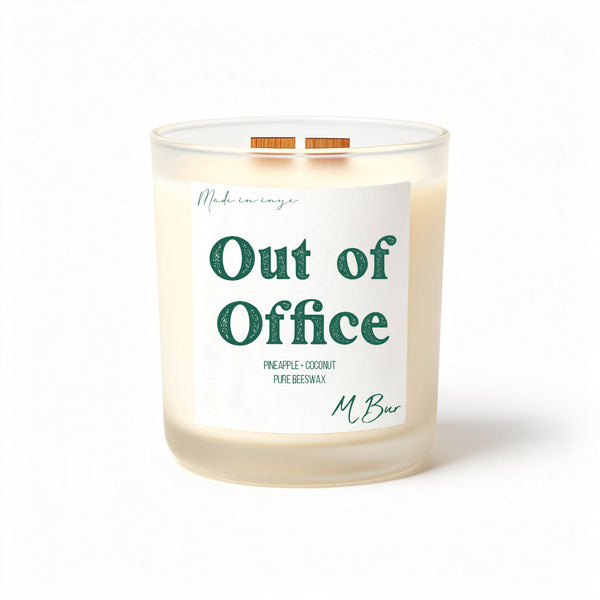
The safest label terms are specific ones: "100% beeswax," "cotton wick," "phthalate free fragrance," "no synthetic dyes." Specificity signals transparency.
Decoding a Real Candle Label: Step by Step
Let's walk through what to look for when you're actually shopping.
First, find the wax type. It should be visible on the label or packaging. If it says "made with beeswax" instead of "100% beeswax," the rest might be paraffin. If it says "soy blend," ask what the other wax is.
Second, check the wick. Cotton or wooden is good. Metal core should be labeled "lead free" (though ideally there's no metal at all). If there's no mention, email the maker and ask.
Third, look at fragrance. Does it say "essential oil," "plant based," or just "fragrance"? If it's vague, that's a sign to dig deeper. What makes a candle non toxic starts with transparent fragrance sourcing, so makers who are serious about health will spell it out.
Fourth, scan for additives. Does the label mention dyes, stearic acid, or other chemicals? Most are harmless, but the fewer the better. Beeswax naturally has a pale golden color, so candles that need heavy dyes are usually not beeswax.
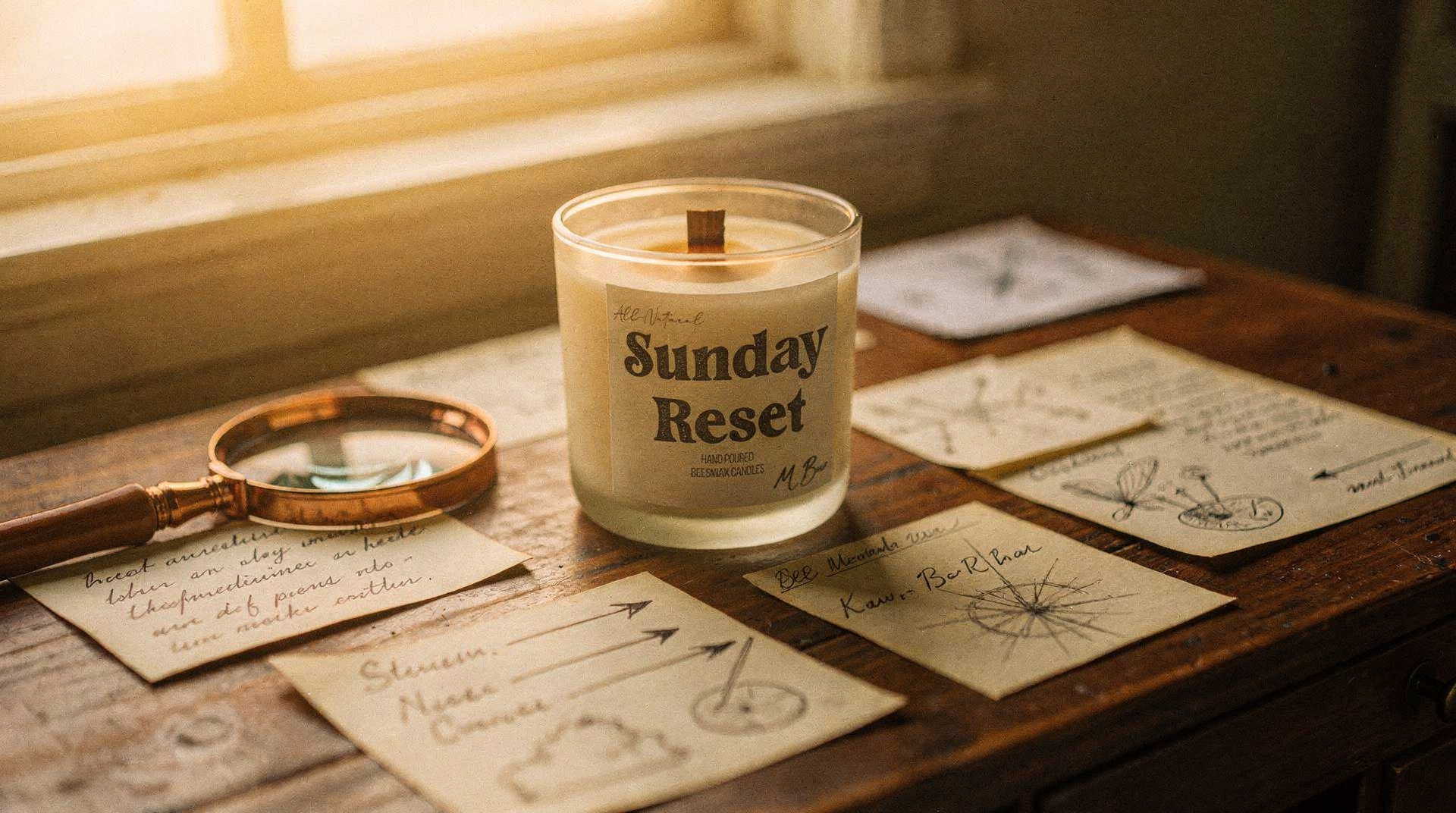
Fifth, check burn time. This is often where makers fudge numbers. A 12oz beeswax candle should burn for roughly 80 hours, while a soy candle of the same size might do 50 to 60 hours. If the label claims 100+ hours for a paraffin candle, it's exaggerating. Cross reference the burn time claim with the wax type and size to spot inconsistencies.
Red Flags That Signal Low Quality
Some label phrases should make you skeptical:
"Paraffin blend" without specifying the blend ratio. This is usually mostly paraffin.
"Fragrance" with no further detail. Vagueness about fragrance is a red flag for synthetic or low quality sources.
"Up to X hours" instead of a specific burn time. This is wiggle room.
No wick information at all. Makers of quality candles highlight their wicks because they're part of the value.
"Made with natural ingredients" applied to the candle itself. Wax and wick might be natural, but if the fragrance is synthetic, the claim is misleading.
No maker information or contact. If you can't find who made the candle, it's probably a commodity product.
What Transparency Looks Like
A well made candle label tells you exactly what's in the jar. It specifies the wax type ("100% beeswax"), the wick material ("wooden wick"), the fragrance sourcing ("phthalate free fragrance"), and the burn time ("80 hours"). It might even list fragrance notes so you know what you're getting before you buy.
Brands that care about transparency often go beyond the legal minimum. They might list the specific scent notes ("lavender, chamomile, sage, cedar, sandalwood") or explain why they chose their materials. This level of detail costs more to communicate, so makers who do it are signaling they're confident in their product.
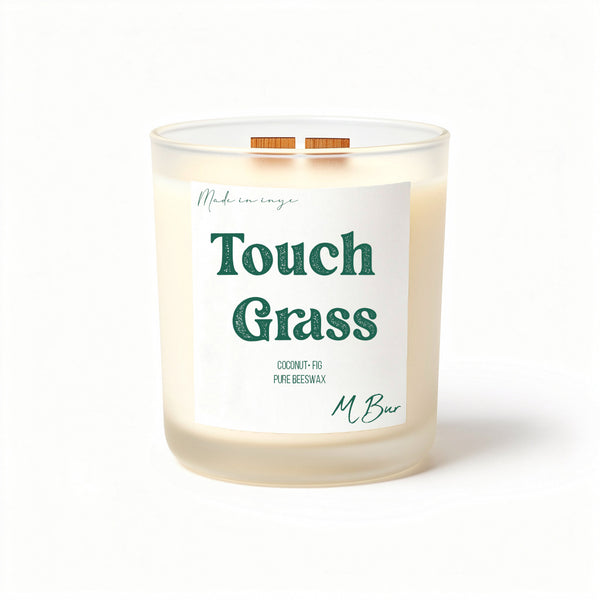
When makers are vague or use marketing fluff instead of specifications, they're usually hiding something: low quality ingredients, synthetic fragrance, or inflated burn time claims.
FAQ: Ingredient Questions People Actually Ask
What does "blended wax" really mean? It means the candle is made from more than one type of wax. Usually paraffin blended with soy or beeswax to reduce cost. The label should say what the blend is. If it doesn't, ask the maker directly.
Are synthetic fragrances actually bad for me? They release VOCs when heated, which some people are sensitive to. If candles give you headaches, the fragrance is likely the culprit. A real customer who switched from mass market candles to purer options put it this way: "I absolutely love these candles. I instantly notice the difference in the air quality, in comparison to the Bath and Body scented candles. I love Bath and Body's candles but I acknowledge that it caused a slight headache and other minor respiratory discomfort." The Wine Down beeswax candle is one example of a clean-burning alternative if you're sensitive.
Is beeswax really better than soy? Beeswax burns longer, produces less soot, and naturally purifies air by emitting negative ions. Soy is renewable and better than paraffin, but it doesn't burn as long or as cleanly. Beeswax is the premium choice, and it shows on the label and in the price.
What if the label doesn't list fragrance type? That's a red flag. Email the maker and ask. If they don't answer clearly, find a different brand. Transparency matters because it signals the maker respects your health.
Does "paraffin free" mean the candle is safe? It means you've avoided petroleum byproducts, which is a good start. But paraffin free doesn't automatically mean safe if the fragrance is toxic or the wick is metal core. Paraffin free is one piece of the puzzle, not the whole picture.
The Bottom Line: Read Like a Scientist, Shop Like You Care
Candle labels aren't just marketing documents. They're the ingredient list for something you're literally burning in your home. Learning to read them gives you the power to make decisions based on facts instead of hype.
Look for specificity. If a label tells you exactly what's in the candle without vague claims, the maker probably cares about quality. If it uses buzzwords and avoids details, that's information too.
The next time you're at a store or browsing online, take 30 seconds to read the label. Check the wax type, wick material, fragrance sourcing, and burn time. Ask questions if something seems off. Good makers love talking about their ingredients because they're proud of them.
Your home's air quality depends on what you burn in it. A label might seem like a small thing, but it's your window into what's actually happening when that wick catches flame.
Shop the full MBur collection — every ingredient disclosed, every candle transparent
What buyers say:
Related reading:

