

Do Beeswax Candles Actually Purify Air? Here's What the Research Says
You light a candle after a long day and someone tells you it's "purifying the air." It sounds great, and maybe a little too good to be true. So you do what any reasonable person does and start googling it at 11pm, only to find a mix of wellness-blog claims and almost no actual sources.
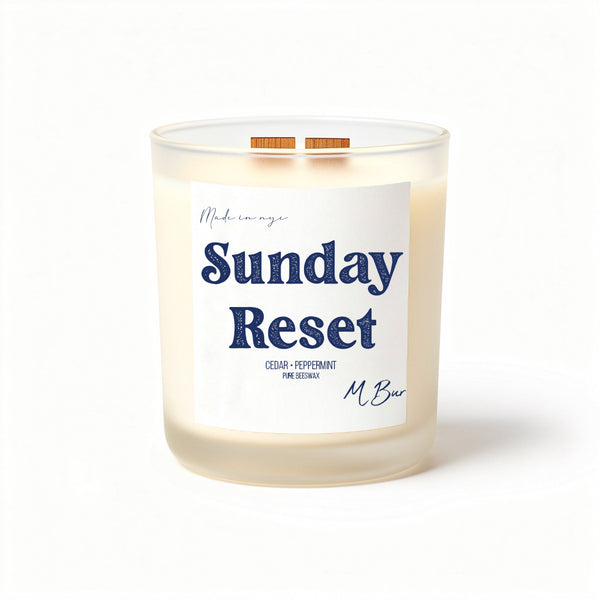
Here is the honest version up front: the claim that beeswax candles release negative ions that clean your air has a real scientific basis, but the direct evidence for candles specifically is thin. What is well documented is that beeswax burns much cleaner than paraffin. This post walks through what the research actually supports, what's overblown, and what genuinely matters for the air in your home.
By the end you'll know how to think about candles and air quality, which waxes are cleanest to burn, and what to look for. Browse the full MBur beeswax candle collection as you read, or if you already know you want a candle that won't make things worse, our best candles to burn for allergies post is a solid place to start.
First, the Negative Ion Claim. What Is It Actually Saying?
The popular version goes like this: burning beeswax releases negative ions, which attach to positively charged particles like dust, pollen, mold, and pet dander, causing them to drop out of the air where they can be cleaned up. Less airborne junk, cleaner air, at least in theory.
The ion idea itself is not made up. Negative ions are real. They're produced by lightning storms, ocean waves, and moving water, which is part of why mountain air and beachside breezes feel fresher. Research on negative air ions has explored possible links to reduced airborne bacteria, better mood, and respiratory benefits, and some studies suggest negative ions can lower particulate matter indoors.
So the chemistry behind the idea is legitimate. The open question is whether a beeswax candle produces enough negative ions to make a real difference in a room, and here the evidence gets thin.
What the Research Actually Supports
No peer-reviewed study has directly measured the negative ion output of a burning beeswax candle and compared it to an air-purifier threshold. The claims circulating online mostly trace back to anecdotal reports and marketing language, not controlled studies on candle combustion.
What we can say with confidence is that many people report cleaner-feeling air after switching to beeswax, that beeswax burns at a higher temperature than other waxes, and that it produces minimal soot. Whether that is the negative ion mechanism, or simply the absence of the pollutants other candles give off, is a distinction worth making.
The honest answer: some sources suggest beeswax may release negative ions, and many users report real benefits, but we are not going to tell you your candle is a medical-grade air purifier. What we can tell you is that it's one of the cleanest things you can burn indoors.
The Bigger Story: What Other Candles Do to Your Air
If you want to understand beeswax and air quality, the more useful question is not what beeswax adds to your air. It's what paraffin candles put into it.
Paraffin is a petroleum byproduct, what's left after crude oil is processed into gasoline and other fuels. When you burn paraffin, you are burning a refined petroleum product in your living room. A widely cited 2009 study from South Carolina State University, presented at an American Chemical Society meeting, reported that paraffin candles can release compounds like benzene and toluene when burned. It was a conference presentation rather than peer-reviewed research, and the candle industry disputed it, but benzene is a recognized carcinogen, so caution is reasonable.
Soy is a step in the right direction, not a clean finish line. Most soy candles sold are blended with paraffin. Even when they're not, soy is often tied to GMO crops and pesticide use, and the wax itself usually needs chemical processing. Add phthalate-heavy fragrance and synthetic dyes and you have a candle that looks natural on the label and burns like something else.
Beeswax is one of the oldest candle materials on earth, used for roughly 5,000 years. It needs no chemical processing, it's a natural byproduct of honey production, and it has one of the highest melting points of any candle wax, which means a slower, more complete burn with significantly less soot than paraffin or most soy candles. That cleaner burn comes down to basic combustion chemistry.
The Real Risk Factors in Most Candles
Whether a candle purifies air is almost secondary to whether it's actively degrading it. The ingredients that cause the most harm are specific, and you can avoid all of them once you know what to look for.
Paraffin Wax
Petroleum-derived, and it can release VOCs including benzene and toluene during combustion. If a candle's ingredient list doesn't specify the wax type, assume paraffin.
Toxic Fragrance
The word "fragrance" on a label is a legal loophole. It can stand for a blend of hundreds of undisclosed chemicals, many of which include phthalates. Phthalates are endocrine disruptors, meaning they interfere with hormone function, and they have been linked in various studies to reproductive issues, developmental effects in children, and respiratory irritation. In many candles the fragrance is where most of the chemical load lives, no matter the wax.
Metal-Core Wicks
Lead-core wicks were banned in the US in 2003, but zinc and tin core wicks are still around, and they release metal particulates during combustion. Wooden wicks sidestep this entirely, and they produce a much nicer crackle while they're at it.
Synthetic Dyes
Candle colorants are often petroleum-derived themselves. They serve no functional purpose and add chemical load to every burn. Undyed candles burn cleaner.
I absolutely love these candles! I instantly notice the difference in the air quality, in comparison to the Bath and Body scented candles. I love Bath and Body's candles but I acknowledge that it caused a slight headache and other minor respiratory discomfort. Awesome products. Totally addicted.
Jason H., verified buyer
Jason's experience is not unique. Headaches and respiratory discomfort from paraffin and phthalate-fragrance candles are a common pattern in our reviews. Switching to beeswax with phthalate-free fragrance makes a noticeable difference for a lot of people, and our guide to candles for allergy sufferers goes deeper on what to look for if you're sensitive.
What Actually Makes a Clean-Burning Candle
Here's a practical checklist. If a candle hits every item, it is about as clean as a candle gets.
- 100% beeswax (not a blend, not "beeswax blend," 100% beeswax)
- Phthalate-free fragrance (or no fragrance at all for extreme sensitivities)
- Wooden or cotton wick (no metal core)
- No synthetic dyes
- No paraffin content
- Transparent ingredients (if a brand won't tell you what's in it, that's your answer)
Every MBur candle checks every box: 100% beeswax with no blending, man-made phthalate-free non-toxic fragrance oils, untreated wooden wicks with that low crackle, and no synthetic dyes. Hand-poured in Far Rockaway, Queens, NY, so you can actually ask questions and get answers about what's in your candle.
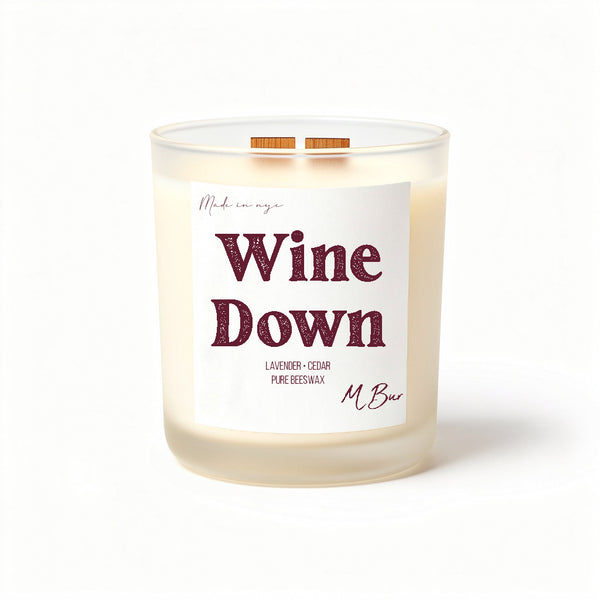
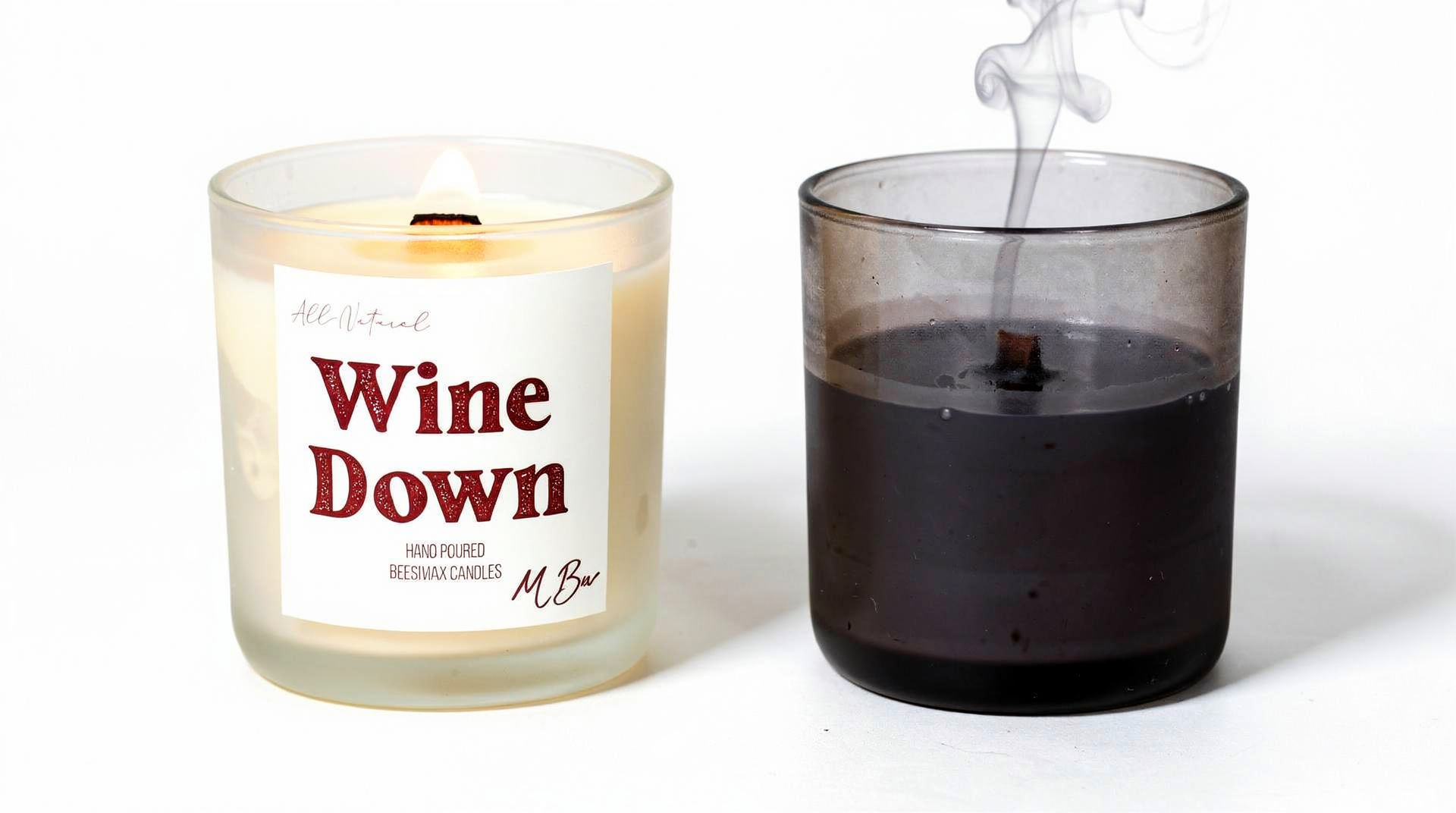
If you want a candle that smells incredible and burns clean without the respiratory side effects, the Wine Down beeswax candle (starting at $20 for the 20-hour size) is one of our most popular picks for people who are sensitive to strong scents.
Practical Tips for the Cleanest Possible Burn
Even the cleanest candle can be burned poorly. These habits make a real difference regardless of wax type.
Trim the Wick Before Every Burn
A wick that's too long makes a larger, less controlled flame and more soot. For wooden wicks, aim for a clean break to about 1/8 inch before lighting. Our wooden wick troubleshooting guide covers how to trim and keep a clean burn.
Keep Burns Under 4 Hours
Even clean candles should not run indefinitely. The wax pool gets too deep, the wick submerges, and combustion gets less efficient. Most safety guidelines cap a session at about 4 hours. Let the candle cool fully before relighting.
Ventilate the Space
Even the cleanest candle is still combustion. Light ventilation keeps air moving and prevents any buildup of combustion byproducts. You don't need every window open, but a cracked door or passive airflow helps.
Keep Candles Away from Drafts
Drafts cause uneven burns, larger flames, and more soot. A stable spot means a cleaner, slower burn and better fragrance throw.
Frequently Asked Questions
Do beeswax candles actually release negative ions?
Some sources suggest burning beeswax may produce negative ions, and many people report better air after switching from paraffin. No peer-reviewed study has specifically measured the negative ion output of a burning beeswax candle against a clinical standard, so the cleaner burn and the absence of paraffin's VOCs is the better-documented benefit. If you want candles that won't compromise your air, start with our allergy-friendly beeswax recommendations.
Are beeswax candles better for air quality than soy?
Generally, yes. Most soy candles are blended with paraffin, use phthalate fragrance, and undergo more chemical processing than beeswax. A 100% beeswax candle with phthalate-free fragrance and a wooden wick is the cleanest option available. See our full breakdown in beeswax vs soy candles.
Why do some candles give me headaches but beeswax doesn't?
The likeliest culprits are phthalate-containing fragrance and VOCs from paraffin combustion. Both are airborne irritants that can trigger headaches, respiratory discomfort, and eye irritation. Beeswax with phthalate-free fragrance removes both variables. Our deep dive on why candles cause headaches has more on the mechanisms.
How long do beeswax candles burn?
Beeswax has one of the highest melting points of any candle wax, so it burns slower and longer. MBur's largest size is rated at 80 hours. For the full picture, see our guide on how long beeswax candles actually last.
What's the safest candle to burn indoors?
100% beeswax with phthalate-free fragrance, a wooden or untreated cotton wick, and no synthetic dyes. That combination removes the three main sources of candle-related air quality concerns: VOCs from paraffin, phthalates from fragrance, and metal particulates from metal-core wicks. More in what is the healthiest candle to burn.
The Bottom Line
Beeswax candles and negative ions: the claim has a real scientific basis, but the direct evidence for candles specifically is thin. What is well documented is that beeswax burns cleaner than paraffin, produces far less soot, needs no chemical processing, and, combined with phthalate-free fragrance and a wooden wick, removes the primary sources of candle-related air quality concerns.
The air-purification claim is only partly supported by the science. The reduction in soot and VOCs compared to paraffin is well documented.
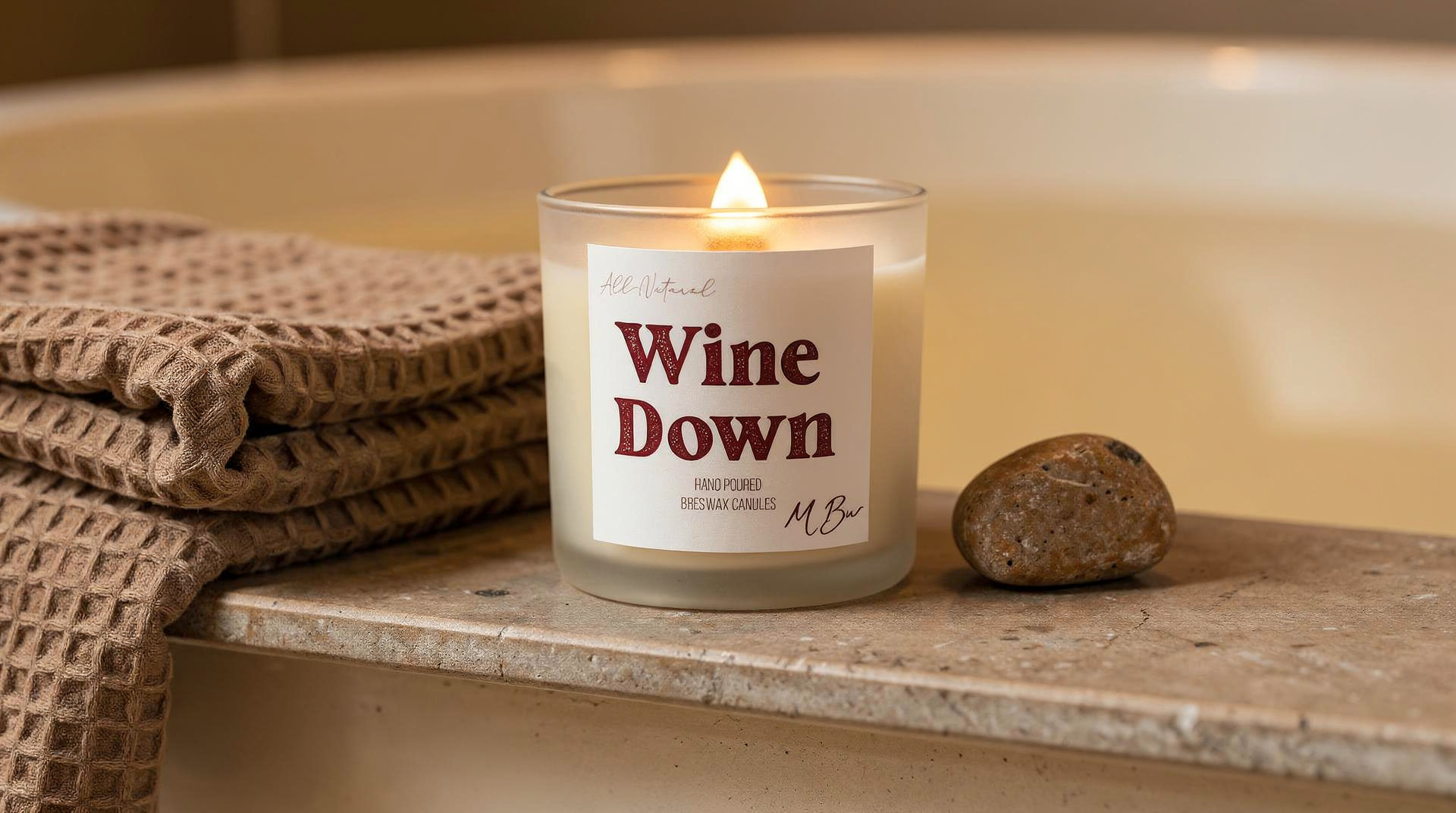
If you've been dealing with headaches, stuffiness, or respiratory irritation from candles and haven't tried 100% beeswax yet, the difference is real. Start with the Wine Down beeswax candle (20-hour size, $20), which Nicole D. called "a total game-changer" for scent sensitivity, and see for yourself. It's backed by our 30-day satisfaction guarantee.
Wine Down holds a 5-star rating from customers who've switched away from big-box fragrance candles and report no headaches, just a clean, long burn and a crackling wooden wick.
Shop the full MBur beeswax candle collection and find your clean burn
Related reading
What buyers say:

