

Candles That Don't Produce Soot and Black Smoke: How to Choose One
That black ring creeping up the inside of your candle jar has a cause, and it is not bad luck. Neither is the gray film on the ceiling above your favorite candle spot. Both come from the same thing, and once you know what it is, you can stop it.
Soot is unburned carbon. It floats up, lands on walls, coats glass, and drifts into the air you breathe. Two things drive most of it: the wax you burn and how you burn it. If you want a candle that keeps a room smelling clean instead of leaving a smoky film behind, MBur's pure beeswax candles burn without the paraffin soot that stains a jar, so the air stays fresher after the flame goes out.
Throwing out the sooty candle is the easy part. Picking the next one so it does not happen again is the part that trips people up.

First, the concern is real, and it is fixable
You are not imagining the smoke. Some candles genuinely put out visible black wisps and coat your space in a fine gray dust. That is a real problem, not a picky complaint.
Black smoke is made of tiny carbon particles. They come from a flame that cannot burn its fuel all the way. Instead of turning into light and heat, some of the wax escapes as soot.
These particles are small. Small enough to land deep in your lungs. For most healthy people in a well-aired room, an occasional smoky candle is a minor thing. If you have asthma or allergies, the soot can bug your airways more.
The good news is that soot is not random. It has clear causes. Change the causes and the smoke mostly goes away.
The wax sets the floor for everything else
Most heavy-sooting candles start with the same base: paraffin wax. Paraffin is a petroleum byproduct. When it burns, it tends to throw off more soot and more petroleum-based emissions than plant or animal waxes do.
Plant-based and natural waxes burn cleaner. Soy, coconut, and beeswax all put out far less soot than paraffin. That is why the wax is the first thing to check, before you even look at the wick.
Beeswax sits at the top for a reason. It is a single, naturally occurring material with no chemical processing. It also has the highest melting point of any candle wax, which is why MBur's beeswax candles can reach an 80-hour burn in the largest size.
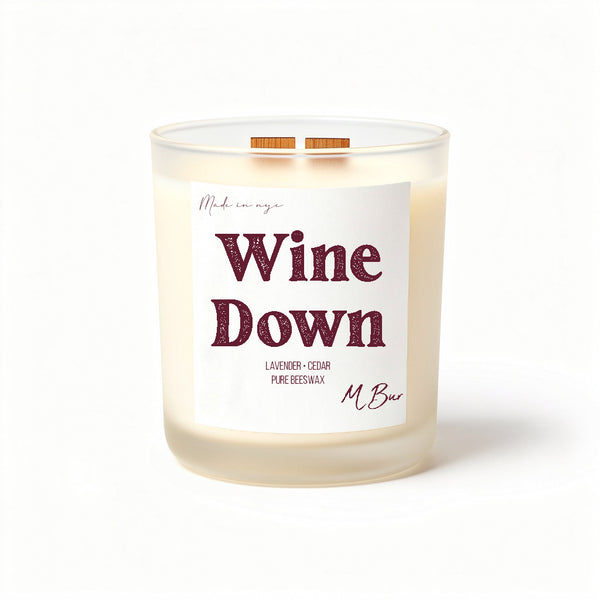
One honest note. No candle is truly 100% smokeless. Any flame makes a trace of fine particles. What clean wax does is drop that amount way down, so you get scent and glow without the film.
The word doing the most work on the label
"Non-toxic" gets stamped on a lot of candles. It is a loose marketing term with no strict rule behind it. So it does not tell you much on its own.
What matters more is what the maker will actually name. A brand that tells you the exact wax and lists phthalate-free fragrance is giving you real information. A vague label is hiding something.
Many candles use toxic fragrances loaded with phthalates and parabens. These add to the junk in the air when the candle burns. MBur uses only non-toxic, phthalate-free fragrance oils and skips chemical dyes entirely.
"I absolutely love these candles! I instantly notice the difference in the air quality, in comparison to the Bath & Body scented candles. I love Bath & Body's candles but I acknowledge that it caused a slight headache and other minor respiratory discomfort. Awesome products. Totally addicted." Jason H.
If you want a clean, low-soot pick that fills a room without a heavy chemical hit, the Sunday Reset candle is a solid start. Its notes run eucalyptus, clove, cedar, patchouli, and vanilla. The 40-hour size is $32, and the 80-hour is $65.
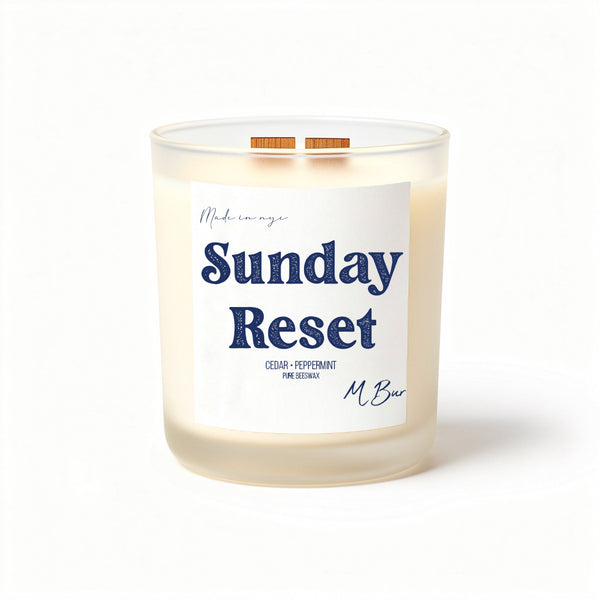

The two things you can see with your own eyes
After wax, look at the wick. The wick decides how much fuel the flame pulls up.
Skip metal-core wicks. Some older or cheap candles use them, and they can throw heavy soot and toxic particles. Untreated cotton and wooden wicks are the clean picks.
Wooden wicks have a bonus. They burn evenly and make a soft crackle, and every MBur candle uses one. A well-sized wick means a steady, controlled flame instead of a hungry one that smokes.
The second thing you can see is the flame itself. A calm, teardrop flame burns clean. A flame that dances, gutters, and flares is starved of oxygen or fed too much fuel, and that flame makes smoke.
Here is the part most guides skip: how you burn it
You can buy the cleanest beeswax candle made and still get soot if you burn it wrong. Half the problem lives in habits, not in the jar.
Start with the wick length. Trim it to a quarter inch before every single burn. A long wick pulls up too much wax, and the extra fuel comes out as unburned carbon. A half-inch wick can put out many times the fine particles of a properly trimmed one.
Next, kill the draft. Keep the candle away from open windows, fans, and air vents. Moving air makes the flame flicker, and a flickering flame burns its fuel unevenly, which means smoke.
Watch your burn time too. Stop at three to four hours. Past that, the wax pool overheats, the wick gets unstable, and soot climbs.
Finally, how you put it out matters. Blowing hard splatters wax and sends up a smoke trail. Use a snuffer or dip the wick, and the room stays clean.
Your quick checklist for a soot-free candle
Run any candle you are eyeing through this short list before you buy.
- 100% beeswax or a plant-based wax, clearly named, not a mystery blend.
- Untreated cotton or wooden wick, never a metal core.
- Phthalate-free fragrance, stated plainly by the maker.
- No chemical dyes.
- A brand that tells you what is actually inside.
MBur checks every box. Single-ingredient beeswax, a wooden wick, phthalate-free fragrance, no dyes, and handmade in New York City. That is the whole point of the line.

Frequently asked questions
Why do some candles produce black smoke and soot?
Black smoke comes from incomplete combustion. The usual causes are a wick that is too long, a flame flickering in a draft, or a wax full of impurities. A clean wax and a trimmed wick fix most of it. If you want to start clean, browse the pure beeswax collection.
Do soy and beeswax candles produce zero soot?
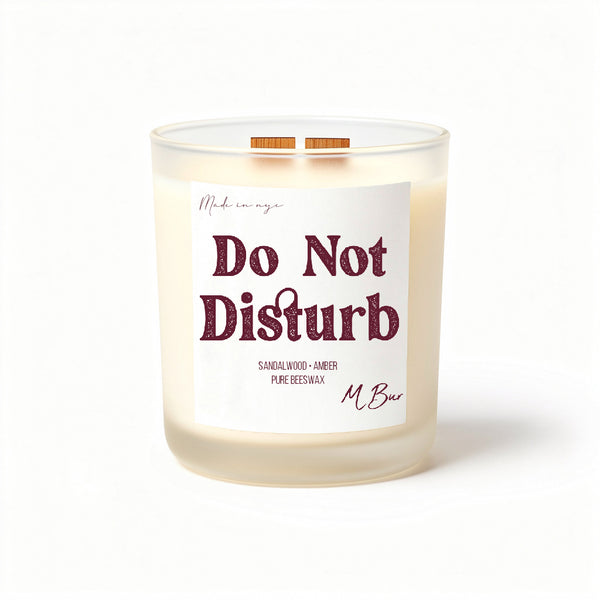
No candle is fully soot-free, since any flame makes a trace of fine particles. Soy and beeswax burn much cleaner than paraffin, though, and beeswax burns the longest. A Do Not Disturb candle, with bergamot and pear notes, burns clean and slow in a bedroom.
How can I stop my current candles from smoking?
Trim the wick to a quarter inch before every burn and move the candle away from drafts and vents. Keep continuous burns under four hours. When you upgrade, a Sunday Reset candle gives you a wooden wick that burns steady.
Are candle soot and black smoke harmful to health?
Breathing in heavy soot can irritate the airways. The risk is higher for people with asthma or allergies. If you have a breathing condition, follow your doctor's guidance on candle use, and lean toward clean-burning options like the beeswax collection.
Why does a candle smoke right after you blow it out?
The wick stays hot for a moment and keeps vaporizing wax, but there is no flame left to burn it fully. That leftover carbon shows up as a wisp of smoke. Use a snuffer or wick dipper to skip it.
The takeaway
Soot comes down to the wax and how you burn it. Pick a clearly named natural wax with a cotton or wooden wick, trim to a quarter inch, and keep it out of the draft. Do that and the black ring and smoky film stop showing up.
For a clean, room-filling pick, start with the Sunday Reset candle, 100% beeswax with a wooden wick, $32 for the 40-hour size. Customers keep saying the same thing: it fills the room and skips the headache.
Ready for a candle that stops staining your walls? Shop the pure beeswax collection.
For more on how candles affect indoor air, the EPA's guide to indoor air quality is a solid non-commercial read.
Related reading

