

Candles in Interior Design: The Complete Styling Guide for 2025
Candles in Interior Design: The Complete Styling Guide for 2025
You spent real money on that bookshelf. You found the perfect throw pillow. You hung the art at exactly eye level. And then you lit a random candle from a gift basket three years ago and called it a day.
Here is the thing: candles are not just accessories. In well designed spaces, they are doing actual work. They add warmth, vertical interest, layered scent, and a sense that someone actually lives there. But only if you choose and place them with intention.
This guide covers everything, from the current design trends reshaping how candles are used in interiors, to a room by room styling framework, to the actual products worth buying. Whether you are starting from scratch or just want your space to feel more pulled together, you will leave here with a clear plan. Explore the full MBur candle collection while you read, because a few of these will make a lot more sense once you see them in context.
Why Candles Are Having a Design Moment Right Now
Interior design in 2025 is moving hard toward sensory layering. It is not enough for a room to look good in photos anymore. The spaces people actually want to live in have texture, depth, warmth, and scent working together. Candles sit at the intersection of all four.
Three trends in particular are reshaping how designers and tastemakers use candles right now.
Architectural Vessels
The vessel is no longer an afterthought. Concrete, thick glass, marble, and ceramic are replacing the generic frosted jar. Brands like Le Labo have leaned into this hard, with their Santal 26 Concrete Candle ($75 to $90) functioning as a design object whether the wick is lit or not. The logic is simple: if you are going to put something on a shelf, it should be worth looking at cold.
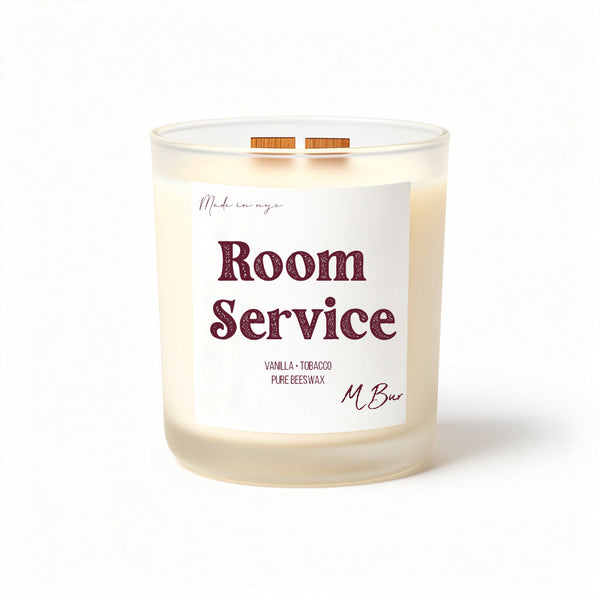
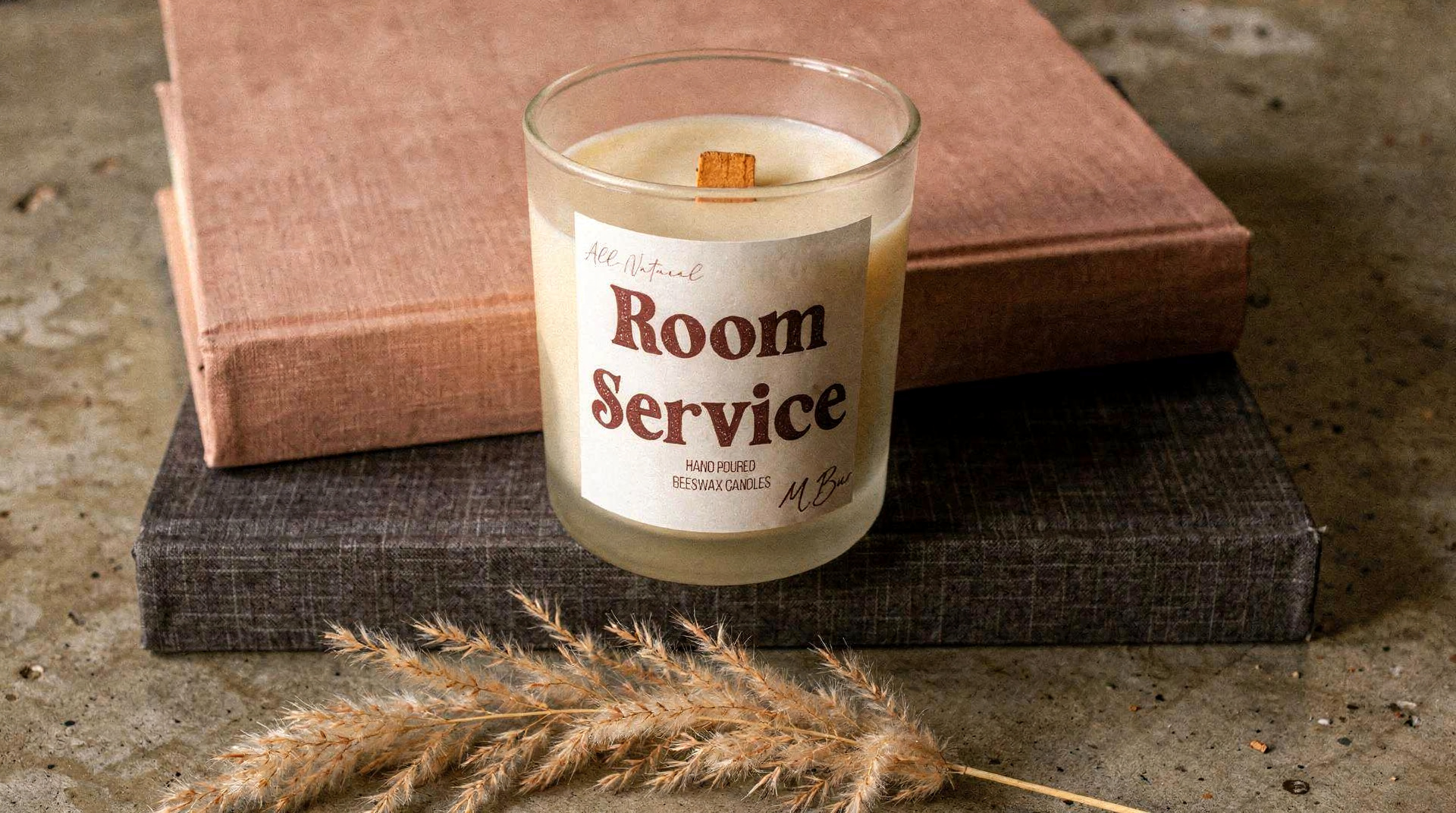
MBur candles take a different approach that actually works better for most styling contexts. The clean, minimal vessel lets the candle itself do the work visually, without competing with the rest of your decor. The Room Service beeswax candle sits on a shelf or side table and reads as considered and intentional, not loud.
Scent Scaping
This is the practice of assigning different scents to different rooms so the fragrance shifts as you move through your home. Fresh and citrus forward in the kitchen and entryway. Woody and amber in the living room. Calming and herbal in the bedroom. It turns your home into a full sensory environment instead of just a visual one.
Jo Malone London has been pushing this concept for years, even selling candles specifically designed to layer on top of each other. Their Wood Sage and Sea Salt Home Candle runs about $80, and it is genuinely designed for combining with other scents in the same space.
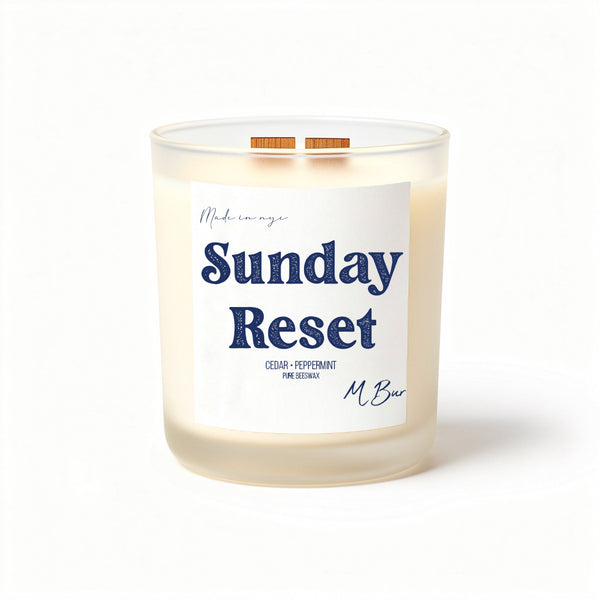
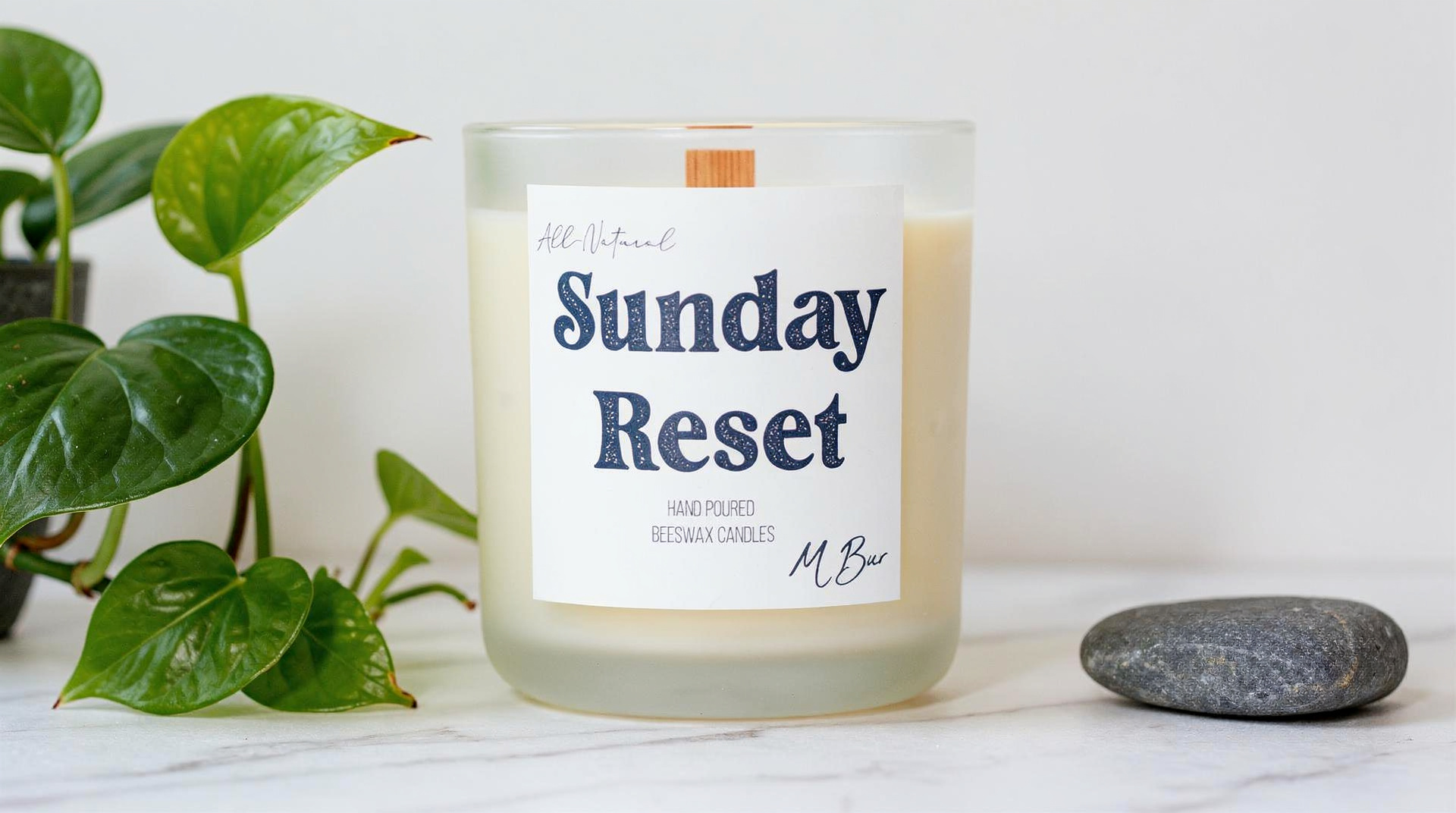
The principle applies perfectly to the MBur lineup. You can run Sunday Reset (peppermint, eucalyptus, cedar) in a home office, Wine Down (lavender, chamomile, sage) in the bedroom, and something warmer in the living room. Your home starts to feel like it has rooms with distinct personalities, which is exactly what good interior design does.
Colored Tapers
The taper candle is back, and it is not wearing ivory anymore. Deep navy, forest green, plum, and black are showing up on dining tables and mantels everywhere. Brands like Viyffo are doing gradient ombré tapers (around $20 to $30 per set) that add serious vertical drama to a tablescape. If you are doing a dinner party or want to make a fireplace mantel look intentional, colored tapers are the move right now.
The Room by Room Styling Framework
Good candle placement is not random. It follows the same principles as all good styling: consider scale, consider grouping, consider the relationship between the candle and the surfaces around it.
Living Room
The living room is where candles can do the most design work, and where most people get it wrong. The mistake is putting a single mid sized candle alone on a coffee table and calling it done. That reads as an afterthought.
Instead, work in odd numbered groupings. Three candles at slightly different heights create visual rhythm. Vary the scale: one tall vessel, one medium, one low. This is the same principle that applies to any styled vignette. Pair them with a small sculptural object, a book, or a plant to give the grouping context.
For scent in the living room, you want something that fills the space without overwhelming it. Something warm, slightly complex, and not aggressively sweet. The Retail Therapy beeswax candle works well here. It leads with grapefruit and blackcurrant, then settles into black tea, amber, and tonka. It is the kind of scent that makes people ask what that smell is in the best way possible.
"This scent has me in a chokehold. I burn it in my room and my living room and it fills my space SOOOOO nicely. There is nothing I hate more than a candle that cannot fill the room and baby this is NOT that. This candle permeates every corner of the room. Cannot say enough about how impressed I am with this company." Tiffany Gordon, Retail Therapy Candle (5 stars)
Retail Therapy starts at $20 for the 20 hour size and goes up to $65 for the 80 hour 12oz version. For a living room you are burning daily, the 80 hour size is the clear choice.
Bedroom
The bedroom is where candle placement gets more personal and where scent choice matters most. You are not trying to impress guests here. You are trying to shift your own nervous system after a long day.
Scale down in the bedroom. One or two candles on a nightstand or dresser is enough. You do not need a vignette here, you need a ritual object. Something you light at a specific time as a signal that the workday is actually over.
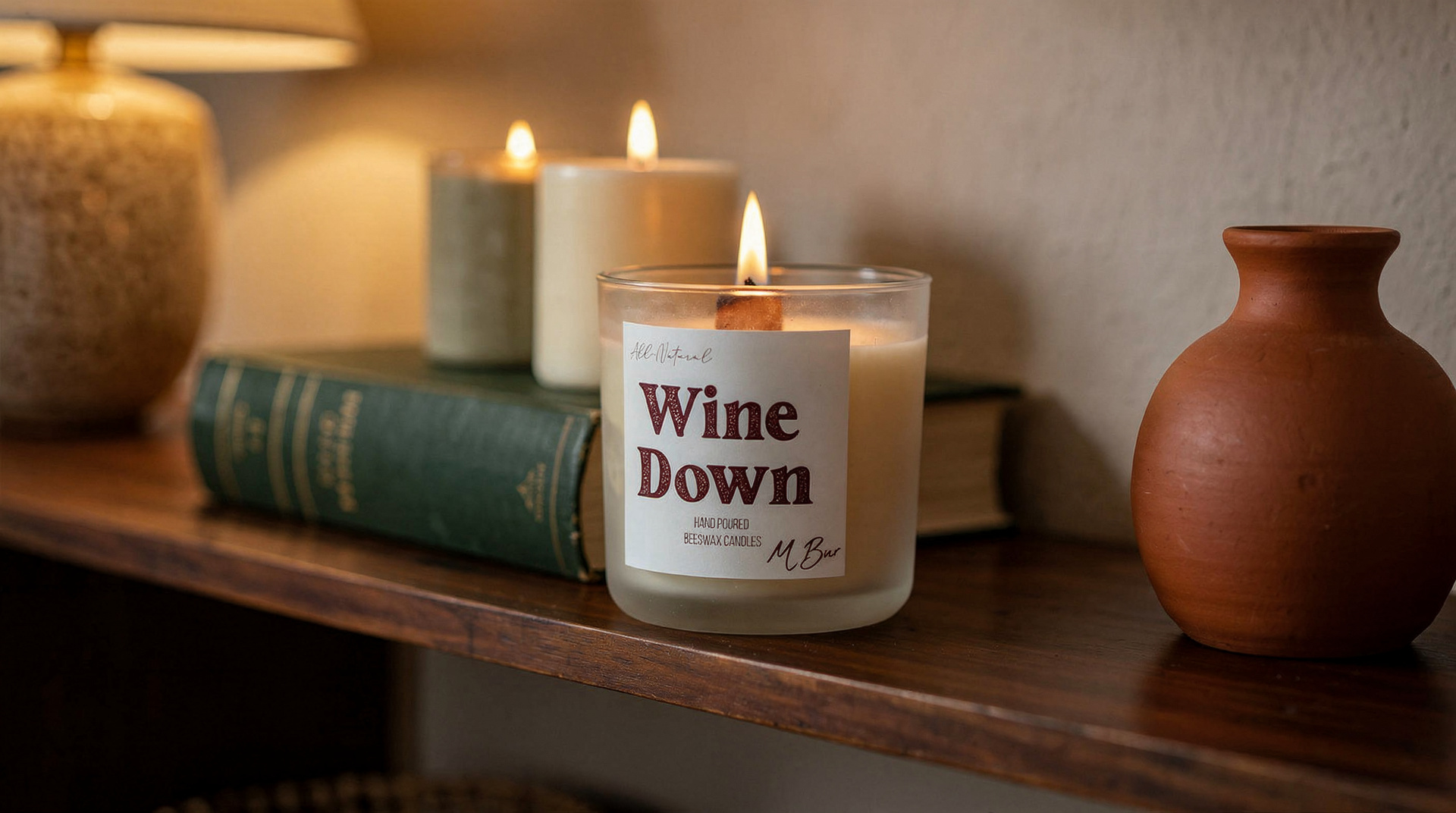
For scent, lavender forward and herbal profiles are your best friends. The Wine Down candle (lavender, camphor, chamomile, sage, rosemary) is designed exactly for this context. Start at $20 for the 20 hour size.
"Absolutely loved the Wine Down candle! The scent is so light and clean, not overpowering at all, which is exactly what I look for. A lot of other candles tend to give me headaches, but this one was a total game changer. I was able to enjoy the calming aroma without any discomfort. It made my space feel cozy and refreshed at the same time." Nicole D., Wine Down Candle (5 stars)
Placement tip: set the candle on a small tray or ceramic dish on your nightstand. It elevates the object visually and protects your furniture. Burn it for one hour before you want to fall asleep. Trim the wooden wick to about a quarter inch before each burn so the light stays soft and even.
Kitchen and Entryway
These are the zones where you want fresh and energizing scents, not heavy or sweet ones. The kitchen already has food smells competing for attention. The entryway is the first impression your home makes.
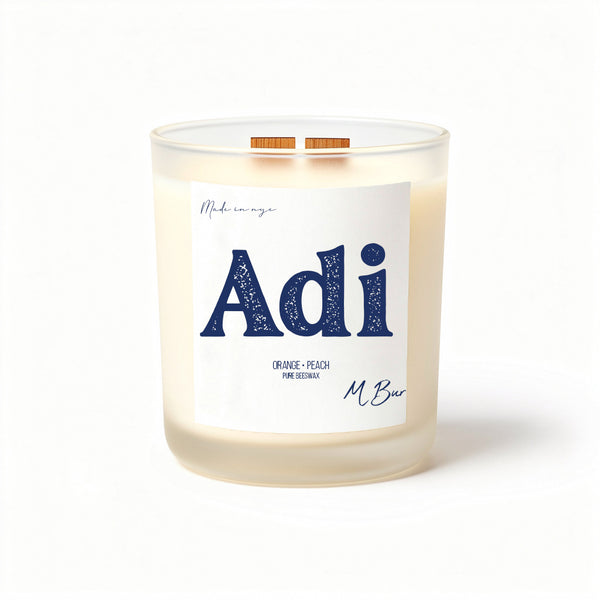
Citrus forward candles are the right call here. The Adi beeswax candle (lemon, orange, grapefruit, mandarin, tangerine, lime) is built for exactly this. It is bright without being sharp, and it reads as clean without smelling like cleaning products. Starting at $20 for the 20 hour size, it is also a low commitment way to try the scent before committing to the larger format.
For the entryway specifically, a single candle on a console table does a lot. It softens the transitional space between outside and inside, and it signals that the home is cared for. Pair it with a small mirror behind it to reflect the light when lit.
Home Office and WFH Spaces
The home office has a different job than every other room. You are not trying to relax here. You are trying to focus.
Scent research consistently points to peppermint and eucalyptus as supporting alertness and concentration. The Sunday Reset candle (peppermint, eucalyptus, clove, cedar, patchouli) maps directly onto that. It also creates what customers describe as a "just cleaned everything" freshness that makes a messy desk feel more manageable.
"I love this scent!!!! It has been getting me through my workday. I will definitely be reordering but going bigger next time!!!" Calvin P., Sunday Reset Candle (5 stars)
Keep candles off the actual desk surface in a home office. A candle on the desk competes with your monitor and your focus. Instead, place it on a side surface at eye level or slightly below. You want the scent without the flame in your line of sight.
Bathroom
Small space, big impact. The bathroom is where a single well chosen candle does disproportionate design work. The steam from a bath or shower helps diffuse the scent more aggressively, so you need less candle than you think.
Go with something spa adjacent but not cliché. The Wine Down candle works here too, but placed on the edge of a tub or a small shelf near the sink, it transforms a practical room into something that actually feels intentional.
For styling, keep it simple. One candle. Maybe a small plant if you have window light. The bathroom rewards restraint more than any other room.
How to Think About Scale and Grouping
Most candle styling mistakes come down to scale. Here are the rules that actually apply.
The Rule of Odd Numbers
Three objects are more visually interesting than two or four. This applies to candles the same way it applies to any styled grouping. If you are placing candles on a mantel, a shelf, or a console, work in threes.
Vary the Heights
A grouping of three candles at the same height is just a row. Vary the sizes so the eye has somewhere to travel. This is where mixing a tall taper in a holder, a medium vessel candle, and a smaller votive creates something that reads as designed rather than placed.
Give the Group an Anchor
A grouping of candles alone can look sparse. Anchor it with one non candle object: a small ceramic, a folded linen, a single stem in a bud vase, a smooth stone. This grounds the vignette and makes the candles feel like part of a considered composition rather than objects that need a home.
Think About the Unlit Version
This is the test that separates candles with design value from ones that are just functional. Look at your candle when it is not burning. Does it still look good? Does the vessel earn its place on the shelf? If the answer is no, you are looking at a candle that only justifies itself when lit. That is fine for some contexts, but for a well designed room, the object should hold up around the clock.
Architectural vessel candles from brands like Diptyque (Feu de Bois, $65 to $80 for the standard 190g) and NEST New York's luxury 4 wick formats ($190 to $225) are specifically designed with this in mind. They are statement objects that happen to be candles. If budget is a consideration, the MBur vessel reads as intentional and clean without requiring a triple digit investment. The 80 hour 12oz candle at $65 is a long term resident on your shelf, not a consumable you burn through in a week.
Candle Styling by Aesthetic
Different design aesthetics call for different candle choices. Here is how to match the two.
Minimalist and Scandinavian
Restraint is the whole point. One or two candles max. Neutral vessels only. Scents that are clean, herbal, or lightly woody. Sunday Reset or Out of Office from the MBur lineup work here. No ornate holders, no colored wax, no fuss.
Maximalist and Eclectic
This is where sculptural candles earn their place. Brands like Mulier Studio (Eclipse Sculptural Candle Set, around $125) and Avenoir Co. (The Shima Candle, around $38) are designed specifically for spaces that celebrate form and texture. You can mix candle types freely here: tapers in dramatic holders, sculptural pieces on shelves, vessel candles on side tables.
Warm and Traditional
Tapers are your starting point. The colored taper trend works particularly well in traditional spaces where a pop of deep green or navy on a formal dining table feels fresh without being jarring. Pair with classic brass or cast iron holders. For scent, go warm and spiced: amber, vanilla, or something with a slight smokiness like Diptyque's Feu de Bois.
Modern and Industrial
Concrete and heavy glass vessels fit this aesthetic naturally. Le Labo's Santal 26 Concrete Candle ($75 to $90) was practically designed for loft apartments and open plan spaces with exposed brick. Scents that are woody, smoky, or resinous work best. In terms of placement, let the vessel be the statement: no groupings needed, just one significant object in a clean, negative space.
The Wax Question: Why It Matters for Design
Design people care about materials. The wax your candle is made from matters for the same reason the materials in your furniture matter: it affects how the object performs and what it signals about your taste.
Paraffin is petroleum waste. It produces soot that discolors walls, leaves residue on surfaces, and puts benzene and toluene into the air you breathe. If you have ever noticed dark marks above a candle on a light colored wall, that is paraffin soot at work. For a well designed room, that is an actively bad outcome.
Soy is better, but the market is messy. Most soy candles are blended with paraffin, and many use toxic fragrance that carries its own set of problems.
Beeswax is the cleanest burn available. It has the highest melting point of any candle wax, which gives it the longest burn time. It produces no soot, no petro chemicals, and no wall damage. MBur candles are 100% beeswax, single ingredient wax, not a blend. They use phthalate free fragrance, wooden wicks, and no chemical dyes. For a white wall or a light colored shelf, this is not a minor consideration. It is the difference between a candle that stays beautiful and one that slowly ruins your decor.
"I can really tell the difference in the natural materials, especially compared to other big brand named candles that I have tried which make me feel like I need to cough." Sarah Thompson, Room Service Candle (5 stars)
Frequently Asked Questions
How do I keep candles from making my walls look dirty?
The culprit is paraffin soot. Switch to a 100% beeswax candle with a wooden wick and the problem goes away. Beeswax burns clean with no soot output. You can browse the full MBur beeswax candle collection to find options that fit your space. Also trim your wick to about a quarter inch before each burn to keep the flame size controlled.
How many candles is too many in one room?
There is no hard number, but the practical limit is usually dictated by scent overlap. If you are burning two or more scented candles in the same room, they compete and the result is muddled. For scented candles, one per room is the rule. For unscented decorative candles, group as many as the space and aesthetic call for.
What size candle should I buy for a large living room?
For a room over 300 square feet, you want a candle with significant scent throw. The MBur 80 hour 12oz candle is the right call. At $65, it is also the best value per burn hour in the lineup. The People Watching beeswax candle in the 80 hour size is a strong choice for living rooms specifically: warm spices, citrus, and vanilla that fills a large space without being aggressive.
Do I need to match candle scents to my decor style?
Not exactly match, but there is a real relationship between scent and aesthetic that is worth thinking about. Minimalist spaces tend to feel right with clean, herbal, or lightly woody scents. Warmer, more layered spaces can carry richer, more complex fragrances. If your instinct says a scent feels wrong for a room, trust it. The 20-hour size at $20 is the lowest-commitment way to test a scent in your space before sizing up.
Can candle holders be part of the decor even when the candle is not lit?
Absolutely, and this is actually the higher design standard to aim for. The best candle setups look intentional whether the wick is burning or not. Architectural vessels, interesting holders, and clean vessel candles all hold up as decor objects around the clock. If your candle styling only works when lit, it is doing half the design work it could be doing.
The Candle Styling Checklist
Before you buy or rearrange, run through this list.
- Does the vessel look good unlit?
- Is the scent appropriate for the room and the aesthetic?
- Am I working in odd numbered groupings where relevant?
- Is there height variation in any grouped arrangement?
- Do I have a non candle anchor object in any styled vignette?
- Am I using a clean burning wax that will not damage my walls or surfaces?
- Is the candle sized appropriately for the room?
- Have I assigned different scents to different rooms for scent scaping?
If you can check every box, the candle work in your home is doing what it should: adding warmth, depth, and scent that makes the space feel genuinely alive.
The Bottom Line
Candles are one of the most efficient tools in interior design, but only when you treat them as design elements rather than afterthoughts. The right wax, the right scent for the room, the right vessel, and the right placement transforms a candle from clutter into something that actually elevates the space around it.
If you want to start with one candle that works across multiple aesthetics, the Room Service beeswax candle is the most versatile option in the MBur lineup. It is the bestseller for a reason: the scent is light, complex, and undeniably elegant without being precious. The 40 hour 5oz size at $23 is a solid entry point, and the 80 hour 12oz at $65 is where it really earns its shelf space.
Rated 5 stars across dozens of reviews. Not bad for something that also looks great sitting unlit on a nightstand.
Browse the full collection and find the right candle for every room in your home at mburcandle.co.
What buyers say:
Related reading:

