

Candles and Pregnancy: What's Safe to Burn When You're Expecting
Candles and Pregnancy: What's Safe to Burn When You're Expecting
If scented candles are making you nauseous, dizzy, or triggering headaches during pregnancy, the problem probably isn't the scent itself. It's the invisible chemicals being released into your breathing air.
Pregnancy already makes your body hyperaware of smells. Your sense of smell intensifies, your tolerance shifts, and suddenly that candle you loved before feels overwhelming. But here's what most expecting mothers don't realize: the nausea and headaches aren't pregnancy hormones playing tricks. They're a direct response to what's actually burning in that candle.
Let's be clear about what's happening chemically so you can make decisions that feel right for you and your growing baby. If you want to skip ahead to the solution, our full collection of pregnancy-safe beeswax candles is here.
Why Standard Candles Cause Problems During Pregnancy
Most mass market candles (and many boutique brands) are made from paraffin wax, which is a petroleum byproduct. When paraffin burns, it releases volatile organic compounds (VOCs) into the air. These include benzene, toluene, and formaldehyde. Those aren't marketing buzzwords. Those are the same chemicals found in car exhaust and industrial manufacturing plants.
Paraffin isn't the only culprit. The fragrance oils matter just as much. The candle industry is largely unregulated, which means brands can use cheap fragrance oils loaded with phthalates (chemicals that soften plastics and carry fragrance) without disclosing them on the label. Phthalates disrupt endocrine function and cross the placental barrier, which is a justified concern during pregnancy when your baby's systems are developing.
Add in synthetic dyes that create color, and you've got a cocktail of chemicals releasing into your bedroom, nursery, or living room every time you light it.
Your nose is doing exactly what it's supposed to do when it rejects that candle. Your body knows something isn't right.
The Science of Pregnancy and Chemical Sensitivity
During pregnancy, your olfactory system becomes hypersensitive. This isn't weakness or overcautiousness. It's biology. Your sense of smell strengthens to help protect your baby from potentially harmful substances. Studies show that pregnant women's ability to detect odors increases significantly, especially in the first and second trimester.
At the same time, your respiratory system changes. Your oxygen consumption increases by 20 to 30 percent, which means you're breathing deeper and pulling more air (and any airborne chemicals) into your lungs. Your baby shares your bloodstream, so anything you inhale has the potential to affect them.
This combination makes pregnancy the exact wrong time to be casual about what you burn.
How to Choose a Truly Safe Candle During Pregnancy
Safe candles during pregnancy come down to three non negotiable criteria: the wax, the fragrance, and the wick.
Start with the Wax: Why Beeswax Matters
Beeswax is the only wax that doesn't require chemical processing. It's a natural byproduct of honey production, which means it burns without releasing VOCs or synthetic chemicals. When beeswax burns, it actually releases negative ions that can help neutralize airborne particles and improve air quality. It's not just safer for pregnancy. It's actively beneficial.
Soy wax is often marketed as the eco friendly alternative, but most soy candles are blended with paraffin to reduce costs. Even if a brand claims 100 percent soy, soy production involves heavy pesticide use and genetic modification. It's better than paraffin, but it's not the cleanest option.
Palm wax is similarly complicated. It's a natural wax, but palm oil production drives deforestation and endangers ecosystems. For pregnancy, you want to avoid the stress of worrying whether your candle choice is ethically sound.
Beeswax eliminates all of that uncertainty. Pure beeswax candles are the gold standard for pregnant mothers who want to burn something with zero guilt and zero chemical exposure.
Fragrance: Phthalate Free is Non Negotiable
The fragrance oils used in your candle must be explicitly phthalate free. This is not optional. Phthalates are endocrine disruptors, and they cross the placental barrier. Studies have linked prenatal phthalate exposure to developmental issues and reproductive health concerns in babies.
Ask the brand directly: are your fragrance oils phthalate free? If they won't answer, that's your answer. Move on.
Fragrance oils should also be sourced from responsible suppliers. All MBur candles use phthalate-free non-toxic fragrance oils. They're more expensive to source, but they're also more stable and less likely to cause the nausea and headaches you're experiencing.
The Wick: Wooden Wicks Burn Cleaner
Metal core wicks (especially those made with zinc or lead, though lead is now banned in the US) release heavy metals into the air as they burn. Even zinc core wicks contribute to air pollution inside your home.
Wooden wicks are the safest option. They burn cooler, produce less soot, and create an even melt pool across the candle. They also have the added benefit of that crackling sound, which many pregnant women find genuinely soothing during a stressful time.
Reading the Label: What to Look For
When you're shopping for a candle during pregnancy, here's your checklist:
- 100 percent beeswax (not a blend, not soy, not paraffin)
- Phthalate free fragrance oils explicitly stated on packaging or website
- Wooden wick
- No synthetic dyes or colorants
- Burn time disclosed (this indicates the brand has tested the product and knows what they're making)
- Made by a company willing to answer questions about their ingredients
If a brand is vague about any of these points, that's a red flag. The best candle companies are transparent because they have nothing to hide.
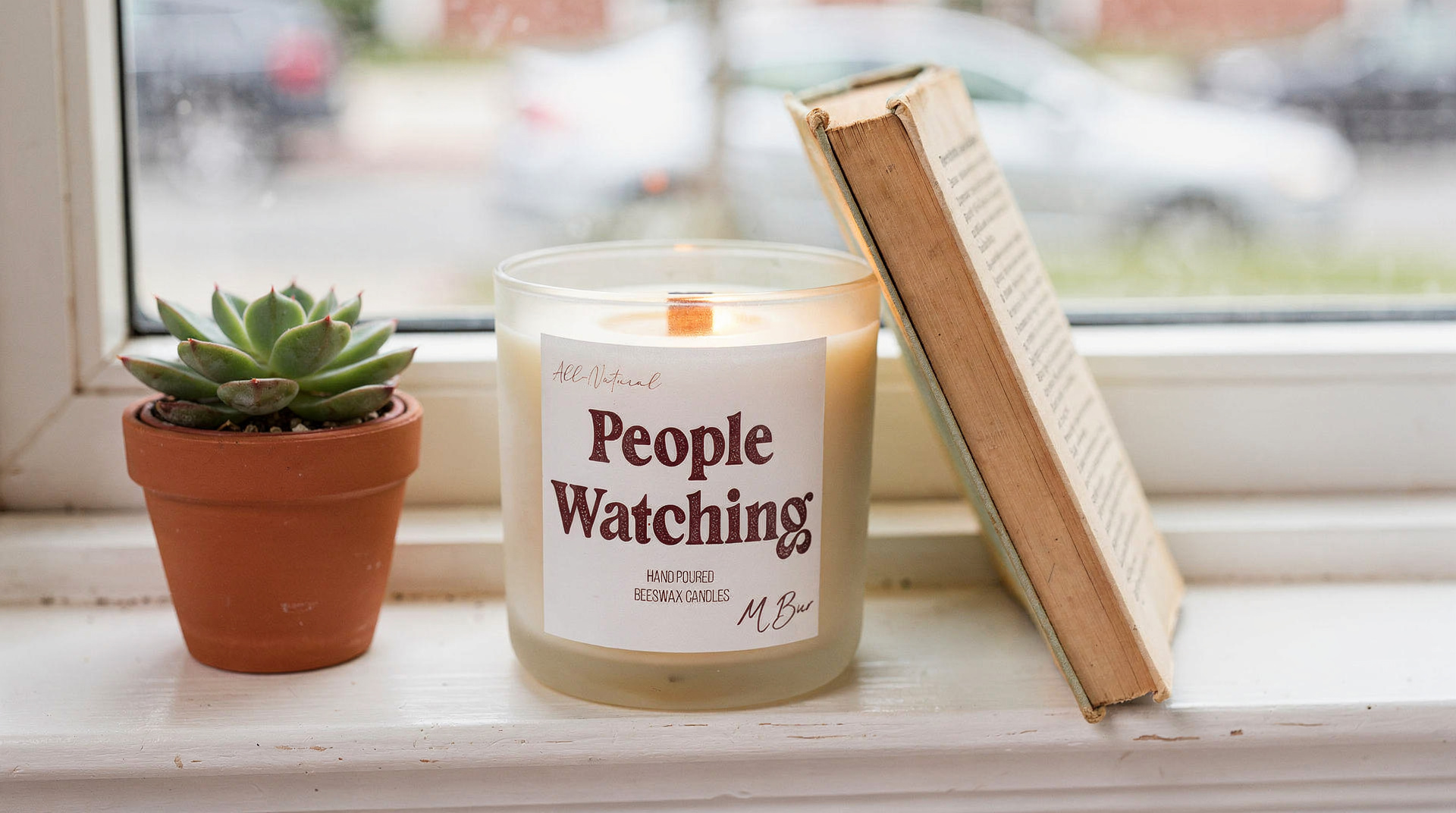
MBur Candle Co: What Makes Them Different for Pregnancy
If you're looking for a concrete example of what safe looks like, our Wine Down beeswax candle hits every single requirement. It's 100 percent beeswax, uses a wooden wick, contains phthalate free fragrance, and has zero synthetic dyes. The scent profile is calming (lavender, chamomile, sage, cedar, and sandalwood) without being overpowering, which matters when your sense of smell is heightened.
One customer who was expecting shared that most candles made her nauseous during pregnancy: "A lot of other candles tend to give me headaches, but this one was a total game changer. I was able to enjoy the calming aroma without any discomfort."
That's what a safe candle for pregnancy should feel like. Not a compromise. Not a sacrifice. Just something that smells good and doesn't make you feel sick.
For expectant mothers specifically, the lighter scents tend to work best. Do Not Disturb has a warm, gentle profile with vanilla, sandalwood, pear, and peach blossom that's soothing without being heavy. Out of Office combines coconut, eucalyptus, pineapple, and spearmint, which many pregnant women find grounding and gentle.
The burn time also matters during pregnancy. Beeswax candles like these burn for up to 80 hours in the largest size, which means you're getting consistent, long lasting scent without needing to replace the candle frequently.
What About Scent Sensitivity and Pregnancy Nausea?
If you're in early pregnancy and dealing with nausea, the safest approach is actually no candle at all. Let your body settle first. Once the nausea passes (usually around week 12 or 14), you can revisit candles with a clearer sense of what your body can tolerate.
When you do reintroduce candles, start with unscented beeswax candles. Yes, those exist. They provide the benefits of beeswax (negative ions, clean burn, light spectrum closest to sunlight) without any fragrance at all. This lets you ease back in without the sensory overwhelm.
If you're past the nausea phase and ready for scent, lighter fragrances (citrus, fresh herbs, floral) are typically easier to tolerate than heavy fragrances (musk, amber, vanilla). Your heightened sense of smell will guide you. Trust it.
FAQ: Common Questions About Candles During Pregnancy
Can I burn any candle during pregnancy, or do I need to avoid them completely? You don't need to avoid candles entirely, but you do need to be selective. The right candle (100 percent beeswax, phthalate free fragrance, wooden wick) is actually safer to burn than to skip. Many pregnant women find that calm, pleasant scents reduce stress and support better sleep, which your body desperately needs.
Are diffusers safer than candles during pregnancy? Diffusers using essential oils have the same risk profile as candles. The issue isn't the delivery method, it's the chemical composition of what you're diffusing. A diffuser filled with synthetic fragrance oils is just as problematic as a paraffin candle. Diffusers with pure essential oils are safer, but purity is hard to verify. A clean beeswax candle is more straightforward and more controllable.
What about unscented candles? Unscented beeswax candles are completely safe during pregnancy and have the bonus of releasing negative ions without any fragrance to trigger nausea. They're a great option in early pregnancy or if you're sensitive to all scents.
Can I use candles in the nursery after the baby is born? Yes, but continue using the same standards. Babies have developing respiratory systems, so the safety rules for candles around newborns are similar to those for pregnancy. Beeswax, phthalate free fragrance, wooden wick. That candle you bought for pregnancy can continue protecting your baby after they arrive.
Are wooden wick candles really better than cotton wicks? Yes, for pregnancy specifically. Wooden wicks produce less soot, burn more evenly, and that crackling sound is genuinely soothing. Cotton wicks are fine, but wooden is the premium choice for air quality.
The Bottom Line
Pregnancy is nine months of making choices for someone else. That's exhausting. You don't have to be perfect, but you also don't have to compromise on something as simple as what you're breathing.
A safe candle during pregnancy is one choice that feels good instead of stressful. It's one thing you can light without second guessing yourself. It's beeswax, phthalate free, and made with a wooden wick. It burns clean, smells intentional, and supports your body instead of working against it.
That's not unrealistic. That's the baseline. And every mother to be deserves it.
Start with the 20-hour size ($20) to test how your body responds. Once you know what works, the larger sizes last longer and give you consistent comfort for months.
Your heightened sense of smell during pregnancy isn't a burden. It's your body protecting you and your baby. Honor that instinct by choosing candles that deserve to be trusted.
Shop the full collection of pregnancy-safe beeswax candles
Related reading: