

Candles and Endocrine Disruption: What the Research Actually Shows
The word "endocrine disruptor" keeps showing up in wellness conversations, and if you burn candles regularly, you have probably wondered whether yours belong on the list of household products worth worrying about. The concern is legitimate. Certain chemicals used in candle manufacturing can interfere with your hormonal system, and the research on this has gotten sharper in the last two years.
But the picture is more nuanced than most headlines suggest. The risk does not come from candles as a category. It comes from specific ingredients inside specific candles. Understanding which ones matter, and why, puts you in a position to keep burning candles without second guessing every time you strike a match.
If you want to skip straight to candles that already check every box on the clean ingredient list, browse MBur's full beeswax candle collection. Otherwise, keep reading for the full breakdown.
What "Endocrine Disruption" Actually Means
Your endocrine system is a network of glands that produce hormones: chemical messengers controlling everything from metabolism and sleep cycles to reproductive health and mood regulation. An endocrine disruptor is any chemical that mimics, blocks, or otherwise interferes with those hormones.
According to the National Institute of Environmental Health Sciences, endocrine disrupting chemicals (EDCs) can affect your body at very low concentrations, sometimes far below what traditional toxicology would flag as dangerous. The concern is less about a single large exposure and more about repeated, low level contact over months and years.
That cumulative exposure model is exactly why candles have entered the conversation. You are not burning one candle once. You are burning candles in your living room, your bedroom, your bathroom, week after week. And if those candles contain the wrong ingredients, each session adds a small deposit to what researchers now call your "body burden" of EDCs.

The Three Ingredients That Actually Matter
Research has identified three categories of candle ingredients with documented links to endocrine disruption. Knowing them makes the rest of this conversation simple.
1. Phthalates in Toxic Fragrance Oils
This is the big one. Phthalates (specifically DEP, DBP, and BBP) are used as fixatives in fragrance oils to make scent last longer. They are recognized endocrine disruptors that can mimic estrogen and interfere with testosterone and thyroid hormones.
A 2026 chamber study confirmed that phthalates are emitted at measurable concentrations from candles using toxic fragrance oils during burning. The chemicals become airborne, meaning you inhale them directly.
The catch: you will almost never see "phthalates" on a candle label. Under current trade secret law, manufacturers can list the single word "fragrance" or "parfum" and disclose nothing about the hundreds of individual chemicals that word can represent. That legal loophole is the core of the problem. A label that says "fragrance" could mean anything from a simple plant extract to a cocktail containing phthalates, parabens, and musks.
2. Paraffin Wax Combustion Byproducts
Paraffin is a petroleum byproduct. When it burns, it releases volatile organic compounds including toluene, benzene, and formaldehyde. These are not endocrine disruptors in the classical sense, but they contribute to your overall chemical exposure load and create oxidative stress that can compound hormonal effects from other sources.
Paraffin is the most common candle wax on the market because it is cheap. Most candles at big box retailers and even many "luxury" brands use paraffin as their base, sometimes blended with a small percentage of soy or coconut wax so the label can say "natural blend."
3. Synthetic Musks
Musks are common in candles marketed as "fresh" or "clean" scented. Certain synthetic musks can accumulate in body tissue over time and have been shown to interfere with hormonal signaling. They are another ingredient hidden under the umbrella term "fragrance."
How Much Exposure Is Too Much?
This is where the science gets honest about its own limits. For a healthy adult burning a candle occasionally in a ventilated room, the acute risk from any single session is low. Research indicates that VOC levels from candles often remain below World Health Organization safety thresholds even in small rooms.
But measurable biological changes from ultrafine particle inhalation have been documented after five hours of continuous exposure. And the more important framing, the one gaining traction in 2025 and 2026 research, is cumulative and synergistic exposure. Your candle is one source. Your cleaning products are another. Your personal care products are another. The question is what your total daily chemical load looks like, and whether your candle is adding unnecessary volume to it.
Vulnerable populations face higher risk. Pregnant individuals, children, the elderly, and anyone with respiratory conditions like asthma have systems that are more sensitive to hormone mimicking chemicals. If you fall into any of those categories, ingredient scrutiny matters more, not less.

The "Natural" Label Trap
One of the most persistent misconceptions is that a candle made with soy wax or coconut wax is automatically safe. The wax is only one variable. A soy candle loaded with toxic fragrance oils containing phthalates still releases those phthalates when burned. The wax might burn cleaner, but the fragrance is doing the same damage it would in any other candle.
Labels like "natural," "plant based," and "relaxing" are marketing language, not regulated safety claims. A candle can be 100% soy wax and still contain a fragrance blend with dozens of undisclosed chemicals. The only way to know what you are actually burning is to look for specific, verifiable claims: phthalate free fragrance, single ingredient wax (not a "blend"), and full ingredient transparency.
A Comparison of Candle Wax Types
| Factor | Paraffin | Soy | Beeswax |
|---|---|---|---|
| Source | Petroleum byproduct | Soybean oil (often GMO) | Byproduct of honey production |
| VOC Emissions | Releases toluene, benzene, formaldehyde | Lower VOCs than paraffin | Lowest documented VOC emissions |
| Soot Production | High (black soot on walls, ceilings) | Moderate | Minimal to none |
| Burn Time | Shortest (low melting point) | Moderate | Longest (highest melting point of any candle wax) |
| Common Blending | Often blended into "soy blend" candles | Frequently blended with paraffin | Typically used as single ingredient wax |
| Chemical Processing | Heavily processed with bleach, hardeners | Chemically processed with hexane solvent | Filtered and cleaned, no chemical processing |
What a Clean Candle Actually Looks Like
If the goal is to keep burning candles while minimizing endocrine disruptor exposure, here is a practical checklist. Every item addresses one of the specific risk factors identified in the research.
Wax: 100% beeswax or 100% soy. Single ingredient, not a blend. If the label says "wax blend" or "natural blend" without specifying percentages, assume paraffin is in there.
Fragrance: Explicitly phthalate free. If the label just says "fragrance" with no further detail, that is a red flag. Look for brands that voluntarily disclose their fragrance sourcing and certify phthalate free formulations.
Wick: Cotton or wood. Metal core wicks were banned by the U.S. Consumer Product Safety Commission for containing lead, but some imported candles still use zinc core wicks that can release trace metals.
Dyes: None, or plant based. Chemical dyes can release additional VOCs when burned.
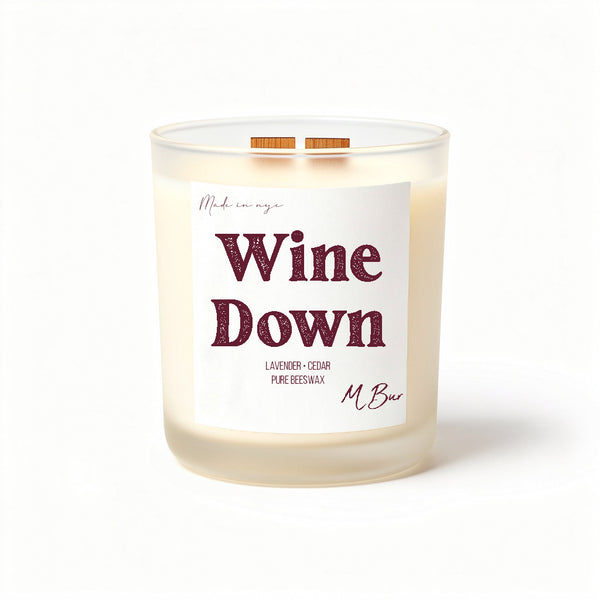
MBur Candle Co. checks every item on that list. Every candle in the collection uses 100% beeswax (single ingredient, no blending), wooden wicks, phthalate free non toxic fragrance, and zero chemical dyes. They are handmade in small batches in Queens, New York, and the ingredient list is short enough to read in one breath.
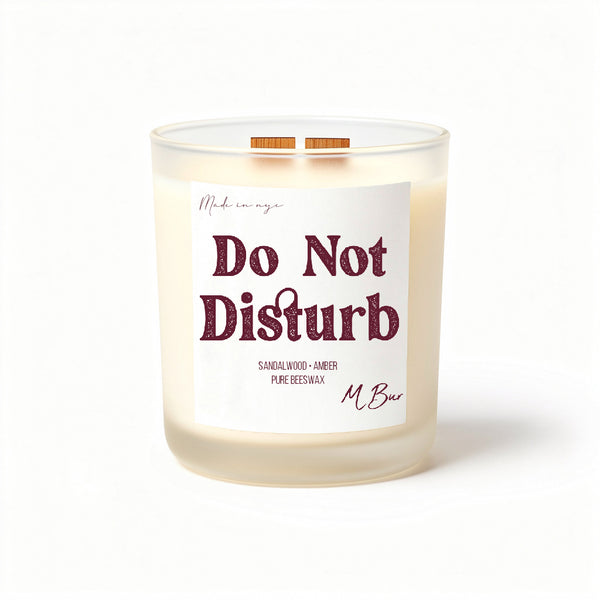
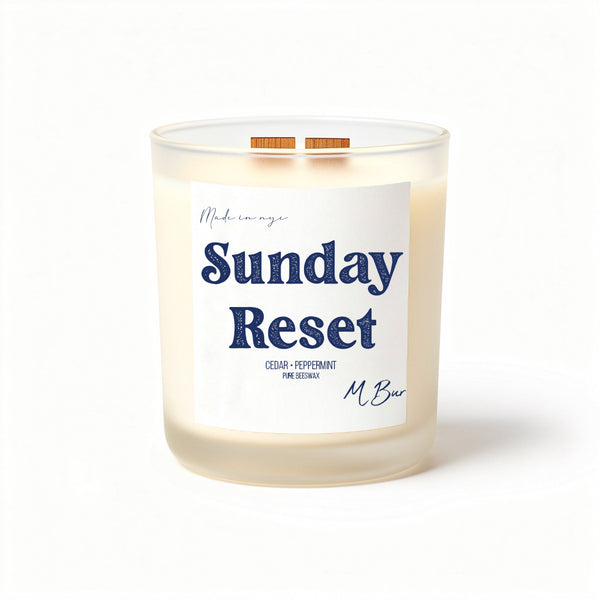
For a bedroom candle where air quality matters most, Do Not Disturb is a good match. Its notes are bergamot, pear, sheer musk, and sandalwood, and it burns for up to 80 hours in the largest size. For a living room or workspace, Sunday Reset opens with eucalyptus and peppermint before settling into clove, cedar, patchouli, and vanilla.
"I absolutely love these candles! I instantly notice the difference in the air quality, in comparison to the Bath & Body scented candles. I love Bath & Body's candles but I acknowledge that it caused a slight headache and other minor respiratory discomfort. Awesome products. Totally addicted." Jason H.

Practical Tips for Reducing Exposure Right Now
Even with a clean candle, how you burn matters. These habits reduce your exposure to combustion byproducts from any candle.
Ventilate. Crack a window or run a fan during and after burning. This disperses airborne VOCs and prevents concentration buildup, especially in smaller rooms like bathrooms and bedrooms.
Trim the wick. Keep it between 1/8 and 1/4 inch before every use. A longer wick produces a larger flame, more soot, and more particulate matter. Wooden wicks generally need less trimming than cotton, but check before each burn.
Limit burn sessions. Three hours maximum per session is the standard recommendation. Longer burns increase the concentration of airborne compounds and can cause the wax to overheat.
Skip the multi candle setup. Burning four candles in one room quadruples the emission output. One well made candle with good scent throw will fill a room. Beeswax candles, because of their high melting point and dense wax, tend to have strong throw from a single source.
Audit your total load. Your candle is one piece of the puzzle. If you are also using air fresheners, plug ins, toxic fragrance laundry products, and scented cleaning sprays, the cumulative effect matters more than any single product. Replacing the biggest offenders first (usually plug in air fresheners and paraffin candles) makes the largest immediate difference.
Frequently Asked Questions
Do all scented candles contain phthalates?
No. Many manufacturers now formulate without phthalates, but the only way to know is to look for an explicit "phthalate free" claim. The word "fragrance" alone on a label tells you nothing about what is inside. Brands like MBur that use phthalate free, non toxic fragrance oils across their entire line make this easy.
Are wax melts safer than burning candles?
Research shows wax melts also release fragrance related VOCs and nanoparticles into the air. They skip the combustion soot, but the fragrance chemicals still become airborne when heated. The same rules apply: check the wax type, check the fragrance sourcing.
How long do beeswax candles actually burn?
Beeswax has the highest melting point of any candle wax, which means it burns significantly longer than soy or paraffin. MBur's largest size delivers up to 80 hours of burn time. The Do Not Disturb candle in the 20 hour size starts at $20, making it a reasonable entry point if you want to test the difference.
Is occasional candle use actually risky for healthy adults?
For a healthy adult burning a candle a few times a week in a ventilated room, the acute risk from a single session is low. The concern is cumulative exposure over time, especially when candles are one of several sources of toxic fragrance chemicals in your home. Choosing cleaner ingredients reduces that cumulative load. If you are pregnant, have young children, or have a respiratory condition, follow your doctor's guidance on indoor air quality.
Can beeswax candles purify the air?
Some studies suggest that burning beeswax produces negative ions, which may help reduce airborne particulates. This is not a medical claim or a substitute for proper ventilation. What is well established is that beeswax produces minimal soot and the lowest VOC emissions of any candle wax, which means it adds less to your indoor air pollution than the alternatives.
The Bottom Line
Candles are not inherently endocrine disruptors. Specific ingredients in certain candles are. Phthalates in toxic fragrance oils, VOCs from paraffin combustion, and undisclosed synthetic musks are the documented culprits. Eliminate those ingredients and you eliminate the primary concern.
If you are ready to make the switch, MBur's pure beeswax candle collection is built around exactly the ingredients the research supports: single ingredient beeswax, wooden wicks, phthalate free fragrance, no chemical dyes. The 20 hour size starts at $20, and the 80 hour size runs through months of regular use.
"I love these candles. No headache or feeling nauseous like the Bath & Body candles with all the extra chemicals." Jason H.
Related reading:
- What Makes a Candle Non Toxic? How to Spot the Real Thing
- Why Paraffin Free Candles Are a Must Have for a Healthier Home
- Discover the Benefits of Non Toxic Candle Fragrance Oils: Enhancing Your Space without Harmful Chemicals
- Do Scented Candles Make Your Head Spin? Understanding the Potential Headache Triggers

