

Candle Safety Rules Every New Parent Should Know
The real worry is not the flame. It is what you cannot see.
Your baby is finally asleep. The monitor is on. You have maybe forty minutes before the next feeding, and all you want is to light a candle and sit in something that feels like calm. But then the questions start: Is the air safe? Could the soot reach the nursery? What is actually in the fragrance?
Those questions are worth asking. Babies have developing respiratory systems that are more sensitive to airborne irritants than adult lungs, and many candles on the market release compounds you would never deliberately put in your home. The good news: you do not have to give up candles entirely. You just need to know what to look for and how to burn them safely.
This guide covers the fire safety basics every parent needs, the air quality concerns that matter most, and how to choose baby safe candles made from cleaner ingredients so you can actually enjoy that rare quiet moment.

Why new parents should care about candle ingredients (beyond fire risk)
Most candle safety advice focuses on fire prevention. That matters, and we will get there. But for parents of newborns, the bigger day to day concern is air quality.
Paraffin wax is a petroleum byproduct. When it burns, it can release volatile organic compounds including benzene, toluene, and formaldehyde. In a well ventilated living room, the concentrations are low. In a small apartment with the windows closed in January, they add up faster than you might expect.
Then there is the fragrance. The word "fragrance" on a candle label is a catch all that can cover hundreds of undisclosed chemicals. Many conventional candles use toxic fragrance oils containing phthalates and parabens. These compounds are under increasing scrutiny globally. As of 2025, ASTM International published revised candle safety standards (ASTM F2417 26), and the EU has introduced new hazard classification requirements for mixtures like candles, reflecting a clear trend toward stricter ingredient transparency.
Your baby breathes faster than you do, takes in more air relative to body weight, and has airways that are still developing. Pediatricians frequently advise minimizing combustion products in rooms where newborns sleep. That does not mean candles are off limits. It means the ingredients inside the candle matter as much as where you place it.
Fire safety rules: the non negotiable checklist
Before we talk about cleaner candles, the basics. Candles remain a leading cause of preventable home fires, and more than half of those fires start because something flammable was too close to the flame. Children under five are at higher risk of fire related injury, which makes these rules essential, not optional.
Placement
- Keep every candle at least 12 inches from curtains, bedding, books, and anything that can catch fire.
- Place candles on a stable, heat resistant surface. A wobbly side table next to a crib is a hard no.
- If you burn more than one candle, keep at least 3 inches between them so the flames do not merge or create excess heat.
Supervision
- Never leave a candle burning in a room you are not in. If you leave, blow it out.
- Never burn a candle while you sleep. According to the National Fire Protection Association, a significant percentage of candle fire deaths occur when candles are left burning unattended or while the user is asleep.
- Store matches and lighters in a locked cabinet, not a kitchen drawer. Toddlers are faster and more resourceful than you think.
Burn limits
- Do not burn any candle for more than 4 hours at a time. The container can overheat, and the wax pool becomes unstable.
- Stop using a container candle when 1/2 inch of wax remains at the bottom. The glass can crack from the heat when there is not enough wax left to buffer the flame.
Wick maintenance
- Trim the wick to 1/4 inch before every single burn. A long wick creates a larger flame, more soot, and a higher chance of flare ups.
- If the flame is flickering wildly, smoking, or taller than an inch, blow it out. Something is wrong. Let it cool, trim the wick, and relight.

The "separate room" strategy pediatricians recommend
Many pediatricians suggest a simple approach: burn your candle in a different room from the baby, then ventilate the space before bringing the baby back in. Open a window or run a fan for a few minutes after you extinguish the candle. This clears residual particulates and lets you enjoy the candle without worrying about what your baby is breathing.
This works well for the first few months when your newborn is stationary. Once they start crawling, the calculus changes. A candle on a coffee table becomes a reachable hazard. At that point, high shelves and mantels become your only safe placement options, and you need to be even more vigilant about the "never unattended" rule.
What actually makes a candle safer for a home with babies
Safer candles come down to four things: the wax, the wick, the fragrance, and the dye. Get all four right and you dramatically reduce the irritants your baby could be exposed to.
Wax
Beeswax is the cleanest burning candle wax available. It is a single ingredient, a natural byproduct of honey production, with no chemical processing required. It produces virtually no soot compared to paraffin, and it has the highest melting point of any candle wax, which means a slower, more stable burn. Soy is a step up from paraffin, but many "soy" candles are actually soy and paraffin blends. Read the label carefully.
Wick
Lead wicks were banned in the U.S. in 2003, so that is no longer a concern with domestic candles. But zinc core and other metal core wicks can still produce more soot and residue than cotton or wood wicks. Wooden wicks burn at a lower temperature and produce a steadier, more even flame, which means less soot in the air.
Fragrance
This is where most candles fail. Toxic fragrance oils containing phthalates are still standard in the industry. Look for candles that specifically state "phthalate free" on the label. If the label just says "fragrance" with no further detail, assume the worst. Non toxic, phthalate free fragrance oils exist and smell just as good. The industry just has not caught up because the cheap stuff is cheaper.
Dye
Chemical dyes can release additional compounds when burned. Undyed candles, or candles colored only by the natural hue of their wax (beeswax has a warm golden tone on its own), eliminate this variable entirely.
A cleaner candle that checks every box
MBur Candle Co. makes 100% pure beeswax candles with wooden wicks, phthalate free fragrance, and no chemical dyes. Everything is handmade in small batches in Queens, New York. The 80 hour burn time (the longest of any candle wax, thanks to beeswax's high melting point) means you are not replacing candles constantly, and the wooden wick crackle is genuinely one of the more pleasant background sounds you can add to a quiet evening.
For a nursery adjacent room, Do Not Disturb is a natural fit. Its notes of bergamot, pear, lavender, vanilla, and sandalwood are calming without being heavy, and the clean burn means you are not introducing irritants into your home's air.
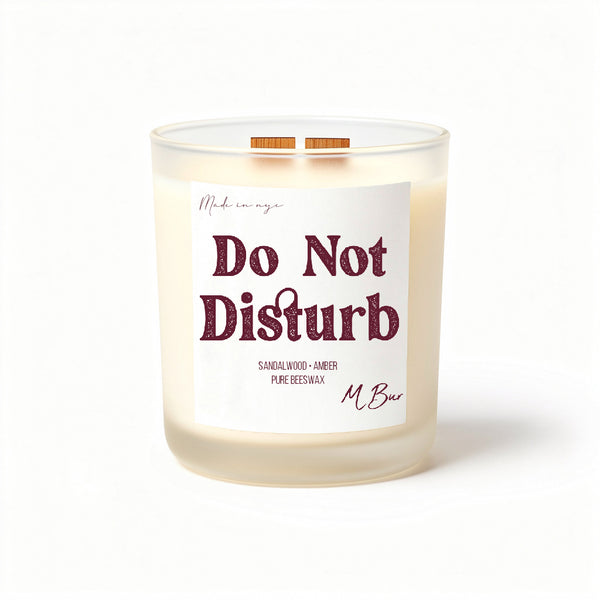
"I love the scent of this candle. It is lovely not overpowering. It's soothing fragrance more than covers my bedroom and bathroom. It is aromatherapy at its best." Dawne Forrest, Do Not Disturb customer
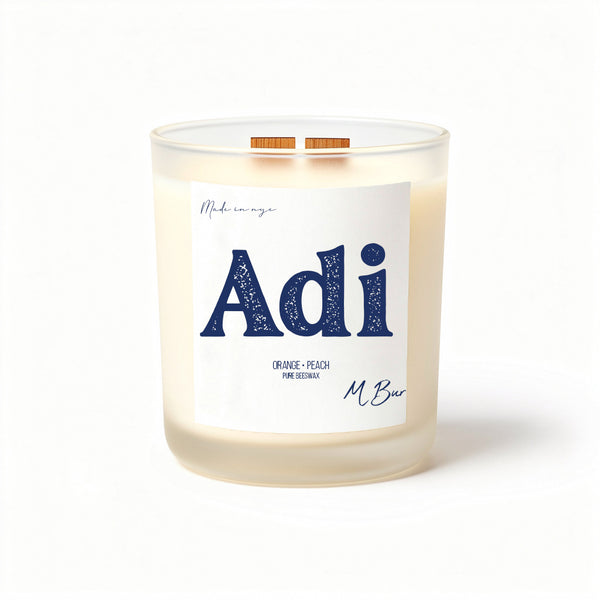
If you prefer something brighter for daytime, Adi brings lemon, orange, grapefruit, mandarin, tangerine, lime, peach, and agave together into a citrus blend that feels energizing without being aggressive. It is the kind of scent that makes the living room feel alive during a long afternoon at home with a baby.

Quick reference: candle safety comparison
| Factor | Paraffin Candle | Soy Candle | 100% Beeswax Candle |
|---|---|---|---|
| Wax source | Petroleum byproduct | Soybean oil (often blended with paraffin) | Natural byproduct of honey production |
| Soot production | Higher | Moderate | Minimal |
| VOC emissions | Can release benzene, toluene | Lower than paraffin | Lowest of all candle waxes |
| Burn time | Shortest | Moderate | Longest (highest melting point) |
| Fragrance transparency | Varies widely | Varies widely | Look for phthalate free labels |
| Chemical dyes | Common | Common | Often undyed (natural golden color) |
Frequently asked questions
Can I burn a candle in the same room as my baby?
Most pediatricians recommend against burning candles in the nursery or in any room where your baby is sleeping. Newborns have developing respiratory systems that are more sensitive to soot and fragrance particles. The safer approach is to burn your candle in a separate room and ventilate before bringing the baby back. If you do burn a candle nearby, choose one with minimal soot output, like a pure beeswax candle with a wooden wick, and keep the room well ventilated.
How long do beeswax candles actually burn?
Beeswax has the highest melting point of any candle wax, which translates directly to longer burn times. MBur's largest size burns for up to 80 hours. Even the 20 hour size (starting at $20) lasts significantly longer per ounce than a comparable paraffin or soy candle.
Are scented candles worse than unscented ones for babies?
The scent itself is not the problem. The problem is what the fragrance is made of. Candles using toxic fragrance oils with phthalates and parabens release more irritants than candles using non toxic, phthalate free fragrance. An unscented paraffin candle can still produce more soot and VOCs than a scented beeswax candle made with clean ingredients.
When can I start burning candles more freely around my child?
There is no official age cutoff. As your child's respiratory system matures (generally past the first year), the sensitivity to airborne irritants decreases. The fire safety concerns actually increase as your child becomes mobile, so shift your focus from air quality to placement and supervision. Keep candles on high surfaces, never leave them unattended, and continue choosing cleaner burning candles as a baseline habit.
Do I need to worry about lead in candle wicks?
Lead wicks have been banned in the United States since 2003. If you are buying candles from a reputable domestic brand, this is not a concern. The bigger wick consideration now is whether the wick produces excess soot. Cotton and wooden wicks tend to burn cleaner than metal core alternatives.
The bottom line for parents who love candles
You do not have to quit candles when you have a baby. You have to get smarter about which candles you bring into your home and how you burn them. Choose 100% beeswax over paraffin. Choose phthalate free fragrance over whatever "fragrance" means on a mystery label. Choose wooden or cotton wicks. Trim them every time. Burn in a separate room from the baby when possible. Never walk away from a lit flame.
MBur's full beeswax candle collection checks every box on the clean candle checklist, with 12 scents starting at $20 for the 20 hour size. As one customer put it:
"I absolutely love these candles! I instantly notice the difference in the air quality, in comparison to the Bath & Body scented candles. I love Bath & Body's candles but I acknowledge that it caused a slight headache and other minor respiratory discomfort. Awesome products. Totally addicted." Jason H.
If you are a parent who wants to keep candles in your life without second guessing every burn, browse the full collection and pick the scent that fits your home.
If your baby has a diagnosed respiratory condition or you have specific health concerns, always follow your pediatrician's guidance.
Related reading

