

Can Newborns Smell Scented Candles? How a Baby's Nose Develops
Your baby's nose is more powerful than yours. That is the part most new parents miss when they wonder whether the candle on the dresser is a problem. A newborn's olfactory receptors start forming around 10 weeks of gestation, and by the time that baby arrives earthside, their sense of smell is fully operational, possibly sharper than an adult's. They use it to find you, to locate breast milk, to feel safe. So when a candle releases fragrance compounds into the air of a small nursery, your baby is absolutely picking up on it.
The question worth asking is what exactly they are breathing in. Because the answer depends almost entirely on what the candle is made of.
If you have been burning candles at home and wondering whether you need to stop cold turkey now that there is a newborn in the house, this post will walk you through the science of infant smell, the real risks hiding inside most candles, and how to keep your home smelling good without compromising your baby's air quality. You can also browse our full beeswax candle collection to see what a cleaner option actually looks like.
A Baby's Sense of Smell Is Designed for Survival
Smell is the first sense your baby uses independently. Before their vision sharpens, before they can track your voice across a room, they are already cataloging scents. Research published in neuroscience journals has shown that infants as young as one month old exhibit distinct brain activity in response to different odors, inhaling more vigorously when exposed to pleasant scents and pulling back from aversive ones.
This is not random. It is wired for survival. A newborn recognizes their mother's unique scent within hours of birth. That scent triggers oxytocin release, promotes bonding, and helps them locate breast milk. The olfactory system connects directly to the brain's memory and emotional centers, which means every smell your baby encounters in those early weeks is being processed deeply, not just passively detected.
What this means practically: the air quality in your nursery matters more than you might think. Babies breathe faster than adults, their airways are smaller, and their lung tissue is still developing. Compounds that an adult nose might barely register can accumulate quickly in a small room with a closed door.

The Problem Is Not Candles. It Is What Most Candles Are Made Of.
Burning any organic material produces some particulate matter. That is basic combustion. But the gap between a clean burning candle and a cheap one is enormous, and the ingredients list tells you everything.
Paraffin Wax
Most candles on store shelves use paraffin, which is a petroleum byproduct. When paraffin burns, it releases volatile organic compounds including benzene, toluene, and formaldehyde. These are the same chemicals you would find in car exhaust. In a well ventilated living room, the concentration stays low. In a small nursery with the door shut at 2 a.m., it builds up fast.
Toxic Fragrance Oils
The word "fragrance" on a candle label is a catch all. Under current regulations, manufacturers can group hundreds of undisclosed chemicals under that single term. Many mainstream candle fragrances contain phthalates and parabens, compounds linked to endocrine disruption and respiratory irritation. A baby cannot tell you they have a headache or that their throat feels tight. You have to read the label for them.
Metal Core Wicks
Some cheaper candles still use wicks with metal cores to keep them upright. When these burn, they can release trace heavy metals into the air. Cotton or wooden wicks do not carry this risk.
Chemical Dyes
Brightly colored candles often get their pigment from chemical dyes that release additional compounds when heated. An uncolored or naturally tinted candle eliminates this variable entirely.
What "Natural" Actually Means (and Does Not Mean)
One of the most common mistakes new parents make is assuming a candle labeled "natural" or "clean" is automatically safe for a nursery. Those terms are unregulated. A candle can be marketed as natural while containing a paraffin blend, toxic fragrance oils, and a zinc core wick.
The only way to know what you are burning is to check the actual ingredients. Look for single ingredient wax (not "wax blend"), a named fragrance standard like phthalate free, and a wick material you can identify. If the label does not tell you these things, that silence is its own answer.

A Cleaner Candle Checklist for Homes with Babies
If you want to keep candles in your routine after bringing a baby home, here is what to look for. Every box matters.
Single ingredient wax, no blends. Beeswax is the cleanest burning candle wax available. It has the highest melting point of any candle wax, which means it burns slower and produces significantly less soot than paraffin or soy. It is also a naturally occurring byproduct of honey production, with no chemical processing required.
Phthalate free, non toxic fragrance. If the candle is scented, the fragrance oil should be explicitly labeled phthalate free. Even better if the brand lists all fragrance components rather than hiding behind the generic "fragrance" umbrella.
Cotton or wooden wicks. Wooden wicks burn evenly and produce a low, steady flame. They also crackle softly, which some parents find doubles as white noise. No metal cores, no lead, no mystery materials.
No chemical dyes. The color of the wax should come from the wax itself. Beeswax has a natural warm golden tone that needs no added pigment.
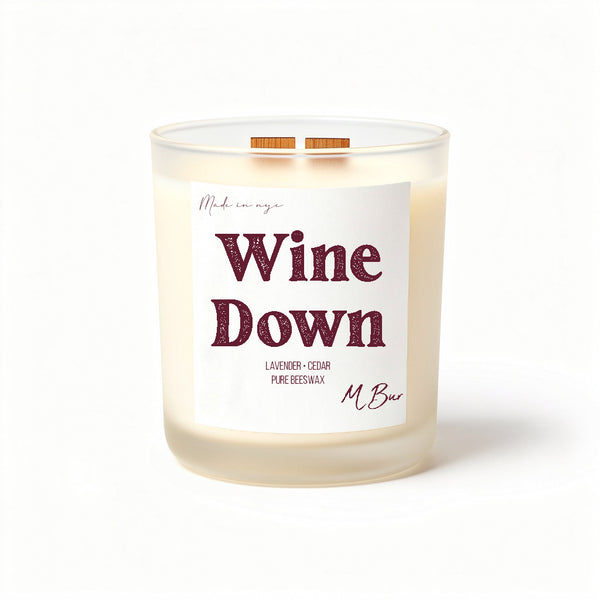
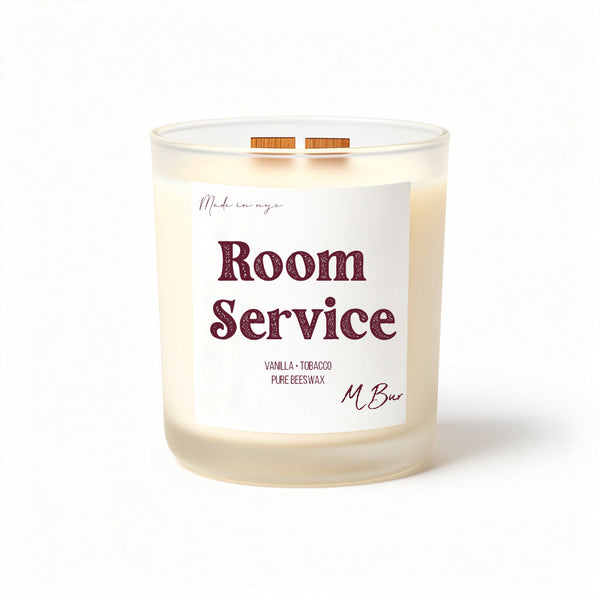
MBur's Do Not Disturb candle checks every one of these boxes. It is 100% beeswax with a wooden wick, phthalate free fragrance, and no chemical dyes. The scent is bergamot, pear, vanilla, and sandalwood, soft and grounding without being heavy. It was designed for the bedroom, which makes it a natural fit for the hours after the baby is down and you finally get a moment to decompress.
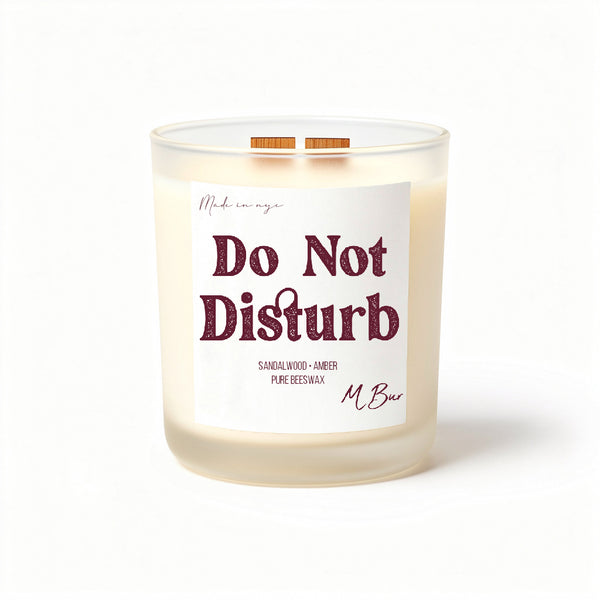
"I love the scent of this candle. It is lovely not overpowering. It's soothing fragrance more than covers my bedroom and bathroom. It is aromatherapy at its best." Dawne Forrest, Do Not Disturb customer
Practical Rules for Burning Candles Around a Newborn
Even with the cleanest candle on the market, there are ground rules worth following when you have an infant at home.
Never burn a candle in the nursery while the baby is sleeping. This is non negotiable. The combination of an open flame, a closed room, and a sleeping infant is a risk on multiple levels, from fire safety to air quality.
Ventilate. Crack a window or leave a door open. Stagnant air in a small room concentrates whatever compounds the candle releases, clean or otherwise.
Keep burn sessions short. One to two hours is plenty. Extended burns increase particulate matter in the air regardless of wax type.
Trim the wick before every use. A trimmed wick (about 1/4 inch) produces a smaller, cleaner flame with less soot. This is true for cotton and wooden wicks alike.
Burn in a separate room first. Light the candle in the living room or kitchen while the baby is in another space. The scent will drift naturally without direct exposure to the combustion zone.
Watch for signs of irritation. If your baby seems fussier than usual, is rubbing their nose, or develops any respiratory symptoms, stop burning candles and consult your pediatrician. Babies with a history of allergies or asthma should avoid scented products entirely until cleared by a doctor.

Why Beeswax Specifically
All natural waxes are a step up from paraffin, but beeswax has a few properties that make it particularly well suited for homes with newborns.
It burns at the highest melting point of any candle wax, which translates to a slower, cooler flame and dramatically less soot. Some studies suggest beeswax may release negative ions when burned, which could help neutralize airborne pollutants, though this benefit is not definitively proven.
Beeswax is also naturally hypoallergenic. It contains no chemical additives, no bleaching agents, and no petroleum derivatives. The light it produces falls on a spectrum closest to natural sunlight, which is a small detail but a pleasant one when you are up at odd hours.
And it lasts. An 80 hour beeswax candle will outlast a comparable soy candle by a wide margin, which means fewer replacements and less cumulative exposure to the lighting and extinguishing cycle, the moments when candles produce the most particulate matter.
You can explore the full range of scents in MBur's beeswax candle collection, all handmade in Queens, New York with wooden wicks and phthalate free fragrance.
Frequently Asked Questions
Can newborns actually smell scented candles from across the room?
Yes. A newborn's sense of smell is at least as sensitive as an adult's, and possibly more so. They begin detecting scents in the womb and arrive fully equipped to process airborne fragrance compounds. The volatile organic compounds released by a burning candle will reach their nose even from a distance, especially in an enclosed room. If you want to enjoy candles safely, burn them in a well ventilated space away from the baby and opt for 100% beeswax candles with non toxic fragrance.
Is it ever okay to burn a candle in the nursery?
Pediatric experts advise against burning any candle in a room where a baby is sleeping or resting. The combination of reduced ventilation, open flame, and accumulated airborne particles makes it an unnecessary risk. A better approach is to light a candle like Do Not Disturb in the living room or hallway and let the scent carry naturally.
Do beeswax candles produce less soot than regular candles?
Significantly less. Beeswax has the highest melting point of any candle wax, which means it burns at a lower temperature with a cleaner flame. Paraffin candles are the primary culprits for the black soot residue you see on walls and ceilings. Pure beeswax with a properly trimmed wooden wick produces minimal visible soot.
What if my baby has allergies or asthma?
If your infant has been diagnosed with any respiratory condition or has a family history of allergies, follow your pediatrician's guidance before introducing any scented products into your home. A clean burning candle produces fewer irritants than a paraffin one, but "fewer" is not "zero." Your doctor knows your baby's specific situation.
How long should I burn a candle when there is a baby in the house?
Keep burn sessions to one to two hours. Always burn in a ventilated room that is separate from where the baby is sleeping. Trim the wick to 1/4 inch before each use to minimize soot output. And extinguish the candle well before bringing the baby into that room so the air has time to clear.
The Bottom Line
Your newborn can absolutely smell scented candles, and their developing respiratory system is more sensitive to airborne compounds than yours. The good news is that you do not have to give up candles entirely. You just have to be deliberate about what you burn, where you burn it, and for how long.
Choose 100% beeswax with a wooden wick and phthalate free fragrance. Burn in ventilated rooms away from the baby. Keep sessions short. That combination lets you keep the ritual you love while protecting the tiny person who just moved in.
Browse MBur's full beeswax candle collection, handmade in Queens, New York with clean ingredients and wooden wicks that crackle. Every candle starts at $20 for the 20 hour size and burns up to 80 hours in the largest.
Related reading

