

Best Candles for Renters: Protect Your Deposit and Your Lungs
Best Candles for Renters: Protect Your Deposit and Your Lungs
That "beeswax" candle you bought? It might be 51% paraffin. Legally, a candle only needs to contain 51% of a wax to be labeled as that wax. Which means that "pure beeswax" pillar from the farmers market could be nearly half petroleum byproduct, quietly coating your walls in a thin film of soot while you think you are making a clean choice.
For renters, this is not just a health issue. It is a money issue. Soot stains walls. Landlords notice. And scrubbing black residue off rental white paint before move out is nobody's idea of a good Sunday.
This guide breaks down exactly what to look for when buying candles as a renter, organized by the criteria that actually matter: wax type, wick type, scent sourcing, size, and price per hour.
Wax Type: The Single Biggest Decision You Will Make
Everything starts here. The wax determines what goes into the air when a candle burns, how long it lasts, and whether your walls stay clean.
Paraffin
Paraffin is a petroleum byproduct, full stop. It releases known VOCs including benzene and toluene when burned. It produces visible black soot. For renters, it is a double threat: bad for air quality and bad for walls. Avoid it entirely.
Soy
Better than paraffin, but the "soy candle" label hides a lot. Most soy candles on the market are soy blends, meaning they contain paraffin, coconut wax, or other fillers. Soy also has a lower melting point, which means shorter burn times and more frequent replacements.
Beeswax
Beeswax is the original candle wax, used for roughly 5,000 years, and it earns its reputation. It has the highest melting point of any candle wax, which translates directly into the longest burn times. It burns cleaner than paraffin or soy, producing no black soot under normal conditions. And because it is naturally occurring rather than chemically processed, it does not require the additives that cheaper waxes need to hold fragrance or maintain structure.
For renters specifically, the no soot burn is the headline benefit. No soot means no wall staining, no ceiling discoloration, and no awkward conversations with your landlord at move out.
The catch: not all beeswax candles are created equal. The 51% labeling loophole is real. Look for brands that explicitly state 100% beeswax, single ingredient wax, with no blends or additives.
Wick Type: Cotton vs. Wood vs. Metal Core
Metal Core Wicks
These were common in older candles and occasionally still show up in cheap imports. Metal core wicks release heavy metal particulates when burned. If you cannot identify the wick material, skip the candle.
Cotton Wicks
The industry standard. Cotton wicks burn cleanly and reliably. Nothing wrong with them, but they are not exceptional either.
Wooden Wicks
Wooden wicks burn with a soft crackling sound, similar to a small fireplace. More relevantly for renters, they tend to produce an even, controlled flame that minimizes soot production. They also look cleaner in a jar.

Scent Sourcing: Toxic Fragrance Is the Hidden Problem
This is where a lot of otherwise decent candles fall apart. A candle can use clean wax and a good wick and still release harmful compounds if the fragrance oil contains phthalates.
Phthalates are chemical plasticizers used in many toxic fragrance formulations. They are classified as endocrine disruptors and have been linked to respiratory irritation by researchers at institutions including the National Institutes of Health. They volatilize when heated, meaning they enter the air during the burn.
When you are buying candles for an apartment, especially a smaller one with limited ventilation, the fragrance sourcing is as important as the wax type. Look for candles that explicitly state phthalate free fragrance.
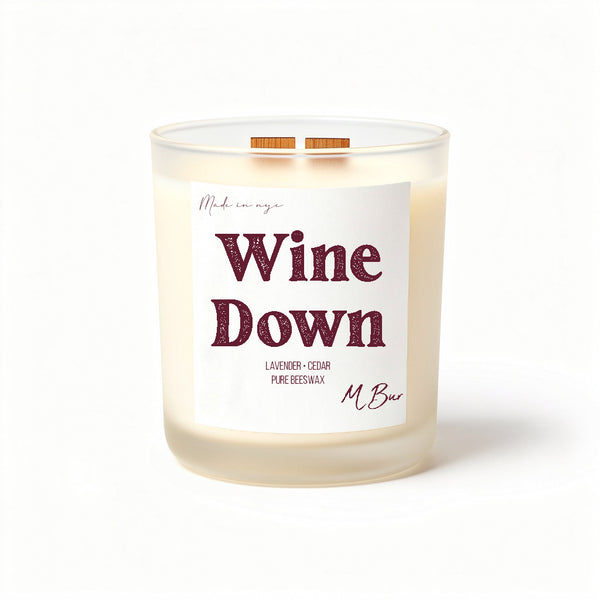
The Wine Down beeswax candle, with lavender, chamomile, sage, cedar, and sandalwood, is a good example of what non toxic fragrance done right smells like in a rental sized space.
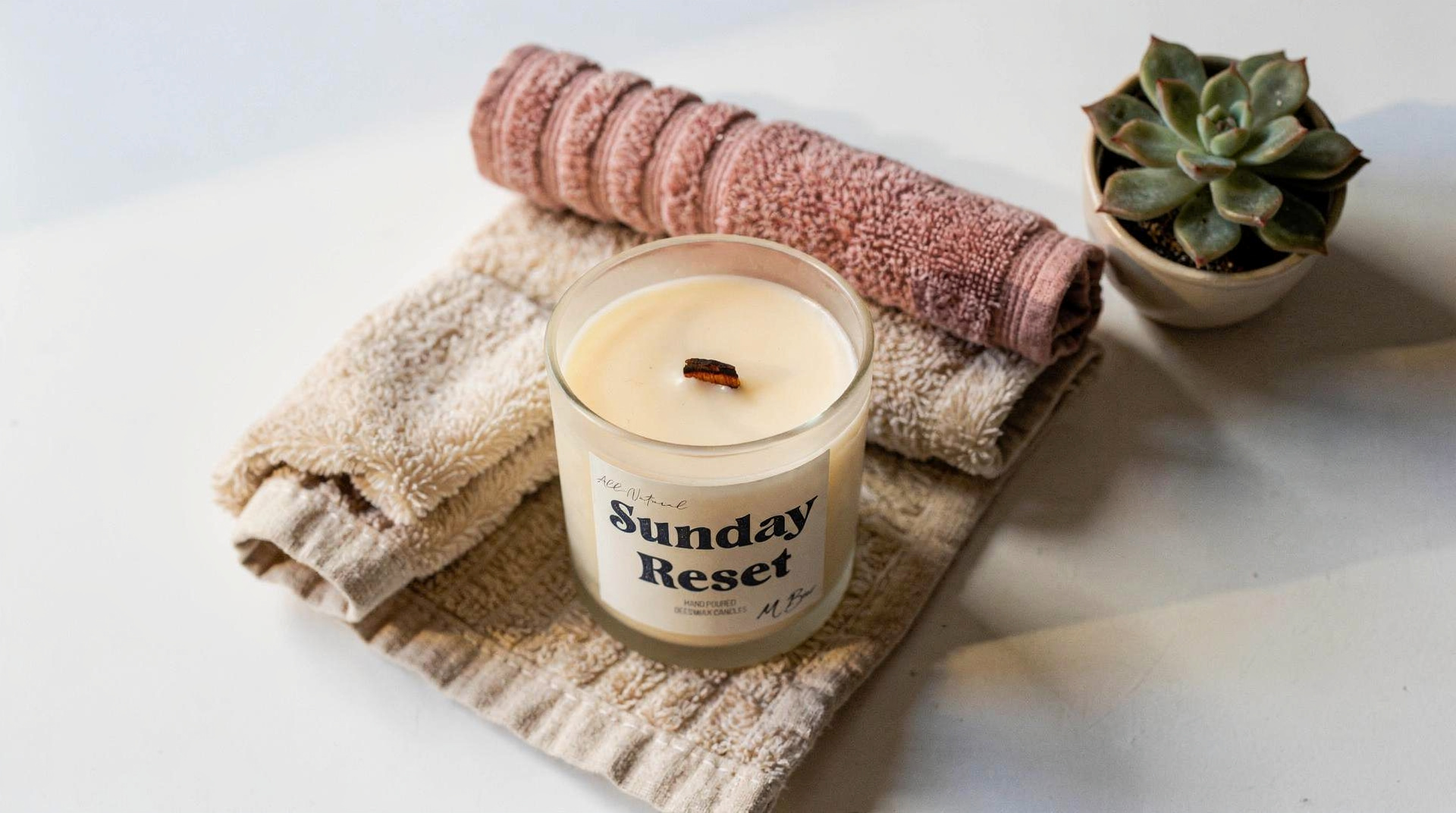
"A lot of other candles tend to give me headaches, but this one was a total game changer. I was able to enjoy the calming aroma without any discomfort. It made my space feel cozy and refreshed at the same time." Nicole D., Sunday Reset Candle
Size: Matching Candle Output to Apartment Square Footage
Bigger is not always better in a smaller space. A 12oz candle designed to scent a large room will overpower a 400 square foot studio. Oversaturation can cause headaches and forces you to burn the candle for shorter periods, which wastes wax and reduces your total burn time.
A practical size guide for renters:
- Studio or 1BR under 600 sq ft: Start with a 2.5oz or 5oz candle. Test the scent throw before committing to a larger size.
- 1BR or 2BR between 600 and 1,000 sq ft: A 5oz or 7oz candle will perform well in a single room or open layout.
- Larger apartments or open floor plans: A 12oz candle is appropriate and will give you the full burn time value.
MBur offers four sizes across their candle line: 2.5oz (20 hours, $20), 5oz (40 hours, $23), 7oz (55 hours, $37), and 12oz (80 hours, $65). The 20-hour size at $20 is the lowest-commitment way to test how a scent performs in your actual space before sizing up.
Price Per Hour: The Math Most Buyers Skip
Sticker price is the worst way to evaluate candle value. Price per hour of burn time is the number that actually matters.
| Size | Price | Burn Time | Price Per Hour |
|---|---|---|---|
| 2.5oz | $20 | 20 hours | $1.00/hr |
| 5oz | $23 | 40 hours | $0.58/hr |
| 7oz | $37 | 55 hours | $0.67/hr |
| 12oz | $65 | 80 hours | $0.75/hr |
The 5oz is the best value per hour. For comparison, a popular Bath and Body Works 3 wick candle retails for around $26.50 and burns for approximately 25 to 45 hours, putting it at $0.59 to $1.06 per hour, and that is before factoring in paraffin wax and toxic fragrance.
"I absolutely love these candles! I instantly notice the difference in the air quality, in comparison to the Bath and Body scented candles. I love Bath and Body's candles but I acknowledge that it caused a slight headache and other minor respiratory discomfort. Awesome products. Totally addicted." Jason H., Sunday Reset Candle

Quick Reference: Renter's Candle Checklist
- Wax: Is it 100% single ingredient beeswax or verified single ingredient soy? Not a blend?
- Wick: Is it wood or cotton, confirmed metal free?
- Fragrance: Is it explicitly phthalate free?
- Dyes: No chemical dyes? (dyes can increase soot production)
- Burn time: Is there a stated burn time so you can calculate price per hour?
- Size: Is the size appropriate for your square footage?
- Brand transparency: Can the brand tell you exactly what is in their product?
Frequently Asked Questions
Do beeswax candles really not produce soot?
Under normal conditions, 100% beeswax candles with properly trimmed wicks produce minimal to no visible soot. The key variables are wick length (keep it trimmed to about 1/4 inch before each burn), burn duration (do not burn longer than three to four hours at a stretch), and placement away from drafts.
Will my landlord know I burned candles?
Paraffin candles leave visible soot trails on walls and ceilings over time, especially above the candle and around ventilation areas. Beeswax candles do not produce this kind of residue under normal use. If your concern is deposit protection, switching to a clean burning wax is the most practical step you can take.
How do I know if a candle fragrance is phthalate free?
The brand has to tell you. There is no visual or smell test that identifies phthalates. If a brand's website or product listing does not explicitly state "phthalate free fragrance," email them and ask. If they cannot answer clearly, treat that as a no.
What is the best candle size for a studio apartment?
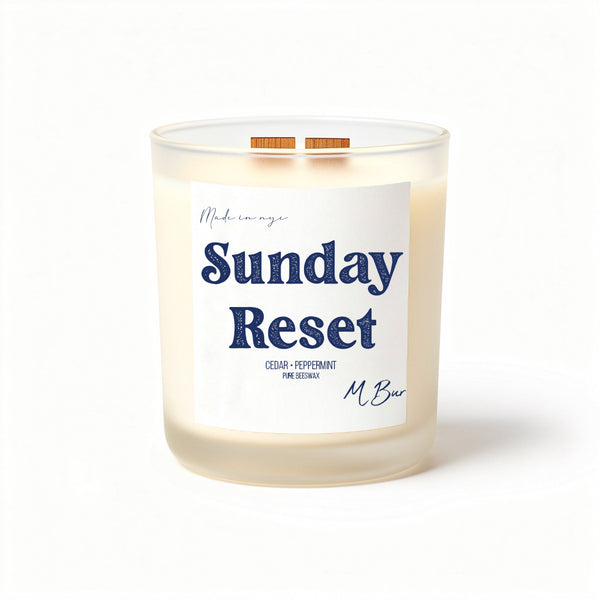
Start with the 2.5oz or 5oz. Studios concentrate scent quickly, and a large candle in a small space can become overwhelming within the first hour. The Sunday Reset candle in the 5oz size is a good starting point for studios: clean, fresh, and not a scent that dominates a small room.
The Bottom Line
Most candle buyers focus on scent and price. Renters need to focus on wax type, wick material, and fragrance sourcing, because those three factors determine both air quality and whether your walls stay clean enough to get your deposit back.
The 5oz MBur candle at $23 gives you 40 hours of clean burning beeswax for $0.58 per hour, no soot, no phthalates, no paraffin.
Shop the full MBur beeswax candle collection
What buyers say:
Related reading:

