

Are Soy Candles Safe to Burn Around a Baby? An Honest Look
Soy candles are marketed as a natural, cleaner choice, so parents reasonably ask whether they are safe to burn around a baby. It is a good question, and the honest answer has a few layers. Soy is a cleaner-burning wax than paraffin, which is a point in its favor, but the fragrance and how you use the candle matter just as much, and a newborn's sensitivity raises the bar. Here is a careful look at soy candles and babies. We make 100% beeswax candles, and the full collection is here as you read. This is general information, not medical advice, so check with your pediatrician.
Soy is cleaner than paraffin, which helps
Starting with the good news, soy wax is a plant-based wax that burns more cleanly than paraffin, with less soot, which is genuinely better for the air around a sensitive baby than a petroleum-based candle. So if the choice is between a conventional paraffin candle and a soy one, soy is the cleaner option. That is a real advantage and part of why soy has a natural, gentle reputation. It is a reasonable starting point for a candle in a home with a little one.
But the wax is only part of the story
Here is the important nuance: the wax is not the whole picture, the fragrance is. A soy candle can still be made with a conventional fragrance oil that contains undisclosed phthalates, and around a baby, that fragrance matters as much as the wax. A clean wax with a questionable fragrance is only half clean. So soy alone does not guarantee a candle is a good choice near a newborn. What you want is a clean wax and a phthalate-free disclosed fragrance together, whether that wax is soy or beeswax.
How soy and beeswax compare for a baby
Both soy and beeswax are cleaner-burning than paraffin, so both are reasonable on the wax front. Beeswax has a slight edge in that it is a single natural ingredient with the highest melting point of the common waxes, burning very cleanly with minimal soot, while soy is a processed plant wax that also burns clean. For a baby, the more decisive factors are the same for either: a phthalate-free disclosed fragrance, no dyes, good ventilation, and keeping the candle out of the nursery. Choose either clean wax, then get those other things right.
The rules that matter most around a newborn
Whatever wax you choose, a few rules do the heavy lifting for safety. Never burn a candle in the nursery, and never while the baby is sleeping, since that is the room where they breathe quietly for hours and an open flame near a crib is a fire risk. Burn it only in a well-ventilated room away from the baby, keep it out of reach and never unattended, and choose fresh, light scents over heavy ones. These matter more than soy versus beeswax, and they apply to any candle in a home with a baby.
Watch your baby, and skip if needed
Your own baby is the best guide. If you notice congestion, coughing, fussiness, or watery eyes that start when a candle is lit and ease when it is out, stop and mention it to your pediatrician. And if your baby was premature, has any respiratory condition, or simply seems sensitive, skip candles for now entirely, soy or otherwise. A candle is a small comfort, never a necessity, so there is no downside to going without until your child is older. Choosing no candle at all is always a perfectly good answer.
What we would actually suggest
If you want a candle in a home with a baby, the honest recommendation is not really about soy versus beeswax, it is about cleanliness and care. Choose a clean wax, soy or 100% beeswax, with a phthalate-free disclosed fragrance and no dyes. Burn it away from the baby, in a ventilated room, never in the nursery or while they sleep, and watch for any reaction. Both soy and beeswax can fit those rules. The wax is a reasonable thing to consider, but the fragrance, the ventilation, and keeping it out of the nursery are what actually keep the air gentle for your baby.
| Factor | What matters for a baby |
|---|---|
| Soy vs paraffin | Soy is cleaner, a point for soy |
| Soy vs beeswax | Both clean; fragrance matters more |
| Fragrance | Phthalate-free and disclosed |
| Where and when | Never nursery, never while sleeping |
Parents value a clean, natural candle that is not overpowering:
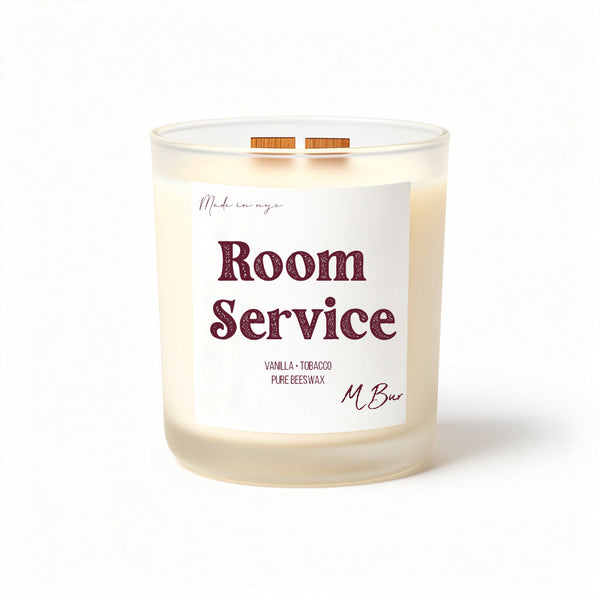
Smells so good with warm spices, and even my husband who hates artificial scents loves it. - Kristen D., verified buyer
Common questions
Are soy candles safe to burn around a baby?
Soy is cleaner-burning than paraffin, which helps, but safety depends just as much on the fragrance and how you use the candle. A soy candle with a phthalate-free disclosed fragrance, burned away from the baby in a ventilated room, never in the nursery or while they sleep, can be reasonable. Watch for any reaction and check with your pediatrician. See clean options in the collection.
Which is safer for a baby, soy or beeswax?
Both are cleaner-burning than paraffin and both are reasonable. Beeswax is a single natural ingredient that burns very cleanly, while soy is a clean-burning plant wax. For a baby, the more decisive factors are the same for either: a phthalate-free fragrance, no dyes, ventilation, and keeping the candle out of the nursery.
Can I burn a soy candle in the nursery?
No. Do not burn any candle, soy or otherwise, in the nursery, and never while the baby is sleeping, since it is where they breathe quietly for hours and an open flame near a crib is a fire risk. Keep candles to other, ventilated rooms, and rely on airflow to keep a nursery fresh.
The bottom line
Soy candles are cleaner than paraffin, which helps around a baby, but the fragrance and how you use the candle matter just as much. Choose a clean wax, soy or beeswax, with a phthalate-free disclosed fragrance, burn it away from the baby and never in the nursery or while they sleep, and watch for any reaction, skipping candles entirely if your baby is sensitive.

