

Are Candles Bad for Dogs? What's Safe and What to Avoid
You light a candle. Your dog wanders in, takes one sniff, and parks himself six inches from the flame. And now you are wondering: is this actually safe for him?
It is a fair question. Dogs have respiratory systems far more sensitive than ours, and their sense of smell is roughly 40 times stronger, so anything you burn, they experience at full volume. The reassuring part is that candle safety for dogs is almost entirely an ingredient question, not a candle question. Once you know what to avoid and what to look for, you can keep burning without the worry. This guide covers what makes a candle genuinely unsafe for dogs, the one distinction that clears up most of the confusion, and how to choose candles for a home with a dog in it. If you want the ranked product picks, our 7 best pet-safe candles for dog owners roundup goes deeper on specific brands.
What actually makes a candle unsafe for dogs
Three things, mostly. None of them are inherent to candles as a category.
Paraffin wax. Paraffin is a petroleum byproduct. Burned, it releases benzene, toluene, and formaldehyde, the same class of compounds found in diesel exhaust. A dog breathes closer to the ground and spends most of the day indoors, so consistent paraffin exposure is a real respiratory concern for them.
Undisclosed toxic fragrance. Many candles use phthalate-laden fragrance and never disclose what is in it. Phthalates are endocrine disruptors linked to hormonal issues in animals and humans. If a label just says "fragrance" with no further detail, that is not an answer you can evaluate.
Lead-core wicks. Banned in the US since 2003, but still found in some cheap imported candles. A lead wick releases lead particles into the air every time it burns. If you are buying from an unknown source, check the wick.
The essential oil confusion, cleared up
Here is where most dog owners get tangled, and it is worth slowing down on because it changes how you read every candle label.
You will see lists, accurate ones, of scents that are toxic to dogs: tea tree, peppermint, wintergreen, pine, ylang ylang, cinnamon, clove, eucalyptus, pennyroyal, sweet birch. That data is real. But it comes from studies of concentrated essential oils, the kind used undiluted or pumped into the air by an active diffuser. At that concentration, a dog inhaling or absorbing the oil is getting a heavy dose, and that is what causes the documented harm.
A scent note inside a phthalate-free fragrance oil, burned in a candle, is a completely different exposure. The concentration is a fraction of what a diffuser delivers, and it is bound into wax rather than aerosolized straight into the air. So the products to genuinely keep away from your dog are essential-oil diffusers running undiluted oils, and paraffin candles with undisclosed fragrance, not a beeswax candle that happens to list a warm spice note.
This is the distinction that matters: the risk is about concentration and delivery, not whether a scent family appears on a list. A fragrance-oil candle is not a diffuser, and treating the two as the same is what makes dog owners needlessly afraid of every candle in the house.
What makes a candle a good choice for a dog household
Wax should be 100% beeswax, soy, or coconut, never paraffin or an undisclosed blend. Wicks should be unbleached cotton or untreated wood. Fragrance should be phthalate-free and disclosed. And whatever you burn, you want a setup where your dog can leave the room if they want to.
Beeswax earns a specific callout for dog owners. It is the only naturally hypoallergenic candle wax, produces no petroleum byproducts because it is not a petroleum product, and burns at the highest melting point of any wax, which means a slower burn and less total fragrance load per hour. For a dog sensitive to scent, that gentler, lower-output burn is the kindest option. Some research also suggests beeswax releases negative ions that bind airborne particles like dander and dust, which is a real bonus in a home with a heavy shedder.
How MBur candles fit a home with dogs
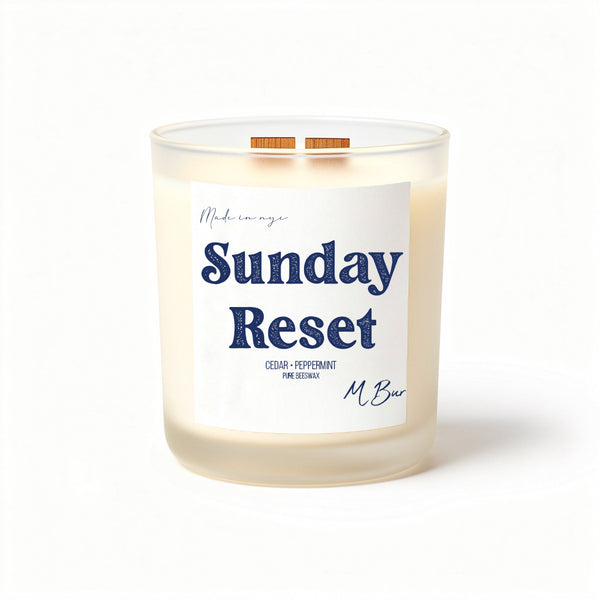
Every MBur candle is 100% beeswax with an untreated wooden wick and phthalate-free, fully disclosed fragrance, so they clear the three real hazards above: no paraffin, no undisclosed fragrance, no lead wick. Because the scents are fragrance oils at candle concentration rather than essential oils in a diffuser, they do not carry the concentrated-oil exposure the toxicity warnings are built around.
A few scent notes for matching a candle to your space:
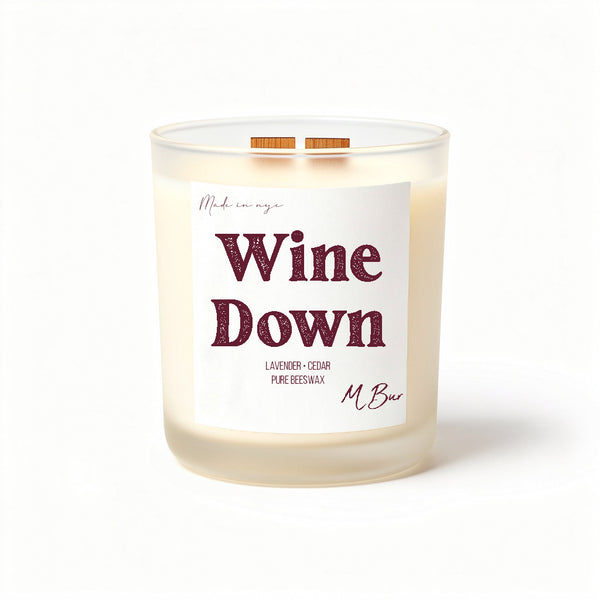
- Wine Down leads with lavender, chamomile, sage, cedar, and sandalwood, soft and calming, a natural first pick for a dog-friendly home.
- Do Not Disturb is soft pear, peach blossom, vanilla, and sandalwood, gentle and low-key in a small room.
- Sunday Reset carries clove and patchouli. Clove appears on the essential-oil caution lists, but here it is a fragrance-oil note at candle concentration, not a diffuser oil. As with any candle, burn it in a ventilated room and let your dog come and go.
The honest, universal rule regardless of brand: ventilate the room, keep the candle out of paw and tail range, never leave one burning unattended around a dog, and if your dog shows any sign of irritation, put it out. No candle, clean ingredients or not, is safe burning where a dog can knock it over.
If you want to test a scent before committing, the 20-hour size at $20 is the easy entry point, enough burn time to see how your dog responds in your actual space.
Frequently asked questions
Can I burn scented candles around my dog?
Yes, when the ingredients are right. A candle made with 100% beeswax, soy, or coconut wax and phthalate-free disclosed fragrance, burned in a ventilated room, is generally fine for dogs. What you avoid is paraffin, undisclosed fragrance, and concentrated essential-oil diffusers.
Are essential oils the same as candle fragrance?
No, and this is the key point. The dog-toxicity warnings come from concentrated essential oils, especially in diffusers. A fragrance-oil note in a candle is a much lower, wax-bound exposure. Treating a candle like a diffuser is what causes most of the confusion.
Is the crackling sound from wooden wicks safe for dogs?
Yes. The crackle is just wood fiber burning, no extra emissions, and it is softer than most household sounds. Dogs habituate to it quickly.
What if my dog has allergies or breathing issues?
Go for the cleanest possible burn: beeswax with phthalate-free fragrance, light scent, good ventilation. Our guide on the best candles for allergy and fragrance sensitivity covers this in depth and applies directly to sensitive dogs.
How long do beeswax candles burn?
Longer than any other wax. The 12oz beeswax size runs up to 80 hours because beeswax has the highest melting point of any candle wax. More burn time per candle means less total fragrance load in your home over time.
Ready to pick one for your dog-friendly home? Browse the full MBur collection and start with a calming scent like Wine Down.
What buyers say:

