

Why Some Candles Smell Strong Cold but Weak When Lit: The Science Explained
You buy a candle that smells incredible in the jar, get it home, light it, and forty minutes later the room barely smells like anything. Frustrating, and also weirdly common. The strong shelf scent is called the cold throw, and the scent a candle actually pushes into a room while burning is the hot throw. Those two things run on completely different physics, which is why one can be loud while the other whispers.
Good news: most of this is fixable, and a lot of it comes down to the wax, the wick, and how you burn the thing. If you want candles built to project once lit, start with our full beeswax candle collection, then read on so you know what you are actually paying for.

Cold throw vs hot throw: two different jobs
Cold throw is the scent that drifts off the wax surface at room temperature. No heat, no melt pool, just the most volatile molecules evaporating on their own.
Hot throw is what happens once a flame heats the wax to somewhere around 120 to 180 degrees Fahrenheit. That heat pushes heavier fragrance molecules airborne and disperses them across a room. It is a much bigger, more demanding process than a jar sitting on a shelf.
Here is the part nobody tells you: a strong cold throw does not promise a strong hot throw. In fact, a candle loaded with light, breezy top notes can smell punchy cold and go quiet the second you light it.
Why the scent vanishes once you light it
Fragrance is built in layers. Citrus, mint, and fresh accords are top notes, and they are extremely volatile, meaning they evaporate fast even at room temperature. That is what makes them shout on the shelf. Under a flame, those same light molecules burn off almost instantly and leave you with very little.
Base notes like vanilla, wood, amber, and musk are the opposite. They are heavy and stubborn. They need sustained heat to become airborne at all, but once they do, they are what fills and holds a room. A candle that leans hard on top notes for a big cold throw simply runs out of material once the flame does its work.
So the disappearing act usually means the blend was engineered for a good first impression instead of a long, warm burn.
The wick is the engine, and small wicks starve the scent
Fragrance can only leave the wax through the melt pool, the liquid surface a burning candle creates. A properly sized wick melts the wax edge to edge. An undersized wick carves a narrow tunnel down the middle, which shrinks the evaporating surface to almost nothing.
Less surface area means less fragrance in the air, full stop. One of our customers ran into exactly this: "Im having issue with the flame staying big enough to burn the candle evenly. I keep it lit for long enough for the wax to evenly burn, but it still only burns the middle due to a small flame." That is a wick and melt pool problem, and it directly throttles hot throw.

The other culprits: your room and your nose
Sometimes the candle is fine and the environment is fighting it. A small candle in a big open plan room never stands a chance. Ceiling fans and HVAC vents scatter the rising vapor before it can build up to a level your nose registers.
And then there is nose fatigue. Your brain filters out any steady background smell within about 20 to 30 minutes. The candle may be projecting beautifully to anyone who walks in the door, while you sit there convinced it died. This is why the person in the room is the worst judge of a hot throw.
Why more fragrance oil is not the fix
The obvious assumption is that a weak candle just needs more scent packed in. Makers know better. Wax has a saturation threshold, generally around 6 to 10 percent fragrance oil by weight. Push past it and the oil stops binding to the wax. You get pooling, poor combustion, sooting, and a worse throw, not a better one.
There is also a curing step most people never hear about. Freshly poured candles need time, often one to two weeks, for the fragrance molecules to fully lock into the wax structure. A candle burned too soon after pouring can smell flat no matter how good the blend is. This is craft, not luck.
How to actually get a strong, lasting hot throw
Here is your fix list, in order of impact.
- Pick wax built to project. Beeswax burns hotter and slower than paraffin or soy because it has the highest melting point of any candle wax. That sustained heat is exactly what heavy base notes need to go airborne and stay there.
- Nail the first burn. Let the candle burn until the melt pool reaches the edges, usually two to four hours, every time. Snuffing early causes permanent tunneling and permanently weakens every future burn.
- Trim the wick to about 5mm before each light. A ragged wick means an unsteady flame and a stunted melt pool.
- Match the candle to the room. A 20 hour size is great for a bathroom or bedside. For an open living space, size up to an 80 hour candle so there is enough surface area and burn power to fill it.
- Look for phthalate free fragrance oils engineered for heat. Well built oils hold up under a flame instead of breaking down. That thermal stability is the difference between a candle that holds a room and one that fades.
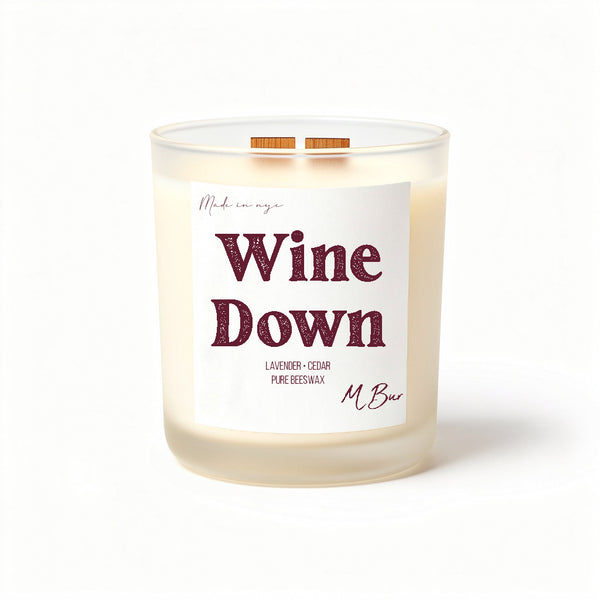
This is where our approach earns its keep. MBur candles are 100 percent beeswax with wooden wicks, phthalate free fragrance, and no chemical dyes, handmade in New York City. The wooden wick and beeswax combination is built for a wide, steady melt pool and a hot throw that lasts across the full 80 hour burn.
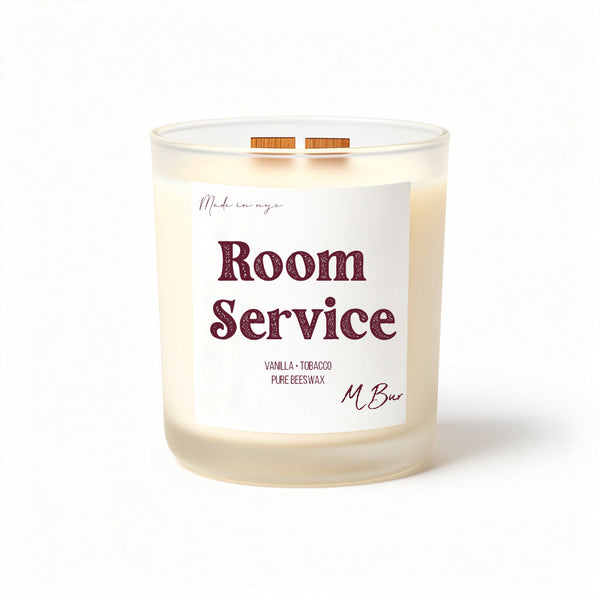
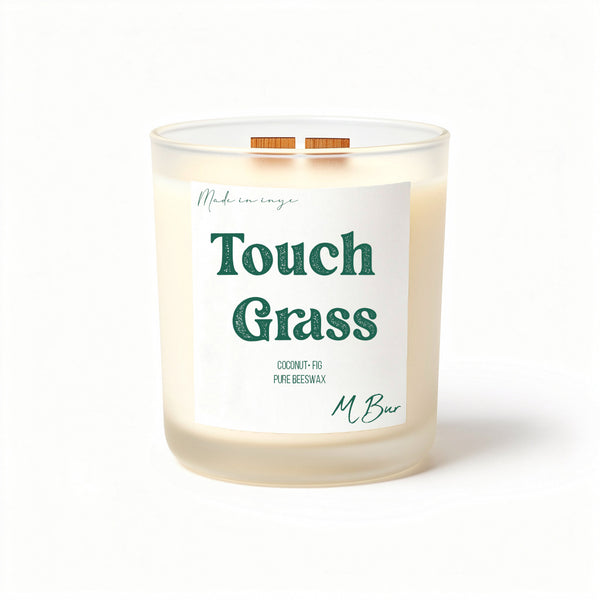
Scents like Room Service, with saffron, white tea leaves, purple peonies, orchid, tobacco, vanilla, almond milk, and tonka bean, are built around deep base notes that need heat to bloom, exactly the kind of blend that rewards a proper burn. And for something greener and brighter that still holds a room, Touch Grass layers fig, black currant, galbanum, coconut, davana, cedarwood, amber, orris, and tonka bean so the sharp opening settles into a warm, lasting base.
"This scent has me in a chokehold. I burn it in my room and my living room and it fills my space SOOOOO nicely. Theres nothing I hate more than a candle that can't fill the room and baby this is NOT that. This candle permeates every corner of the room." — Tiffany Gordon

The takeaway
A candle that smells loud cold and quiet lit is usually a top note heavy blend in a wax and wick that cannot sustain the burn, sometimes made worse by a big room or your own nose adapting. Pick beeswax with a proper wick, burn it edge to edge, and match the size to your space, and the scent will actually stick around.
MBur candles carry a strong rating across dozens of customer reviews, with buyers repeatedly calling out how well they fill a room. If you want a candle whose hot throw matches its promise, browse our full beeswax candle collection and start with a size matched to the room you want to fill.
Related reading

