

Why Candles in Church? The Spiritual Symbolism Behind the Flame
Here is a detail most people miss: for centuries, the highest grade of church candle was required to be made of beeswax, and the reasoning was deeply symbolic. The pure wax stood for the flesh of Christ, the wick for his human soul, and the flame for his divine nature. That is a lot of meaning packed into a single object most of us walk past without a second thought.
Candles have been part of Christian worship since the earliest days, back when believers gathered in the Roman catacombs and needed light to see by. But the flame quickly became more than practical. If you are curious about the material side of that tradition, our full beeswax candle collection carries on the same wax the church has favored for over a thousand years, and you can read more about the benefits of beeswax if you want the science.
Let us get into why that little flame carries so much weight.

The Core Meaning: Christ as the Light of the World
At the center of church candle symbolism is a single idea. In the Gospel of John, Jesus is described as the "Light of the World," the light that shines in darkness. A lit candle became the most natural way to make that abstract idea visible.
When a flame burns in a sanctuary, it is meant to represent God's presence, truth, and guidance. The darkness of the room gives the light something to push against, which is exactly the point. Light dispelling dark is one of the oldest metaphors in human spiritual life, and Christianity leaned into it hard.
This is why liturgical guidelines treat candles as functional theological signs rather than mood lighting. The flame is doing a job. It is announcing that something sacred is happening in the room.
From Catacombs to Cathedrals: A Short History
The earliest Christians did not have grand buildings. They met underground, in the catacombs beneath Rome, often to avoid persecution. Candles served two purposes there at once. They gave people enough light to read and gather safely, and they carried the growing symbolism of Christ as light.
Over the following centuries, as the faith moved above ground and into churches, the practical need for illumination faded but the symbolic use stayed and deepened. What started as a way to see in the dark became a permanent fixture of worship, refined into specific roles and rituals that survive today.
Research into early Christian archaeology has shown that the flame's dual role, practical and sacred, was there almost from the start. The meaning did not get bolted on later. It grew alongside the practice.
The Different Kinds of Church Candles
Not every candle in a church means the same thing. Each type has its own role, and once you know them, you notice them everywhere.
The Paschal Candle
This is the big one, literally. A large, decorated candle lit during the Easter Vigil to represent the risen Christ. It is often the tallest candle in the building and is treated with real ceremony, since Easter is the emotional peak of the Christian calendar.
Votive Candles
These are the small devotional candles you see clustered before statues, shrines, or side altars. People light them to accompany a prayer or to remember someone who has died. The idea is beautiful: even after you leave, your candle keeps burning, meaning your prayer stays active and ongoing without you standing there.
Altar and Sanctuary Candles
Candles placed on or near the altar signal reverence and festivity. In some traditions, the number of altar candles even indicates the rank of the service or the status of the person leading it. A separate tabernacle lamp, kept continuously lit, marks the presence of the Blessed Sacrament.

Two Myths Worth Clearing Up
Myth one: candles are just for atmosphere. They do create a beautiful, hushed aesthetic, and nobody denies that. But official liturgical guidelines are clear that candles function as theological signs of reverence, festivity, and Christ's living presence. The beauty is a bonus, not the purpose.
Myth two: an LED candle works just as well. In traditions like Catholicism, electric or artificial "vigil lights" are generally not permitted for regular liturgy. The reasoning is that a real, living flame carries the symbolism of light and sacrifice in a way a battery cannot. Something is genuinely consumed to produce the light, and that consumption is part of the meaning.
Why Beeswax Specifically?
Of all the materials a candle could be made from, the church has long favored beeswax, and the choice was never arbitrary.
Pure beeswax was valued as a pristine, natural offering to God. Symbolically it represents the pure flesh of Christ, received from the Virgin Mother. Practically, beeswax burns cleaner and produces far less smoke than cheaper alternatives, which matters a great deal in an enclosed, sacred space where you do not want black soot climbing the walls and ceiling.
Depending on the region and the diocese, guidelines have historically recommended a high percentage of real beeswax content, sometimes anywhere from a quarter of the candle up to well over half. The common thread across all of them is the demand for a clean, smoke free living flame. Cheap paraffin, a petroleum byproduct that releases benzene, toluene, and formaldehyde as it burns, was never the ideal.
"I absolutely love these candles! I instantly notice the difference in the air quality, in comparison to the Bath and Body scented candles. I love Bath and Body's candles but I acknowledge that it caused a slight headache and other minor respiratory discomfort. Awesome products. Totally addicted." Jason H.
That difference in air quality is exactly why beeswax earned its place in worship long before anyone was measuring emissions. If you want to bring that same clean, honey warm burn into your own home, our beeswax candle collection uses 100% pure beeswax, the single ingredient wax with the oldest history of any candle material, dating back to around 5,000 BCE.

How Churches Actually Handle Their Candles
The reverence extends to the maintenance, and there is real craft knowledge here worth borrowing at home.
Sacristans and altar guilds are taught never to light church candles with matches or paper lighters, since bits of debris drop into the wax pool and create secondary wicks that make the candle smoke and gutter. A dedicated lighting taper is the tool of choice. New altar candles are often burned briefly before service to set the wax pool correctly, and the wick is trimmed short, roughly half to three quarters of an inch, before lighting.
And nobody blows a church candle out. Blowing directly onto molten wax splashes hot droplets and can send soot into the air. A proper snuffer is standard. If you want the full breakdown of that technique, our guide to how a candle snuffer prolongs candle life covers why it matters at home too.
Frequently Asked Questions
Why do people light candles in a church?
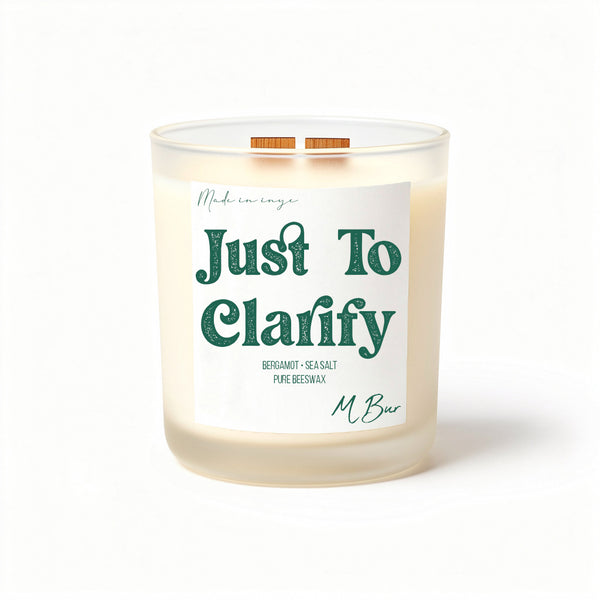
Lighting a candle is a visual extension of prayer. It represents a person's devotion, a desire for spiritual light, or an intention lifted up to God. The flame keeps that intention present even after the person walks away. For the same grounding effect at home, many people reach for a calming scent from our Just to Clarify candle, with notes of bergamot, lemon, orange, green tea, black tea, and sandalwood.
What do church candles symbolize spiritually?
They primarily symbolize Jesus Christ as the Light of the World, dispelling spiritual darkness and representing eternal life and divine presence. You can read more about the material behind that tradition in our post on the benefits of beeswax.
Why are candles lit for deceased loved ones?
It is a memorial act. The flame represents eternal life, honors the memory of the departed, and, in many traditions, asks for God's mercy on their souls. The candle burning on after you leave carries the idea that your remembrance continues.
What is a votive candle?
A votive candle is a small prayer candle left burning continuously after a person departs, signifying that their prayer stays active and ongoing. You place it, you say your prayer, and the light keeps working in your absence.
Why are traditional church candles made of beeswax?
Pure beeswax has historically been valued as a pristine, natural offering to God, symbolizing the purity and obedience of the faithful. It also burns cleaner with far less smoke, which matters inside a sacred, enclosed space. Our beeswax collection is built on that same single ingredient wax.
The Takeaway
A candle in a church is a small object doing enormous symbolic work, standing in for light against darkness, presence against absence, and devotion made visible. The beeswax tradition that shaped it survives for good reason: it burns clean, it lasts, and it carries thousands of years of meaning in a single flame.
If reading this made you want to keep a genuinely pure beeswax flame burning in your own space, our candles are 100% beeswax with wooden wicks and phthalate free fragrance, handmade in New York City. They have earned a wall of five star reviews from people who noticed the difference the first time they lit one. Browse the full beeswax candle collection and find the scent that feels like your kind of ritual.
Related reading

