
Is It Safe to Burn Candles Every Day? What You Need to Know
The problem with burning candles every day is not the habit. It is what most candles are made of.
What customers say on Google
View on Google
If you have ever noticed a faint headache after a long burn session, or seen black soot collecting on your walls and jar lids, or just felt like the air in your apartment got heavier, that is not a coincidence. That is a chemistry problem.
Daily candle burning is completely reasonable. The question is what you are burning. Because daily use of the wrong candle is a genuinely different situation than daily use of the right one.
Why Burning the Wrong Candle Every Day Is a Real Problem
Paraffin wax is a byproduct of petroleum refining. When paraffin burns, it releases compounds including benzene, toluene, and formaldehyde. These are volatile organic compounds. In a well ventilated space with occasional use, the concentration stays low enough that most people do not notice. But burn a paraffin candle in a closed bedroom every day for a month, and you are creating a meaningful change in your indoor air quality.
Research published in the journal Environmental Science and Technology found that paraffin candles release significantly higher levels of VOCs compared to plant and wax alternatives. The American Lung Association has flagged paraffin soot as a concern for people with asthma and respiratory sensitivities.
The other culprit is toxic fragrance. Many candles use fragrance oils that contain phthalates, which are endocrine disruptors. Daily exposure, especially in a small space, is not a great idea.
Not All Candles Behave the Same When Burned Daily
The problem is not candles. The problem is paraffin candles with toxic fragrance and metal core wicks, burned in enclosed spaces, repeatedly, without ventilation.
Beeswax is a different material entirely. It has the highest melting point of any candle wax, which means it burns more slowly and at a higher temperature, combusting more completely and producing dramatically less soot.
Daily beeswax burning, with phthalate free fragrance and a wooden wick, is a fundamentally different activity than daily paraffin burning. One is a habit worth keeping. The other deserves a second look.
Five Actionable Steps for Safe Daily Candle Use
1. Switch to 100% beeswax, not a beeswax blend
If a label says "beeswax blend" or lists beeswax alongside other ingredients, you are likely still burning petroleum. Look for single ingredient wax.
2. Check the fragrance, not just the wax
Phthalate free fragrance is a non negotiable if you are burning daily. "Natural fragrance" without further detail does not guarantee phthalate free formulation.
3. Trim your wick before every burn
A long wick creates a larger flame, more heat, more soot, and faster fragrance release. Trim wooden wicks to about one eighth of an inch before lighting.
4. Ventilate your space
A cracked window or a door left slightly open creates enough airflow to keep any combustion byproducts from accumulating. This applies even with the cleanest candle.
5. Follow the two to four hour burn rule
Burning for more than four hours causes the wick to become unstable and the wax temperature to climb higher than intended. Burn for two to four hours, let the candle cool fully, then relight.
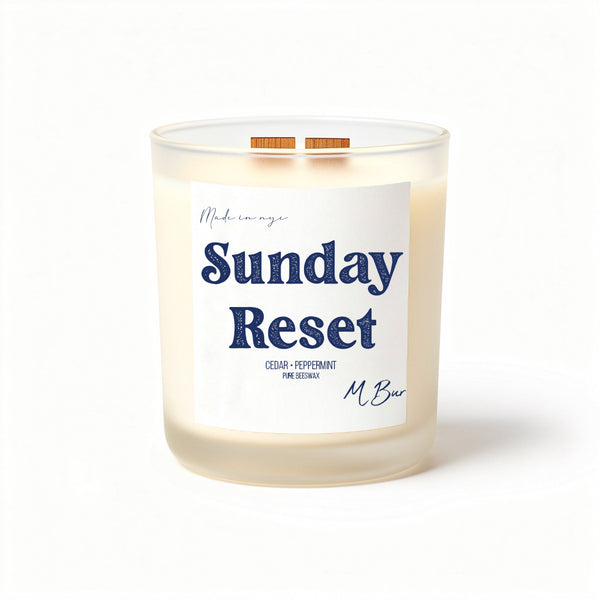
"A lot of other candles tend to give me headaches, but this one was a total game changer. I was able to enjoy the calming aroma without any discomfort. It made my space feel cozy and refreshed at the same time." Nicole D., Sunday Reset Candle
Why MBur Works for Daily Burners
Every MBur candle: 100% beeswax, wooden wicks, phthalate free fragrance, no chemical dyes, and an 80 hour burn time on the 12oz size. The wooden wick produces a soft crackling sound, burns evenly across the wax pool, and eliminates the metal core concern entirely.
"I absolutely love these candles. I instantly notice the difference in the air quality, in comparison to the Bath and Body scented candles. I love Bath and Body's candles but I acknowledge that it caused a slight headache and other minor respiratory discomfort. Awesome products. Totally addicted." Jason H., Sunday Reset Candle
Frequently Asked Questions
Can burning candles every day affect my indoor air quality?
Yes, if you are burning paraffin candles with toxic fragrance. Beeswax with phthalate free fragrance produces a dramatically cleaner burn.
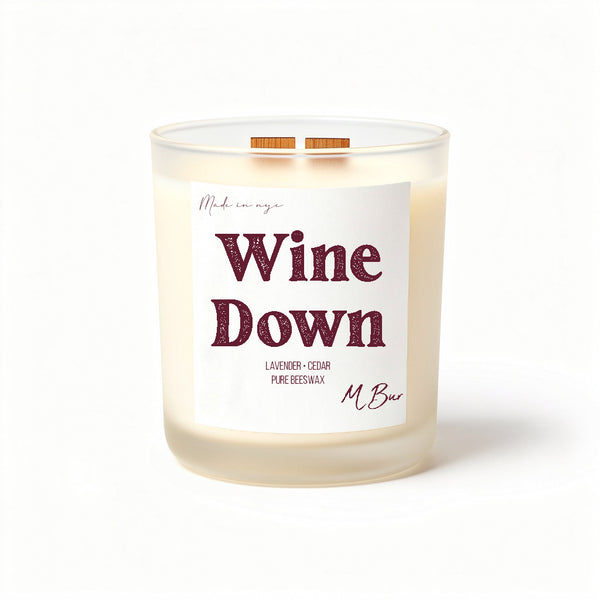
Wine Down Candle
$65.00
How long is it safe to burn a candle in one sitting?
Two to four hours. Beyond four hours, the wick becomes unstable and the wax gets hotter than intended.
Are beeswax candles actually safer than soy or paraffin?
For daily use, yes. Paraffin is a petroleum byproduct that releases VOCs. Most soy candles are blended with paraffin and use toxic fragrance. Pure beeswax with phthalate free fragrance is the cleanest option available.
Do I need a phthalate free candle, or is any scented candle fine?
For daily burning, it adds up. Phthalates are endocrine disruptors. Look for candles that explicitly state phthalate free fragrance on the product page.
What if my candle is leaving black marks on the jar or the wall?
That is soot, and it is a sign that your candle is not burning cleanly. It usually means paraffin wax, a cotton wick that needs trimming, or both. Switch to beeswax with a wooden wick and the black marks disappear.
The Bottom Line
Burning candles every day is not the problem. Burning the wrong candles every day is.
The Wine Down beeswax candle starts at $20 for the 20 hour size and is a good entry point for daily evening use.
Shop the full MBur beeswax candle collection
What buyers say:
Related reading:

