

How to Get the Charcuterie and Cheese Smell Out After Entertaining
The guests left an hour ago, the dishwasher is running, and your kitchen still smells like a brie that overstayed its welcome. That funk clinging to the air after a good charcuterie spread is not your imagination, and it is not going away on its own. Aged cheese and cured meat leave behind volatile fatty acids and sulfur compounds that settle into your air, your couch, and that gorgeous wooden board you spent way too much on.
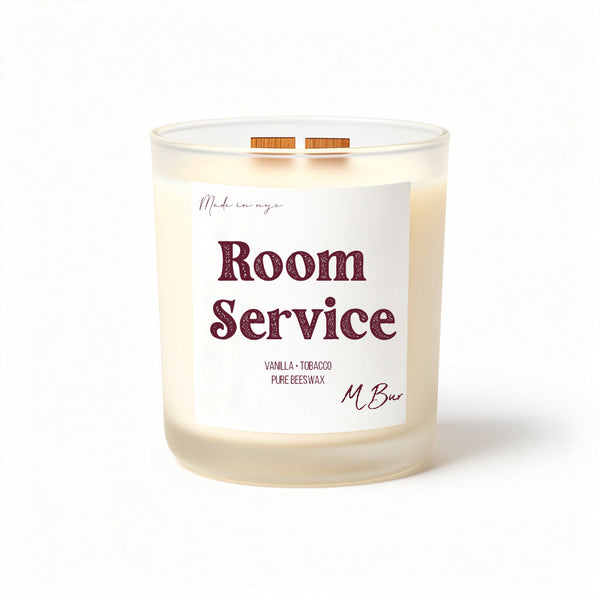
The good news: this is a solvable problem, and most of the fix costs you nothing. Once your space is genuinely clean, a clean burning beeswax candle from our full collection is what keeps it smelling good instead of just less bad. We will get to that. First, the science.

Why cheese and charcuterie smells refuse to leave
Cheese, especially the soft and blue varieties, is basically a controlled bacterial project. Those active cultures release sulfur gases and fatty acids as they age, and those molecules do not stay politely on the board. They aerosolize, drift, and land.
Here is the part that trips people up. These compounds are fat soluble, so they cling to porous surfaces your dish soap never reaches. Micro textures in wood, upholstery fibers, curtain folds, even painted drywall all hold onto them. You wipe the counter, the counter looks clean, and the room still smells like a fridge that lost a battle.
Cured meats add their own layer. The salt and fat that make prosciutto delicious also leave greasy residue that oxidizes and turns rancid over hours. That slightly sour, animal note you catch the next morning is charcuterie fat breaking down.
Step one: remove the source before you do anything else
You cannot neutralize a smell while the source is still generating it. This is the mistake almost everyone makes. They light something fragrant, feel better for ten minutes, then wonder why the funk creeps back.
Start with the trash. Bag up the rinds, the meat scraps, the used napkins, and physically take the bag out of the house. Not to the kitchen bin. Outside. Those scraps keep off gassing all night if you leave them.
Then wipe every hard surface the board touched with warm soapy water. The USDA and FoodSafety.gov both stress that removing organic residue is the actual fix for stubborn food odors, since bacteria left on surfaces keep producing smell long after the food is gone.
Step two: rescue your wooden board (without ruining it)
Please do not put your wooden charcuterie board in the dishwasher. I know it is tempting. It will warp, crack, and still smell like cheese, because submerging wood in water does not extract the fat trapped in the grain, it just damages the wood.
The right method is coarse salt and a lemon. Sprinkle kosher salt or baking soda across the board, then scrub with the cut face of a lemon half. The salt acts as an abrasive that pulls embedded odor from the grain, and the lemon's acid cuts through the grease and knocks back bacteria.
For a board holding serious funk, let the salt and lemon paste sit up to twelve hours or overnight, then scrape, rinse, dry fully, and re oil. One warning: do not leave acidic mixtures on wood longer than that overnight window, because too much acid contact breaks down the wood's structure over time.

Step three: pull the smell out of your air and textiles
Airborne particles are the reason the whole room smells, so move air aggressively. Cross ventilation beats leaving one window cracked for hours. Open windows on opposite sides of your space to create an actual draft, ten minutes at a time, repeated every few hours.
For neutralizers, a few options genuinely work rather than just covering things up:
- Baking soda in open bowls around the room absorbs acidic and basic odor molecules from the air.
- White vinegar left in a bowl overnight, or simmered gently on the stove, releases acetic acid that breaks down pungent odor compounds.
- Coffee grounds use nitrogen to trap odors, and they smell pretty good doing it.
- An air purifier with an activated carbon filter is the heavy hitter, capturing the volatile organic compounds and food fats that everything else misses.
For soft surfaces, your couch and rugs quietly soaked up party fat all evening. Sprinkle baking soda over them, let it sit overnight, then vacuum. The dry powder binds to the trapped molecules so you can lift them out instead of letting them fester.
"I absolutely love these candles! I instantly notice the difference in the air quality, in comparison to the Bath & Body scented candles. I love Bath & Body's candles but I acknowledge that it caused a slight headache and other minor respiratory discomfort. Awesome products. Totally addicted." Jason H.
Step four: now light a candle (and light the right one)
Once the source is gone and your air is genuinely clean, a candle stops being a mask and starts being the finishing move. This is the order that matters. A fragrant candle over active cheese funk just gives you cheese funk wearing perfume. A clean candle over a properly deodorized room gives you a room that smells intentional.
Skip anything paraffin based here. Paraffin is a petroleum byproduct that releases benzene, toluene, and formaldehyde as it burns, and it deposits soot on your walls, which is the last thing you want after a cleanup. Many conventional candles also use toxic fragrances loaded with phthalates, exactly the compounds that trigger the headaches Jason mentioned above.
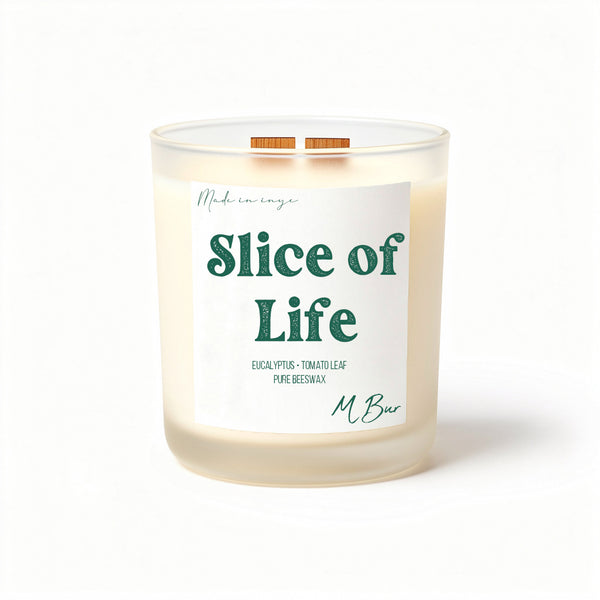
Beeswax is the cleaner call. It is single ingredient wax, naturally hypoallergenic, and it burns without the soot. For a post gathering reset in a kitchen or open living space, Slice of Life is the one I reach for. Its notes are spearmint, eucalyptus, tomato leaf, anise, and mint, a crisp green profile that reads as fresh and clean rather than sweet or heavy, which is precisely what you want cutting through the last traces of dairy.
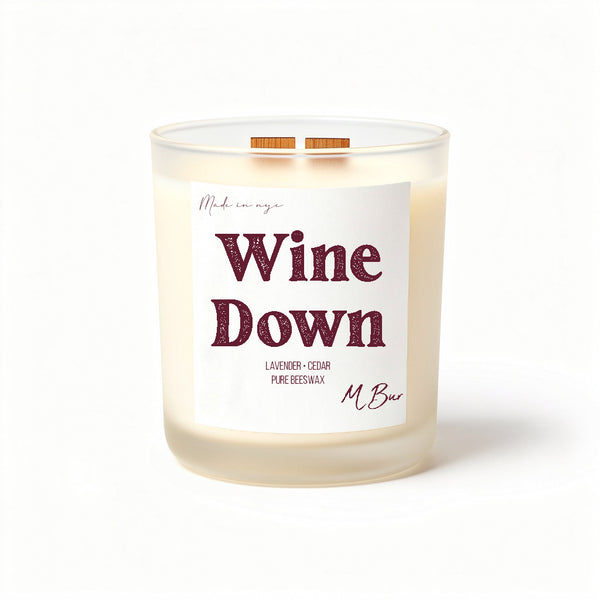
If your gathering was more of an evening wind down and you want the room to feel calm rather than sharp, Wine Down leans soft and herbal with lavender, chamomile, sage, and rosemary. One reviewer, Nicole D., put it plainly: "A lot of other candles tend to give me headaches, but this one was a total game changer." That is the difference a phthalate free, non toxic fragrance makes.

Our beeswax candles use wooden wicks that crackle and burn evenly, and the wax carries a subtle natural honey undertone that plays nicely with a green or herbal scent. The 40 hour size runs $32 and the 80 hour size is $65, so a single candle covers a lot of gatherings. Browse the full beeswax candle collection to match the scent to your space.
Frequently asked questions
Why does the cheese smell linger even after I clean the counters?
Fat soluble compounds from aged cheese and cured meat settle into porous surfaces and micro textures that standard dish soap skips right over. You have to physically remove the residue with an abrasive on boards, and neutralize the airborne molecules with baking soda, vinegar, or carbon filtration. A clean beeswax candle comes after that, to keep the room smelling good once it is actually clean.
What is the fastest way to neutralize strong cheese smells in the air?
Simmer a pot of water with white vinegar on the stove. The acetic acid it releases breaks down pungent odor molecules rather than covering them. Pair it with open windows on opposite walls for cross ventilation and you will notice a difference in minutes.
How do I get cheese smell out of a wooden cutting board?
Scrub with coarse salt and a cut lemon half, let it sit up to twelve hours for a bad case, then rinse, dry fully, and re oil. Never soak it or run it through the dishwasher, since that warps the wood without pulling the trapped fat out.
Why do soft and blue cheeses smell worse than hard cheeses?
Higher moisture content and more active microbial cultures mean soft and blue cheeses release stronger sulfur and fatty acid gases into the air. That is why a runny brie can perfume a whole room in a way a hard parmesan will not.
Will a scented candle just cover the smell instead of fixing it?
If you light it before removing the source, yes, and it comes back. But once the source is gone and your air is deodorized, a candle finishes the job. Reach for a clean burning option like Slice of Life, whose fresh green profile complements a clean room instead of fighting leftover funk.
The takeaway
Charcuterie smell lingers because fatty acids and sulfur compounds cling to porous surfaces and drift through your air. Remove the source, deep clean your board with salt and lemon, move air with cross ventilation, and let baking soda pull odor out of your textiles. Only then does a candle do real work instead of just masking.
My pick for a fresh, non toxic finish is Slice of Life, but the right scent depends on the room and the vibe you are after. MBur candles carry a strong review track record from customers who came to us because other candles gave them headaches. Browse the full beeswax candle collection and pick the one that fits your space.
- Discover the Secret to Soot Free Candles: Say Goodbye to Mess and Hello to Clean Burn
- Do Scented Candles Make Your Head Spin? Understanding the Potential Headache Triggers
- Discover the Benefits of Non Toxic Candle Fragrance Oils: Enhancing Your Space without Harmful Chemicals
- Candles and Cocktails: Perfect Pairings for a Cozy Night In

