

How to Choose a Safe Candle for Kids: A Buying Guide for Parents
That "beeswax" candle you grabbed for the nursery shelf might be mostly paraffin. Labeling laws let a candle call itself "beeswax" or "soy" while a huge chunk of the wax is petroleum, and that petroleum is exactly what parents of kids with sensitive airways are trying to avoid. If you care what your child breathes, the word on the front of the jar tells you almost nothing.
Here is what actually matters when you are shopping for a candle for kids, broken down by the decisions that count. If you want to skip the theory, our full beeswax candle collection is single ingredient wax with wooden wicks, so it already clears most of the bars below.
One thing first, because it frames everything: any open flame is a burn and fire risk around small children. The wax and wick you choose reduce what a candle emits into the air. They do not make a lit flame safe for a toddler to be near unsupervised. Keep both ideas in your head as you read.

Decision 1: Wax type
This is the big one. Paraffin is a petroleum byproduct, and burning it releases particulate matter and VOCs into the room. Children's airways are narrower and still developing, so indoor pollutants that a grown adult shrugs off can irritate a kid's lungs or set off pediatric asthma.
Natural waxes burn cleaner. The honest catch is that any burning organic material produces some soot and fine particles, so "natural" is not the same as "zero." What you are doing is cutting the petroleum load and the worst of the emissions.
Here is how the common options stack up.
| Wax | Source | Burn cleanliness | Watch out for |
|---|---|---|---|
| Paraffin | Petroleum byproduct | Dirtiest, most soot and VOCs | Often hidden inside "blends" |
| Soy | Soybean oil | Cleaner than paraffin | Frequently blended with paraffin, and fragrance can still be toxic |
| Coconut | Coconut oil | Clean burning | Usually blended, check the ratio |
| Beeswax | Byproduct of honey production | Cleanest burn, highest melting point | "Beeswax" on the label can still be a paraffin blend, read the fine print |
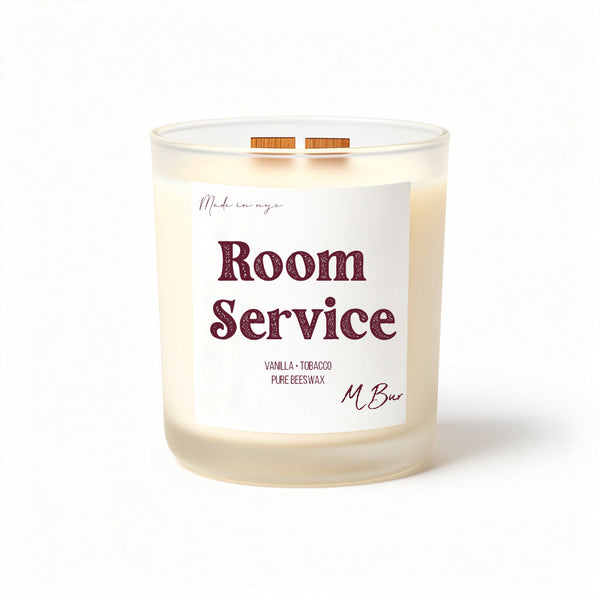
Beeswax is the oldest candle material we have, going back to roughly 5,000 BCE, and it is naturally hypoallergenic. The trick is making sure you are getting 100 percent beeswax and not a blend. Everything in our collection is single ingredient wax, no petroleum hiding underneath.
Decision 2: Wick type
The old lead wick worry is largely retired. The U.S. Consumer Product Safety Commission banned lead cored wicks in 2003, so anything reputable and current uses cotton, paper, or wood. If you are eyeing an unregulated import from an unknown seller, that is the one place old lead risk can occasionally resurface, so buy from brands that are transparent about materials.
Between the safe options, wood wicks have a practical edge for a kids' space. They crackle softly, burn evenly, and produce less of the flickering, sooting behavior you get from an over long cotton wick. You still trim them, but a wood wick tends to misbehave less.

Decision 3: Scent sourcing
This is where a lot of "natural" candles quietly fall apart. A candle can use clean wax and still load the fragrance with phthalates and parabens. Those toxic fragrances are exactly the kind of thing that irritates a child's airways, and "fragrance" on an ingredient list can legally hide a long list of compounds.
Look for phthalate free fragrance stated plainly, or unscented if your child is very sensitive. Essential oil scented candles are an option some parents prefer, though even natural oils can trigger reactions in a sensitive kid, so lighter throw is usually safer than a room filling scent.
MBur uses only non toxic, phthalate free fragrance oils and no chemical dyes. A cleaner candle is less likely to irritate. If your child has diagnosed asthma or a respiratory condition, follow your pediatrician's guidance on scented products in their room, full stop.
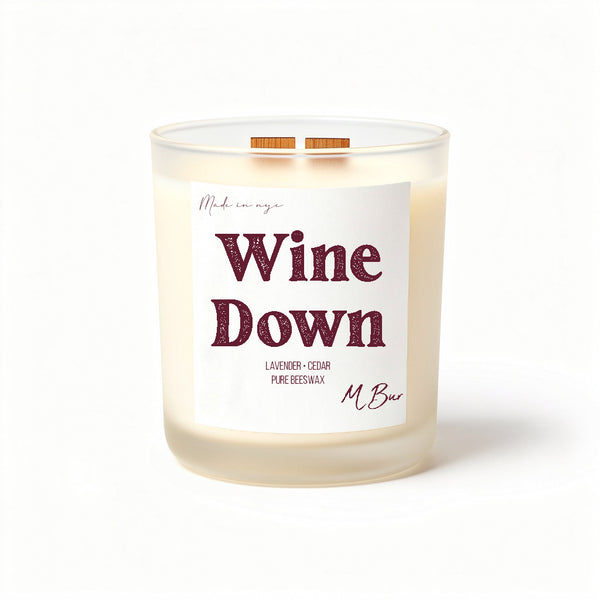
"Absolutely loved the Wine Down candle! The scent is so light and clean, not overpowering at all, which is exactly what I look for. A lot of other candles tend to give me headaches, but this one was a total game changer."
Nicole D.
That "light and clean, not overpowering" note is the sweet spot for a home with kids. Our Wine Down candle leans calm and green with lavender, chamomile, sage, and rosemary, which is why it lands in evening and bedroom routines rather than filling a whole floor with scent.
Decision 4: Size and placement
Size matters less for the child's lungs and more for logistics. A candle in a kids' home should live on a high, stable surface where curious hands cannot grab it or tip it over. That means a jar or vessel that is sturdy and hard to knock, not a slim taper on a low table.
Buy the burn time you will actually use in a high, safe spot. A smaller candle you place correctly beats a large one you leave somewhere reachable because it was too heavy to move.
Decision 5: Price per hour
Clean candles cost more than mass market paraffin, and the honest way to compare is cost per burn hour, not sticker price. Beeswax has the highest melting point of any candle wax, which is why it burns the longest.
MBur candles start at $20 for the 20 hour size and go up to $65 for the 80 hour size, with a 40 hour at $32 and a 55 hour at $37 in between. Run the math on the 80 hour and it is a strong per hour value even against cheaper jars that burn out fast. Across the clean candle market, most non toxic children's candles cluster around $25 to $35, with the range spanning roughly $5 to $60 depending on size and certification.
For comparison and to keep this honest, a few other brands parents look at: Fontana Candle Co. makes a beeswax and coconut candle carrying a MADE SAFE certification aimed at nurseries; Big Dipper Wax Works sells unscented pure beeswax votives and pillars with a natural honey aroma and cotton wicks; and Bluecorn Beeswax pairs 100 percent beeswax with light essential oils for smaller rooms. All reasonable options. Compare wax purity, fragrance sourcing, and per hour cost across all of them.

The quick reference checklist
Before you buy any candle for a home with kids, run it through this:
- Wax is stated as 100 percent beeswax, soy, or coconut, not a vague "blend"
- Wick is cotton, paper, or wood, from a transparent, reputable seller
- Fragrance is labeled phthalate free, or the candle is unscented
- No chemical dyes
- Vessel is sturdy and hard to tip
- You have a high, stable, out of reach spot to place it
- You compared cost per burn hour, not just the price tag
MBur checks every box on the wax, wick, fragrance, and dye lines. The placement is on you.
Practical habits that matter as much as the candle
Ventilate the room while a candle burns so particles do not concentrate. Trim the wick to about a quarter inch before each light to keep the flame small and the soot down. Cap your burn sessions at three to four hours so the vessel does not overheat. Never leave a flame unattended, and never burn overnight, especially in a child's bedroom. If you want light in a nursery or kids' room without any flame at all, a flameless LED candle removes the fire and burn risk entirely, which many pediatric safety folks recommend for those specific spaces.
You can read more in our candle care guide and our breakdown of whether candles are bad for babies.
The bottom line
The safest candle for a home with kids is 100 percent beeswax with a wood or cotton wick, phthalate free fragrance or none, and a high, sturdy spot to sit. Read past the front label, compare per hour cost, and never leave a flame near small children.
Our beeswax candles are handmade in New York City, single ingredient wax, wooden wicks, no chemical dyes, and phthalate free fragrance, with a light throw parents keep praising. Across dozens of reviews, the same thing comes up again and again: clean scent, no headache, room stays comfortable.
Browse our full beeswax candle collection and pick the size that fits your safe spot.
Related reading

