

How to Choose a Candle for Bugs That Actually Works Outside
The reason that citronella candle on your patio table did nothing last summer is not the brand. It is physics. The scent plume drifted off in the breeze, the flame sat two feet above the mosquitoes chewing on your ankles, and the wax it was made of probably held about as much real essential oil as a scratch and sniff sticker. A candle for bugs can help, but only if you understand what it can and cannot do.
So let us set expectations honestly, then show you how to pick one worth burning. If you want a cleaner burning starting point for outdoor evenings, our full beeswax candle collection is a good place to browse while you read.
First, the uncomfortable truth about bug candles
Bug candles work by burning wax infused with essential oils like citronella, lemongrass, or geraniol. Those scents mask the carbon dioxide and body odor cues that guide mosquitoes toward you.
Here is the catch. Vector control experts are clear that candles create localized, passive protection only, effective within a small radius and only when the air is calm. Historical field studies put basic citronella candles at roughly a 40 percent or lower reduction in bites, and that number drops fast the moment a breeze picks up.
A candle is a complementary layer. It softens the problem in one small zone on a still evening. It does not build a force field around your yard, and any product that promises that is lying to you.

Why the wrong candle fails you
Most novelty bug candles fail for the same handful of reasons, and once you know them you can spot a good one instantly.
Weak oil concentration. Effectiveness comes down to the amount of quality essential oil actually volatilizing into the air. Commercial studies tested candles at roughly 3 to 5 percent active oil. Cheap candles come in well under that, so they smell faintly of citronella and repel almost nothing.
A paraffin base. A lot of budget bug candles are poured in paraffin, a petroleum byproduct that releases VOCs and irritants as it burns. You end up trading mosquitoes for a lungful of soot, which is a bad deal on your own patio.
Placement mistakes. A candle on a high table pushes its scent upward and outward, while many mosquitoes hunt low and go straight for your ankles. Set the flame closer to where you are actually getting bitten.
What to actually look for
When you shop for a candle for bugs, run through this quick checklist:
- Real botanical actives. Look for citronella, lemongrass, geraniol, rosemary, geranium, lavender, or peppermint. Geraniol in particular has tested several times more effective than standard citronella in comparison studies.
- A clean burning wax. Beeswax, soy, coconut, or rapeseed over paraffin. Beeswax burns the longest and cleanest of the bunch.
- Non toxic, phthalate free fragrance. You are burning this near your face and your food. Toxic fragrances loaded with phthalates and parabens defeat the whole point of going natural.
- No smoke worship. Thick soot does not mean better repellency. Heavy smoke is a sign of a dirty burn, not a strong one.
Where a clean beeswax candle fits in
Here is the honest MBur position. We do not sell a dedicated citronella bug candle. What we make is a clean burning base you actually want burning near you outdoors, which is half the battle when so many bug candles poison the air they are supposed to improve.
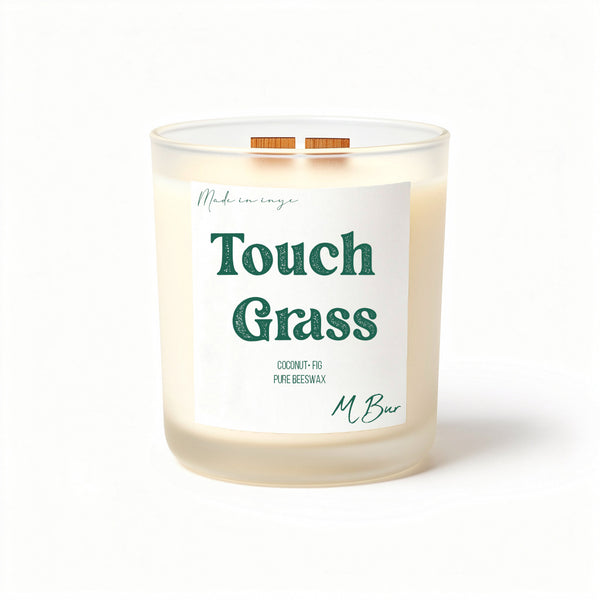
For breezy patio evenings, a fresh, green scent like Touch Grass leans into the outdoor mood with fig, galbanum, and cedarwood. It reads like a garden after rain, and because it is 100 percent beeswax with a wooden wick, it burns up to 80 hours in the largest size ($65) without the soot streaks paraffin leaves on your walls.
People notice the difference in the air with a clean burn.
"I absolutely love these candles! I instantly notice the difference in the air quality, in comparison to the Bath & Body scented candles. I love Bath & Body's candles but I acknowledge that it caused a slight headache and other minor respiratory discomfort. Awesome products. Totally addicted." Jason H.
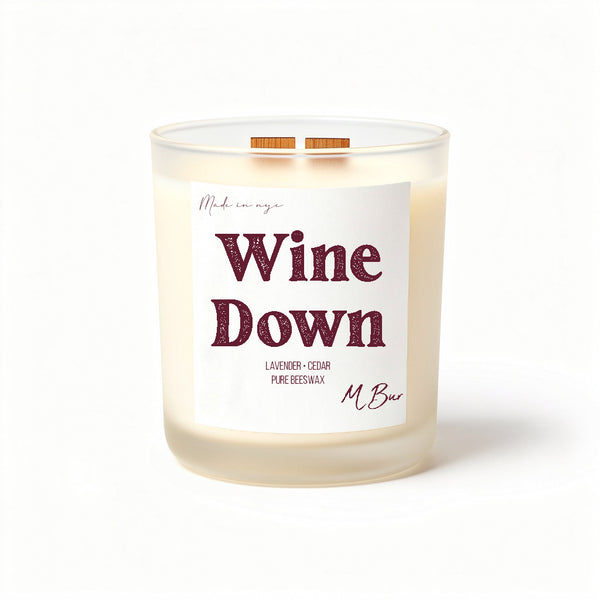
If you want a fresh, herbaceous evening scent for winding down after a long day outdoors, Wine Down brings lavender, chamomile, sage, and rosemary, and several of those herbs (rosemary, lavender) show up on the botanical repellent lists too. It starts at $20 for the 20 hour size.

How to make any bug candle work harder
The candle is one layer. Stack it right and you get real relief:
- Kill the airflow. Burn candles in still corners, not next to a fan or in an open breeze that scatters the scent plume before it can do anything.
- Group them low. Two or three candles clustered near seating and closer to ground level cover more of the zone that matters than one candle up high.
- Burn early. Natural formulas are strongest in the first 30 to 60 minutes, so light them before the crowd, not after the bites start.
- Layer real protection. For anywhere mosquitoes carry disease, an EPA registered topical repellent does the heavy lifting. The candle sets the mood and trims the edges. The EPA's list of skin applied repellent ingredients is the reliable reference here.
One note for households with pets or kids. Standard botanical candles are low toxicity when used per label guidance, but heavy smoke can irritate airways, which is one more reason to choose a clean wax and keep the burn tidy.

The takeaway
No candle clears a whole backyard, and the ones that promise to are usually cheap paraffin with a whisper of oil. Choose a candle for bugs with real botanical actives, a clean wax base, and non toxic fragrance, then place it low, out of the wind, alongside a proper repellent when it counts. If you want a beeswax candle you will genuinely enjoy burning outdoors, browse our full beeswax candle collection, rated across 57 reviews by people who stopped buying anything else.
Start with Touch Grass for that fresh outdoor mood and go from there.
Related reading

