

How Candle Scent Throw Works: Hot Throw vs Cold Throw Explained
How Candle Scent Throw Works: Hot Throw vs Cold Throw Explained
Most people assume a candle that smells incredible in the store will smell just as incredible in their home. That assumption is responsible for a lot of disappointing living rooms and a lot of money wasted on candles that basically do nothing once lit. The truth is that what you smell in the store and what fills your room when the wick is burning are two completely different phenomena, governed by different chemistry, different physics, and very different wax formulas.
This is the concept of scent throw, and once you understand it, you will never shop for candles the same way again.
What Is Candle Scent Throw?
Scent throw is the term used to describe how fragrance travels from a candle into the surrounding air. Strong scent throw means fragrance fills the room. Weak scent throw means you have to hover over the candle to smell anything.
But scent throw is not one single thing. It splits into two distinct categories.
Cold Throw: What You Smell Before the Flame
Cold throw is the fragrance a candle releases at room temperature, before it has been lit. This is what hits you when you open a candle box or walk past a display in a shop. Cold throw is entirely about how volatile the fragrance molecules are at ambient temperature.
High cold throw does not guarantee high hot throw. A fragrance can be engineered to smell powerful at room temperature using top notes that evaporate quickly, but those same top notes may burn off rapidly once the candle is lit, leaving you with very little complexity during the actual burn.
Hot Throw: What You Smell When the Candle Is Burning
Hot throw is what happens during a burn. The flame heats the wax, creating a melt pool. That liquid wax acts as a carrier, releasing fragrance molecules into the air through evaporation. The rate depends on wax type, melt point, fragrance load, wick size, and the chemistry of the fragrance oil itself.
Hot throw is what actually matters for filling a room. It is the real performance metric for any candle you plan to burn rather than display.
Why Wax Type Determines Scent Throw More Than Anything Else
Paraffin: High Cold Throw, Complicated Hot Throw
Paraffin wax has a low melt point, typically between 115 and 154 degrees Fahrenheit. Because it liquefies quickly, it releases fragrance rapidly during a burn. This produces a strong, immediate hot throw. The problem is what paraffin actually is: a byproduct of petroleum refining. When it burns, it releases benzene, toluene, and formaldehyde as combustion byproducts. Paraffin also produces black soot, which coats jar walls, ceilings, and the inside of your nose.
Soy: Cleaner Than Paraffin, Still Not Simple
Soy wax has a lower melt point than beeswax, usually around 120 to 180 degrees Fahrenheit. Soy generally produces good cold throw and moderate hot throw, though the latter can be inconsistent. The majority of commercial soy candles are not 100 percent soy. Many are blended with paraffin, and the toxic fragrance oils commonly used in soy candles often contain phthalates.
Beeswax: The Highest Melt Point and the Most Complex Throw
Beeswax has the highest natural melt point of any candle wax, around 145 to 147 degrees Fahrenheit. Because the melt pool develops more slowly and at a higher temperature, fragrance molecules are released more gradually and more evenly over the entire burn. The result is a scent throw that builds over time rather than spiking immediately and fading.
This is why beeswax candles can feel like they have weaker cold throw than paraffin or soy. They are not weaker. They are slower to volatilize. Once they reach full burn, they tend to fill a room more consistently and for longer.
The Fragrance Load Factor
Fragrance load refers to the percentage of fragrance oil added to the wax. Most candles sit somewhere between 6 and 12 percent by weight. Going higher than 12 percent does not automatically improve scent throw and can actually cause the excess fragrance to seep out of the wax, clog the wick, or release fragrance unevenly.
The quality of the fragrance oil matters as much as the quantity. Phthalate free fragrance oils bind differently to wax than lower grade alternatives, and their molecular profiles are formulated without the cheap plasticizing compounds that make toxic fragrance oils smell sharp and synthetic.
The Wick Variable Most People Overlook
Wick type and size directly affect melt pool temperature and surface area, which in turn affect how aggressively fragrance is released. A wick that is too small creates a narrow melt pool that never reaches the jar edges, releasing fragrance only from a small surface area. A wick that is too large burns too hot, consumes fragrance too quickly, and can produce soot.
Wooden wicks sit in a category of their own. They burn at a lower, steadier flame than cotton wicks, which produces a more even melt pool temperature and a more consistent fragrance release over time. The combination of wooden wick and beeswax is one of the reasons beeswax candles with wooden wicks tend to have notably better sustained hot throw than the same wax with a cotton wick.
Room Size and Scent Throw Performance
Even a candle with exceptional hot throw will underperform in a room that is too large for its fragrance load and vessel size. Scent molecules disperse into air volume, so a 2.5oz candle designed for a small space will not adequately scent an open floor plan living area.
General guidance suggests roughly 1 ounce of candle wax per 100 square feet of space for moderate scent throw. A 12oz candle is generally appropriate for rooms up to 1,200 square feet when properly burned.
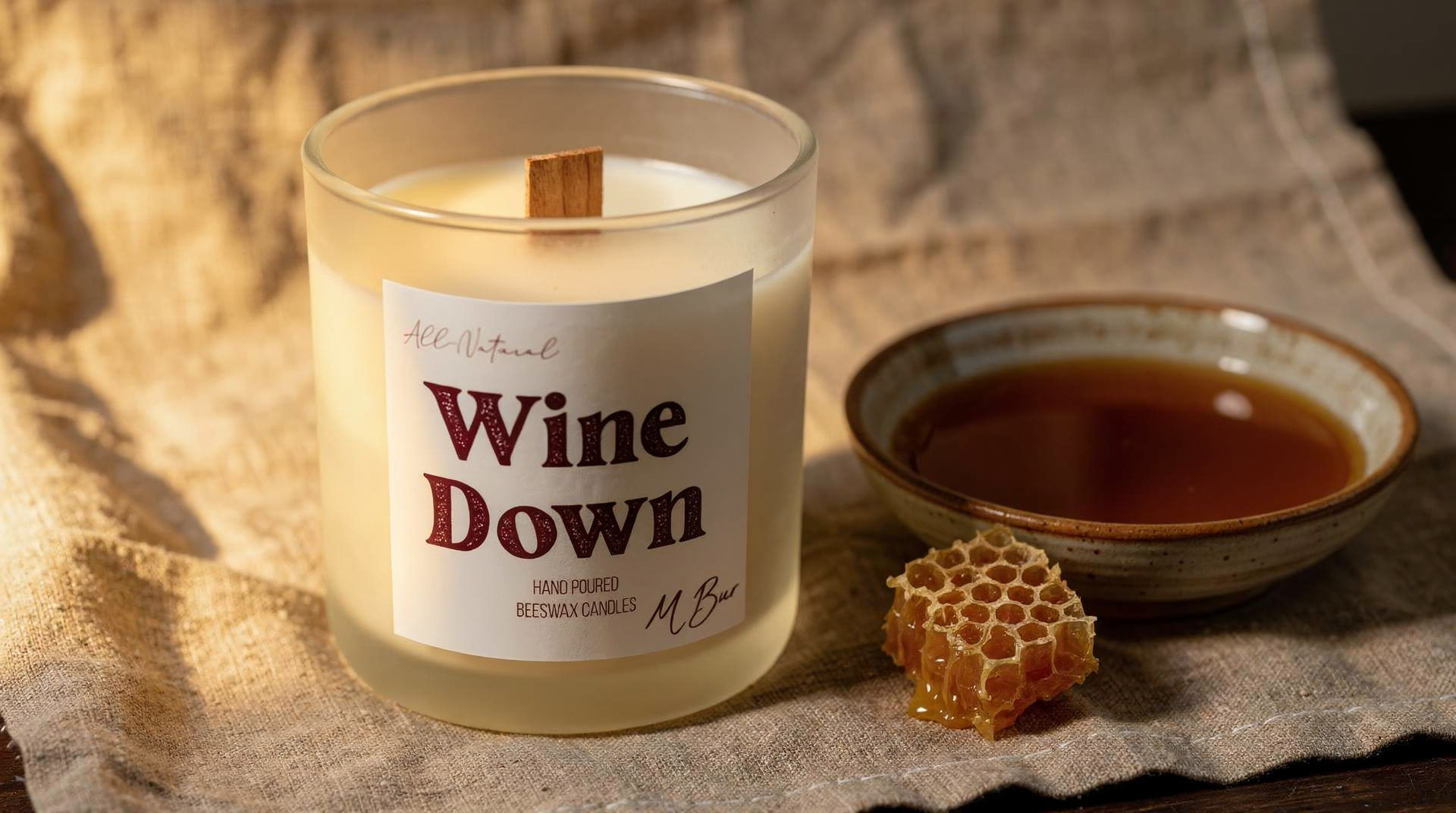
For larger rooms, wax type becomes even more important because you need sustained hot throw rather than a brief burst that fades within an hour. The 80 hour burn time available in MBur's 12oz beeswax candles, including the Sunday Reset (12oz, $60) and Wine Down (12oz, $60), means you get consistent fragrance performance across dozens of burn sessions.
"This scent has me in a chokehold. I burn it in my room and my living room and it fills my space SOOOOO nicely. There is nothing I hate more than a candle that cannot fill the room and baby this is NOT that. This candle permeates every corner of the room." Tiffany Gordon, verified buyer
How to Test Scent Throw Before You Buy
Check the wax type first. 100 percent beeswax or clearly labeled single ingredient wax is a better starting point than vague labels like "natural wax blend." Look at the wick material. Wooden wicks generally indicate a brand that has thought carefully about burn performance. Check the fragrance specification. Phthalate free and non toxic fragrance are the baseline.
If you want to test actual hot throw before committing to a full size candle, the 20 hour (2.5oz) size starts at $20 and gives you enough burn time to properly evaluate melt pool development and room filling performance in your actual space.
Frequently Asked Questions About Candle Scent Throw
Why does my candle smell great in the store but barely throw scent at home?
Retail spaces are often smaller, enclosed, and have many candles releasing fragrance simultaneously. At home, a single candle in a larger, ventilated space has to rely entirely on hot throw. Give a new candle at least 2 to 3 hours on its first burn to allow the melt pool to reach the jar edges before judging its performance.
Does more fragrance oil always mean stronger scent throw?
No. Beyond roughly 10 to 12 percent fragrance load by weight, excess fragrance oil does not bind properly to the wax. The binding relationship between the specific fragrance oil and the specific wax matters more than raw quantity.
Why do beeswax candles sometimes seem to have weaker cold throw than soy or paraffin candles?
Beeswax has a higher melt point, which means fragrance molecules evaporate more slowly at room temperature. This produces a subtler cold throw. But that same property produces a more sustained, even hot throw during burning. The performance gap closes completely once the candle reaches a full melt pool.
How long should I burn a candle to get the best scent throw?
The melt pool needs to reach the full diameter of the vessel. For most candles, this takes between 1 and 3 hours depending on jar width and wax type. Burning for less time consistently produces tunneling, which permanently reduces scent throw.
Does wick trimming actually affect scent throw?
Yes, meaningfully. An untrimmed wick produces a larger, hotter flame that burns through fragrance too quickly and generates soot. A trimmed wick, ideally to about 1/4 inch before each burn, maintains the right flame temperature for controlled, sustained fragrance release.
The Takeaway
Scent throw is not a mystery. It is the product of wax chemistry, melt point, wick engineering, fragrance quality, and room dynamics working together. Cold throw and hot throw are different measurements of different things, and only one of them tells you how a candle will actually perform in your home.
Beeswax, with its higher melt point and natural structure, consistently produces the most sustained and even hot throw of any candle wax, particularly when paired with wooden wicks and non toxic fragrance.
Shop the full MBur beeswax candle collection
Related reading: