

Do Candles Actually Improve Indoor Air Quality? An Honest Answer
No candle cleans the air in your home, and any brand telling you otherwise is selling you a story. Burning something always adds particles to a room, so the honest question is not whether candles purify the air. It is how much junk a given candle puts into it, and whether you can bring that number way down.
That distinction matters a lot if you are the person who cracks a window every time a candle is lit, or the one who loves the mood but ends up with a headache by hour two. Good news: you have real control here. Wax type, wick, fragrance, and how you burn all move the dial. If you want to skip straight to the cleaner end of the spectrum, that is exactly what we built our full beeswax candle collection around.
Let us get into what is actually happening when a candle burns, and how to stop treating a pleasant scent as proof of clean air.

What burning a candle actually does to your air
A flame is combustion, and combustion produces byproducts. Even the best candle in the world releases some fine particulate matter and a little trace of soot into the room. That is physics, not a defect.
Research backs this up. A 2025 study in Scientific Reports found that particulate matter near a burning candle spiked to roughly 1.5 times baseline levels within about five minutes of lighting. Those ultrafine particles are small enough to slip past your upper airways and travel deep into your lungs.
Indoor air is already working against you. The EPA notes indoor air can run several times more polluted than outdoor air, because your home traps everything: cooking, cleaning products, off gassing furniture, and yes, candles. So a candle is one input among many, and the goal is to keep its contribution as small as possible.
Here is the part people miss. A room smelling amazing tells you nothing about the air quality. Fragrance can mask an odor while quietly adding compounds of its own. Your nose is easily fooled.
The real culprit is usually the wax and the fragrance
When a candle leaves you foggy or congested, the wax is often the first suspect. Paraffin is a petroleum byproduct, and burning it releases volatile organic compounds including benzene, toluene, and formaldehyde. That is the well established chemistry of burning refined crude oil in your living room.
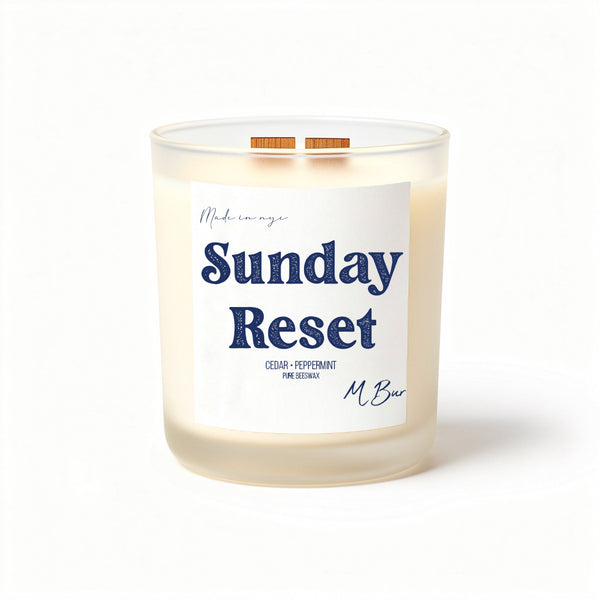
Plenty of "soy" and "natural" candles are actually blends, with paraffin quietly making up a big share of the wax. The label says soy, the burn behaves like paraffin, and you are none the wiser until the headache shows up.
Then there is the fragrance. Many candles use toxic fragrances loaded with phthalates and parabens, and those are a common trigger for the irritation people blame on "strong scent." One of our customers, Jason, put the difference plainly:
"I absolutely love these candles! I instantly notice the difference in the air quality, in comparison to the Bath & Body scented candles. I love Bath & Body's candles but I acknowledge that it caused a slight headache and other minor respiratory discomfort. Awesome products. Totally addicted." Jason H.
That is the everyday version of what the research describes. The compounds that irritate sensitive people tend to ride in on toxic fragrance and paraffin soot, which is why the fix is ingredient specific rather than giving up candles entirely.

How the main wax types actually compare
No wax makes a burning candle a purifier. But the gap between the cleanest and dirtiest options is real, and it shows up in soot, particulate output, and how much a candle bothers sensitive people.
| Wax type | Source | Soot / particulate | Common issues |
|---|---|---|---|
| Paraffin | Petroleum byproduct | Highest, visible black soot | Releases benzene, toluene, formaldehyde when burned |
| Soy (often blended) | Soybean oil, frequently cut with paraffin | Lower, but varies with blend | "Soy" label may hide paraffin; may use toxic fragrance |
| Beeswax | Byproduct of honey production | Lowest, minimal soot | Costs more; must be truly 100 percent to matter |
Beeswax lands at the clean end because it is a single, naturally occurring ingredient with no chemical processing, and it burns at a high melting point that gives you a slow, even flame. That same high melting point is why beeswax has the longest burn time of any candle wax, up to 80 hours in our largest size.
The catch is purity. "Beeswax blend" is usually mostly paraffin with a little beeswax for marketing. If you want the benefit, the wax has to be 100 percent beeswax, which is what we make.
What a cleaner burning candle actually looks like
You do not have to trust a label. Here is a checklist you can hold any candle up against before you buy.
- 100 percent beeswax, not a blend, and not vague "natural wax"
- A pure cotton or wooden wick, never a metal core wick
- Phthalate free fragrance, listed clearly, or unscented
- No chemical dyes coloring the wax
- Full ingredient transparency, so you know exactly what is burning
MBur checks every box. Our candles are 100 percent beeswax with wooden wicks, non toxic phthalate free fragrance, no chemical dyes, handmade in New York City, and naturally hypoallergenic. If you are sensitive to scent, something like the Wine Down candle, with its lavender, chamomile, sage, rosemary, camphor, cedar, and sandalwood, tends to read as calm and clean rather than loud. Nicole put it better than we could:
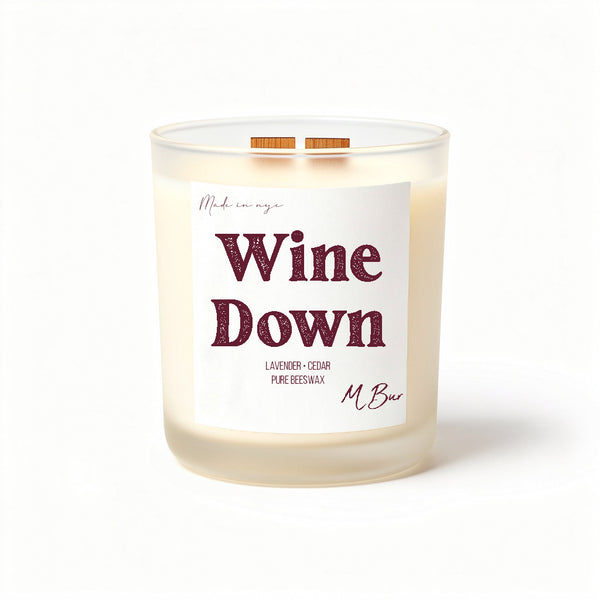
"Absolutely loved the Wine Down candle! The scent is so light and clean, not overpowering at all, which is exactly what I look for. A lot of other candles tend to give me headaches, but this one was a total game changer." Nicole D.
If you want to browse by mood and scent, start with our full beeswax candle collection. The 40 hour size starts at $32, and the 80 hour size is $65.

How to burn any candle without wrecking your air
Even the cleanest candle rewards good habits. These small moves cut particulate and soot more than most people realize.
- Trim the wick to about a quarter inch before every light. A long or mushroomed wick throws more soot and fine particles.
- Keep it out of drafts. A flickering, dancing flame burns unevenly and produces more soot than a steady one.
- Ventilate. Crack a window or run a fan, especially in a small, sealed room like a bathroom.
- Watch the session length. Long continuous burns let byproducts accumulate, so give the room air.
A quick note if you have asthma, allergies, or another respiratory condition: even a clean candle is still combustion, so follow your doctor's guidance on what works for you. A beeswax candle with non toxic fragrance is simply less likely to irritate than a paraffin candle drenched in toxic fragrance.
Frequently asked questions
Do candles improve indoor air quality?
No. Burning any candle adds fine particulate matter and some VOCs to a room rather than removing them. The realistic goal is minimizing what a candle contributes, which means choosing 100 percent beeswax with a clean wick and non toxic fragrance, like the options in our beeswax candle collection.
Do beeswax candles really burn cleaner than paraffin?
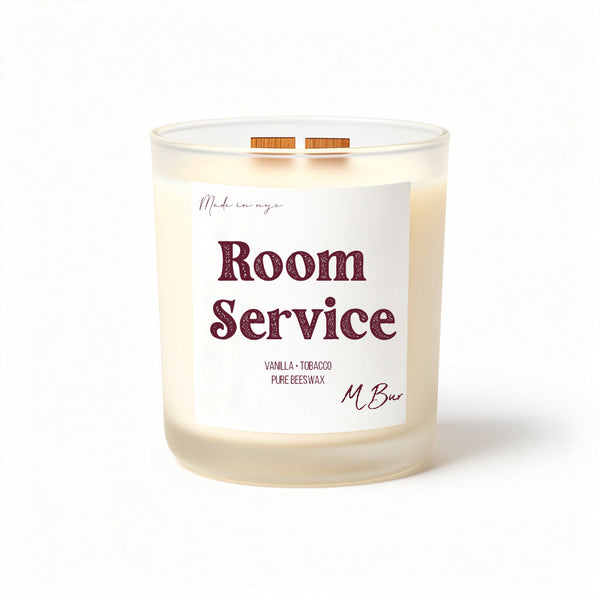
Yes. Beeswax is a single, naturally occurring ingredient with no chemical processing, so it produces far less soot than paraffin, which is a petroleum byproduct that releases benzene and toluene as it burns. You can feel the difference with something like the classic Room Service candle, our bestseller.
Why do scented candles give me a headache?
Usually the toxic fragrance, the paraffin soot, or both. Candles using phthalate laden fragrance and petroleum wax are the common triggers. Switching to a phthalate free, beeswax candle keeps the scent you love and drops the compounds many people react to, which is exactly what our reviewers keep telling us about the collection.
Does a wooden wick make a difference for air quality?
A clean wooden or cotton wick beats a metal core wick, which can add unwanted particles. Our wooden wicks also burn evenly and give you that soft crackle. Trim any wick to a quarter inch before lighting to keep soot down.
The honest takeaway
Candles do not purify your air, and no wax changes that. What you can control is how much your candle adds, and 100 percent beeswax with a clean wick, non toxic fragrance, and good burn habits keeps that number as low as it gets. Your nose was never the right test for clean air, but your ingredients list is.
Our candles carry hundreds of reviews from people who noticed the air quality difference the moment they switched. If you have been cracking a window every time you light something, start with our full beeswax candle collection and see how a cleaner burn feels.
Related reading

