
Dinner Party Candles: What Most Hosts Get Wrong (And How to Fix It)
Dinner Party Candles: What Most Hosts Get Wrong (And How to Fix It)
That "beeswax" candle you bought at the home goods store? It might be 51% paraffin, legally labeled as beeswax because that is all the law requires. Your guests are seated around a beautiful table, the food smells incredible, and a petroleum based candle is quietly competing with your appetizers.
Hosting is a full sensory experience. The scent in the room is part of the ambiance, whether you plan it or not. This guide is for the host who actually wants to get it right.
Mistake 1: Buying Candles Based on Price Alone
The cheapest candle on the shelf is almost always paraffin. It burns fast, releases black soot, and throws a heavy chemical scent that can overwhelm a room and your food.
The other common mistake is buying a candle because it smells good in the store. Cold throw (how a candle smells unlit) is a completely different experience from hot throw (what fills the room while it burns). What you want is a candle with a proven, consistent hot throw.
Decision Criteria 1: Wax Type
Paraffin: Petroleum byproduct. Produces soot and VOCs including benzene and toluene. Burns fast. Not the move for a dinner table.
Soy: Better than paraffin but often blended with paraffin. Many soy candles are not actually 100% soy.
Beeswax: The oldest candle material on earth. Naturally occurring, single ingredient, highest melting point of any candle wax. Burns slower and longer. Emits a light spectrum closest to natural sunlight, which is exactly the warm, flattering glow you want over a dinner table.
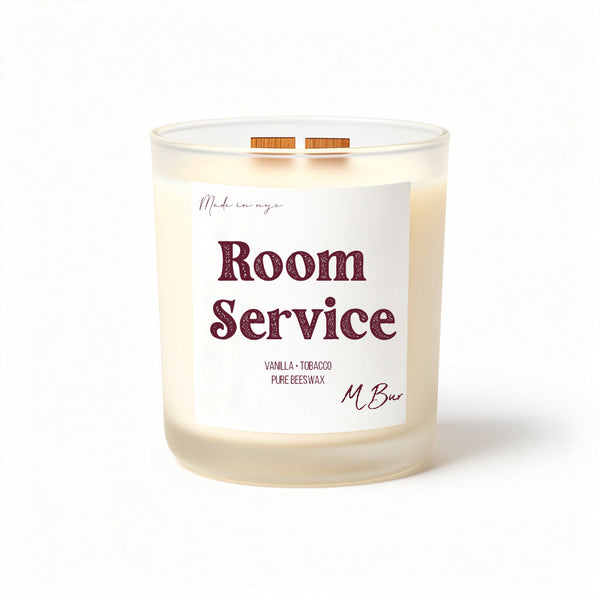
The Room Service beeswax candle was built for exactly this kind of setting. Vanilla, tobacco, saffron, orchid, and tonka bean. It fills a room without overpowering it.
Decision Criteria 2: Wick Type
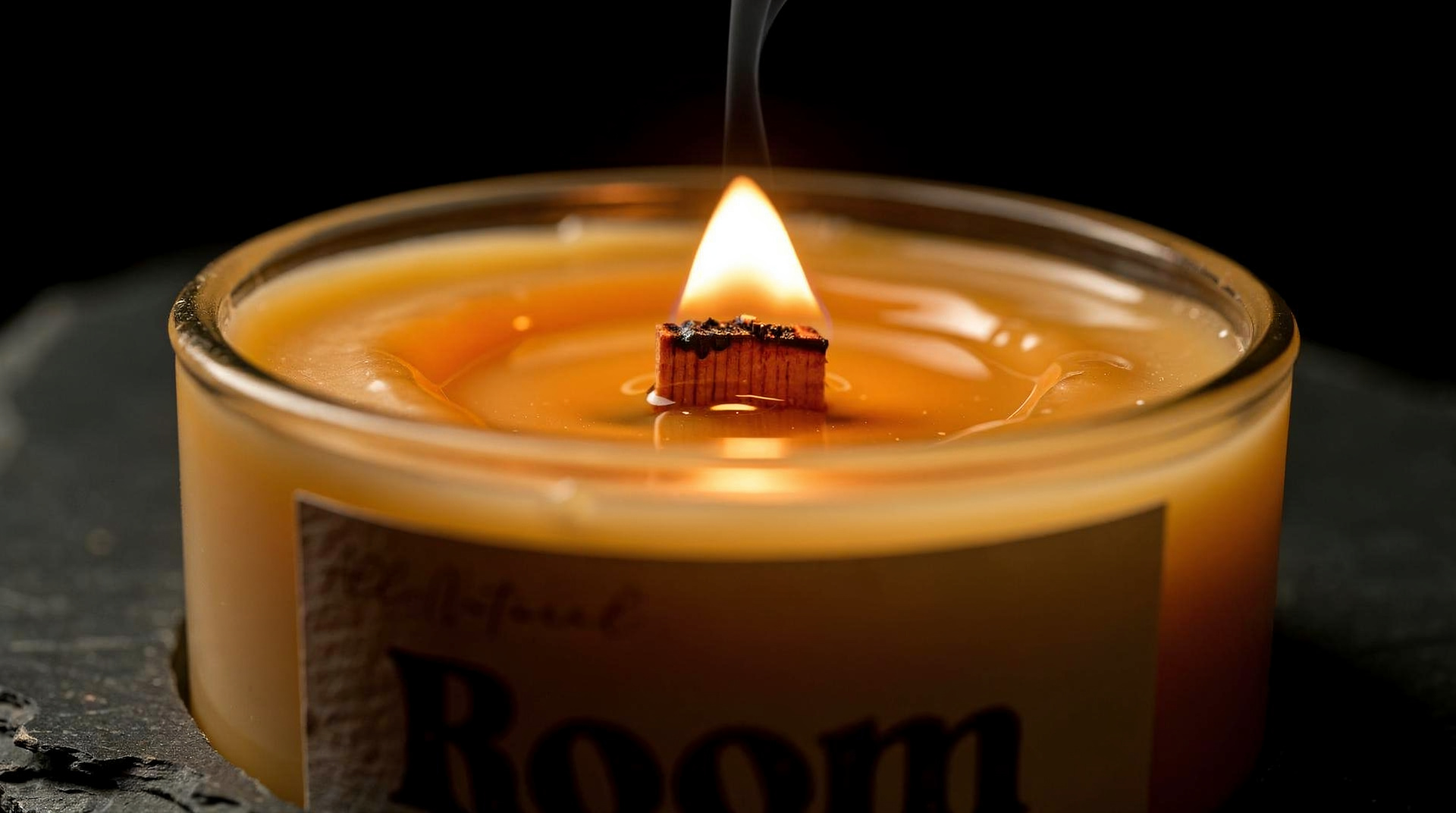
Cotton wicks are the standard. But for a dinner party, wooden wicks have a distinct advantage: the audible crackle. That soft, fireplace like sound creates ambient atmosphere without any extra effort.
Beyond the sound, wooden wicks burn more evenly and produce a broader melt pool, which means better scent distribution across a larger space.
Avoid candles with metal core wicks.
Decision Criteria 3: Scent Sourcing
A candle can be made from 100% beeswax and still contain fragrance oils that include phthalates. The wax is only part of the equation.
What you want for entertaining: phthalate free fragrance oils, no chemical dyes, and fragrance that complements food rather than competing with it. Avoid anything too sweet, too gourmand, or too heavy for a shared meal environment.
For dinner parties, the best scent profiles are complex but not loud. Florals with a tea base, light citrus with woody undertones, or fresh green notes that read as "clean room" rather than "scented product."
"I must say I was apprehensive at first. Once I lit it, however, I fell in love! I'm reordering!" Breann B., Adi Candle
Decision Criteria 4: Size and Burn Time
Most dinner parties run three to five hours. A candle that burns out mid meal is an awkward moment you do not need.
- 2.5 oz (20 hours): Fine for a short gathering or accent placement.
- 5 oz (40 hours): A solid choice for one or two events. Good for a dining table or powder room.
- 7 oz (55 hours): The host's sweet spot. Enough for multiple evenings.
- 12 oz (80 hours): For large open plan spaces or frequent entertainers.
Decision Criteria 5: Price Per Hour of Burn
- Room Service, 12 oz, 80 hours, $65: $0.75 per hour
- Room Service, 7 oz, 55 hours, $37: $0.67 per hour
- Room Service, 5 oz, 40 hours, $23: $0.58 per hour
When you factor in wax quality, scent longevity, and zero soot residue on your walls and furniture, beeswax is just a smarter purchase.
Quick Reference Checklist: What to Look For in a Dinner Party Candle
- 100% single wax composition. No blends, no fillers.
- Wooden wick for ambient sound and even melt pool
- Phthalate free, non toxic fragrance only
- No chemical dyes
- Minimum 40 hour burn time for a standard entertaining size
- Scent profile that complements food
- Price per hour under $1.00
How Many Candles Do You Actually Need?
For a standard dining table seating six to eight: one large candle (12 oz) or two medium candles (7 oz) placed at either end.
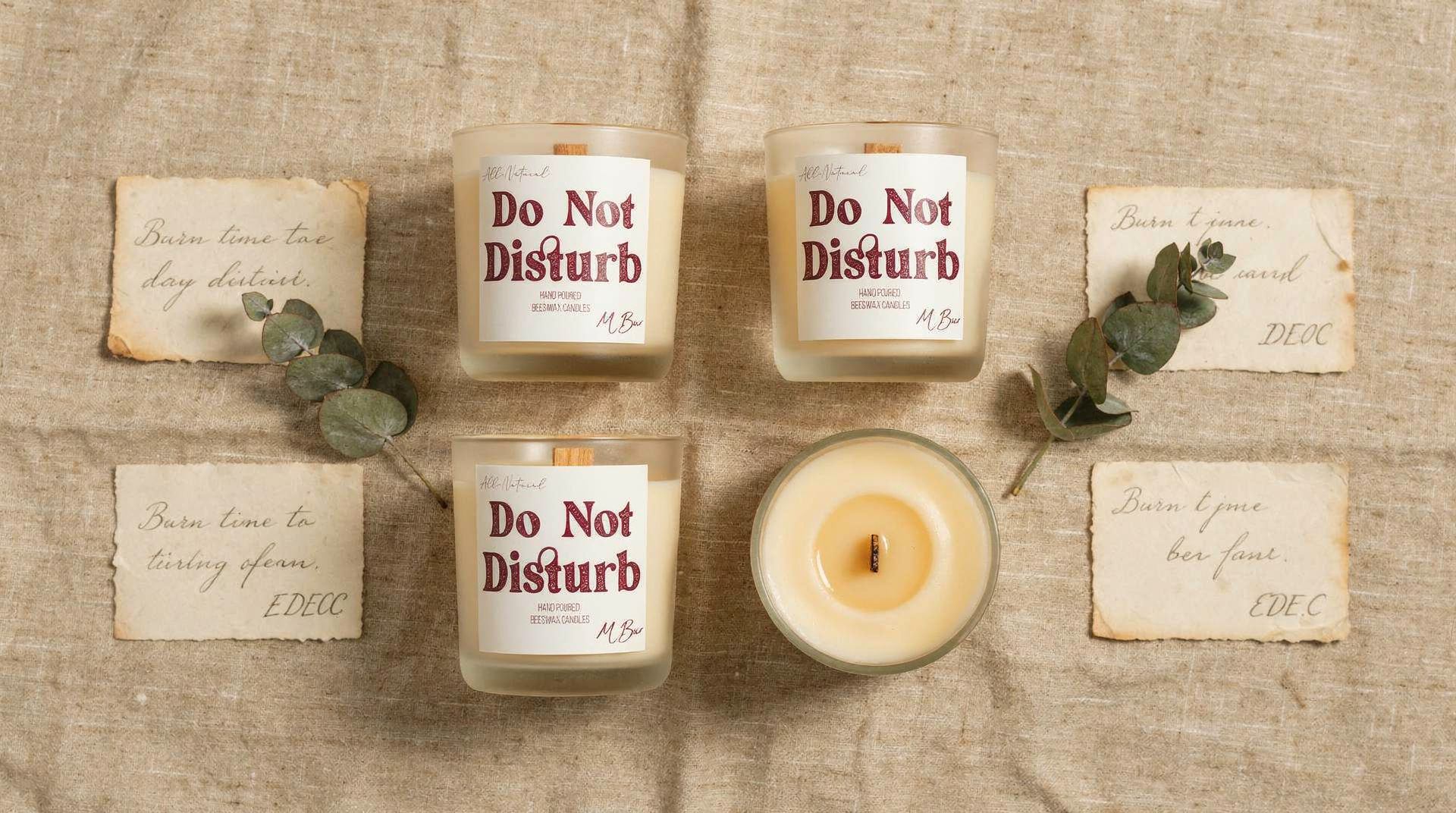
For an open plan living and dining area, consider anchoring two rooms. Room Service on the dining table, with the Do Not Disturb candle in the living room. Vanilla, sandalwood, pear, and peach blossom play well alongside Room Service's richer, warmer base.
Frequently Asked Questions
How long before guests arrive should I light the candles?
Light them 20 to 30 minutes before guests arrive. Beeswax candles need a few minutes to build a full melt pool, and you want the scent already in the room. This also gives the wooden wick time to settle into its crackle.
Will a scented candle clash with the food?
It depends entirely on the scent profile. Heavy sweet or gourmand scents compete directly with savory food aromas. Florals, light tea notes, and fresh green scents tend to complement without conflict.
Is beeswax actually better or is it just more expensive?
Beeswax burns longer, cleaner, and with a warmer light spectrum than paraffin or soy. At equivalent price per burn hour, the quality difference is significant.
Can I use the same candle for multiple dinner parties?
Yes. The 80 hour Room Service candle can cover a dozen or more dinner parties before you need to replace it. Trim the wooden wick to about a quarter inch before each burn.
The Verdict
Most hosts overthink the table and underthink the candle. The candle is doing more work than it gets credit for: setting the light quality, anchoring the scent memory of the evening, and signaling that whoever put this together actually cares about the details.
The Room Service beeswax candle checks every box. Start with the 7 oz (55 hours, $37) if you are new to it. Upgrade to the 12 oz (80 hours, $65) when you inevitably reorder.
Shop the full MBur beeswax candle collection
What buyers say:
Related reading: