

Beeswax vs Palm Wax Candles: Sustainability and Burn Compared
Beeswax vs Palm Wax Candles: Sustainability and Burn Compared
Palm wax candles are sometimes marketed as a natural, plant-based alternative to paraffin, and the crystalline patterns they form on the surface can look striking. But palm wax carries a sustainability problem that no clean-burning chart will tell you about, and the burn performance is more middle-of-the-road than its premium positioning suggests. This comparison weighs beeswax against palm wax on both sustainability and burn.
Browse the full MBur beeswax candle collection to see 100% beeswax in practice.
The Quick Answer
Beeswax wins on sustainability, burn time, and soot. Palm wax has a distinctive crystalline finish and burns cleanly when sourced responsibly, but the wider palm industry is associated with deforestation and habitat loss, particularly in Southeast Asia. RSPO-certified palm wax exists, but certification practices are debated. For most buyers prioritizing both clean burning and sustainability, beeswax is the safer choice.
Sustainability
This is where the two diverge most. Beeswax is a renewable byproduct of beekeeping that supports pollinator populations when sourced responsibly. Palm wax comes from palm oil, an industry linked to deforestation in tropical regions, loss of habitat for orangutans and other species, and significant carbon emissions from land conversion. RSPO (Roundtable on Sustainable Palm Oil) certification was created to address this, but environmental groups continue to debate how rigorous it is in practice. If sustainability is a primary factor, beeswax has a clearer record.
Burn Time
Beeswax has the highest melting point of any candle wax, so it burns longest. Palm wax has a moderate melting point, higher than soy but lower than beeswax, so it burns longer than soy but not as long as beeswax. For value per hour, beeswax leads.
Soot and Air Quality
Beeswax produces the least soot of any candle wax and may release negative ions that help neutralize airborne particulates. Palm wax burns cleanly with low soot when pure, similar to soy. Neither produces the benzene and toluene that paraffin does. For air quality, beeswax has a small edge; both are far better than paraffin.
Appearance
Palm wax is known for its crystalline surface pattern that forms as the wax cools, which gives it a distinctive premium look. Beeswax has its natural honey color and matte finish. This is purely aesthetic and not a burn-quality factor.
Comparison Table
| Factor | Beeswax | Palm Wax |
|---|---|---|
| Source | Made by bees | Refined palm oil |
| Sustainability | Renewable, supports pollinators | Linked to deforestation; RSPO debated |
| Burn time | Longest | Moderate, longer than soy |
| Soot | Lowest | Low when pure |
| Negative ions | Yes (studies ongoing) | No |
| Appearance | Honey color, matte | Distinctive crystalline pattern |
| Scent throw | Gradual, even | Moderate |
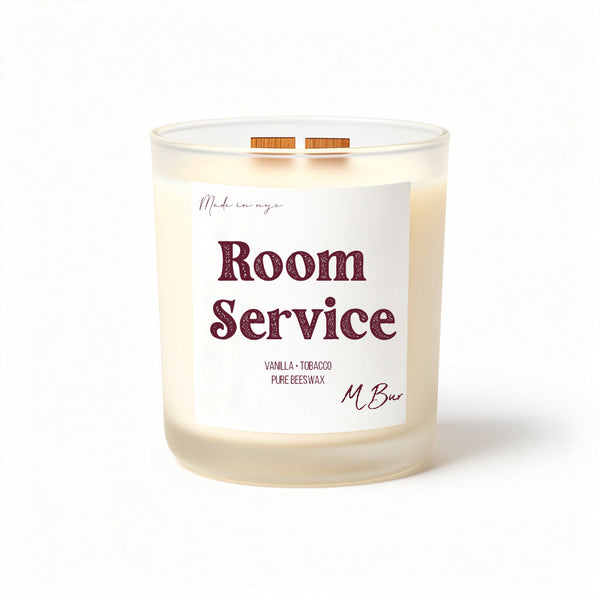
MBur uses 100% beeswax with phthalate-free non-toxic fragrance and wooden wicks. The Room Service candle is a good showcase of beeswax burn quality and throw.
Frequently Asked Questions
Is palm wax bad for the environment?
The palm oil industry is associated with deforestation in tropical regions and loss of habitat for species like orangutans. RSPO certification was created to address this, but its rigor is debated. If sustainability is a major factor, beeswax avoids these concerns entirely.
Is palm wax cleaner than soy?
Palm and soy both burn cleanly when pure, with low soot and no petroleum byproducts. Palm has a higher melting point and burns longer than soy. The bigger differentiator is sustainability, where soy and beeswax both have a more established environmental record than palm.
Why do palm wax candles look frosted?
That crystalline surface pattern is a natural feature of palm wax as it cools. It is decorative only and does not affect burn quality. Beeswax has a smoother, matte finish.
Which is better, beeswax or palm wax?
For sustainability and burn quality, beeswax. It is renewable, burns longest, produces the least soot, and avoids the deforestation concerns associated with palm. Palm wax is a reasonable option if you prefer the crystalline aesthetic and source RSPO-certified product, but it does not have a clear advantage over beeswax.
The Bottom Line
Beeswax beats palm wax on sustainability, burn time, and soot. Palm wax has a distinctive look and burns cleanly when pure, but the wider sustainability question is harder to ignore than the marketing suggests. For buyers who want clean burning and a clean conscience, beeswax is the more straightforward choice.
Shop the full collection of clean-burning beeswax candles
What buyers say:
Related reading:

